The NSW Driver Knowledge Test (DKT) has 45 questions in two parts: 15 general knowledge questions (at least 12 correct) and 30 road safety questions (at least 29 correct). PassDriveTest mock tests mark the two parts separately, like the real test. Below is every NSW sign we cover, with its official image and meaning. After the signs: the sign groups, a short quiz and study tips.
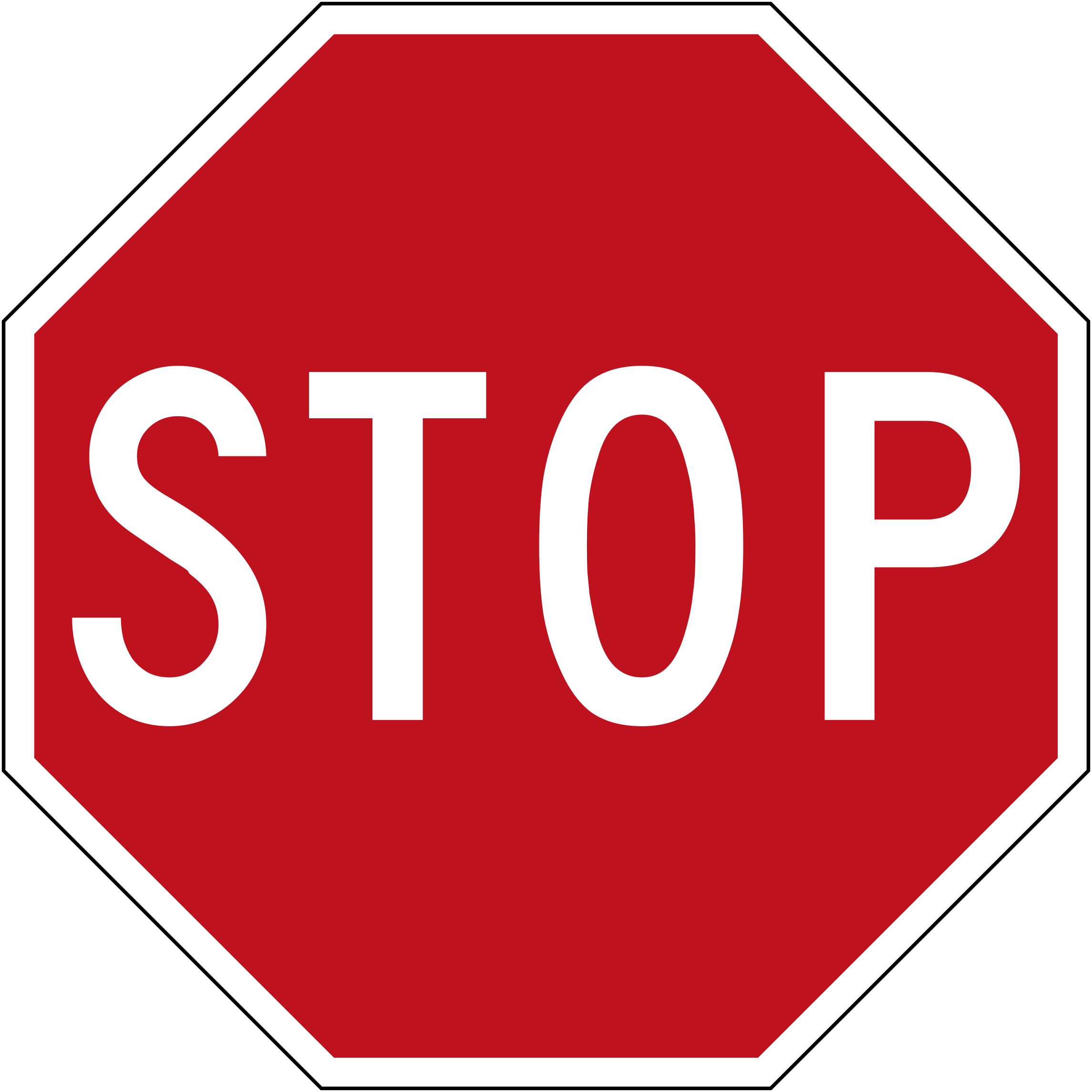
Stop Stop completely, then give way. Stop at the stop line (or before the intersection if there is no line) and give way to all traffic.
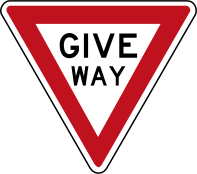
Give way Slow down and give way. Give way to vehicles in, entering or approaching the intersection, and to pedestrians.
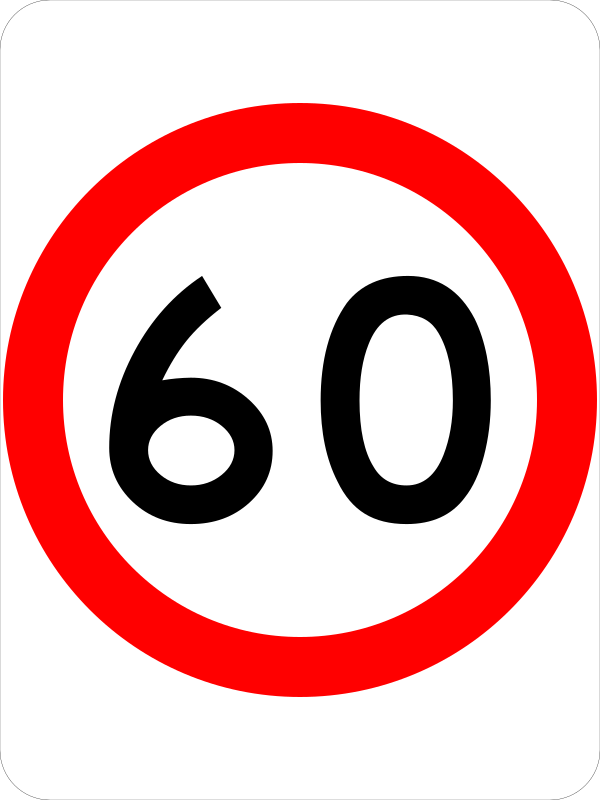
Speed limit 60 Maximum speed 60 km/h. Do not go faster than the number shown; slow down for conditions.
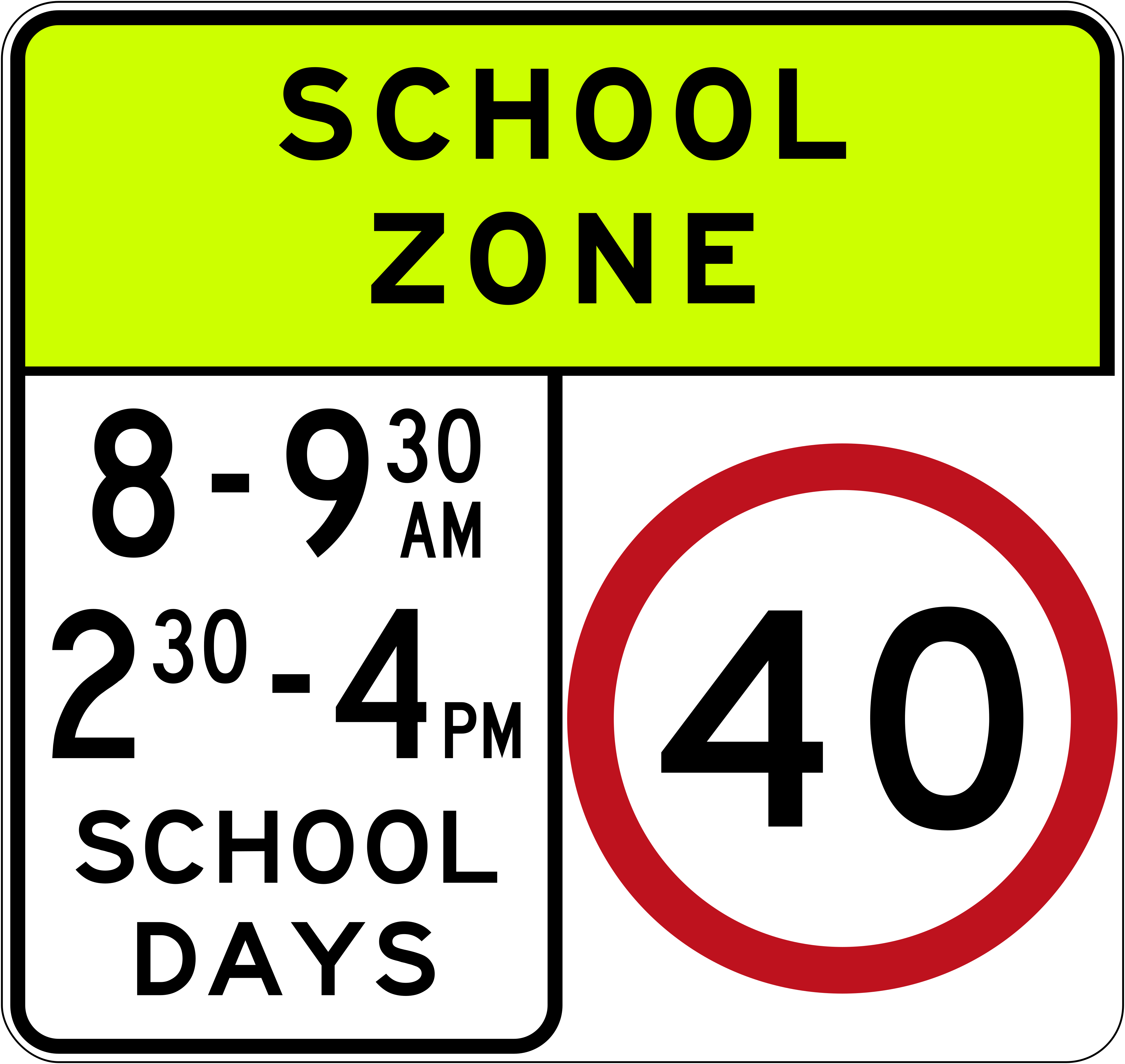
School zone Lower speed limit during school zone times. Keep to the school zone limit during the times shown and watch for children.
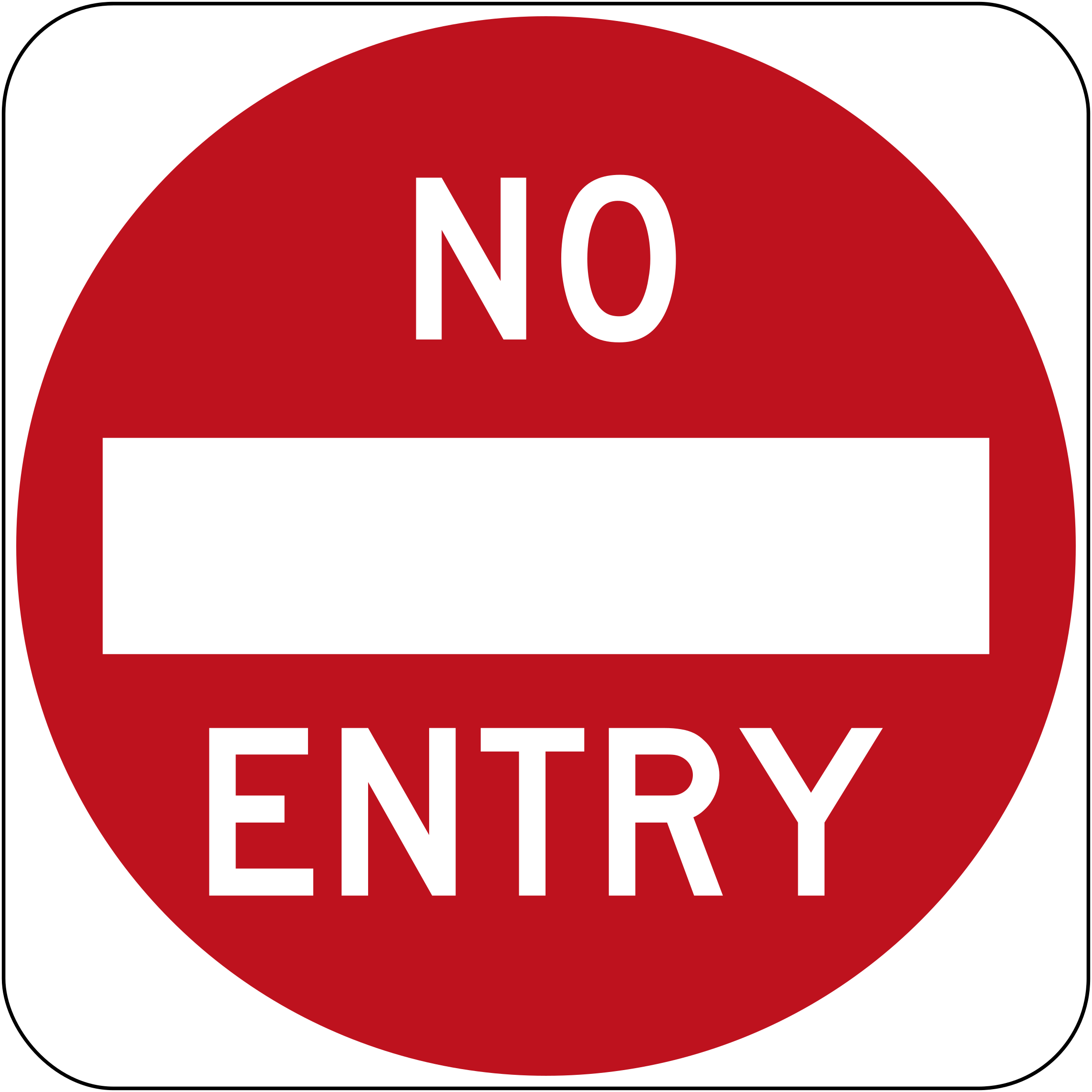
No entry You must not enter. Do not drive past this sign; it usually marks the wrong end of a one-way road.
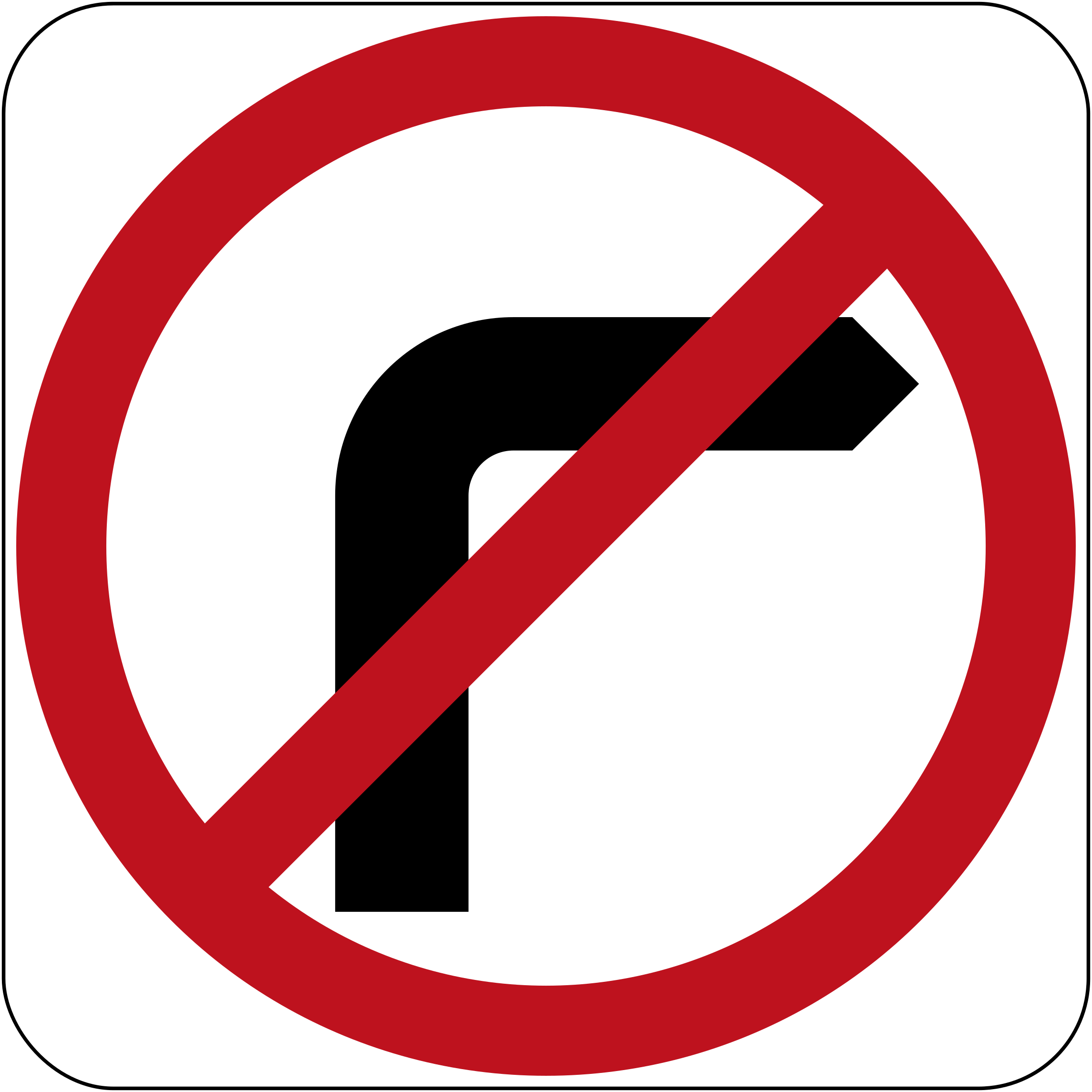
No right turn You must not turn right. Go straight or turn left.
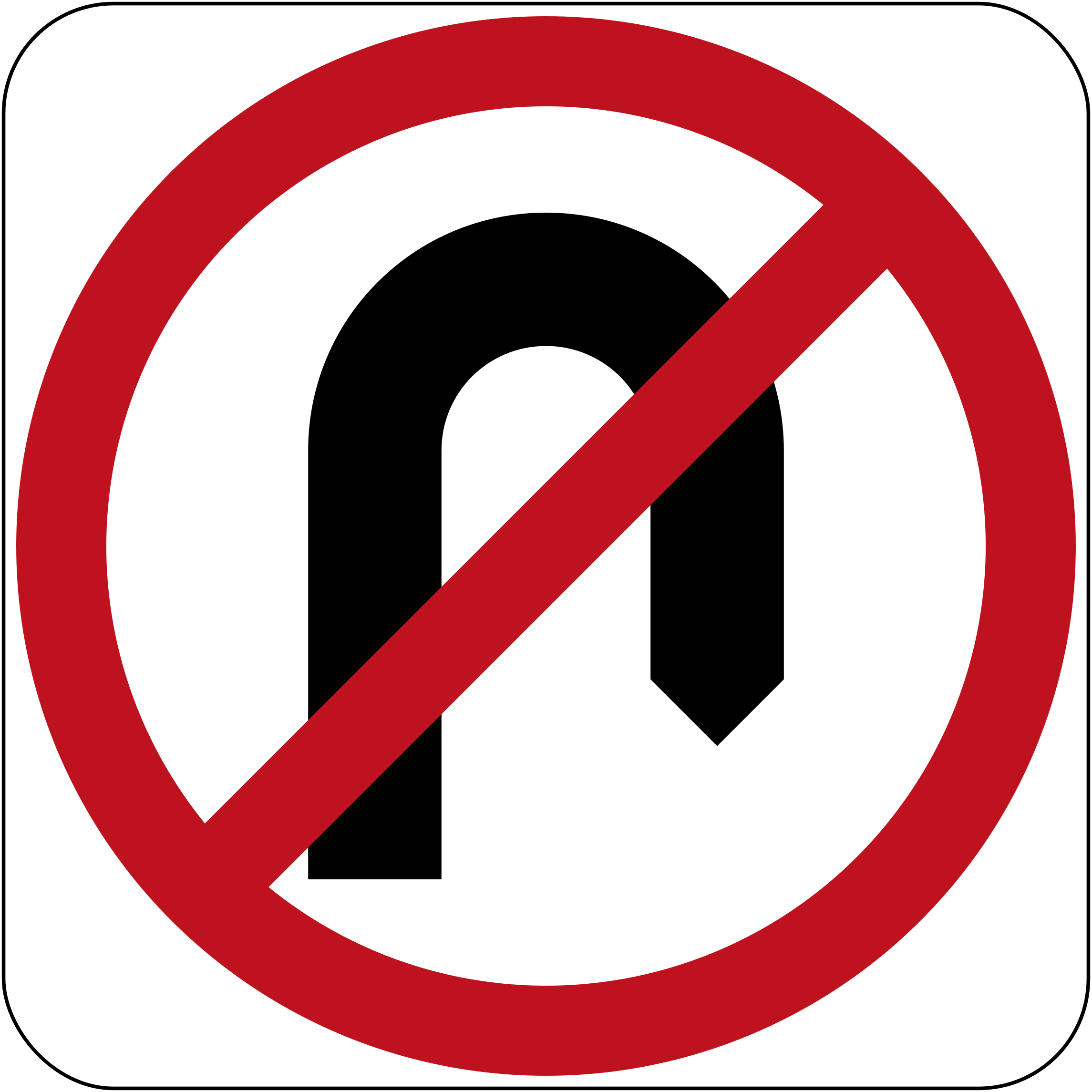
No U-turn You must not make a U-turn. Continue and turn around safely elsewhere.
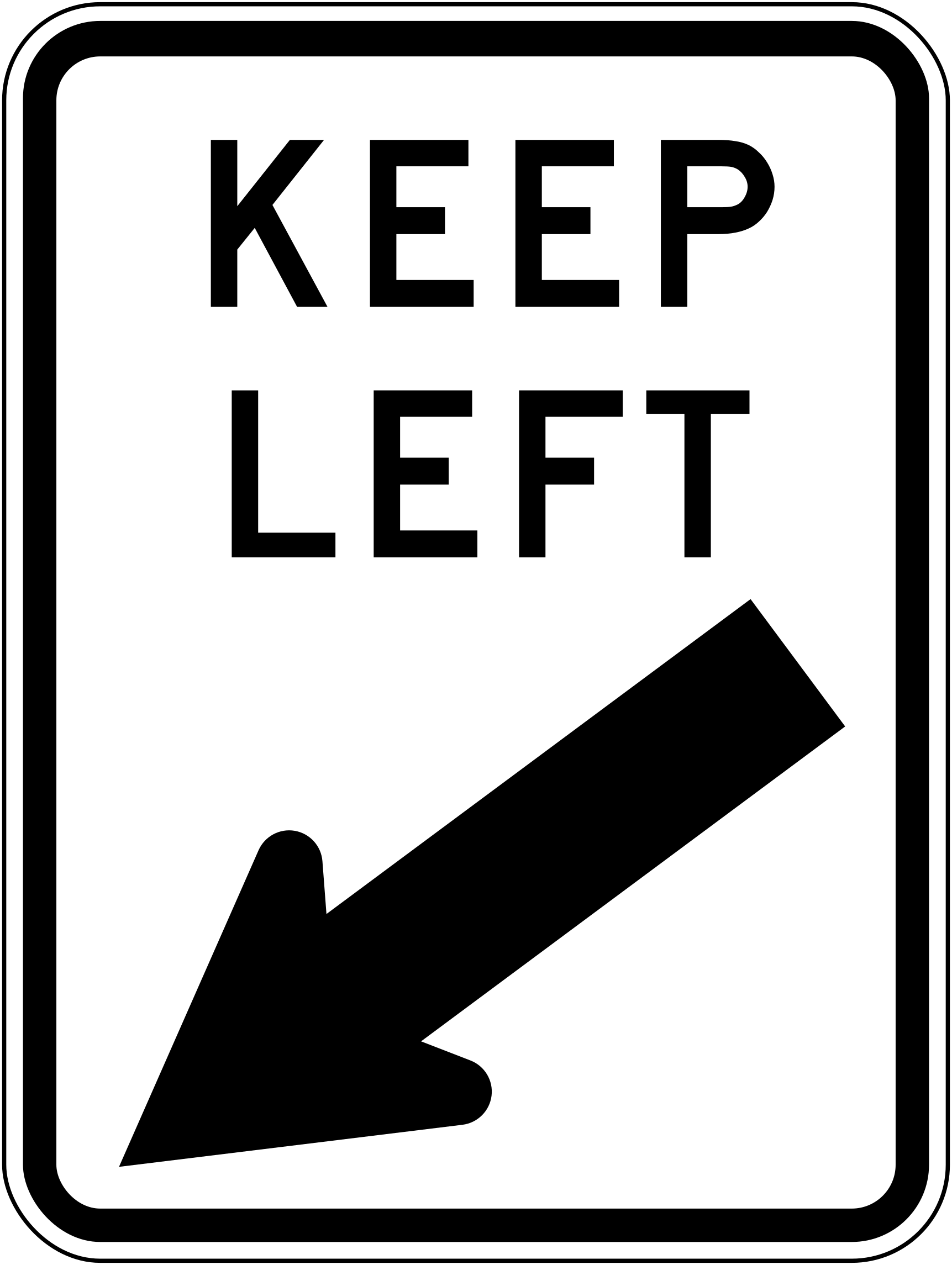
Keep left Keep to the left of the sign. Pass on the left side of the traffic island or obstruction.
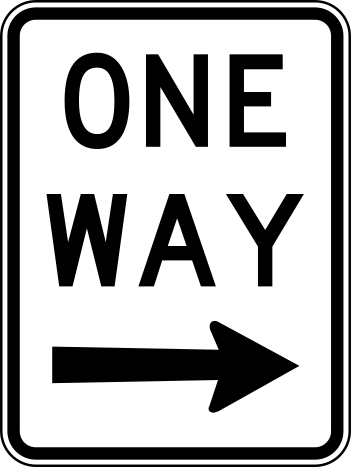
One way Traffic goes only in the direction of the arrow. Do not drive against the arrow.
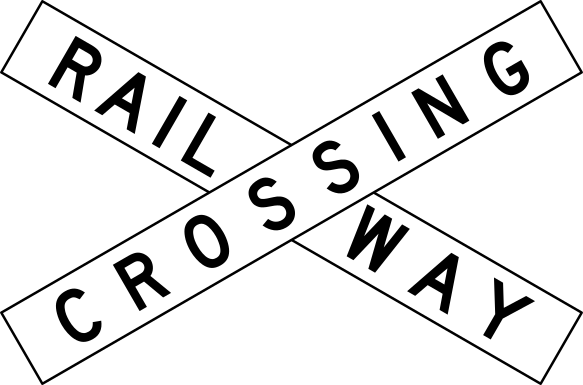
Railway crossing Railway tracks cross here. Give way to trains. Stop if lights flash or a train is coming.
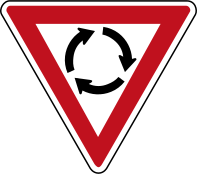
Roundabout give way Give way to all vehicles already in the roundabout. Slow down or stop before entering.
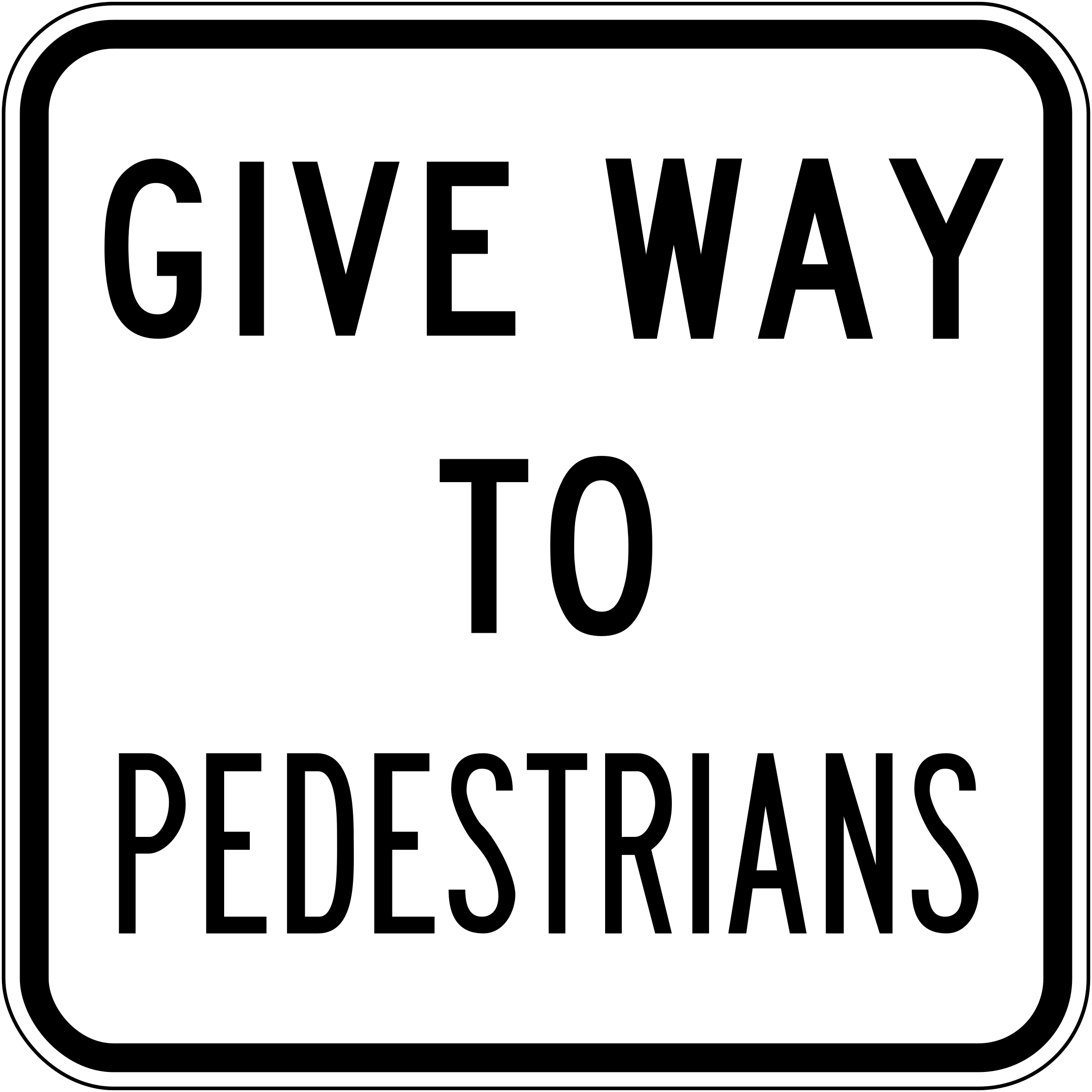
Give way to pedestrians Give way to pedestrians crossing here. Often at slip lanes and car park exits.
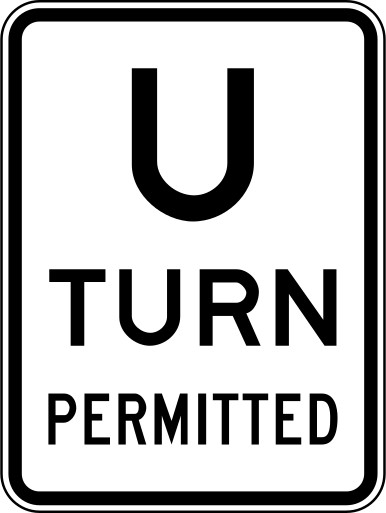
U-turn permitted You may make a U-turn here, giving way to all other vehicles and pedestrians. Often at traffic lights, where U-turns are otherwise not allowed.
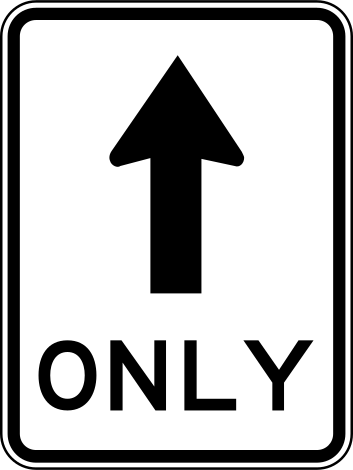
Ahead only You must go straight ahead. You may not turn left or right here.
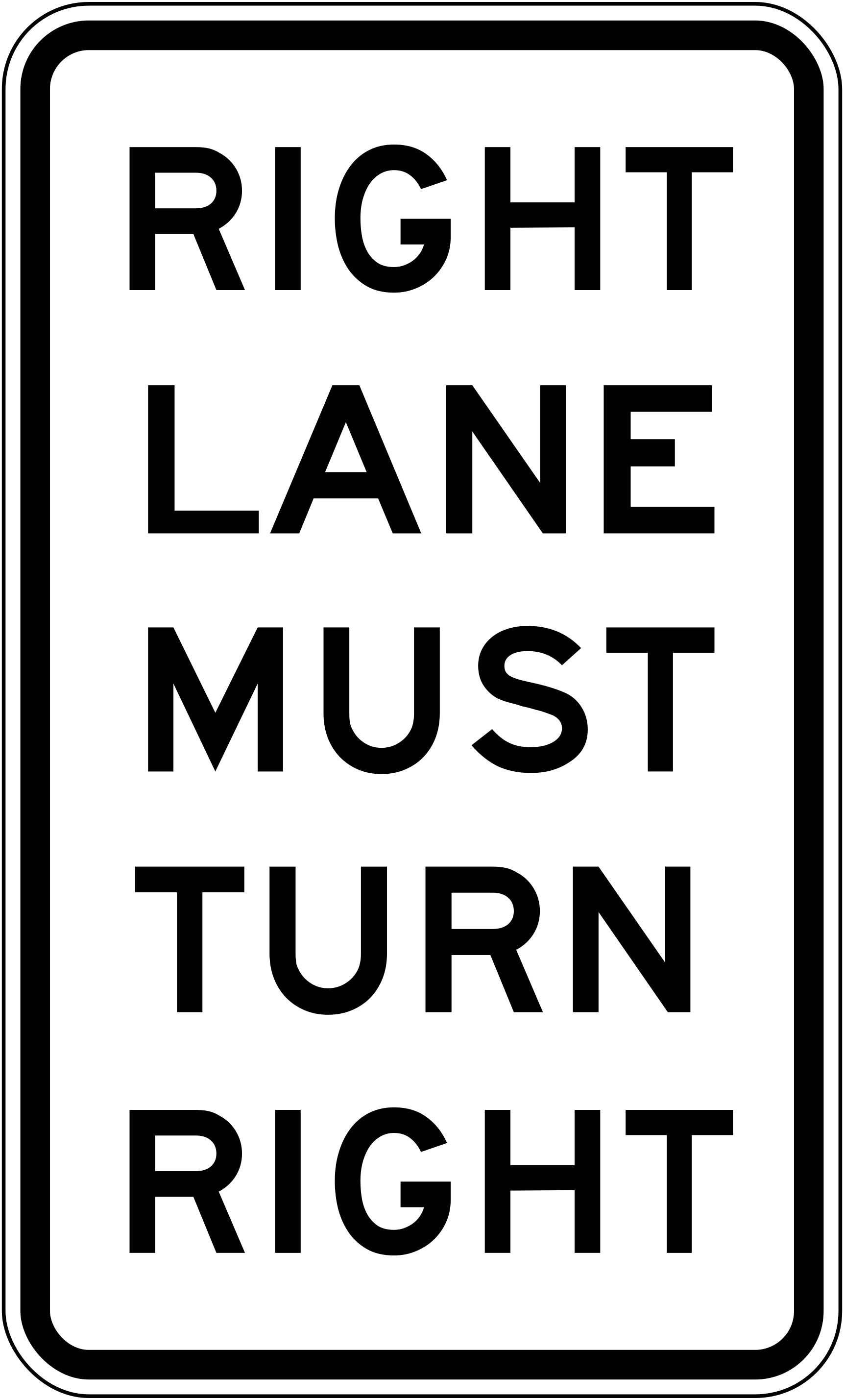
Right lane must turn right Vehicles in the right lane must turn right. Change lanes before the intersection if you are going straight.
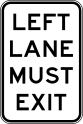
Left lane must exit Vehicles in the left lane must leave at the exit. Move to another lane in good time if you are not exiting.
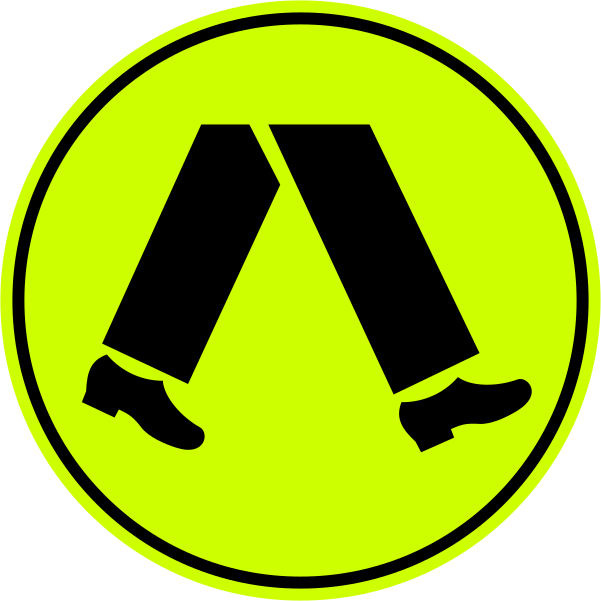
Pedestrian crossing Marks a pedestrian (zebra) crossing: give way to pedestrians on it. Do not overtake a vehicle stopped at the crossing.
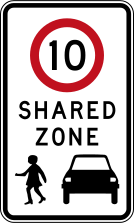
Shared zone A shared zone: the speed limit is 10 km/h and you must give way to pedestrians. Pedestrians may use the whole road.
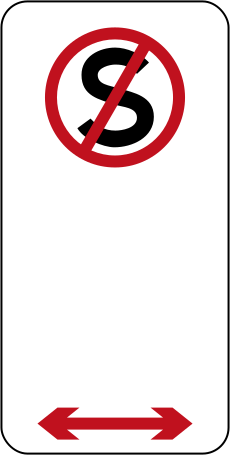
No stopping You must not stop here at all, except in an emergency. The arrow shows which side of the sign the rule applies to.
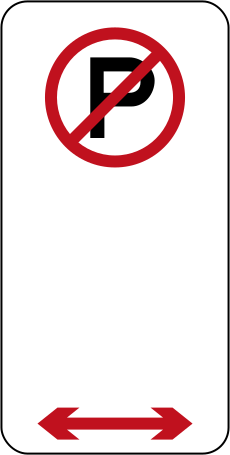
No parking You must not park here. You may stop for up to 2 minutes to drop off or pick up, staying within 3 m of the vehicle.
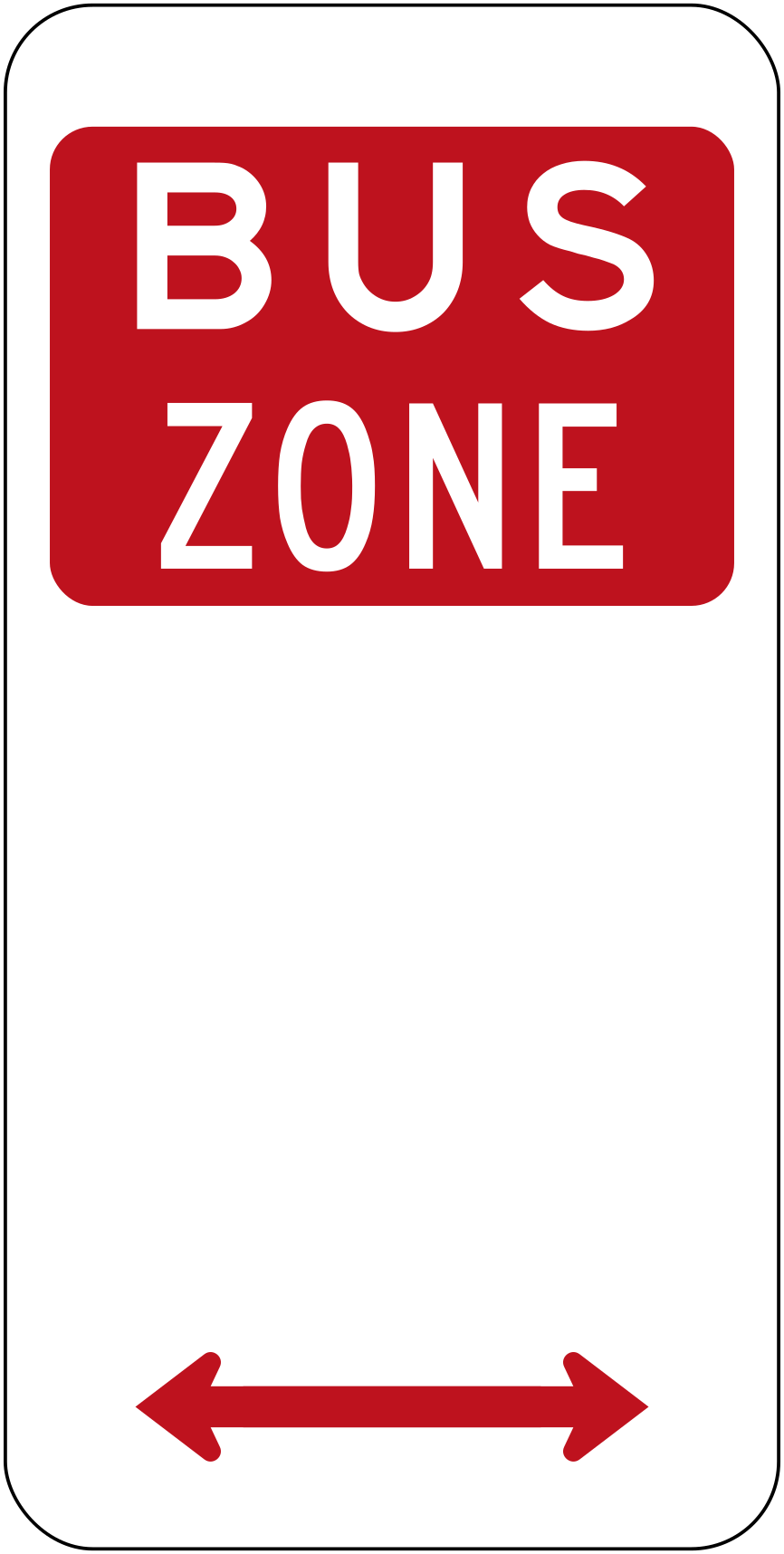
Bus zone Only buses may stop in the bus zone. Other vehicles may not stop there during the times shown.
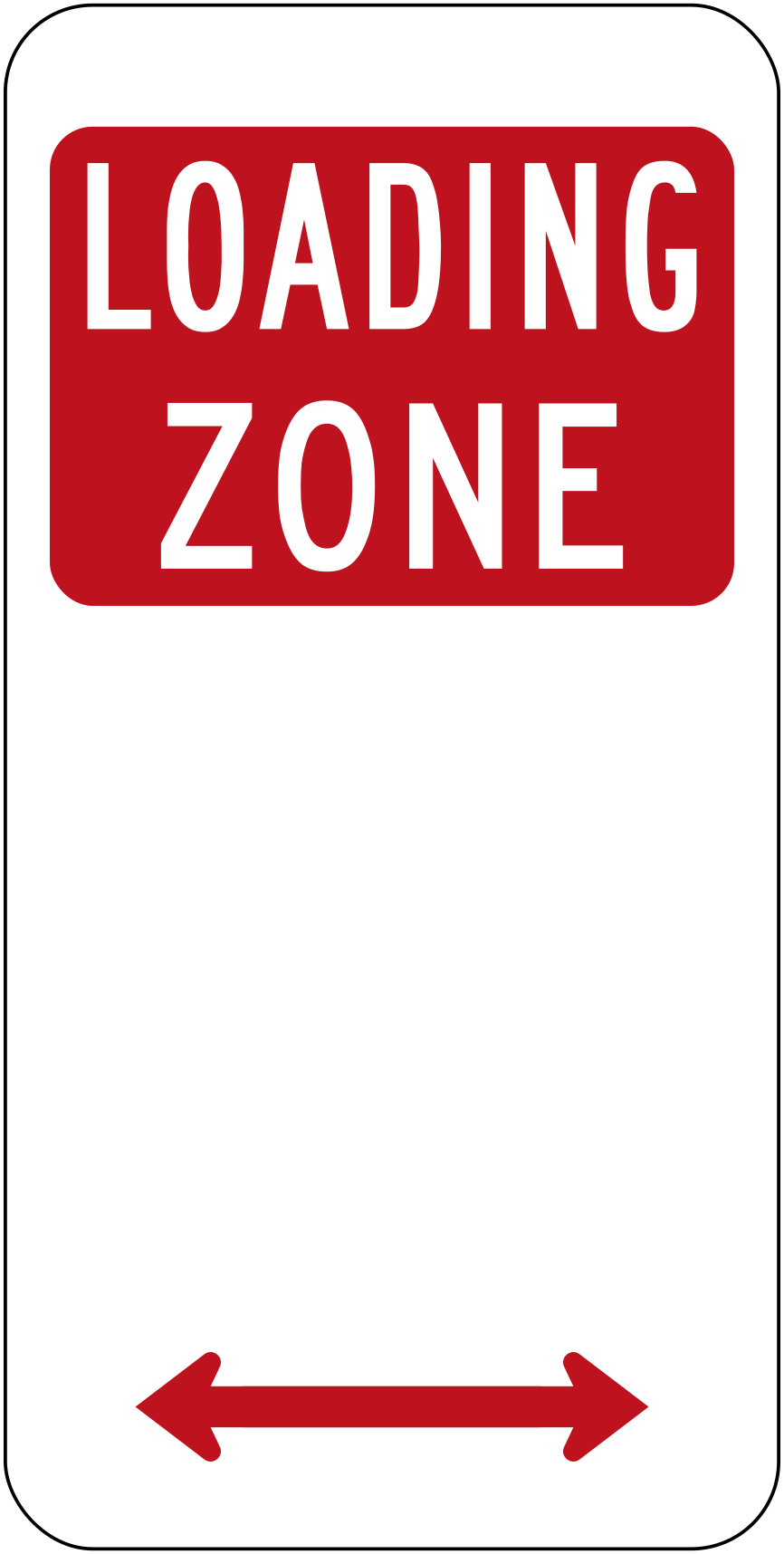
Loading zone Goods vehicles may stop to load or unload for a limited time. Other vehicles may stop briefly to drop off or pick up passengers.
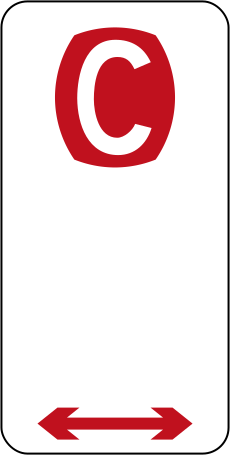
Clearway You must not stop during the hours shown, except in an emergency. Clearways keep traffic moving at busy times.
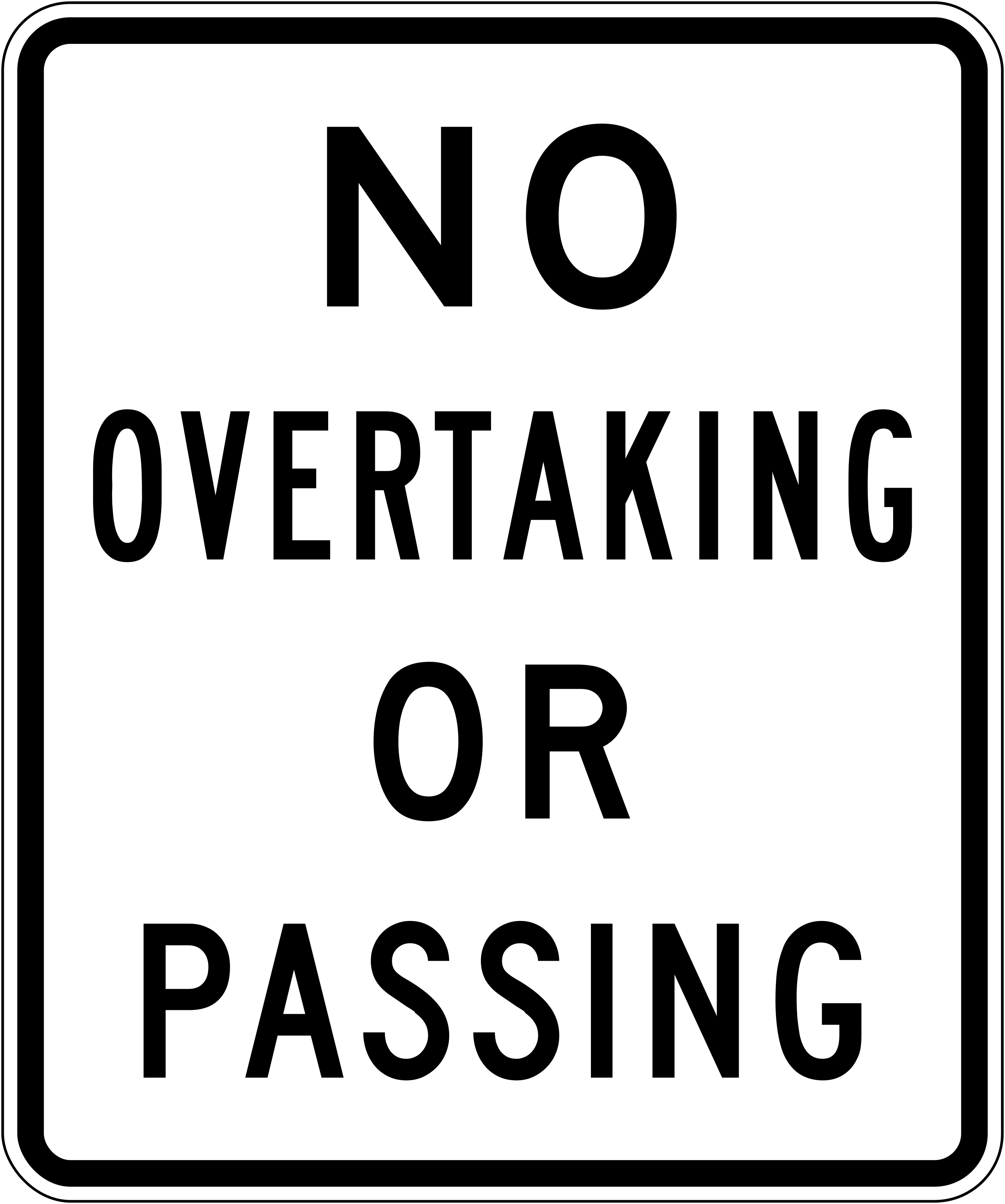
No overtaking or passing You must not overtake any vehicle going the same way. Used on narrow bridges and roads; give way to oncoming vehicles.
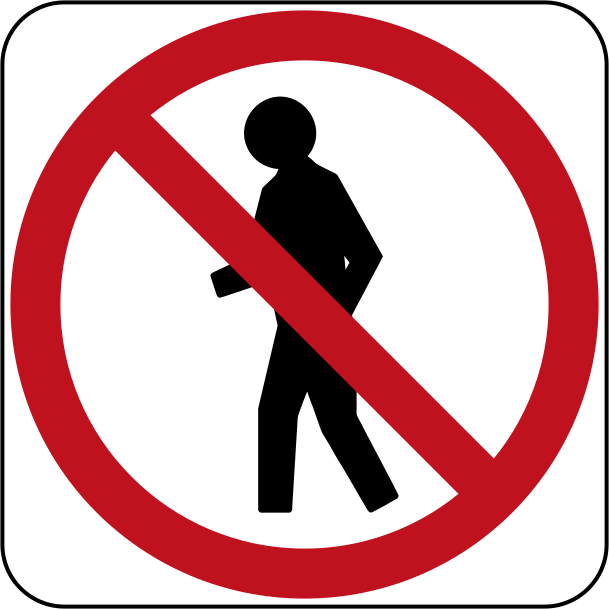
No pedestrians Pedestrians must not go beyond this sign. Often on freeways and ramps.
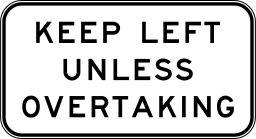
Keep left unless overtaking You must keep left unless you are overtaking. You may use the right lane to overtake, turn right or make a U-turn.
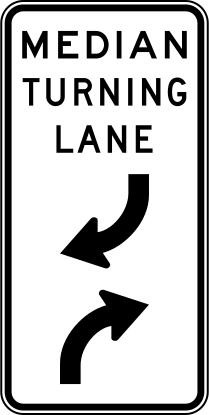
Median turning lane The centre lane is for vehicles from both directions turning right. Give way to any oncoming vehicle already in the lane.
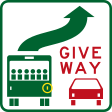
Give way to buses Give way to a bus pulling out from a stop when you are in the left lane. Displayed on the back of buses in built-up areas.
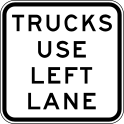
Trucks use left lane Trucks must use the left lane. Other vehicles may also use the left lane.
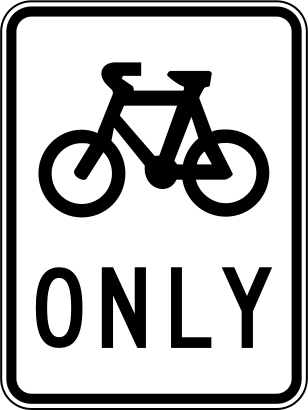
Bicycles only The path or lane is for bicycles only. Other vehicles may enter only to enter or leave the road where allowed.
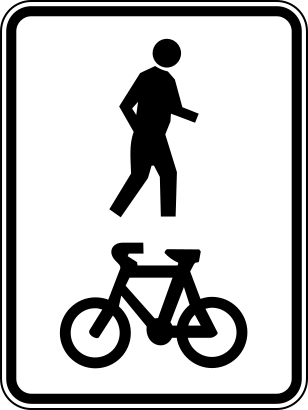
Shared path A path shared by pedestrians and bicycle riders. Bicycle riders must keep left and give way to pedestrians.
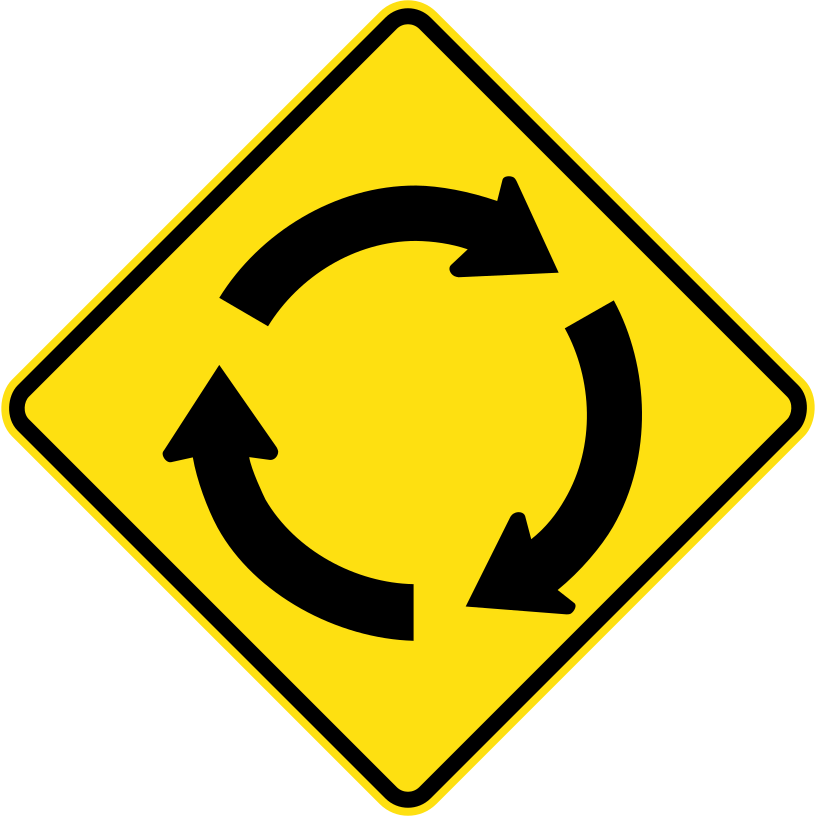
Roundabout ahead There is a roundabout ahead. Slow down and give way to vehicles already in the roundabout.
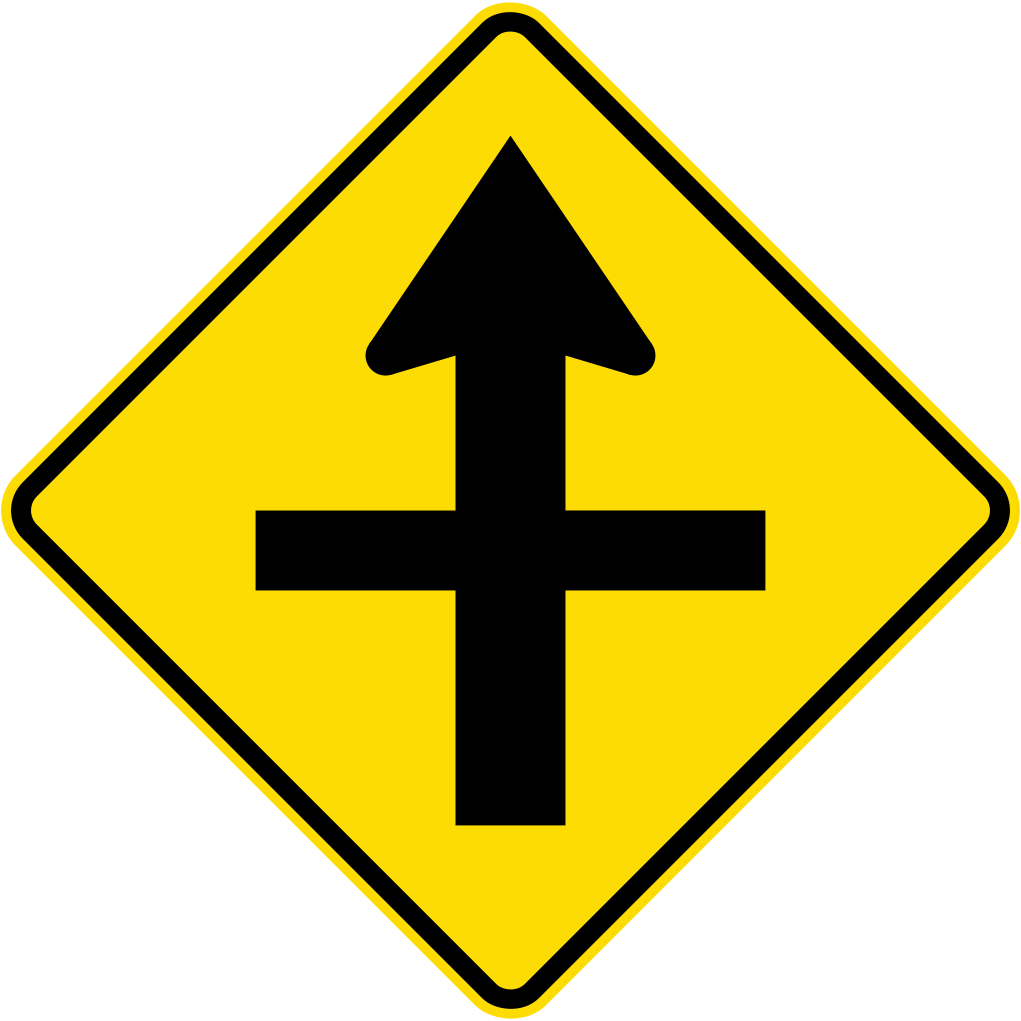
Crossroads ahead A crossroad is ahead. Slow down and watch for traffic entering from either side.
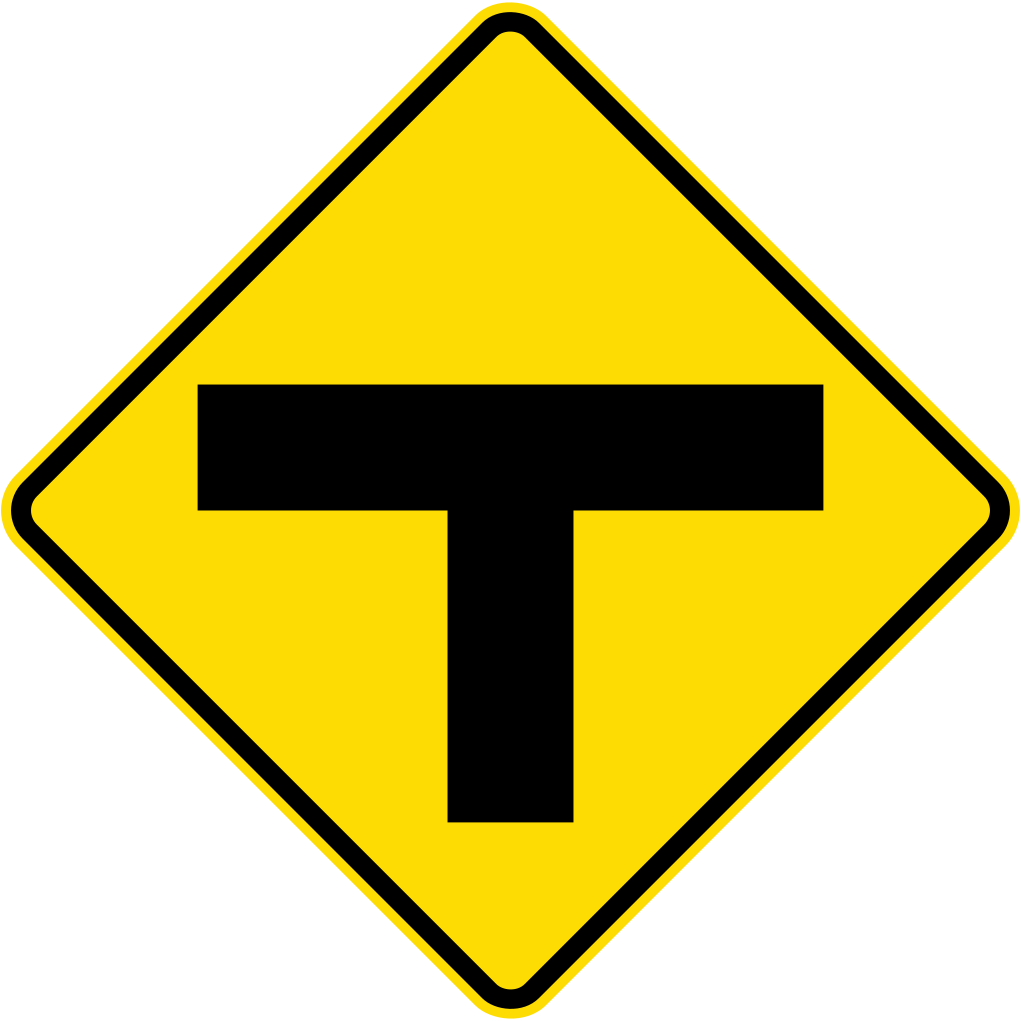
T-intersection ahead The road ends at a T-intersection. Be ready to give way to traffic on the continuing road.
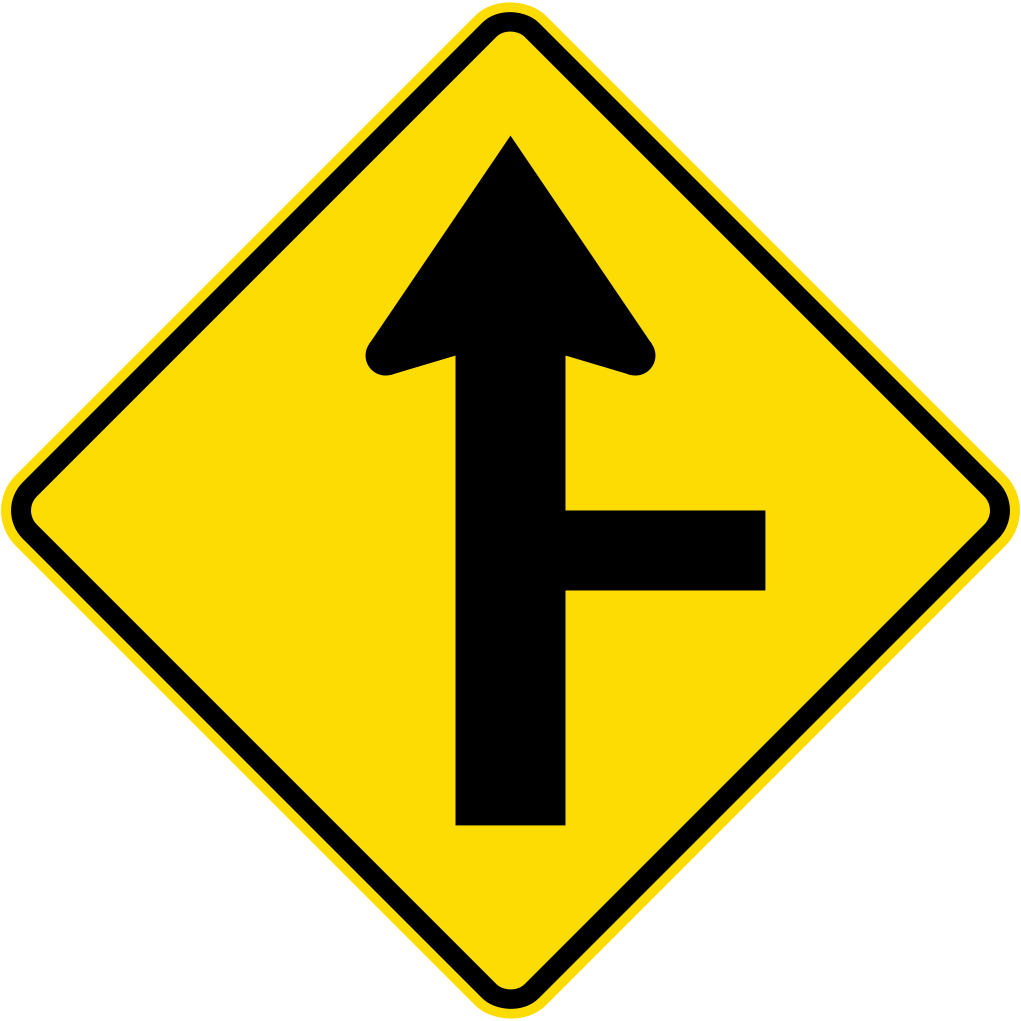
Side road A side road joins ahead. Watch for vehicles entering.
Curve ahead The road curves ahead. Slow down before the curve.
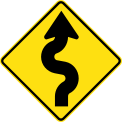
Winding road A series of bends ahead. Slow down and keep left.
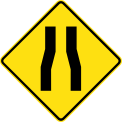
Road narrows The road gets narrower. Slow down and be ready to give way.
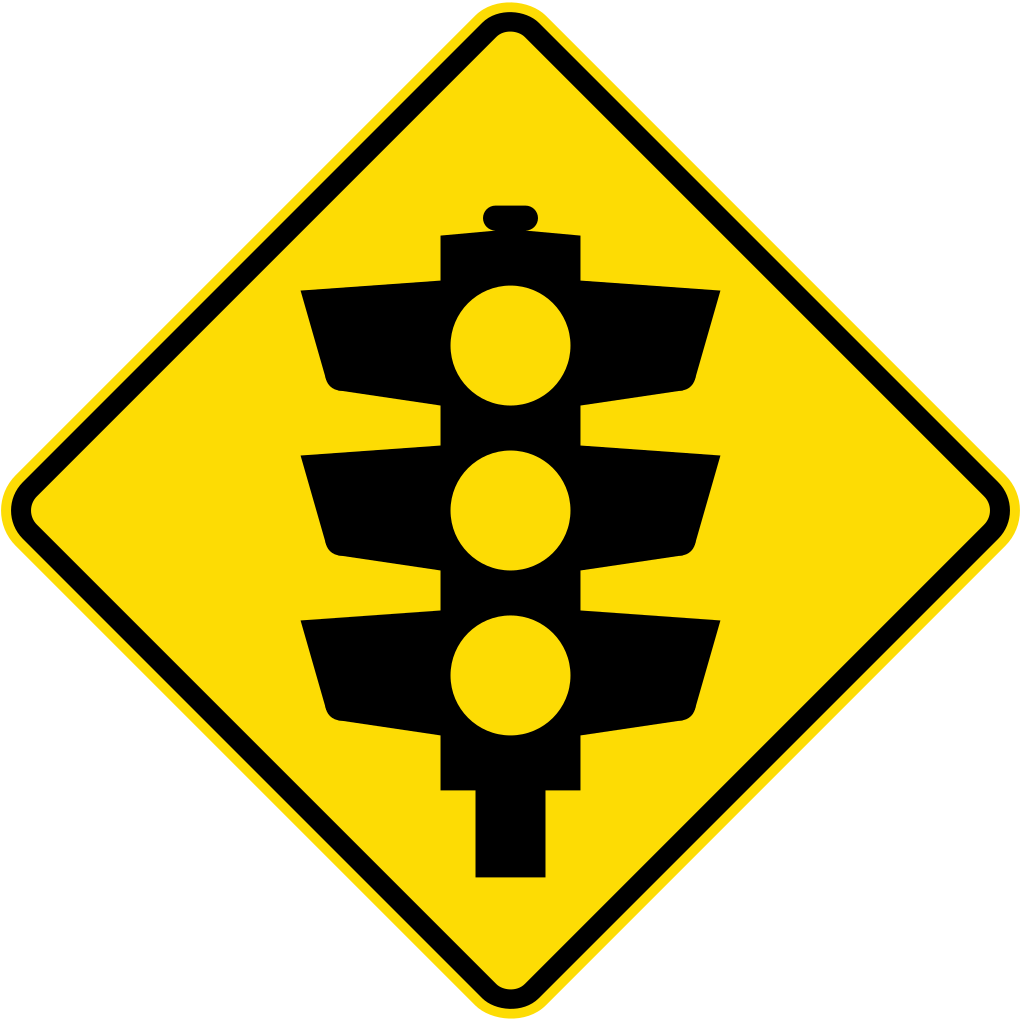
Traffic lights ahead Traffic signals ahead. Be ready to stop.
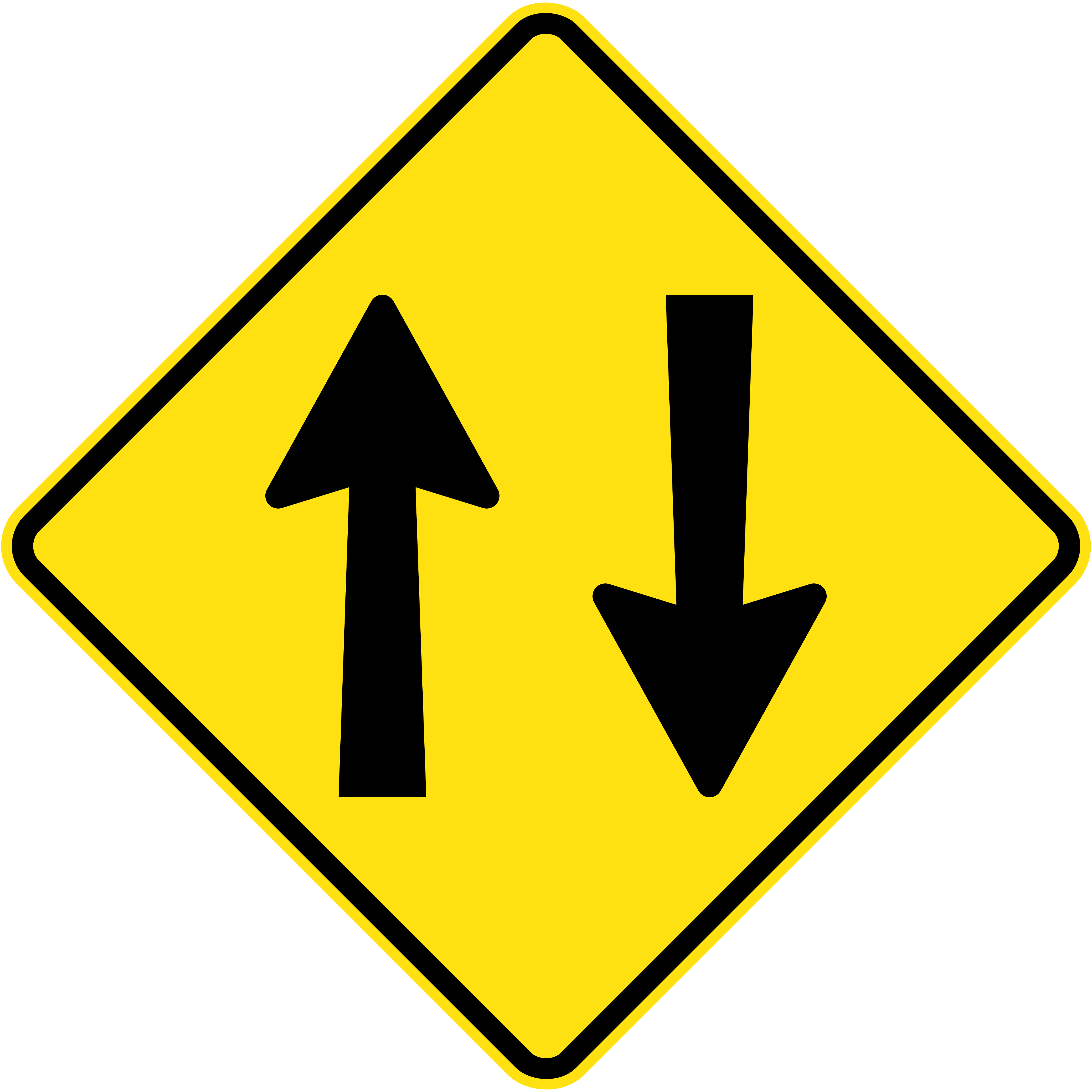
Two-way traffic ahead The road ahead carries traffic in both directions. Keep left and watch for oncoming vehicles, especially after a one-way or divided section.
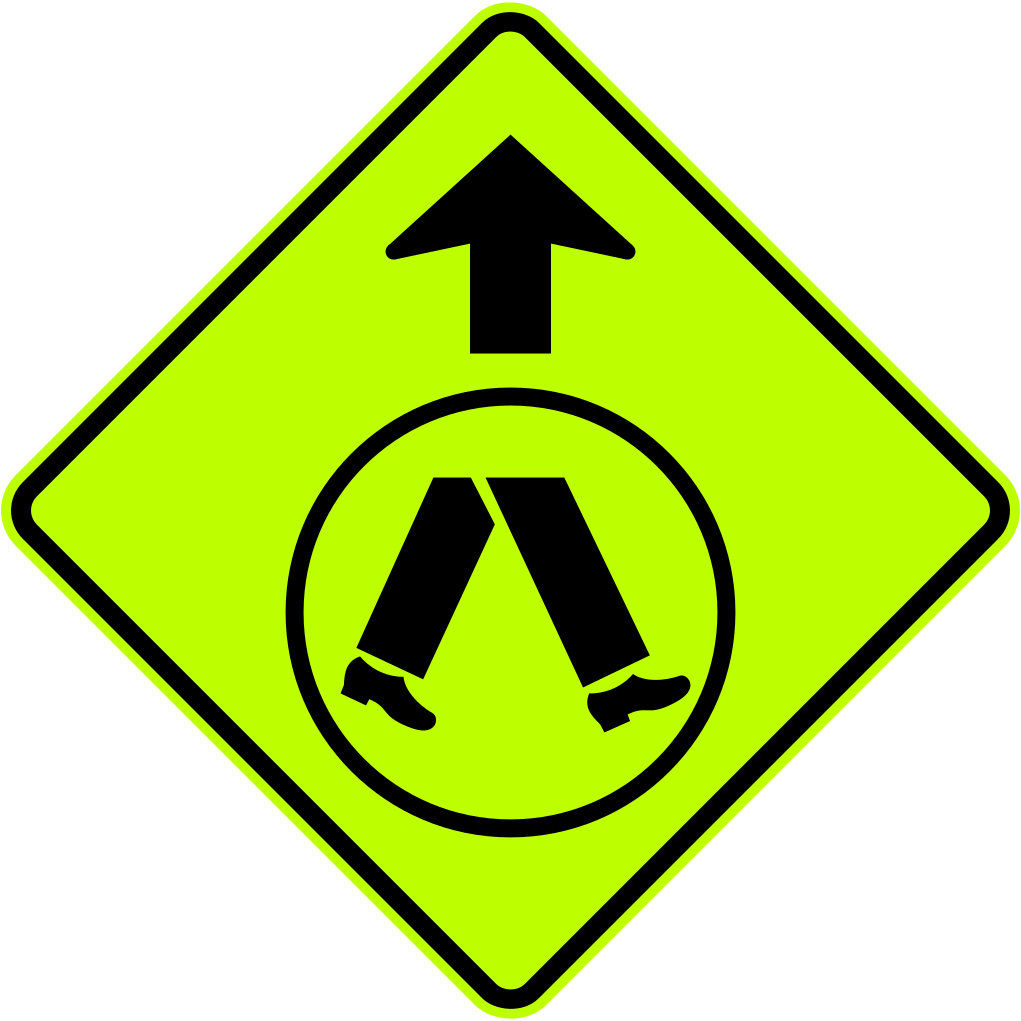
Pedestrian crossing ahead A pedestrian crossing is ahead. Slow down and be ready to stop for people on the crossing.
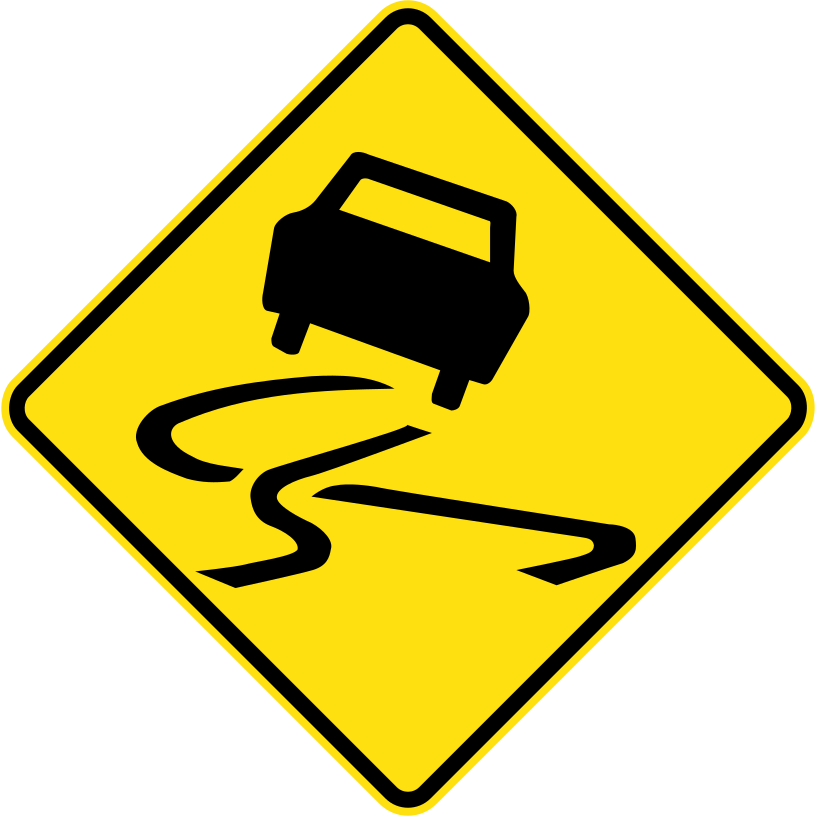
Slippery when wet The road may be slippery when wet. Slow down and increase your following distance.
Merge Traffic lanes merge ahead. Adjust your speed and merge safely.
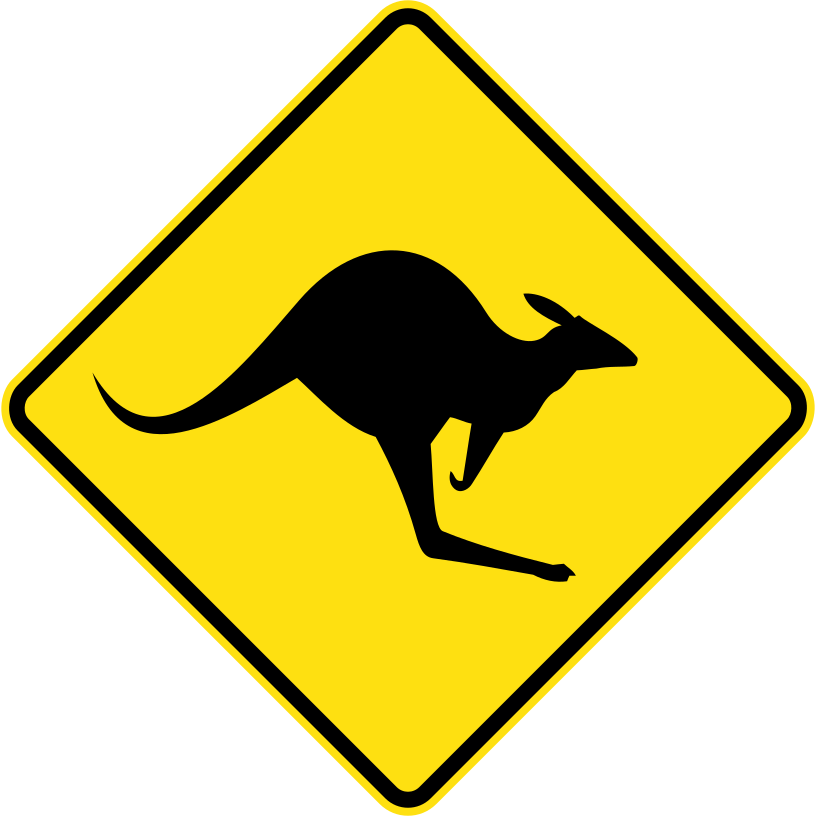
Kangaroos Kangaroos may be on the road. Slow down, especially at dawn and dusk, and brake in a straight line rather than swerving.
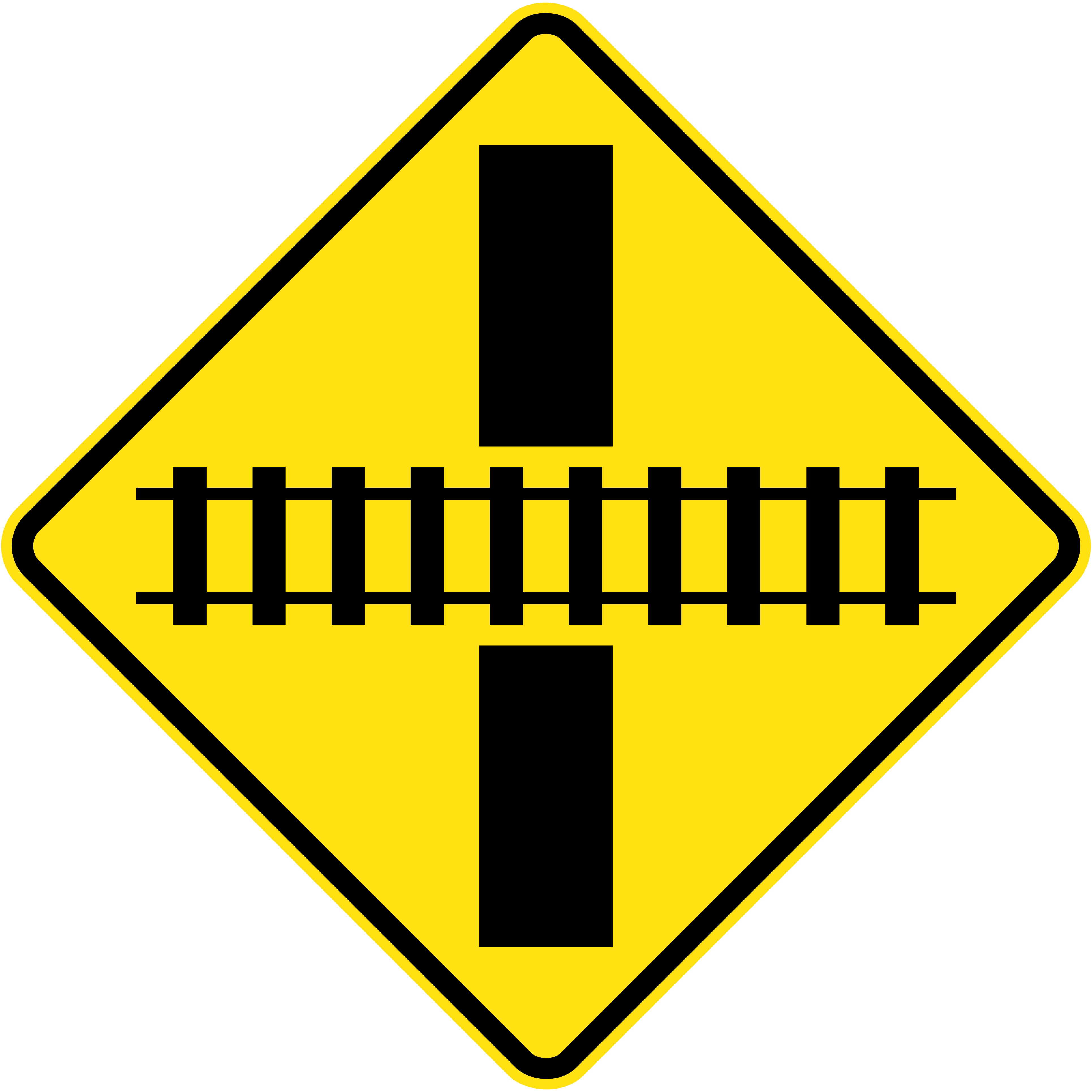
Railway level crossing ahead A railway crossing is ahead. Slow down, look and listen for trains.
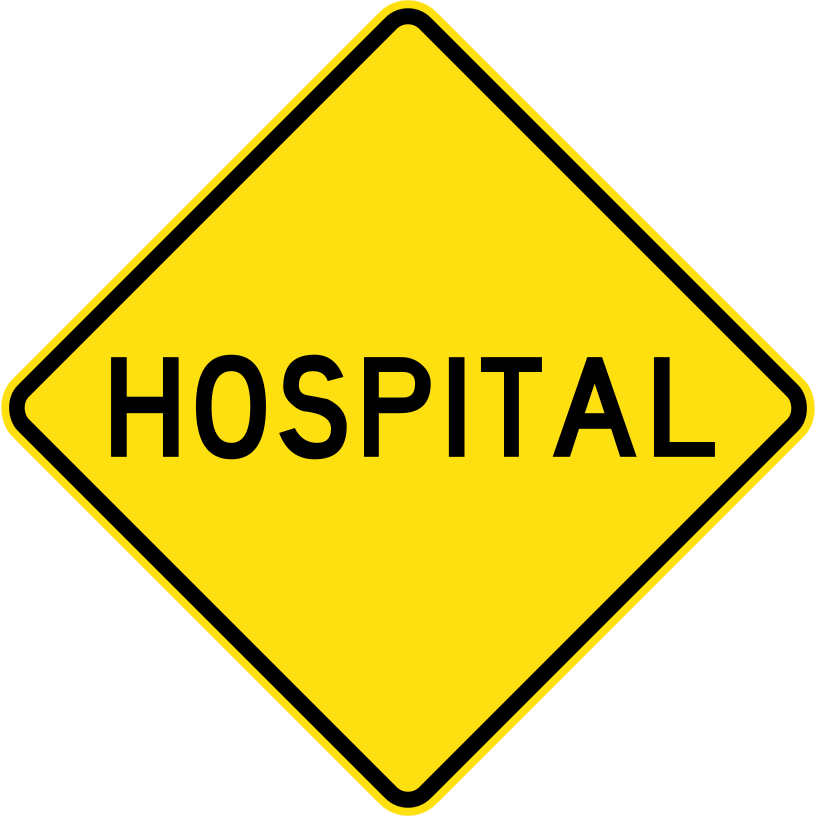
Hospital ahead A hospital entrance is ahead. Watch for ambulances and vehicles turning in and out.
Hairpin bend A very sharp bend that turns back on itself is ahead. Slow down well before it.
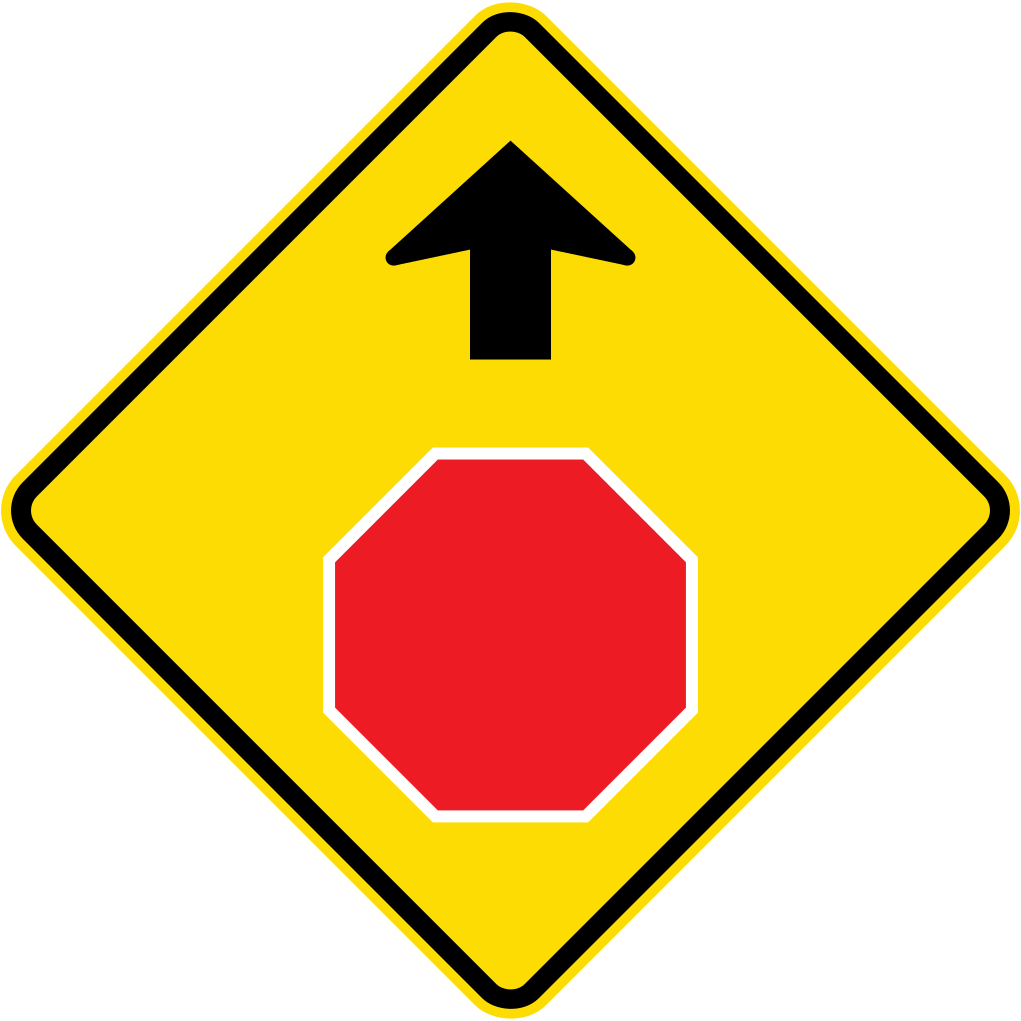
Stop sign ahead A Stop sign is ahead. Slow down and prepare to stop.
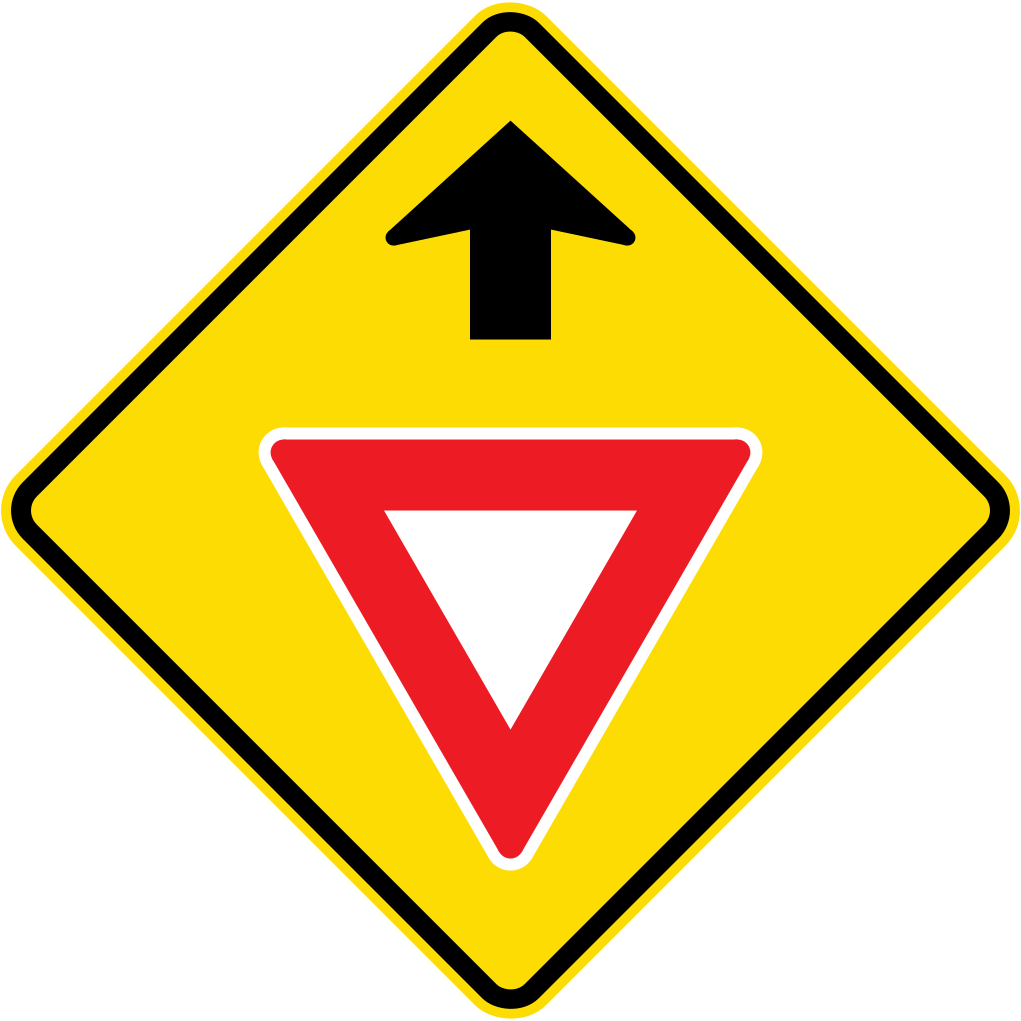
Give way sign ahead A Give way sign is ahead. Slow down and prepare to give way.
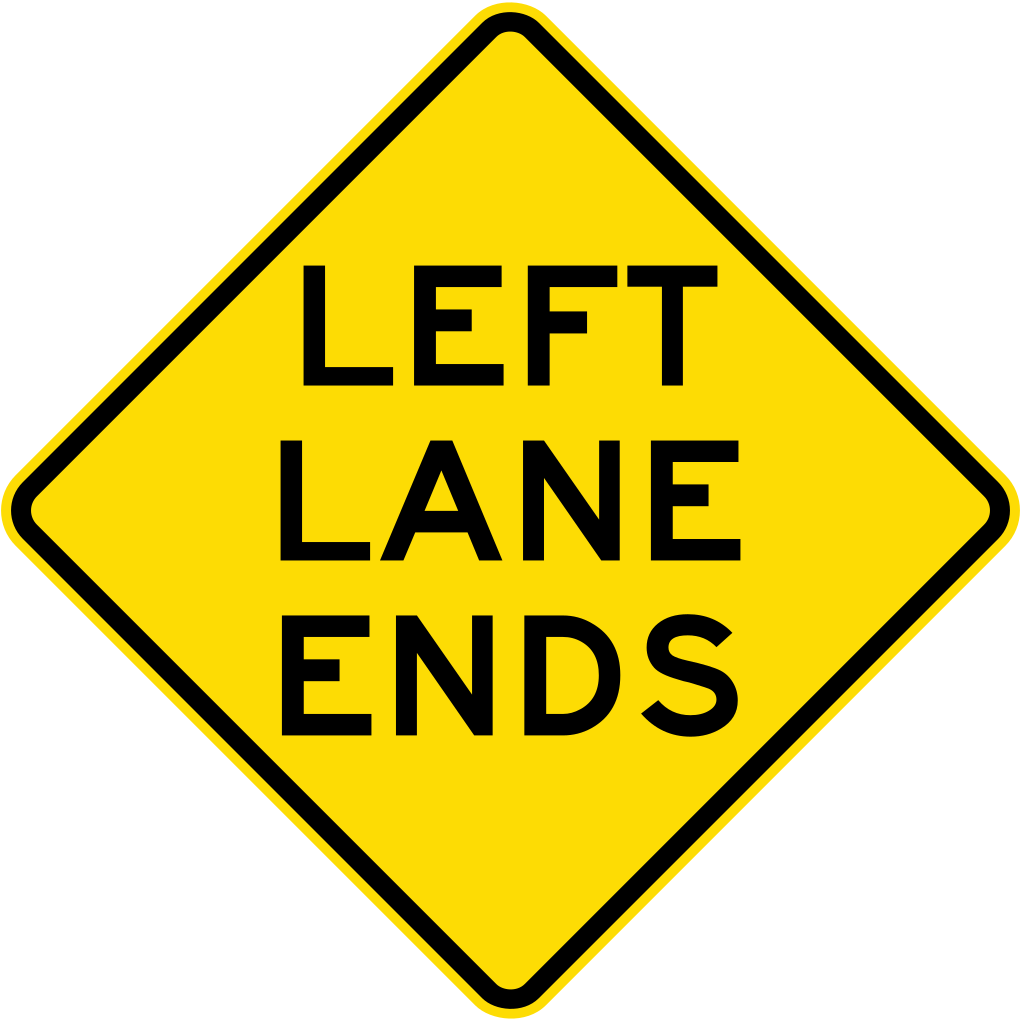
Left lane ends The left lane ends ahead. Merge right when it is safe, giving way to traffic in that lane.
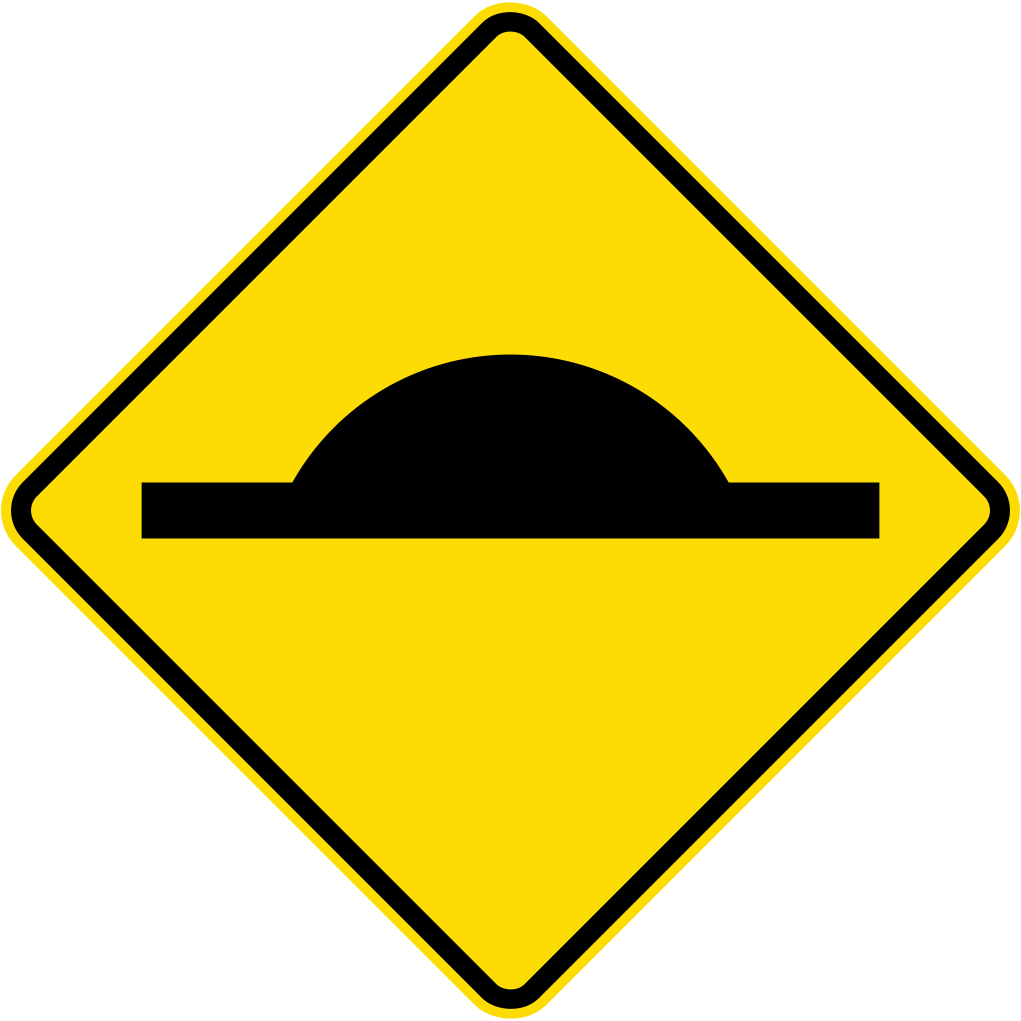
Hump A hump in the road is ahead. Slow down.
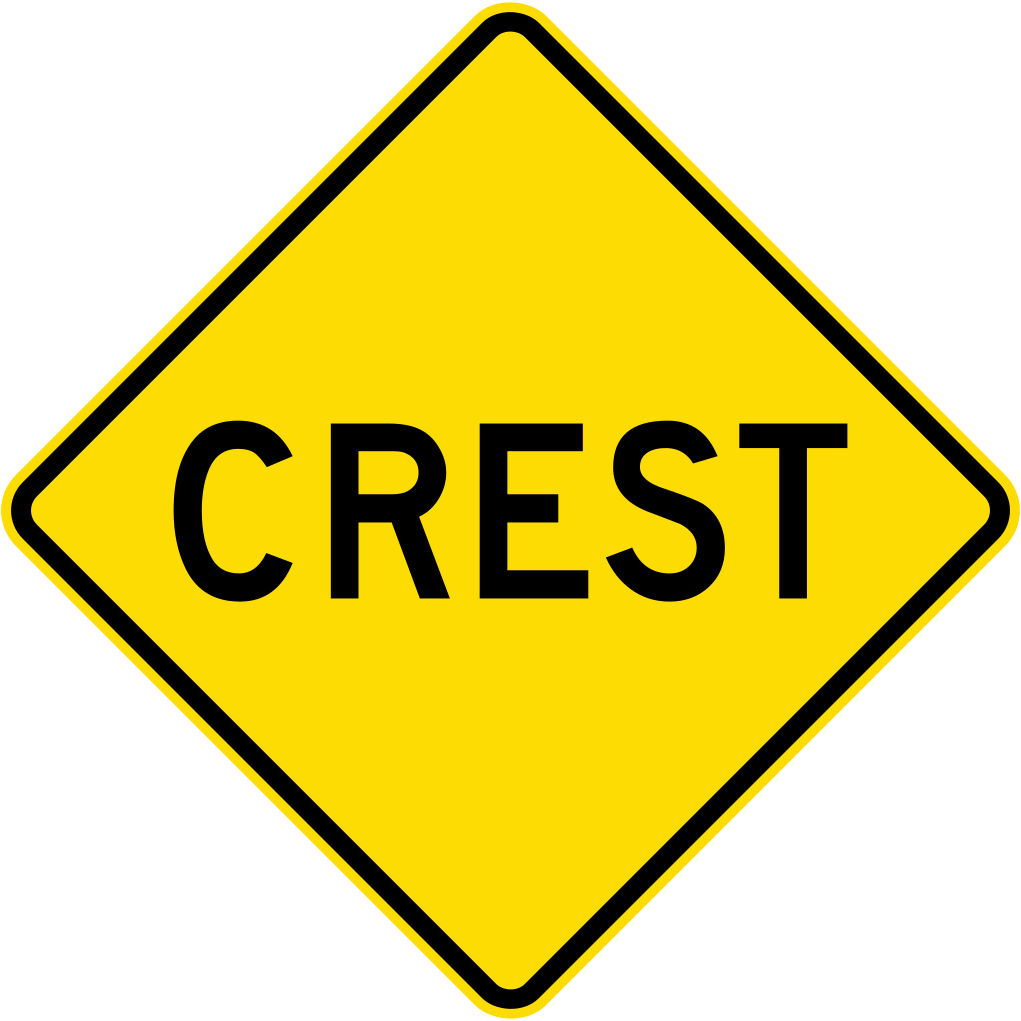
Crest You are approaching a crest where you cannot see far ahead. Slow down and keep left.
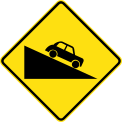
Steep descent A steep downhill grade is ahead. Use a lower gear to control your speed.
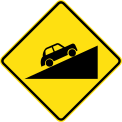
Steep ascent A steep uphill grade is ahead. Slow vehicles may be ahead of you.
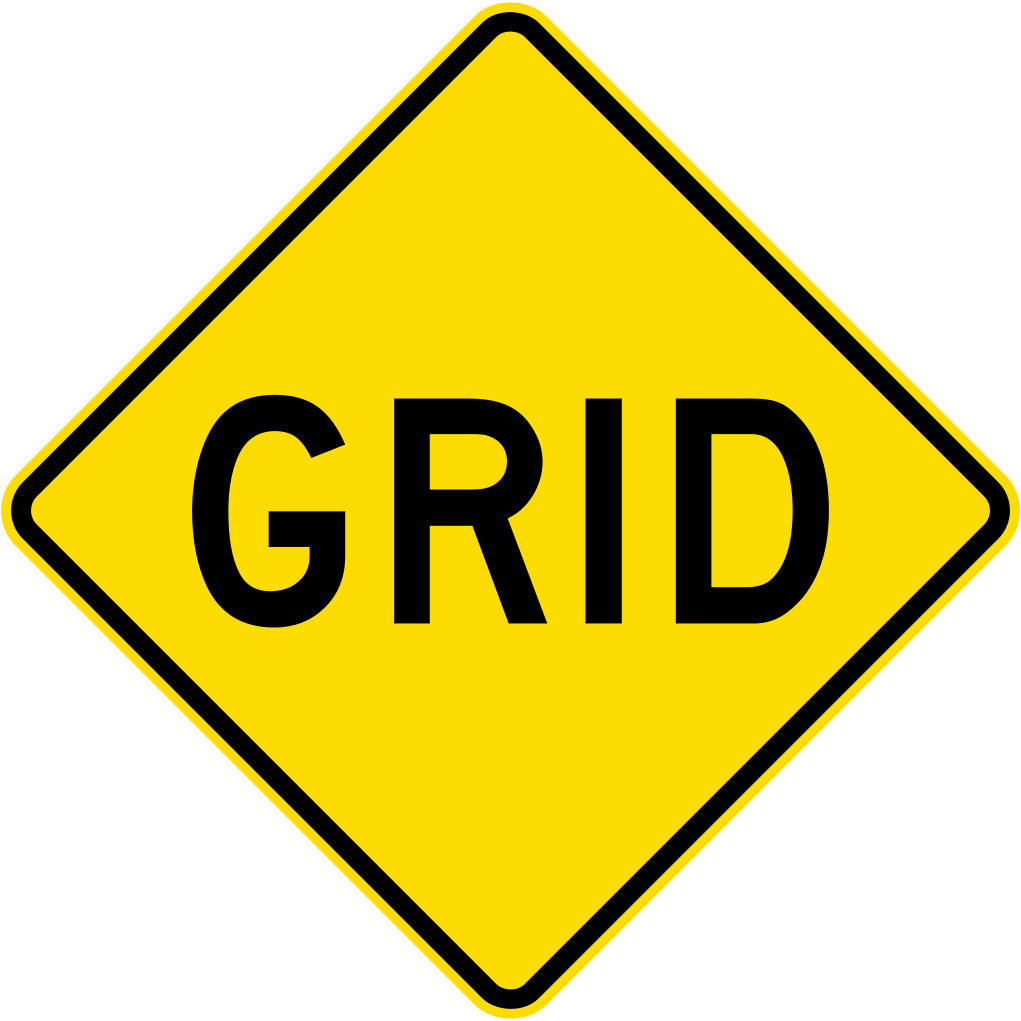
Grid A grid (metal bars across the road) is ahead. Slow down; livestock may be on the road beyond it.
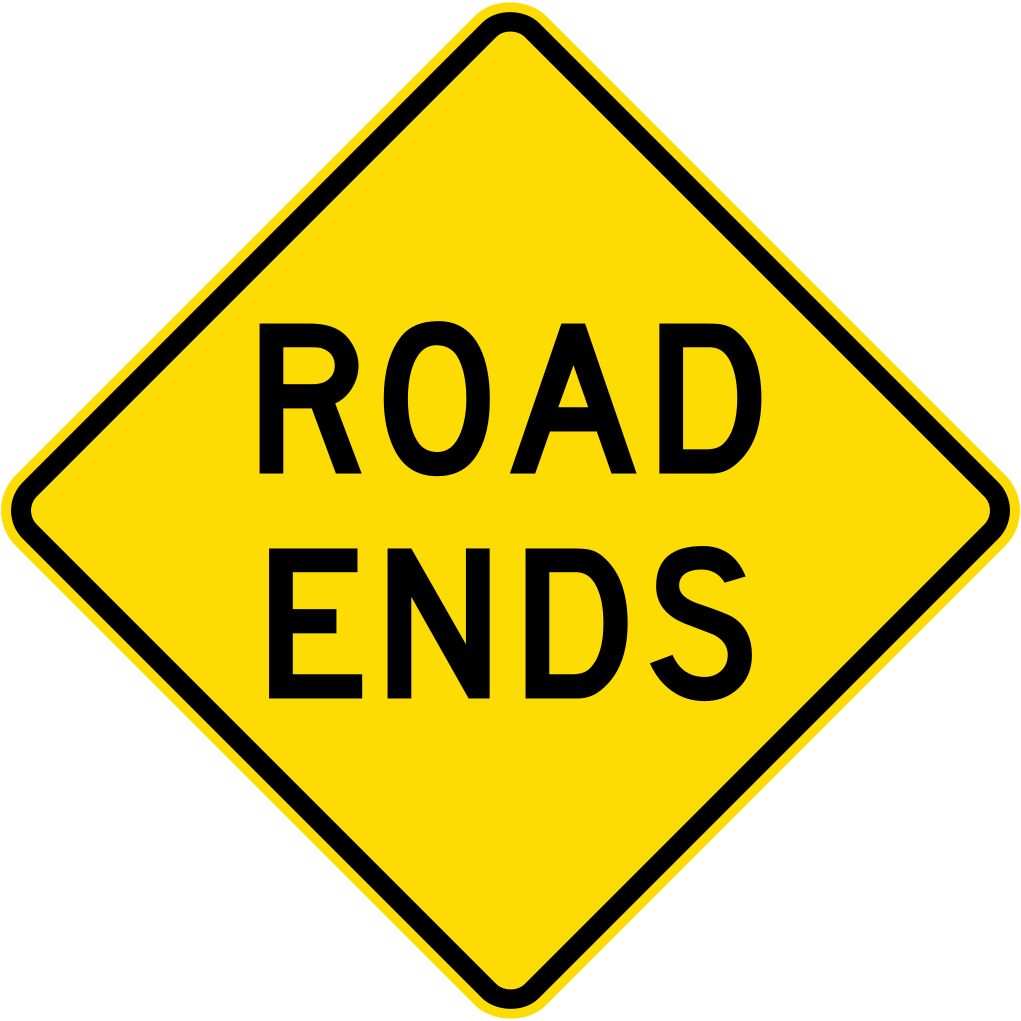
Road ends The road ends ahead. Slow down and be prepared to stop or turn.
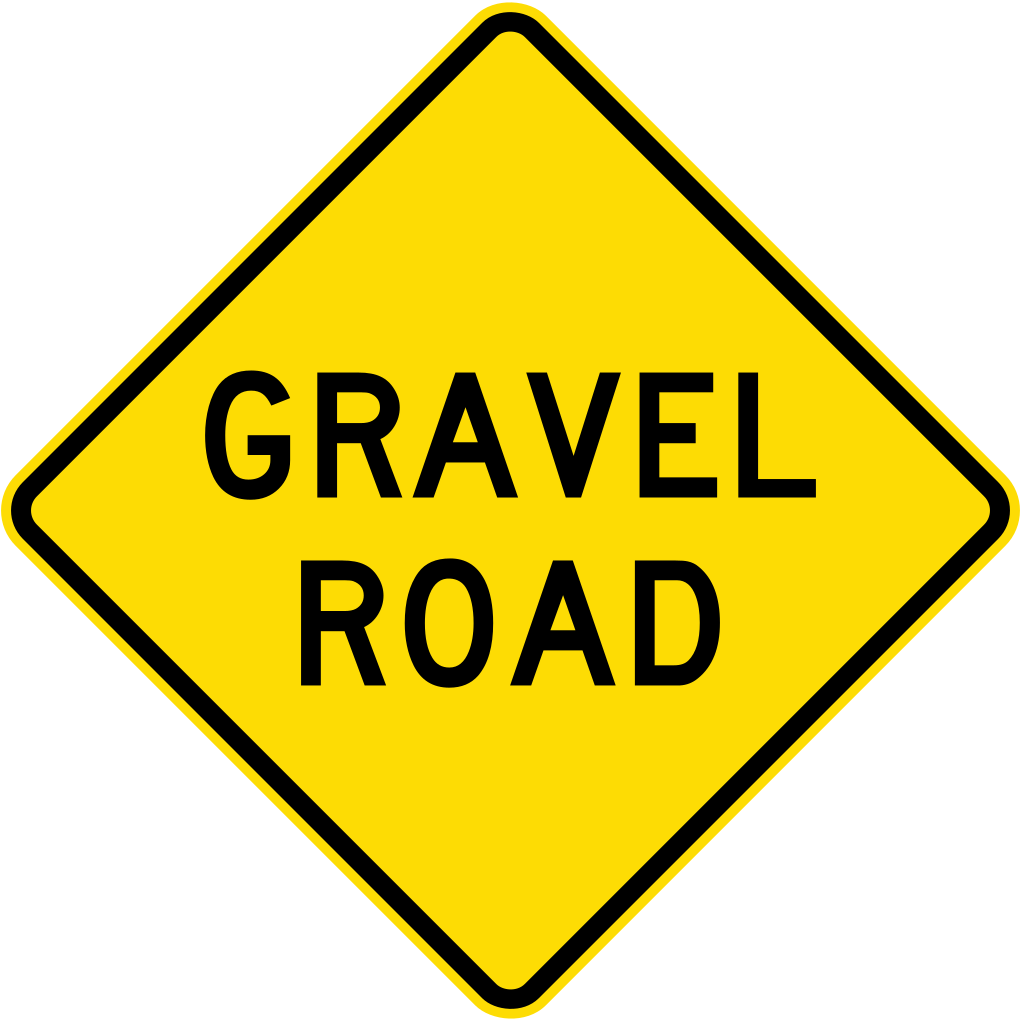
Gravel road The sealed road changes to gravel ahead. Slow down; braking and steering are harder on gravel.
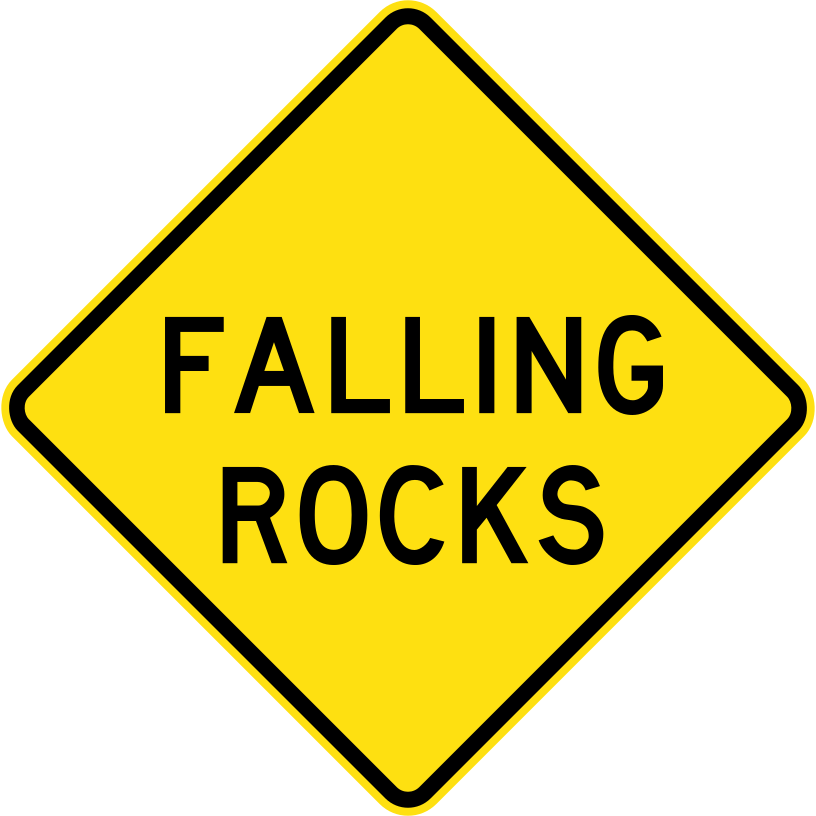
Falling rocks Rocks may fall onto the road ahead. Watch for rocks on the road and do not stop under cliffs.
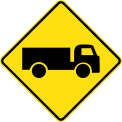
Trucks entering Trucks may be entering or crossing the road ahead. Be ready to slow down.
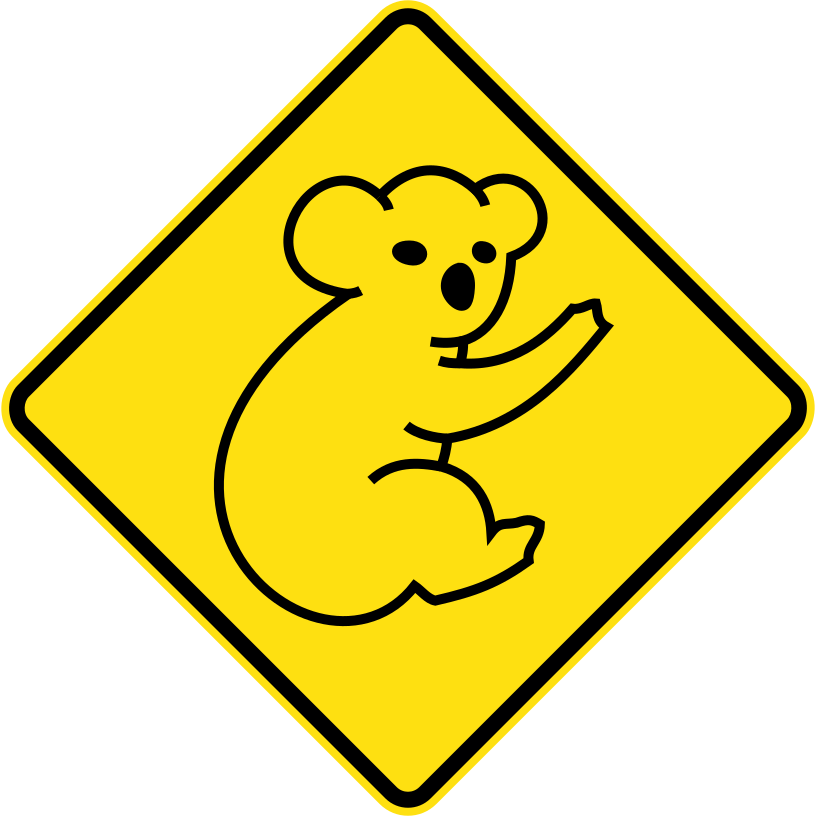
Koalas Koalas may be crossing the road. Slow down, especially at night.
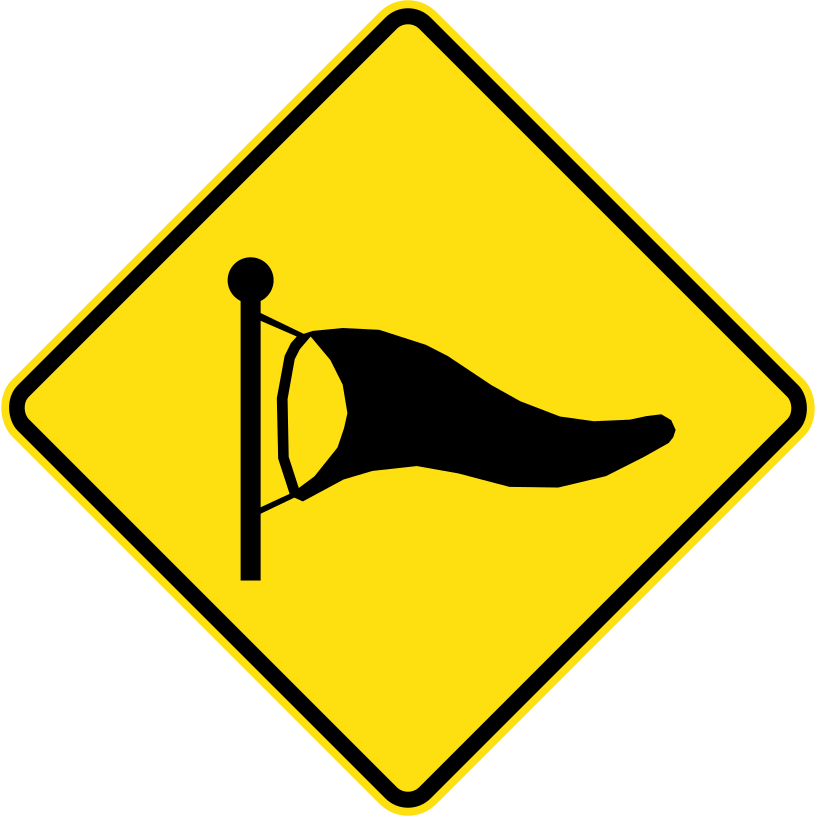
Crosswinds Strong side winds may affect your vehicle. Hold the steering wheel firmly and slow down.
Slow point A narrowing designed to slow traffic is ahead. Slow down and give way to oncoming vehicles if needed.
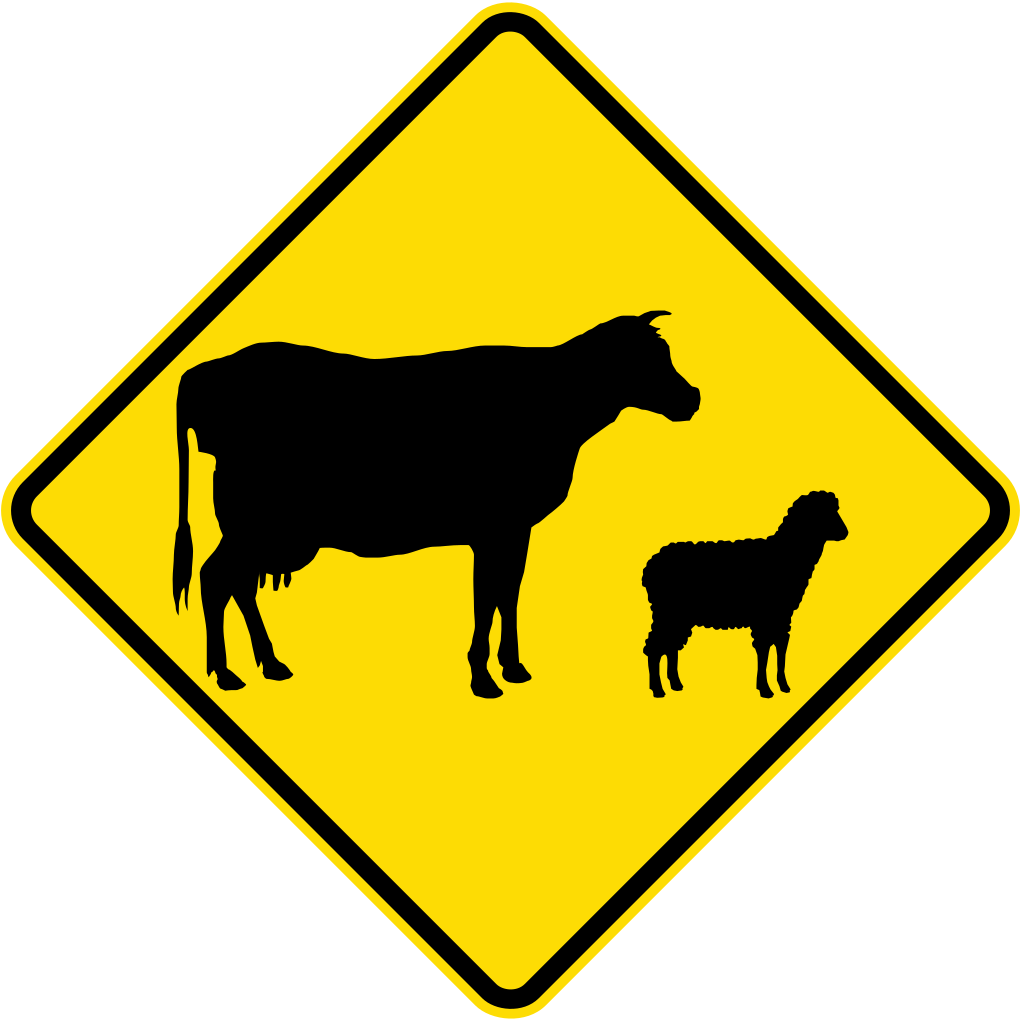
Livestock Farm animals may be on the road. Slow down and be ready to stop.
Uneven surface The road surface ahead is uneven. Slow down to keep control.
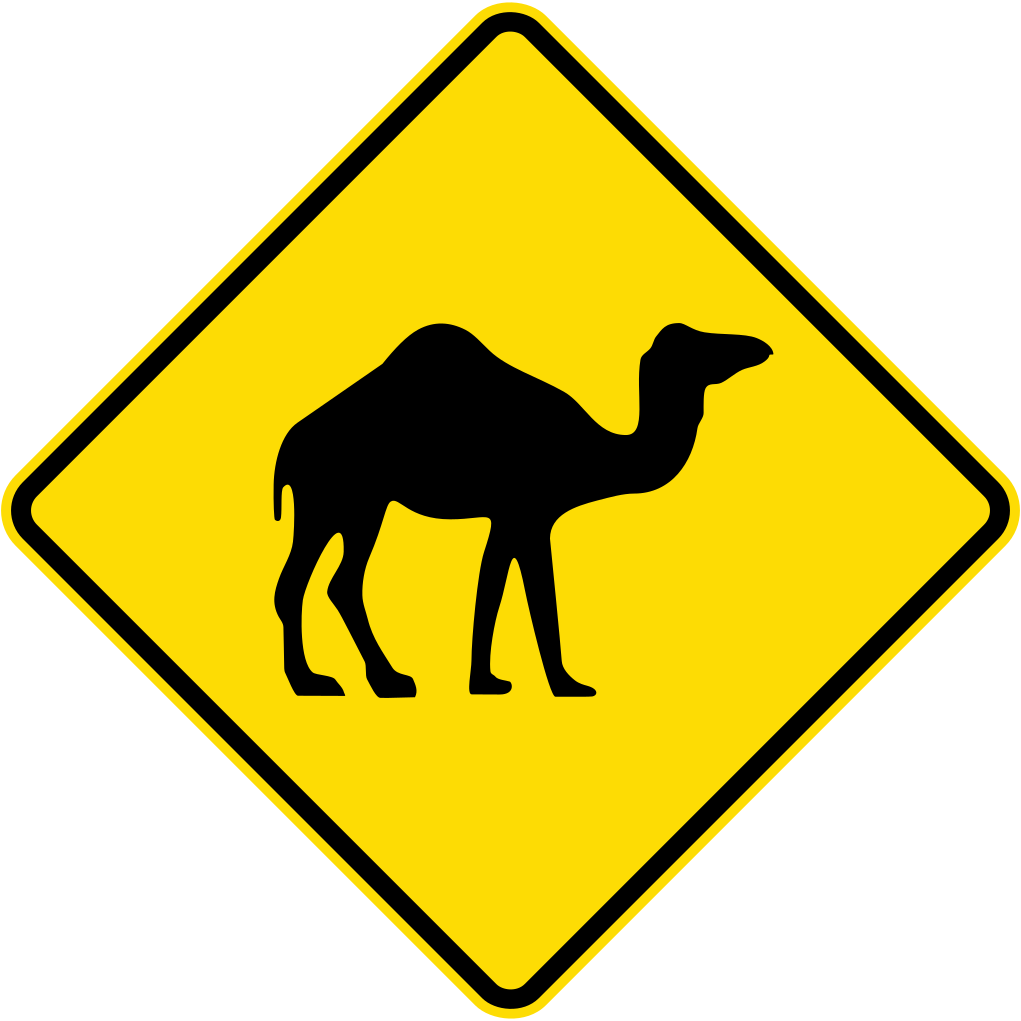
Camels Camels may be on the road. Slow down, especially at dawn, dusk and night.
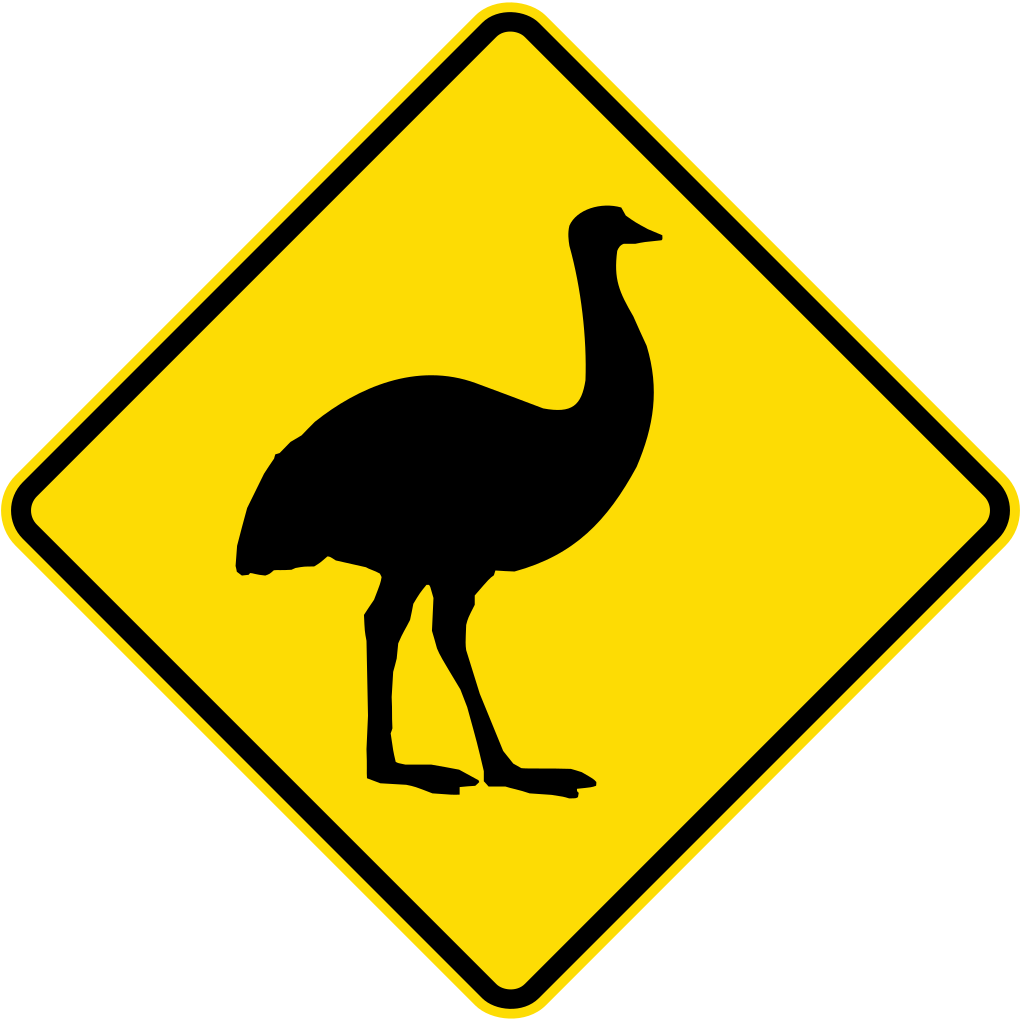
Emus Emus may be crossing the road. Slow down and be ready to brake.
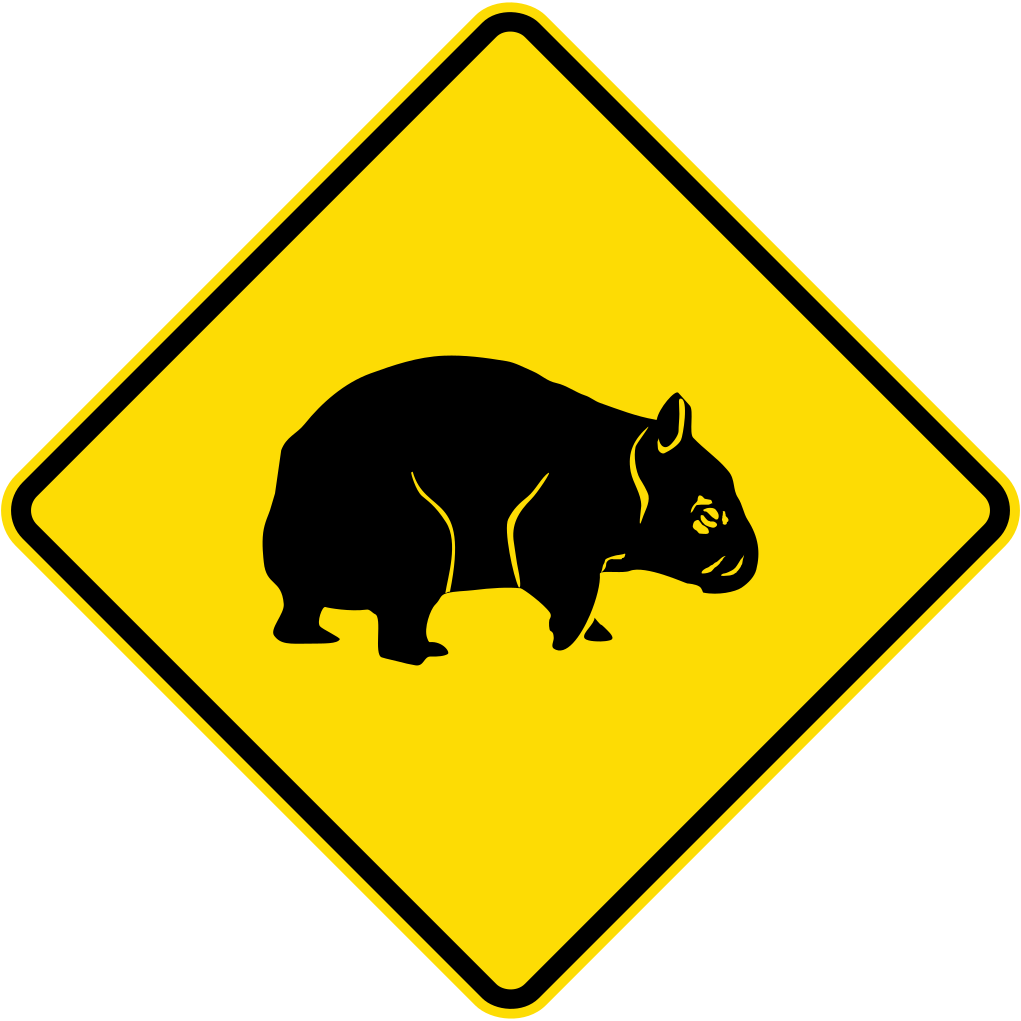
Wombats Wombats may be on the road. Slow down, especially at night.
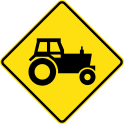
Farm machinery Slow farm machinery may be on the road. Be patient and overtake only when it is safe.
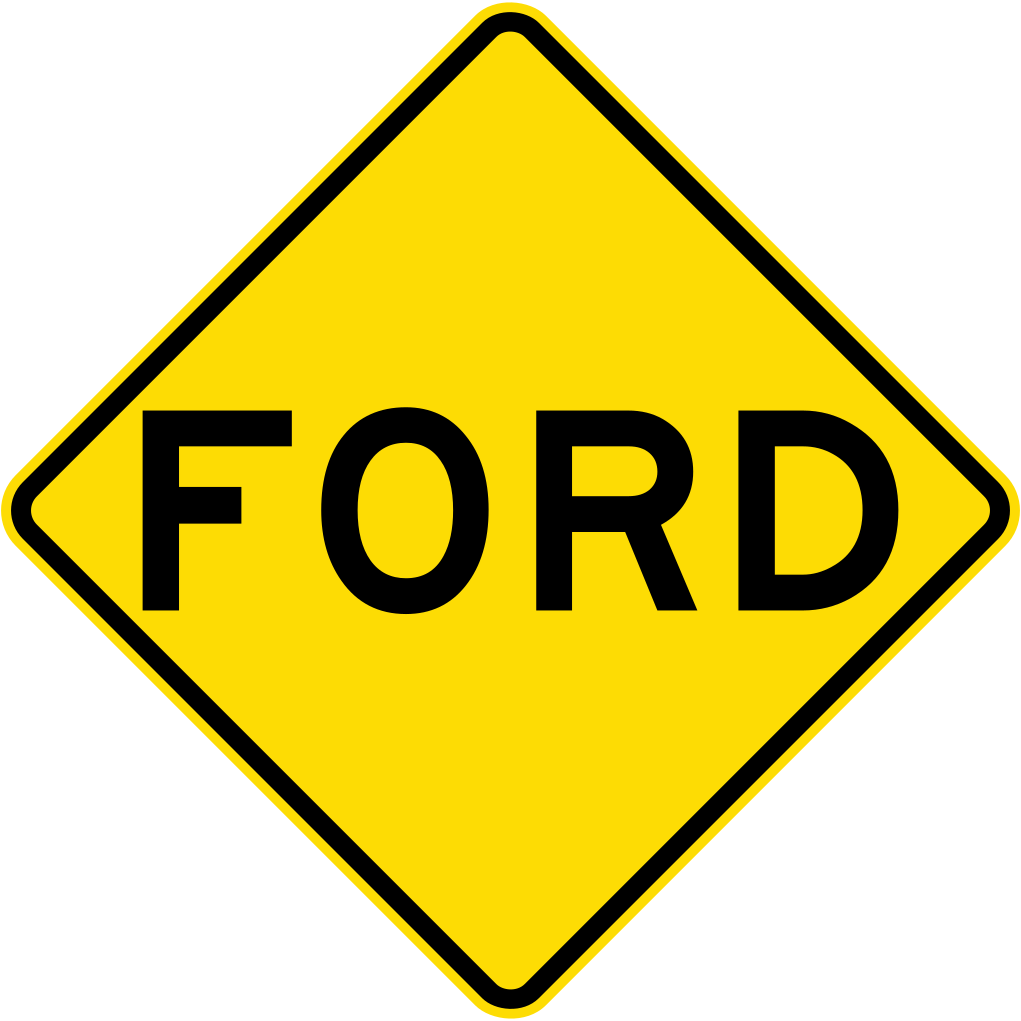
Ford The road crosses a waterway ahead. Check the water depth before crossing; do not enter floodwater.
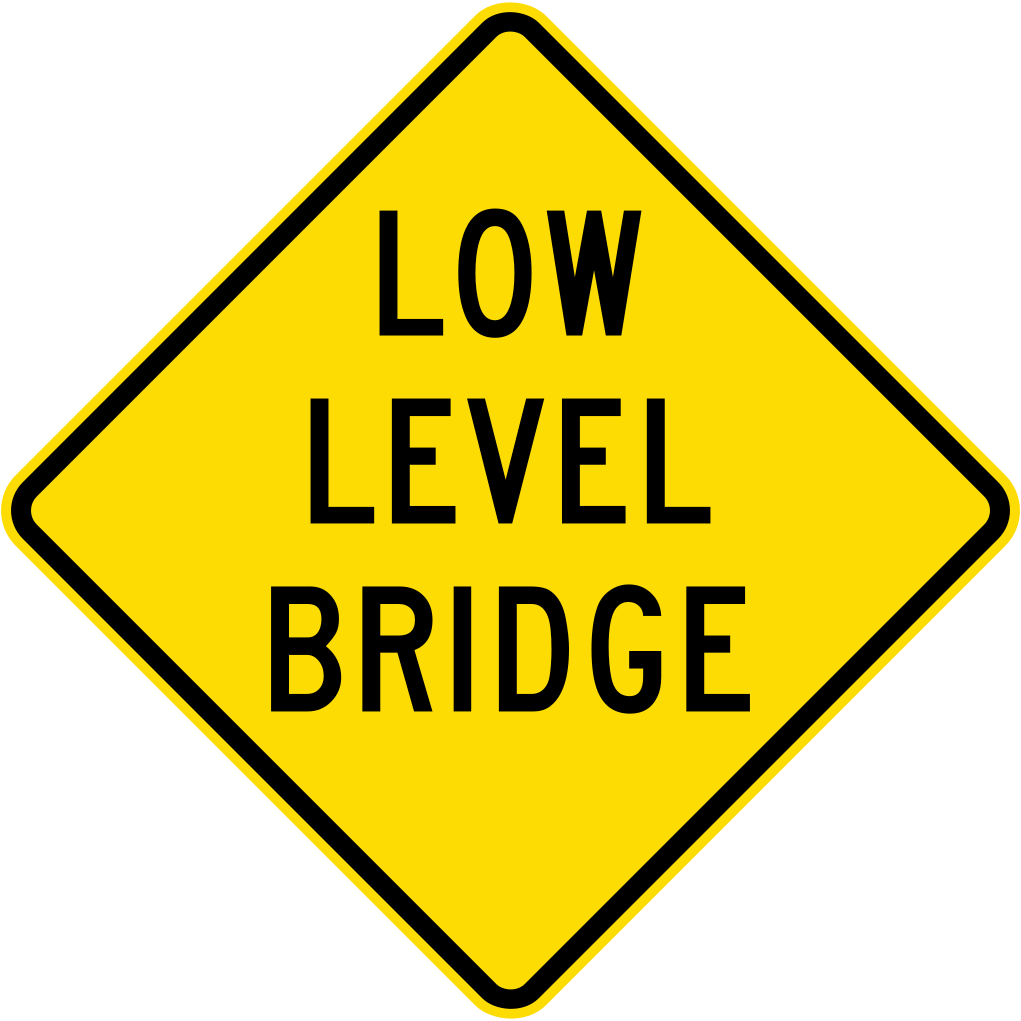
Low level bridge A bridge that may be covered by water is ahead. Do not cross if it is flooded.
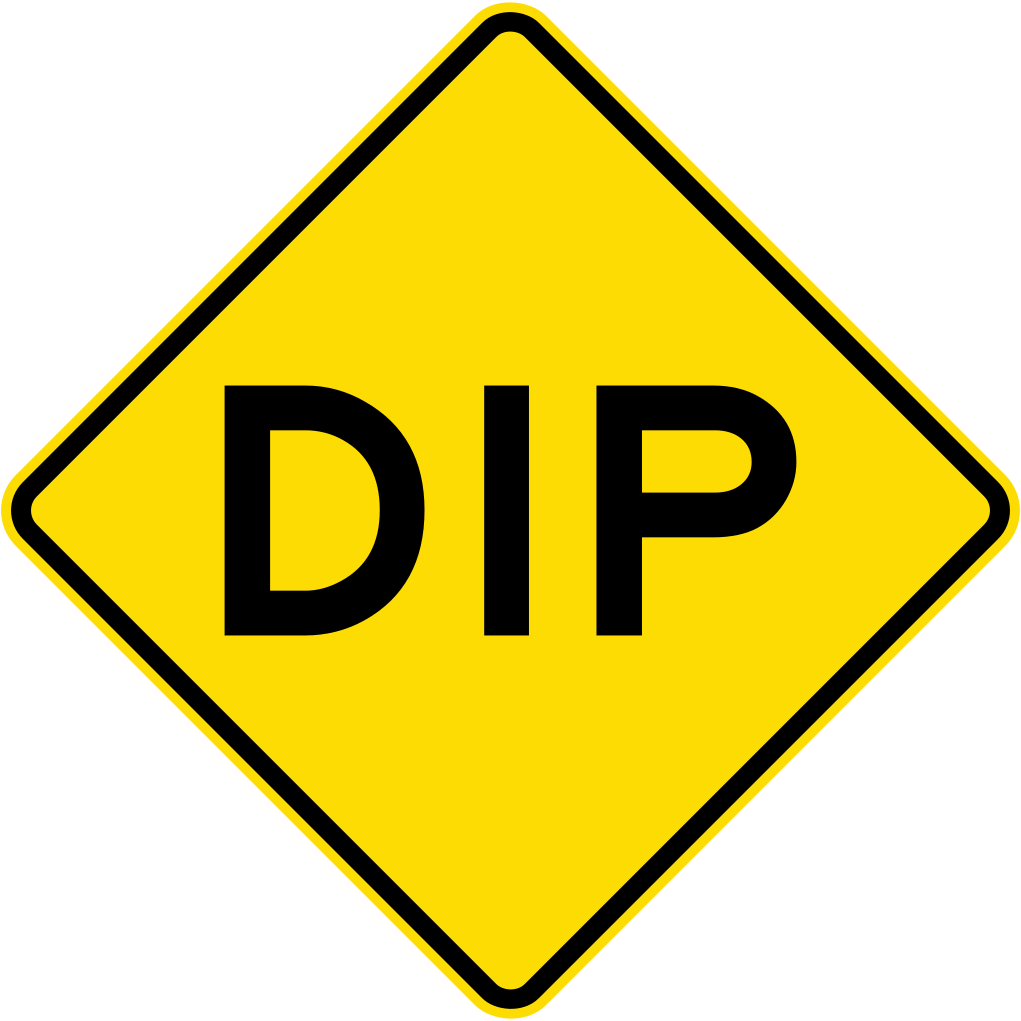
Dip A sudden dip in the road is ahead. Slow down; water may collect in the dip.
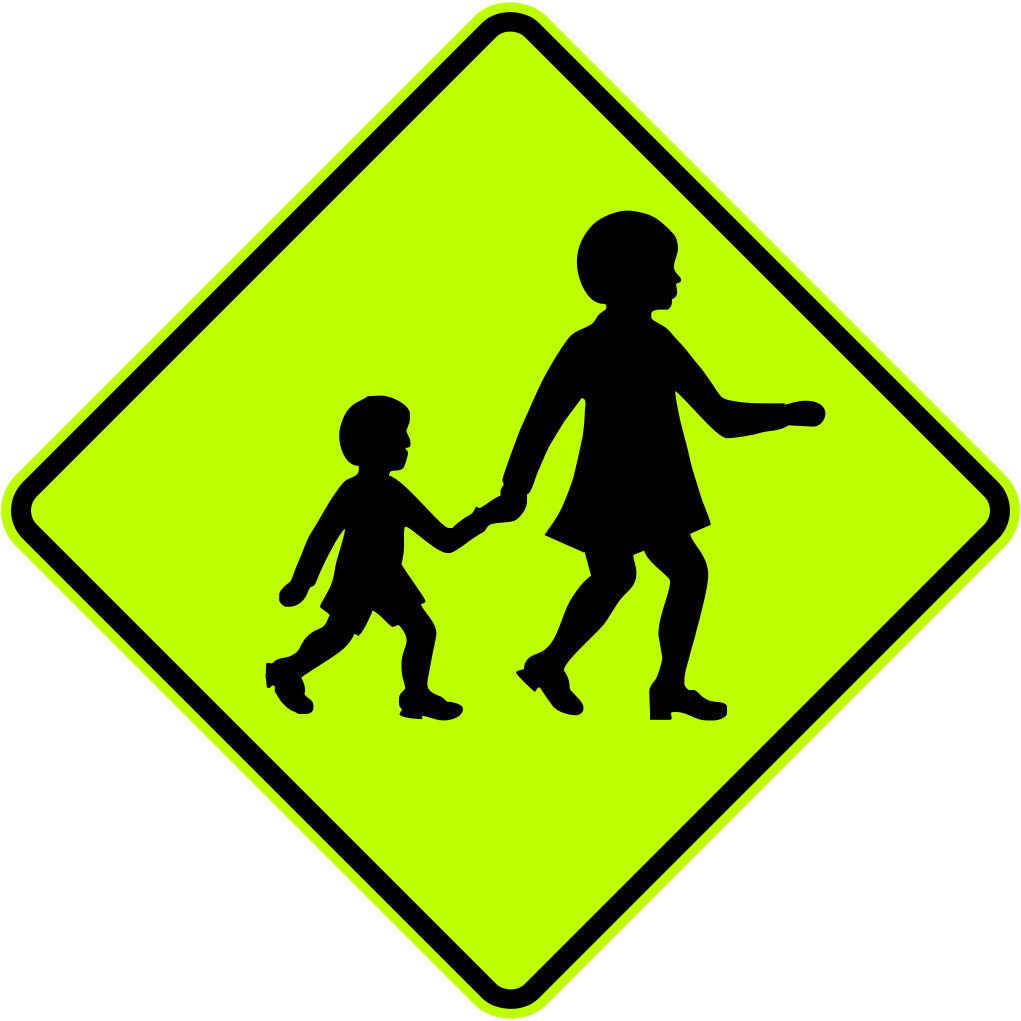
Children Children may be crossing or playing nearby. Slow down and watch out for children.
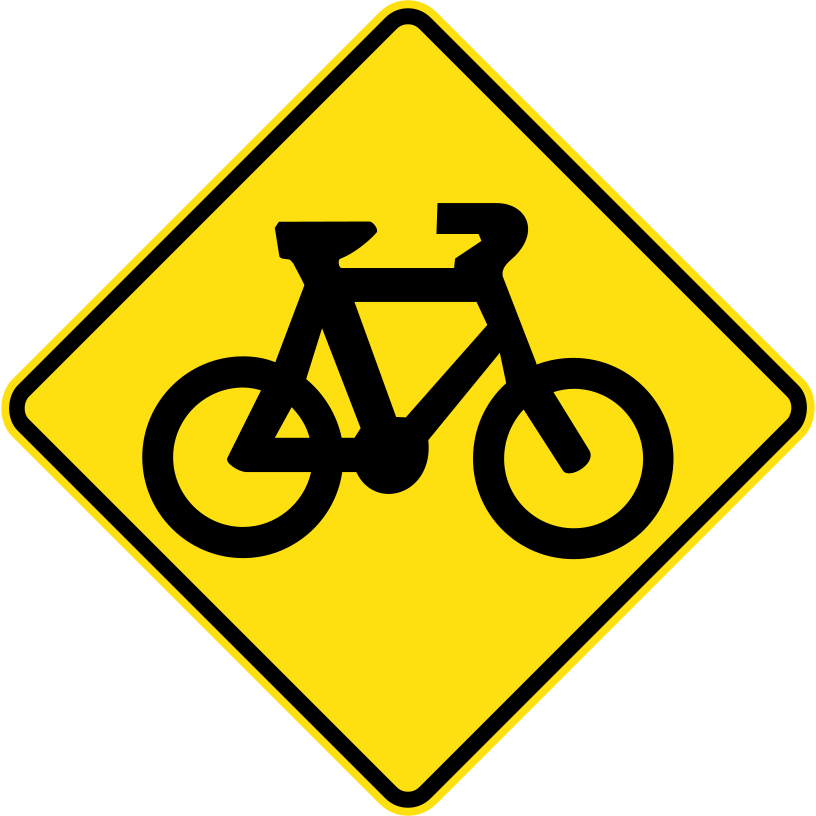
Bicycles Look out for bicycles on or crossing the road. Give cyclists plenty of room.
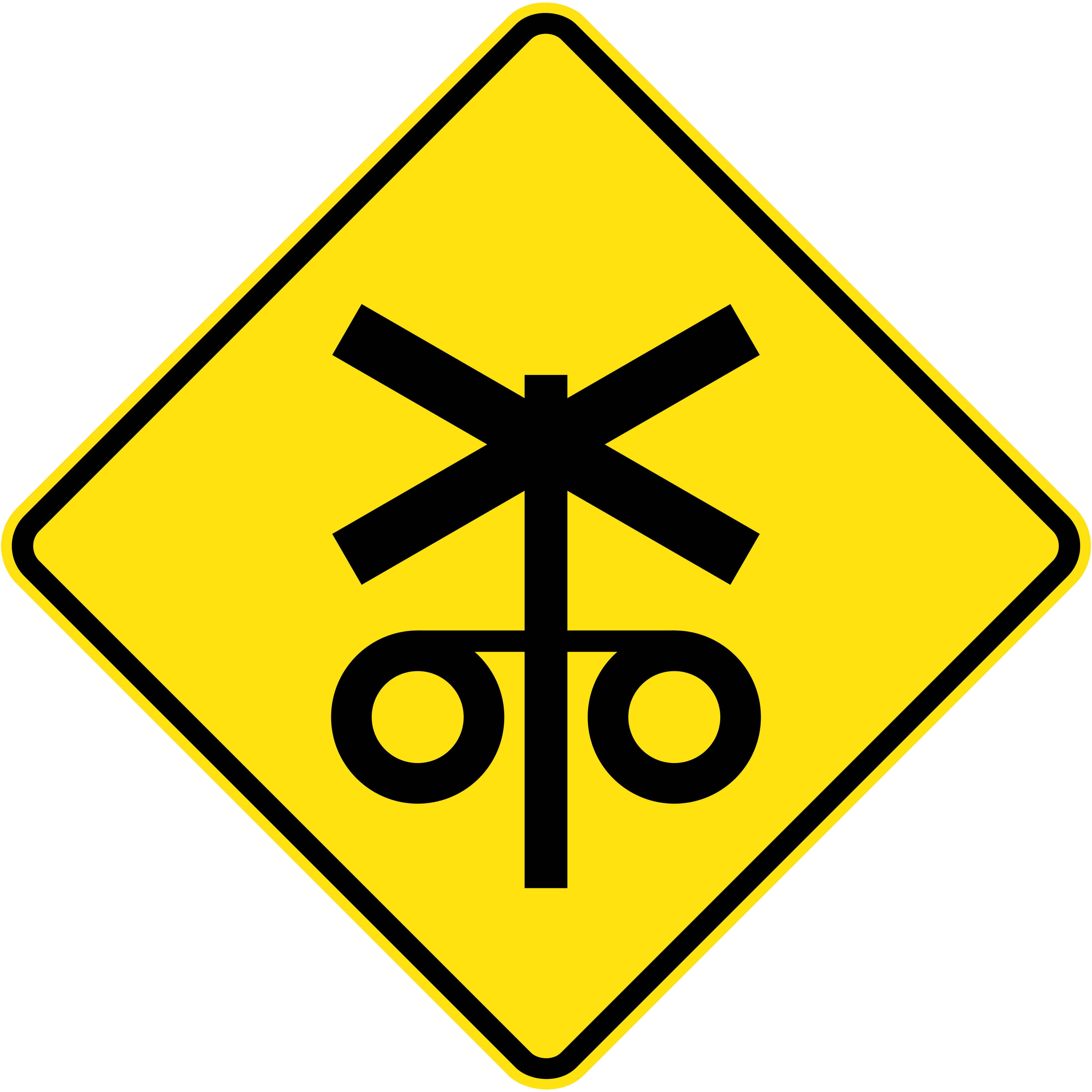
Railway crossing with flashing lights ahead A level crossing with flashing lights is ahead. Slow down and be ready to stop when the lights flash.
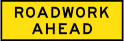
Roadwork Roadwork ahead. Slow down and obey any roadwork speed limit.
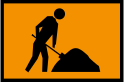
Workers ahead Workers are on or near the road ahead. Slow down and obey any road work speed limit.
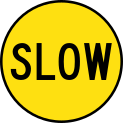
Slow (traffic controller) A traffic controller is showing the SLOW side of the bat. Drive slowly past the work site.
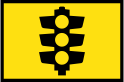
Traffic signals ahead (road work) Portable traffic lights control traffic ahead. Be ready to stop.
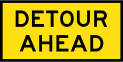
Detour ahead A detour starts ahead. Get ready to follow the detour signs.
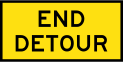
End detour The detour ends here. Return to your normal route.
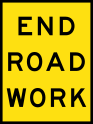
End road work The road work area ends. The normal speed limit applies again unless signed otherwise.
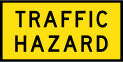
Traffic hazard There is a hazard on the road ahead, such as a crash or debris. Slow down and be ready to stop.
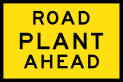
Road plant ahead Road machinery is working ahead. Slow down and watch for machines entering the road.
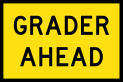
Grader ahead A road grader is working ahead. Slow down and pass only when it is safe.
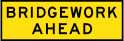
Bridge work ahead Work is being done on a bridge ahead. Slow down and be ready for lane changes.
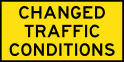
Changed traffic conditions The road or traffic pattern ahead has changed. Slow down and read the new signs and lines.
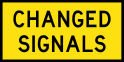
Changed signals Traffic signals ahead have changed how they work. Watch the lights carefully.
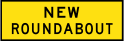
New roundabout A new roundabout is ahead. Slow down and give way to vehicles already on the roundabout.
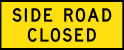
Side road closed A side road ahead is closed. Use another route to reach it.
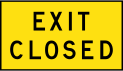
Exit closed The exit ahead is closed. Use the next exit or follow the signed alternative.
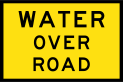
Water over road Water is covering the road ahead. Slow down; if it is flooded, turn around.
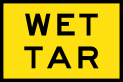
Wet tar The road has fresh tar. Slow down to avoid skidding and splashing tar.
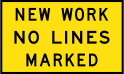
New work, no lines marked The new road surface has no lines yet. Keep left and take care when overtaking.
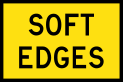
Soft edges The road edges are soft. Keep your wheels on the sealed road.
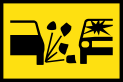
Loose stones Loose stones are on the road. Slow down and keep well back from other vehicles.
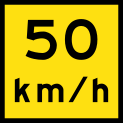
Road work speed The speed shown is the safe speed through the road work. Slow down to this speed.
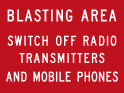
Blasting area Blasting is taking place nearby. Switch off radio transmitters and mobile phones.
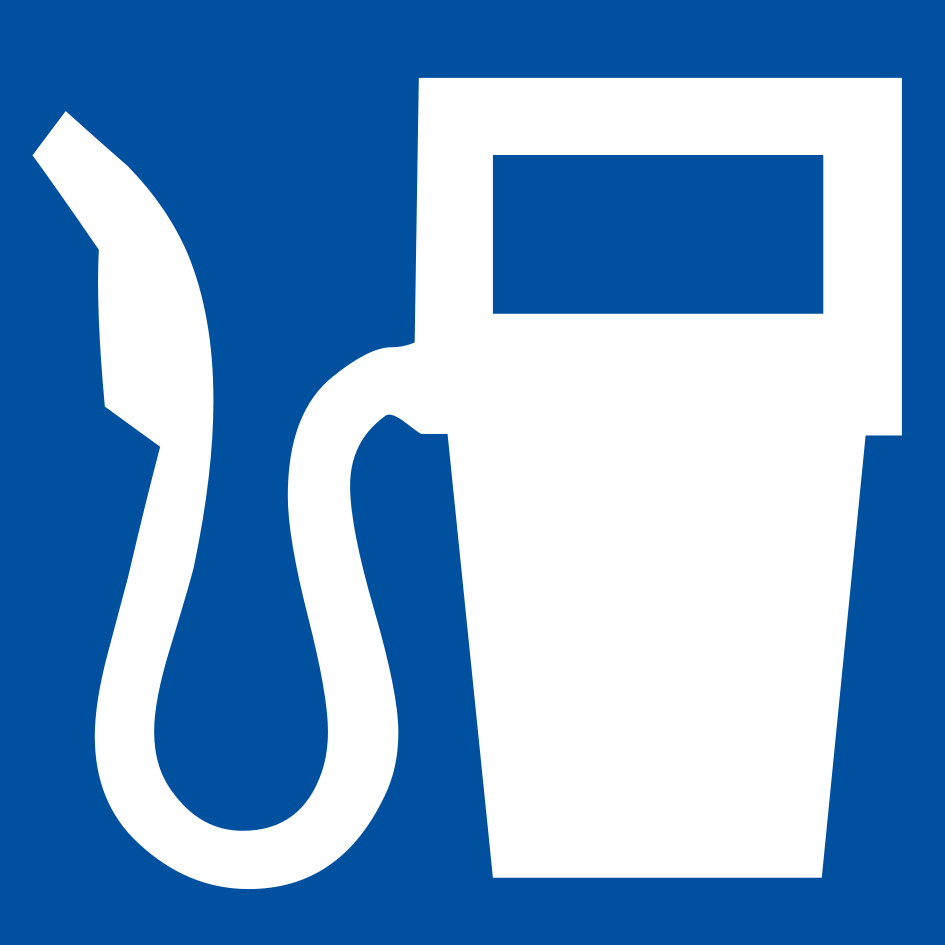
Fuel Fuel (petrol) is available. Service signs are blue with white symbols.

Visitor information centre A visitor information centre is nearby. Service signs are blue with white symbols.
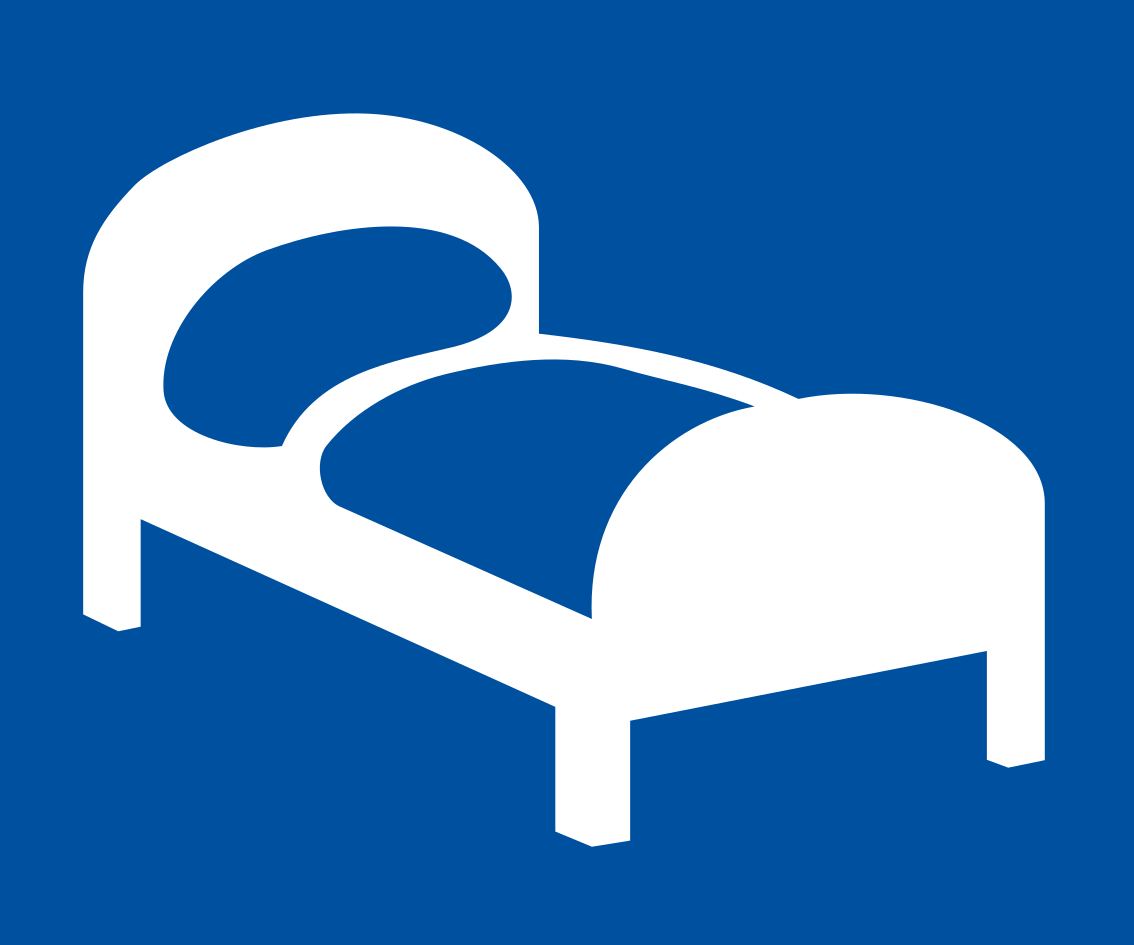
Accommodation Accommodation (hotel or motel) is nearby. Service signs are blue with white symbols.
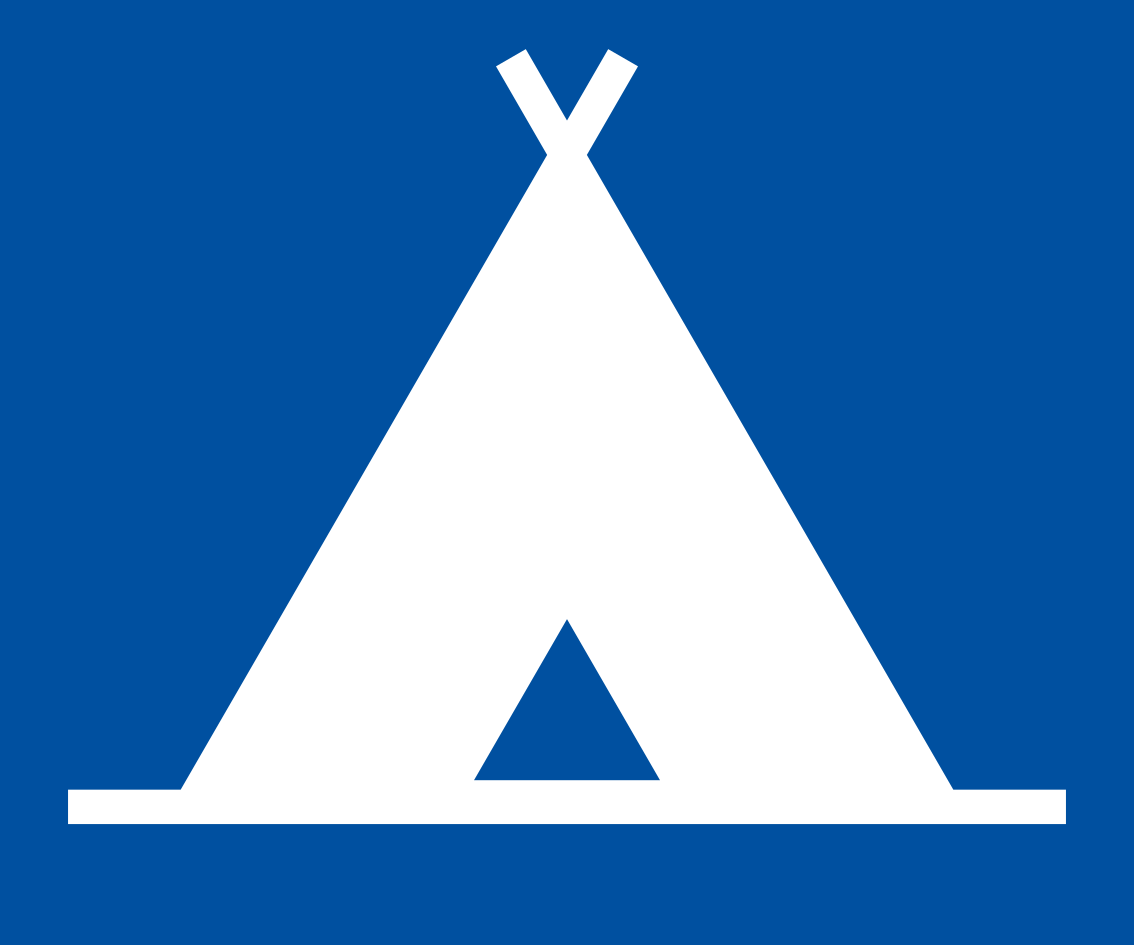
Camping area A camping site is nearby. Service signs are blue with white symbols.
Rest area A rest area is ahead. Stop and rest at least every two hours on long drives.
Parking area A parking area is nearby. Service signs are blue with white symbols.
Toilets Toilets are available. Often shown at rest areas.
Police station A police station is nearby. Service signs are blue with white symbols.
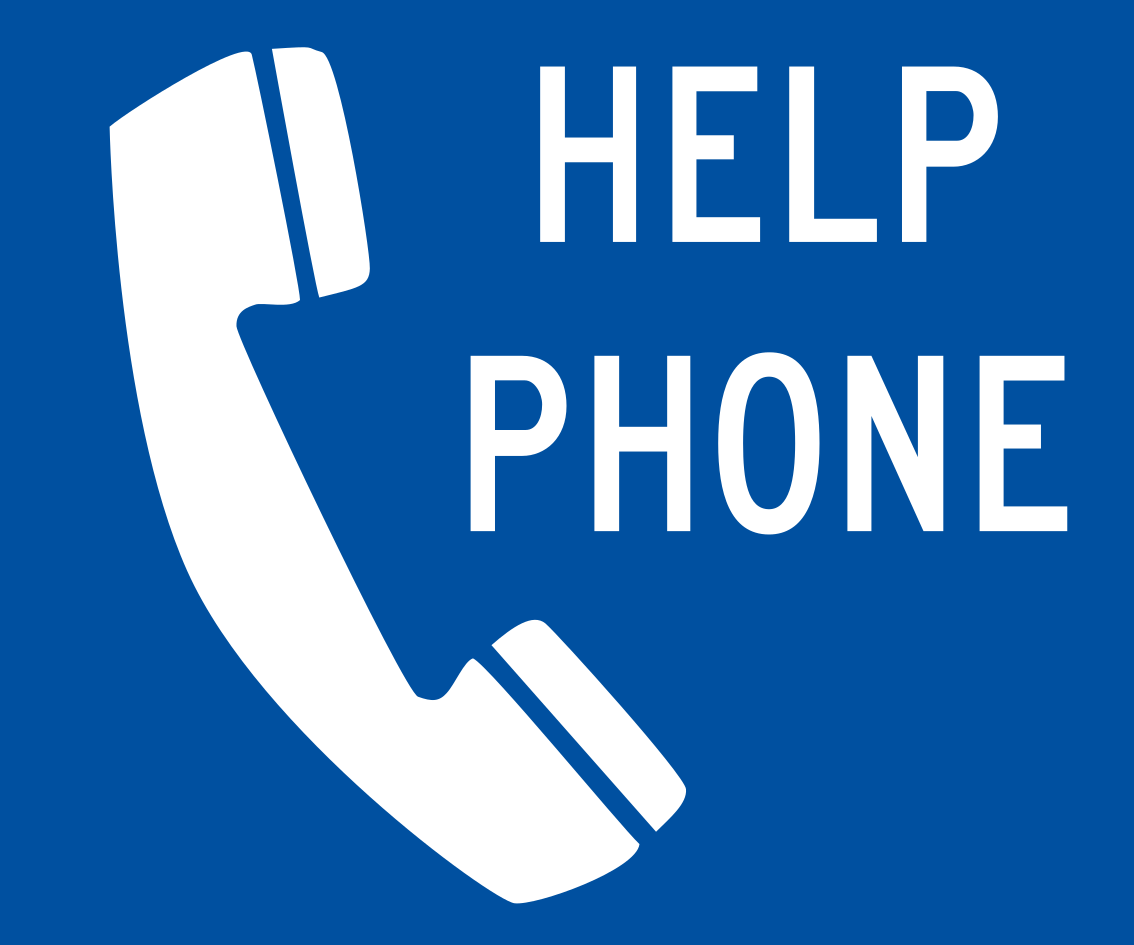
Emergency telephone An emergency telephone is available. Often on motorways and in tunnels.
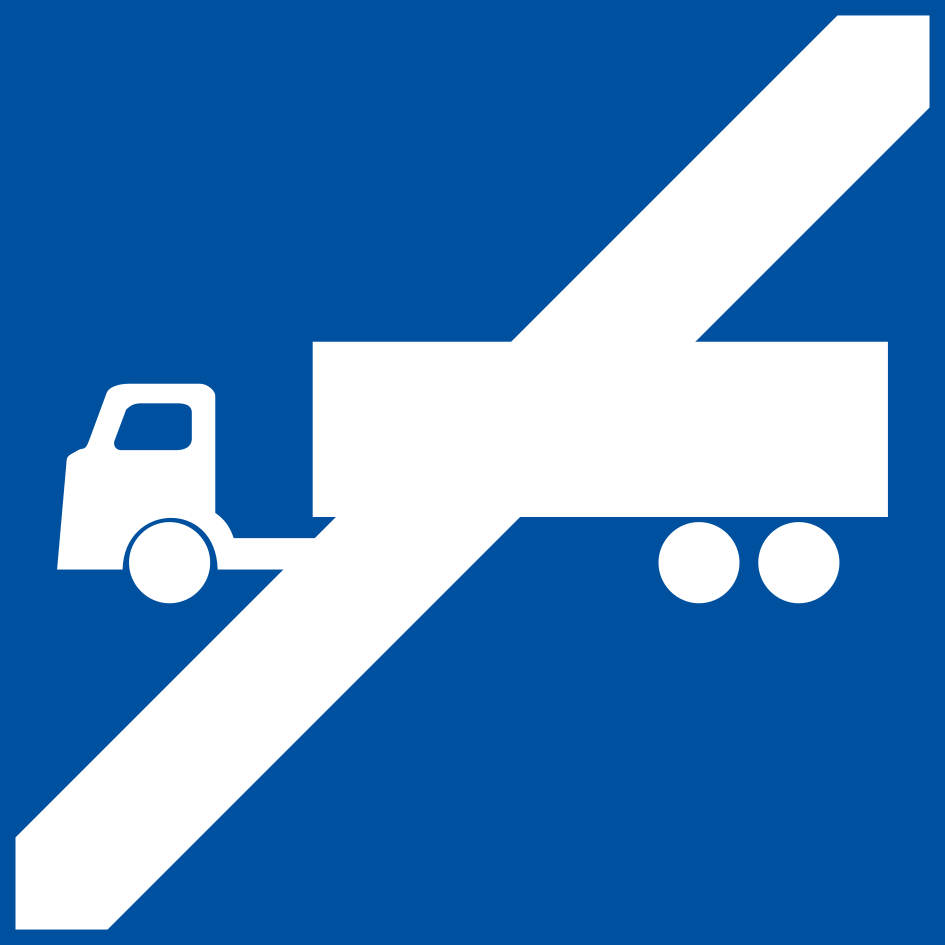
Unsuitable for trucks The road ahead is unsuitable for trucks. Truck drivers should take another route.
National Highway route marker Marks a route of the National Highway network. The number identifies the highway.
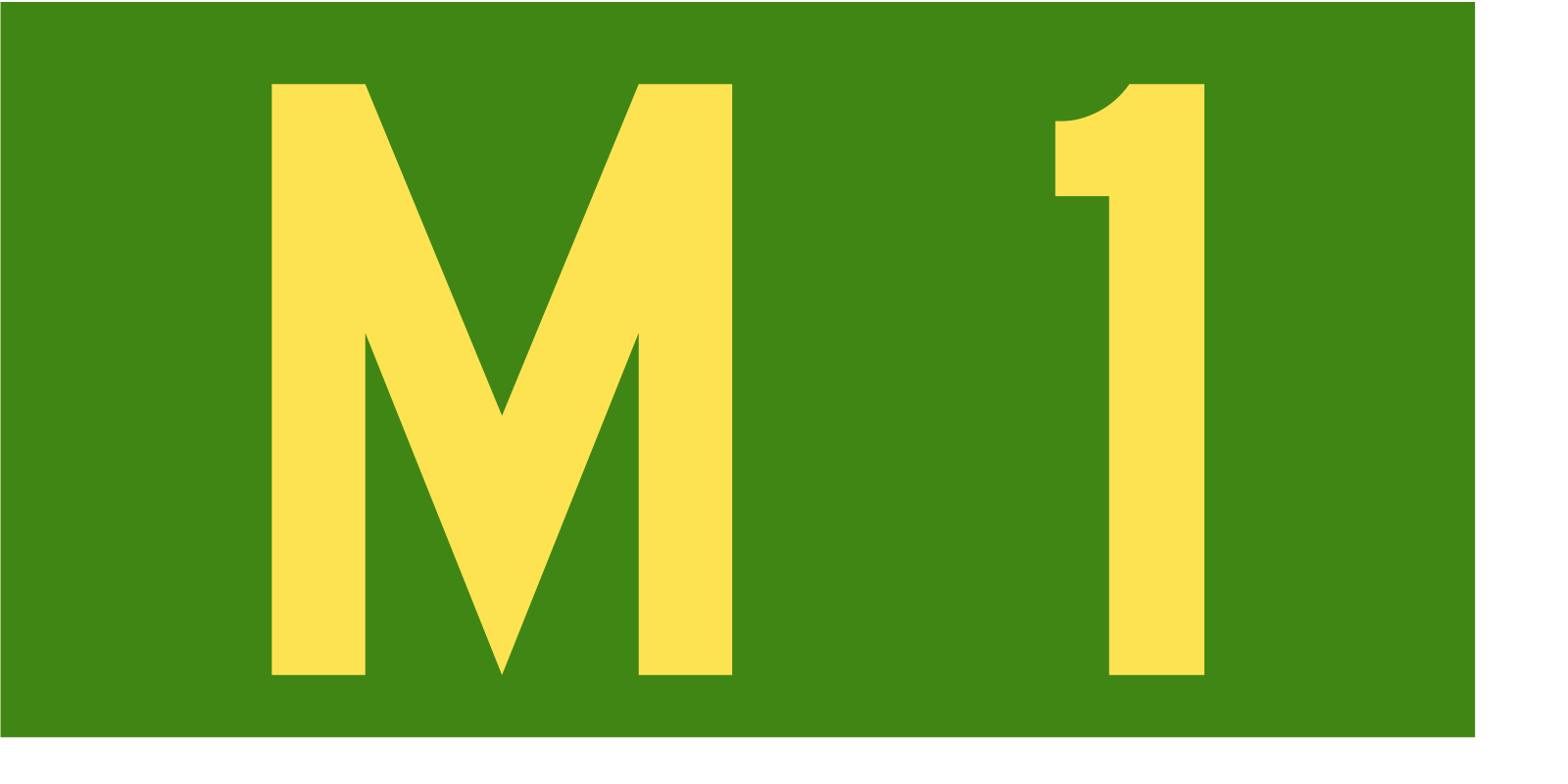
Motorway route marker (M route) An 'M' route marker shows a motorway or freeway route. A, B and C markers show other routes in order of importance.
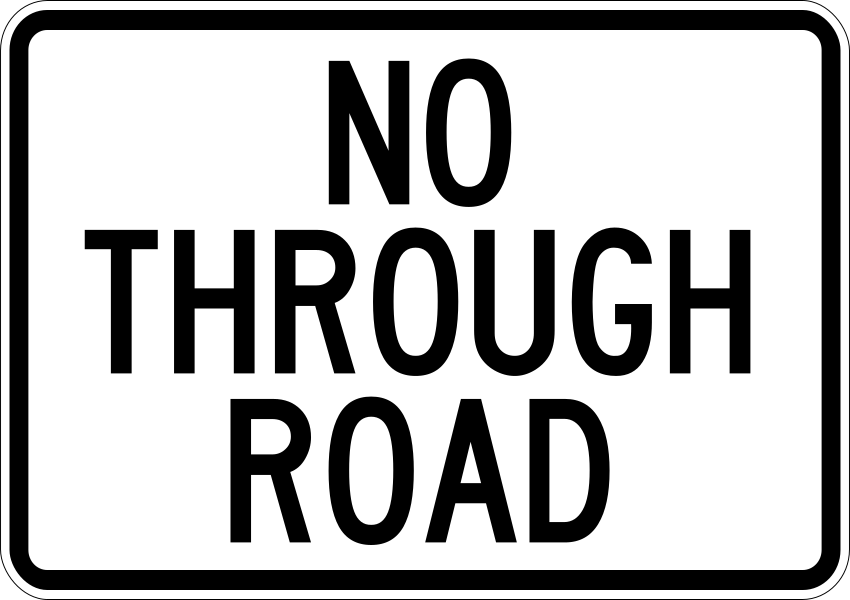
No through road There is no through road ahead. You will have to come back the same way.
Signs are easier to remember by group: the shape and colour tell you the kind of message before you read it. The NSW signs on this page fall into these groups:
Pick an answer, then open "Show answer" to check it. For the real test format, take a free TfNSW practice test.
Turn on JavaScript to take the interactive mock tests.