To pass the Alberta Transportation and Economic Corridors (AT) knowledge test, you must answer at least 25 out of 30 questions correctly to achieve the required 83% passing score. Below is every Alberta sign we cover, with its official image and meaning. After the signs: the sign groups, a short quiz and study tips.
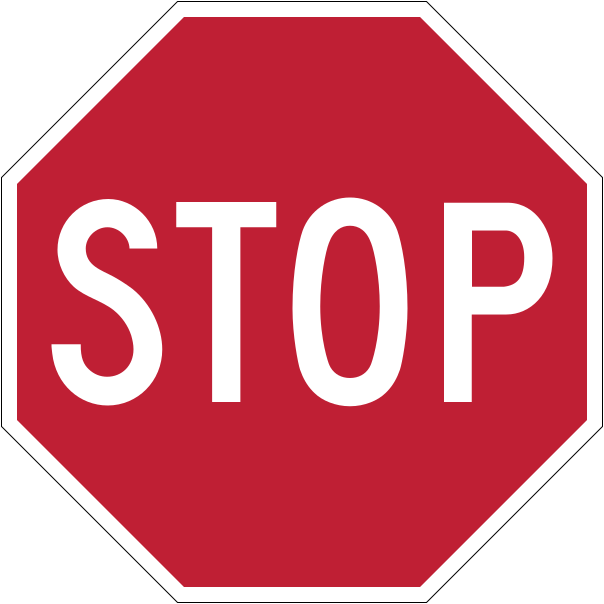
Stop Come to a complete stop. Stop fully at the stop line, or before the crosswalk, or before the edge of the crossing road. Go only when it is safe and you have the right-of-way.
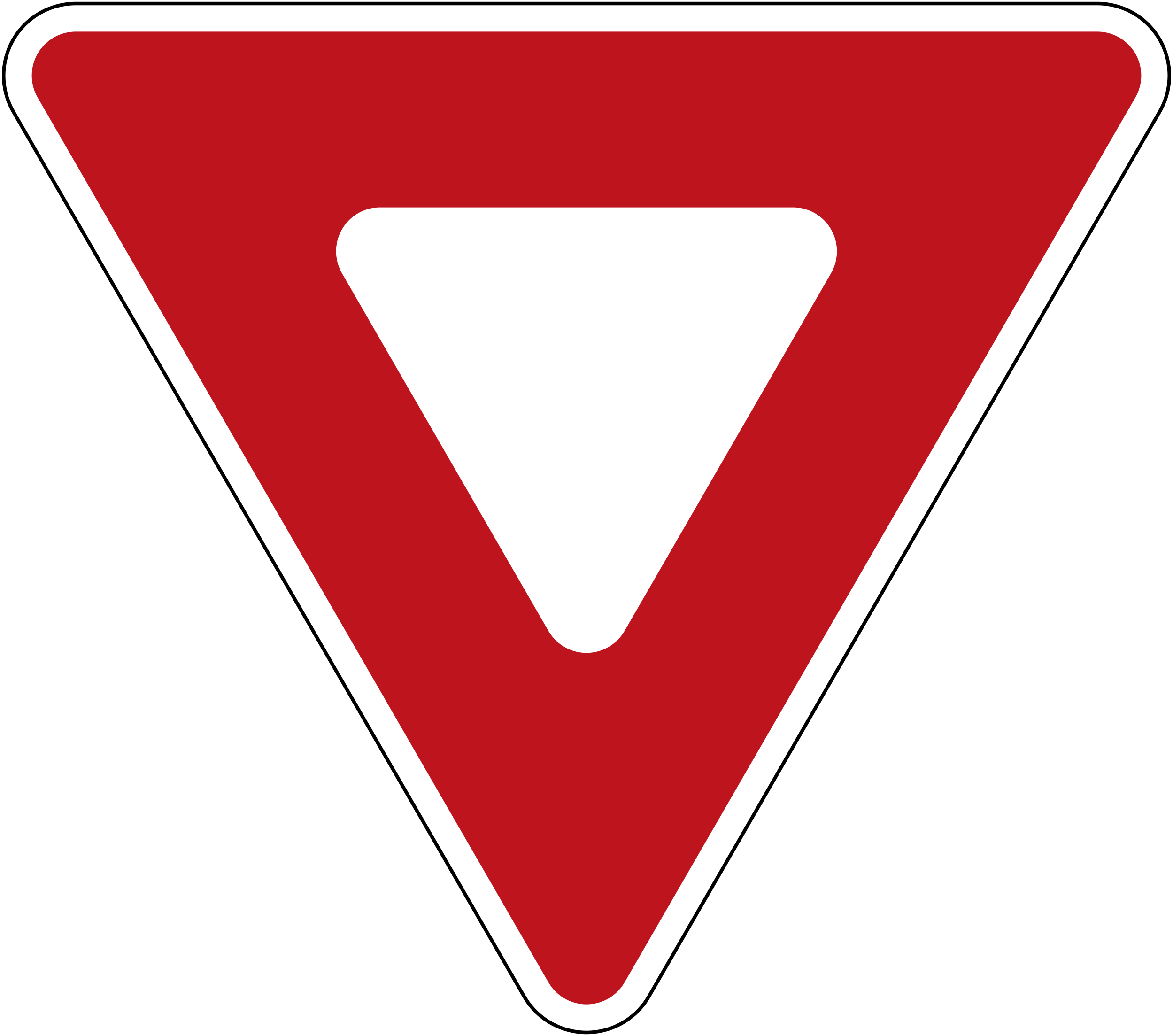
Yield Slow down and give way. Let traffic and pedestrians that have the right-of-way go first. Stop if you need to.
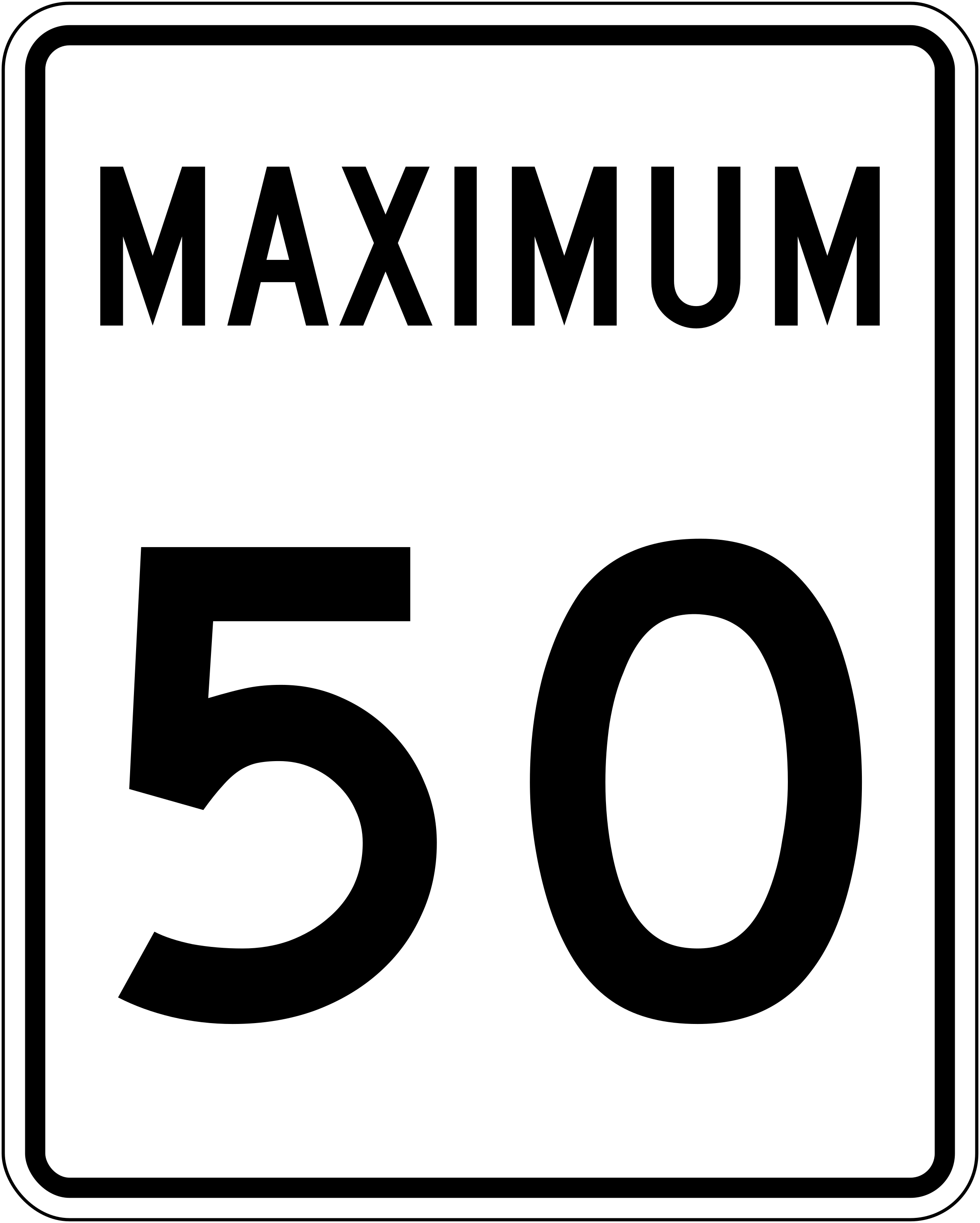
Maximum speed Highest legal speed in good conditions. The posted maximum applies until the next speed sign. Drive slower in poor weather or traffic.
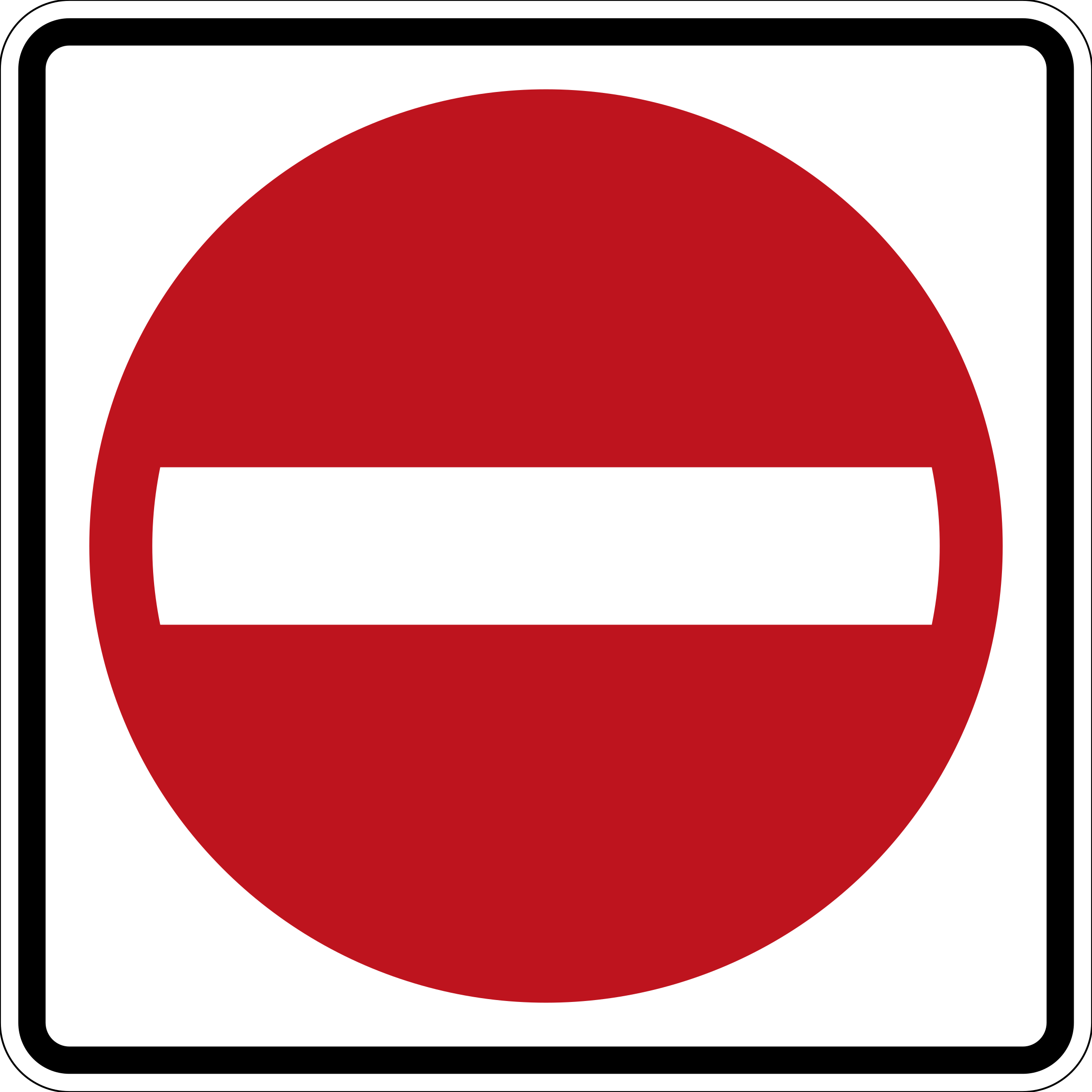
Do not enter You may not enter this road. Posted at the wrong end of one-way streets and ramps. Find another route.
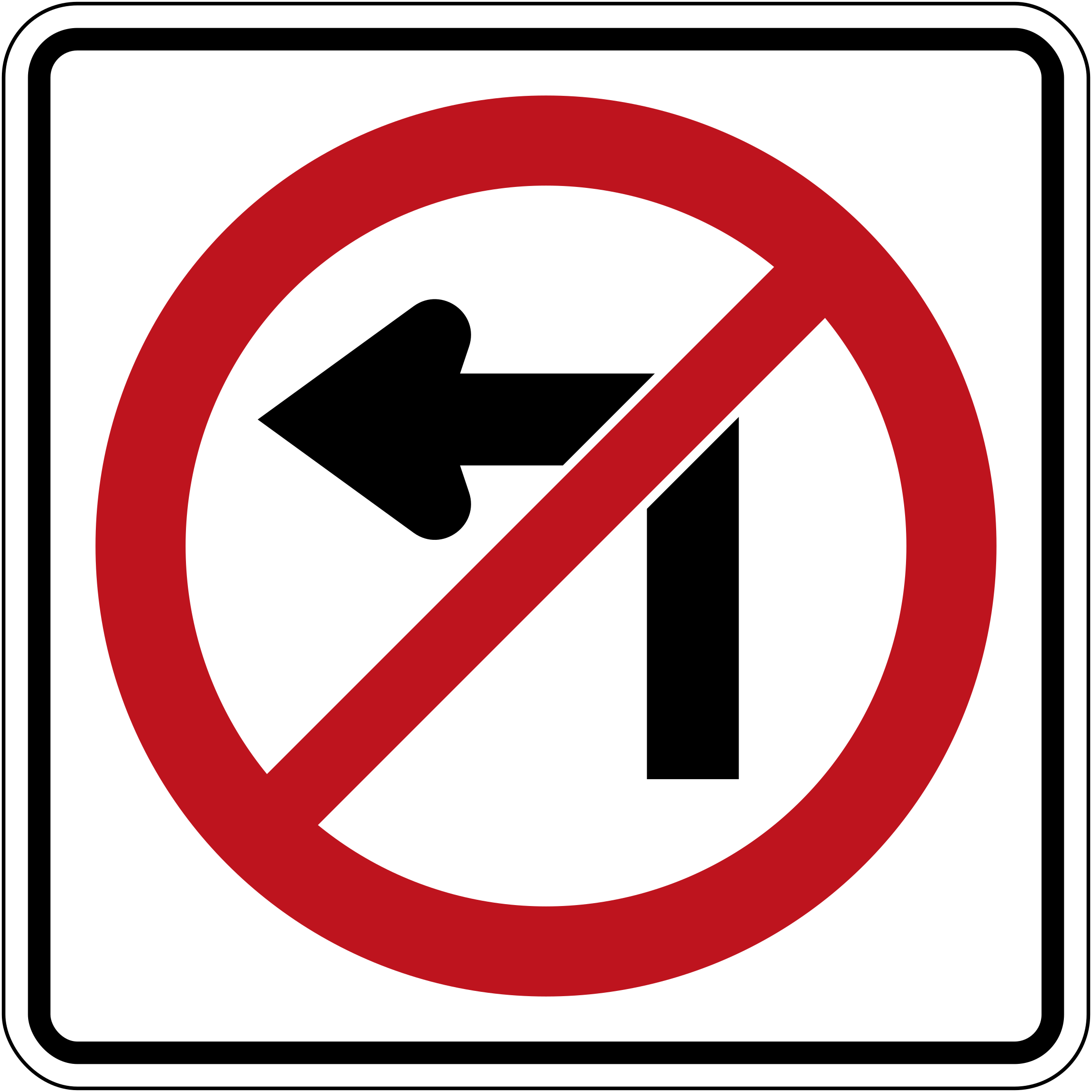
No left turn Left turns are not allowed. A red circle and slash over a symbol means that action is prohibited.
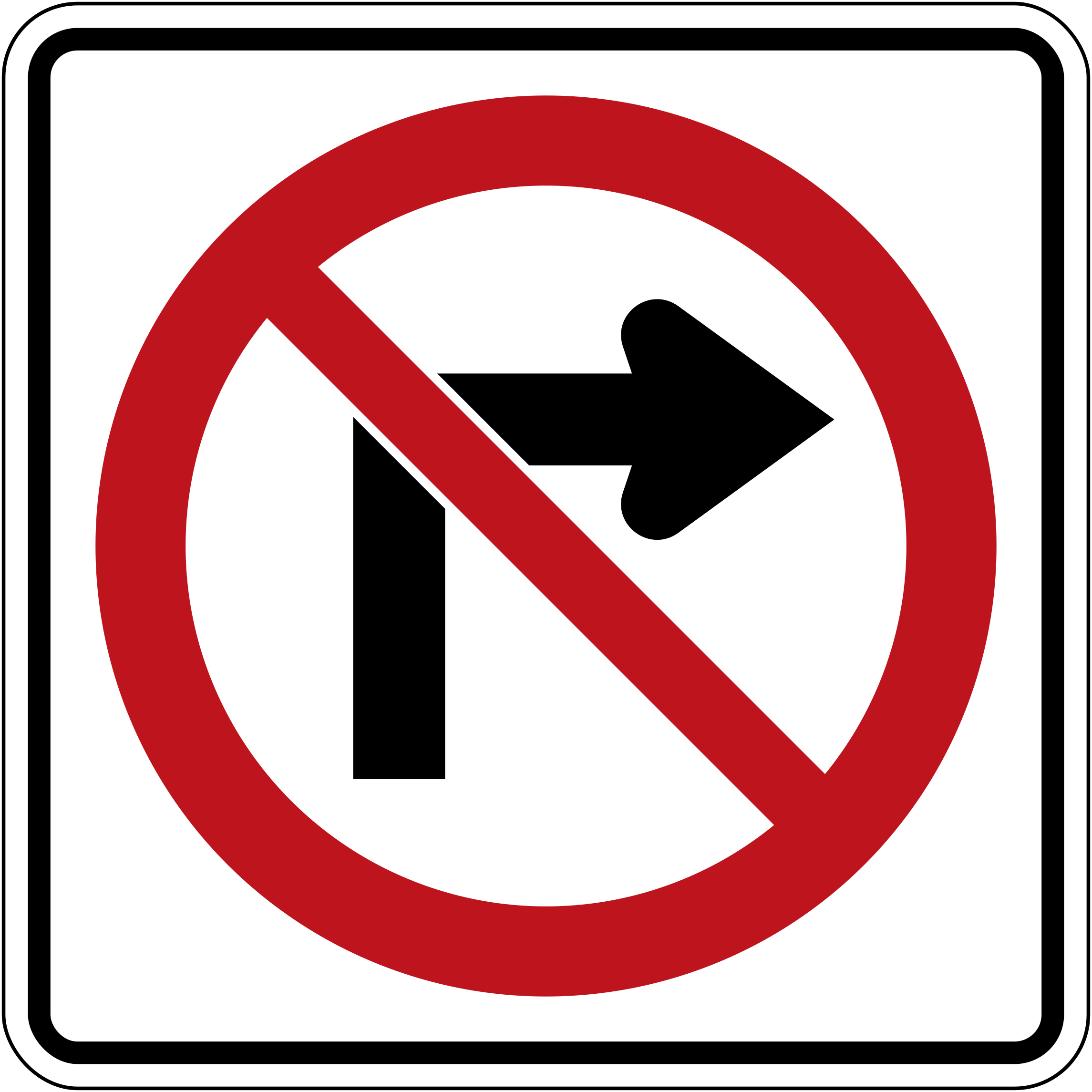
No right turn Right turns are not allowed. Continue straight or turn left where allowed.
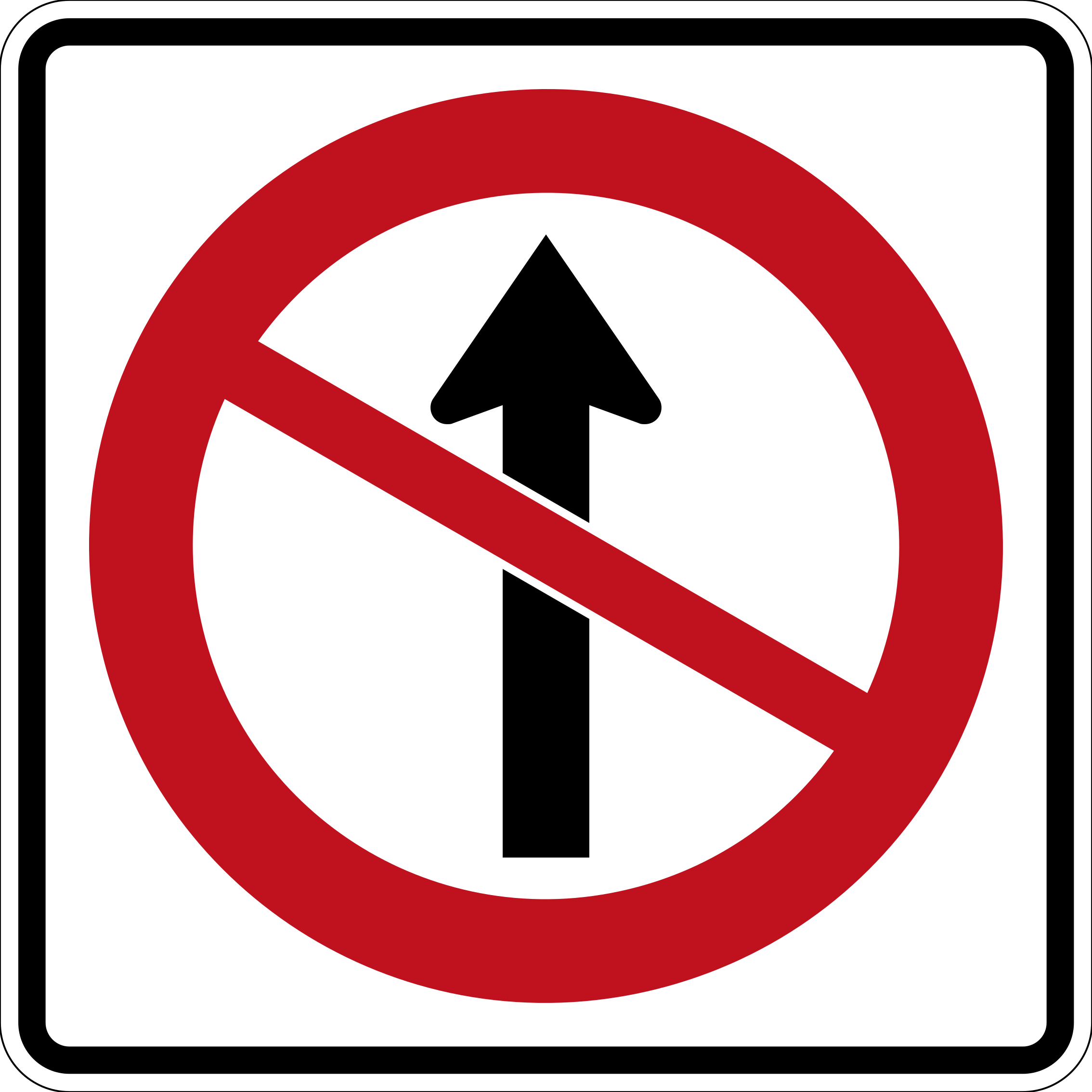
No straight through You may not continue straight. You must turn left or right at this intersection.
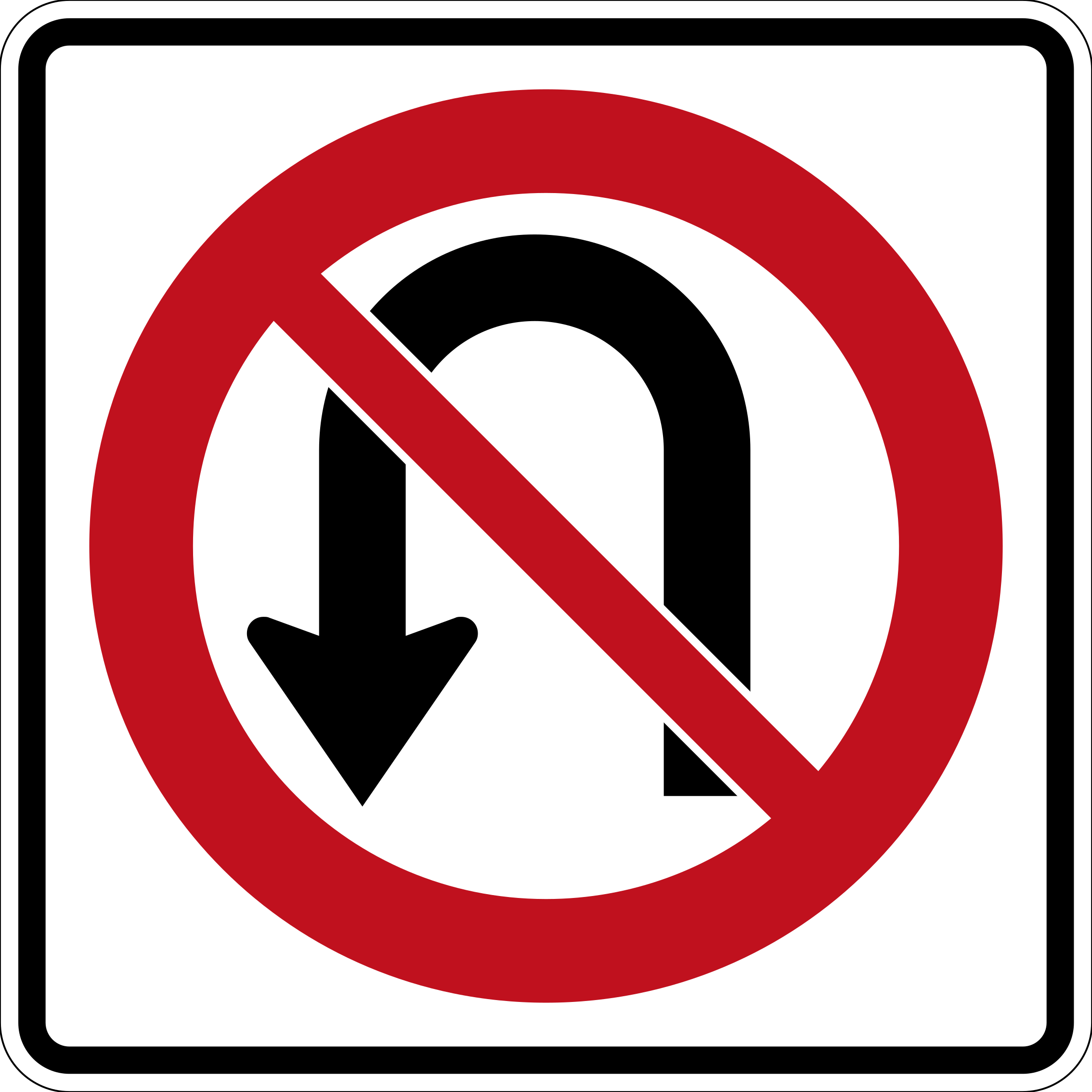
No U-turn U-turns are not allowed. Do not turn around here.
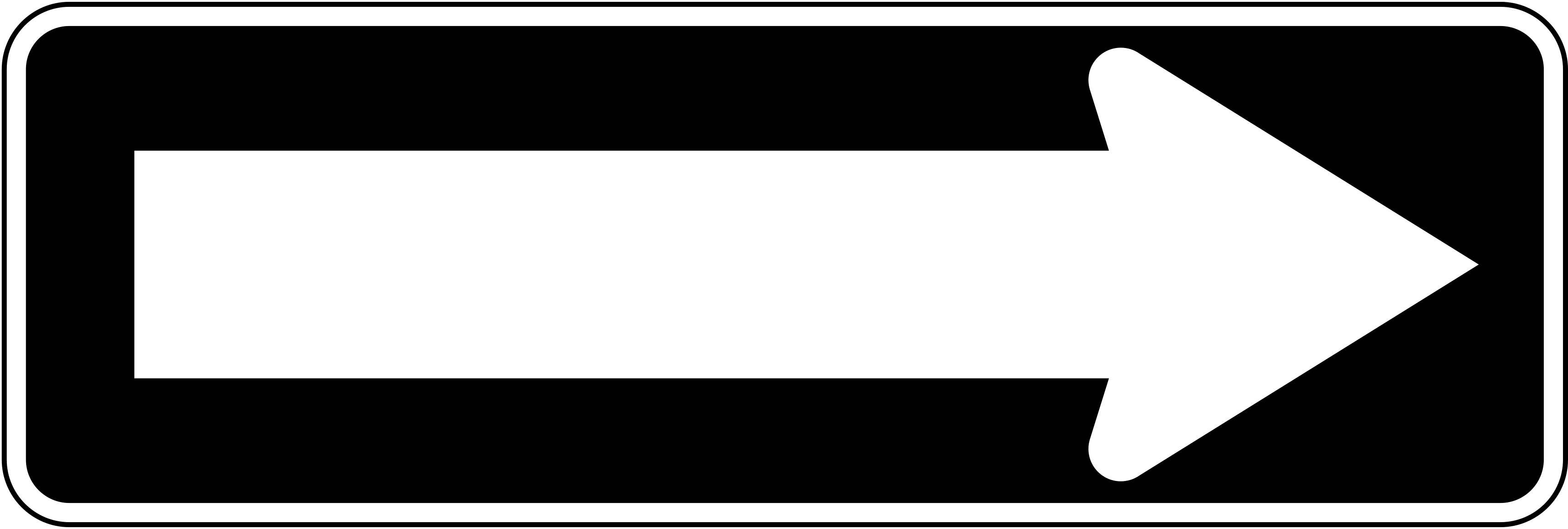
One way Traffic moves only in the arrow direction. Never enter against the arrow.
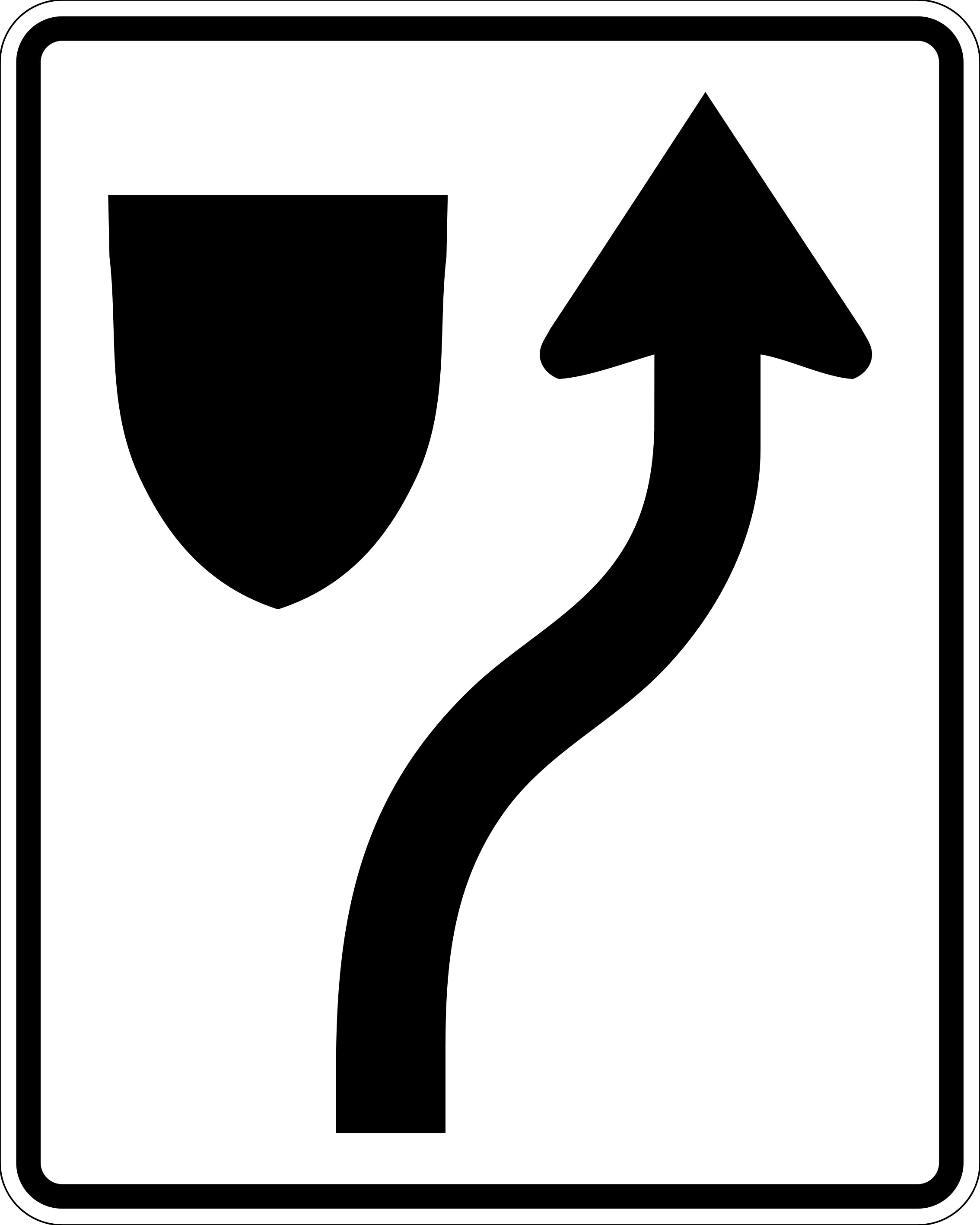
Keep right Pass to the right of the island or divider. Keep to the right of the median or obstruction ahead.
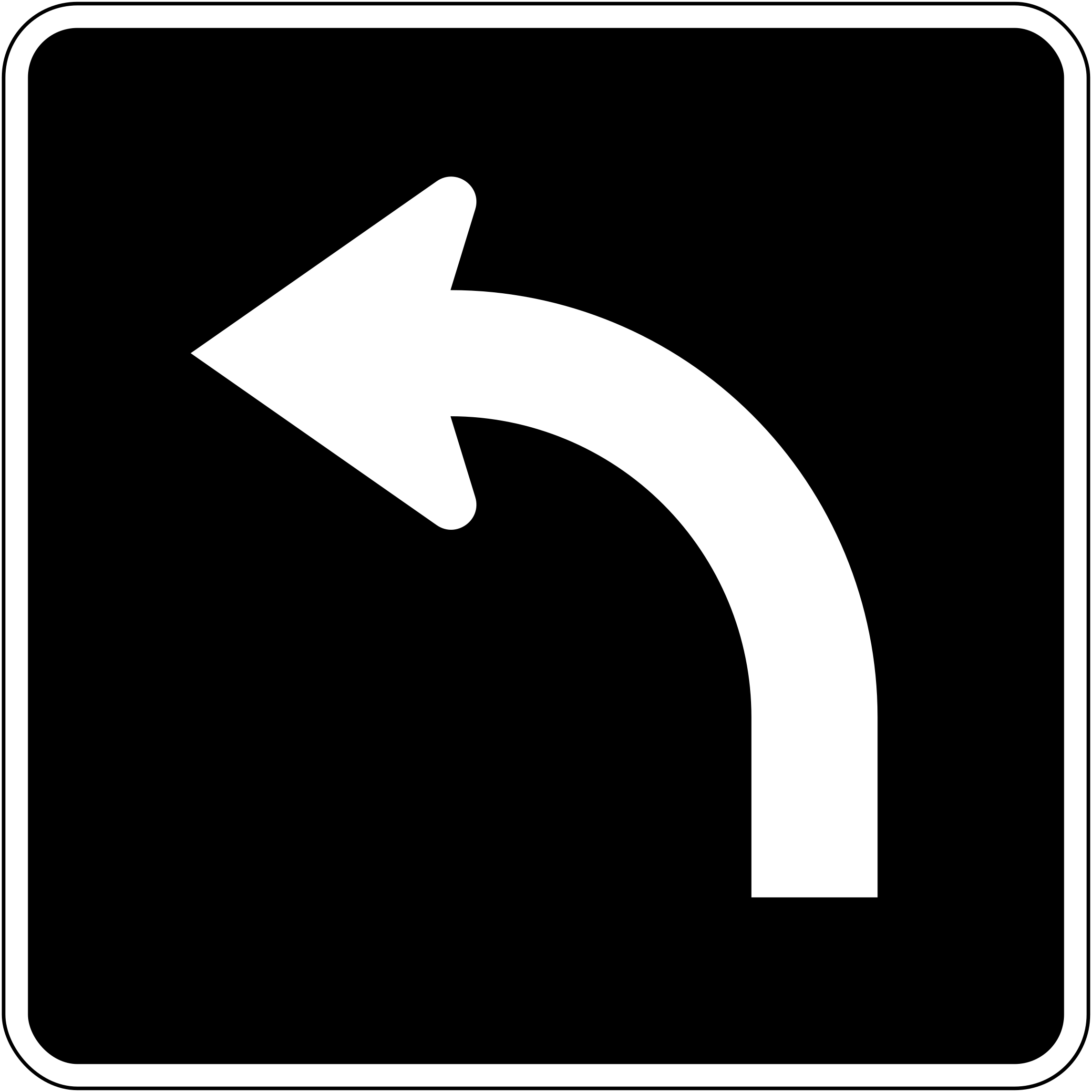
Left turn only This lane must turn left. If you are in this lane you must turn left. Change lanes early if you are going straight.
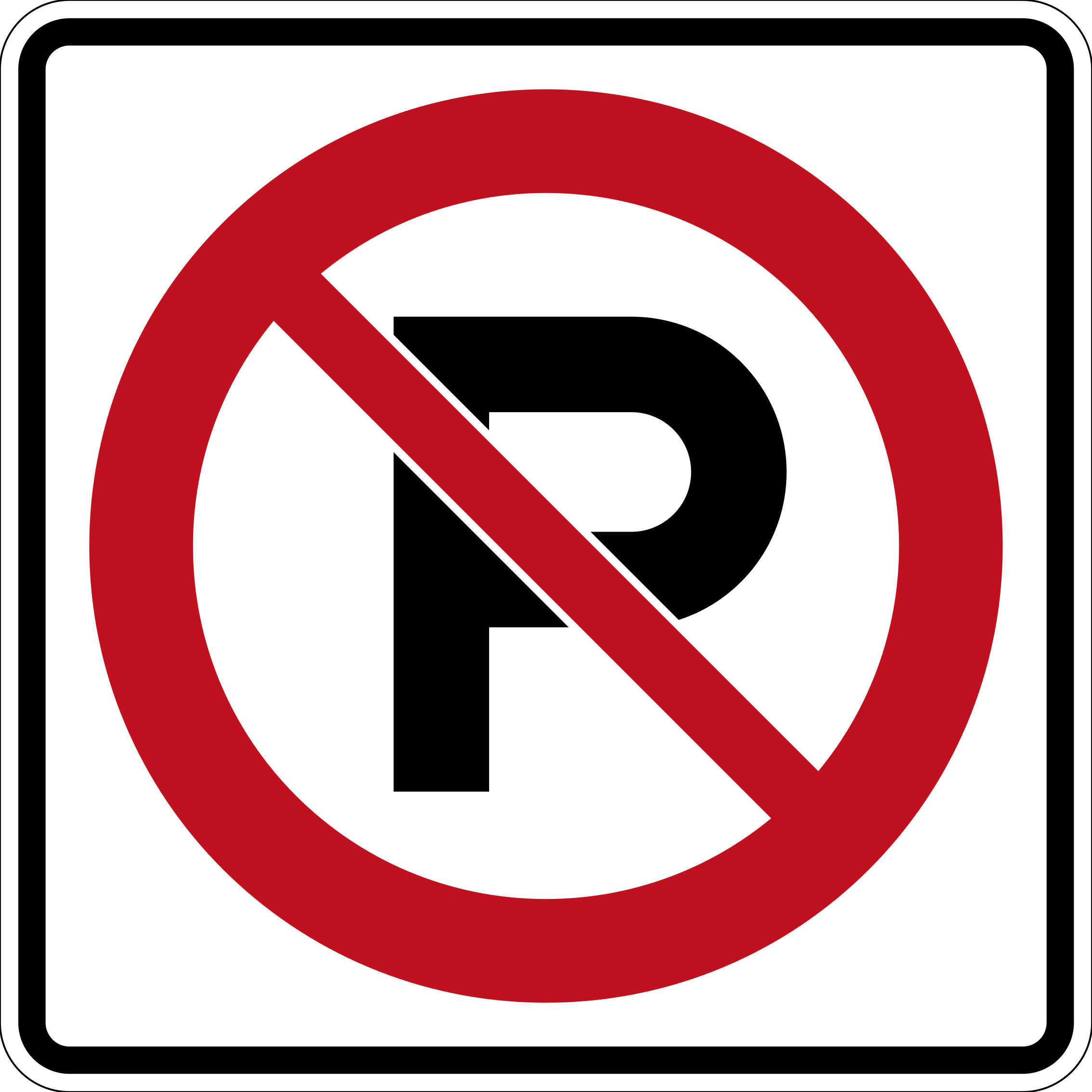
No parking Parking is not allowed. You may stop briefly to load or unload passengers, but not leave the vehicle.
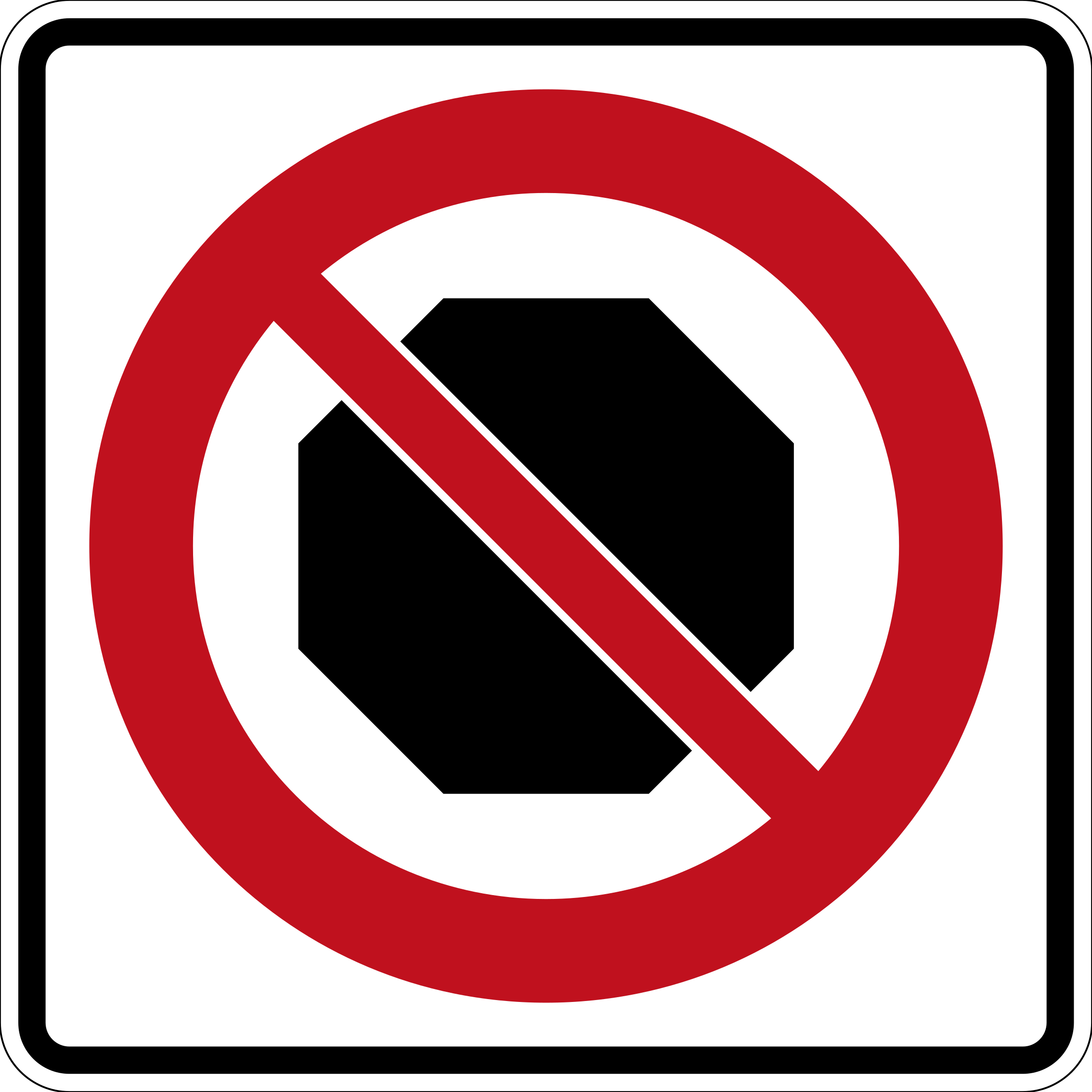
No stopping You may not stop here, even briefly. Stop only when traffic or a signal requires it. No passenger pick-ups or drop-offs.
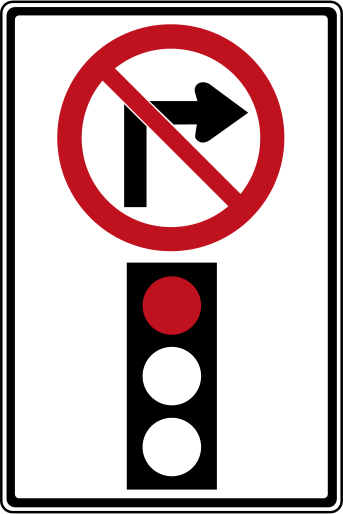
No right turn on red Wait for green before turning right. Normally you may turn right on red after a full stop; this sign removes that permission.
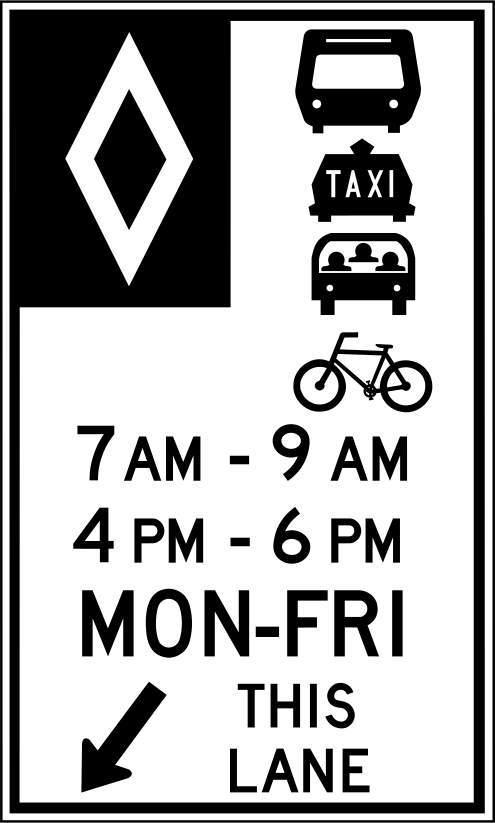
Reserved / HOV lane Lane reserved for buses, taxis or vehicles with 2+ people. Use it only if your vehicle qualifies during the times shown.
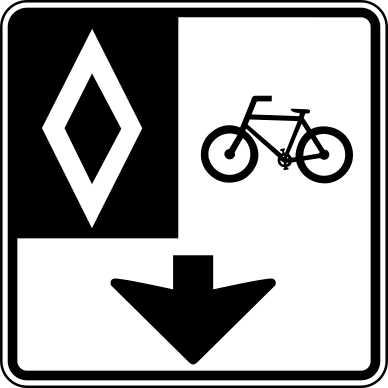
Reserved bicycle lane Lane reserved for cyclists. Do not drive or park in it. Check for cyclists before turning right across it.
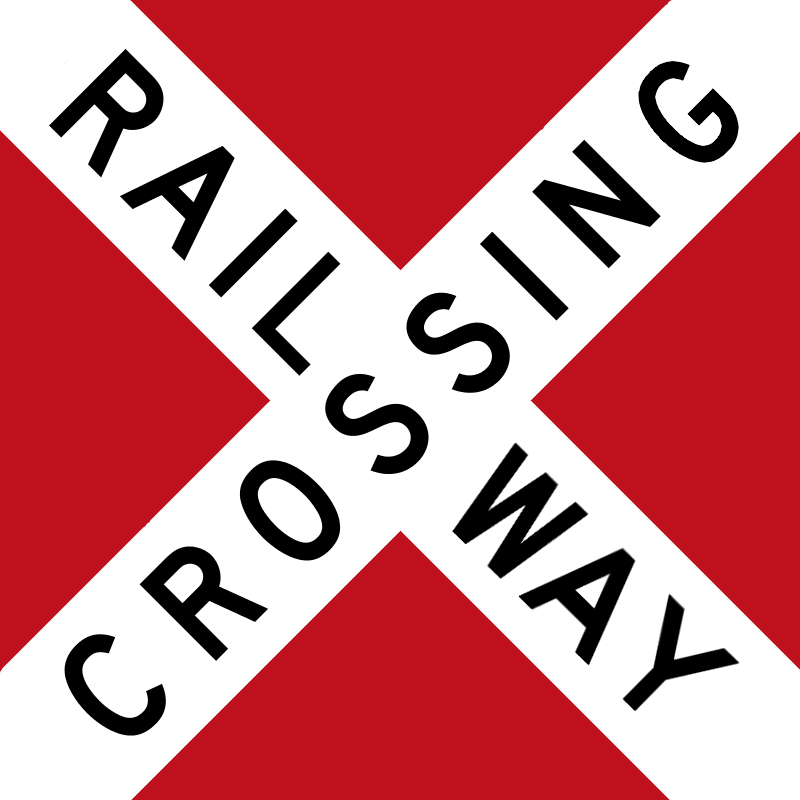
Railway crossing Railway tracks cross here. Stop at least 5 m from the nearest rail when lights flash, bells ring or gates lower. Never stop on tracks.
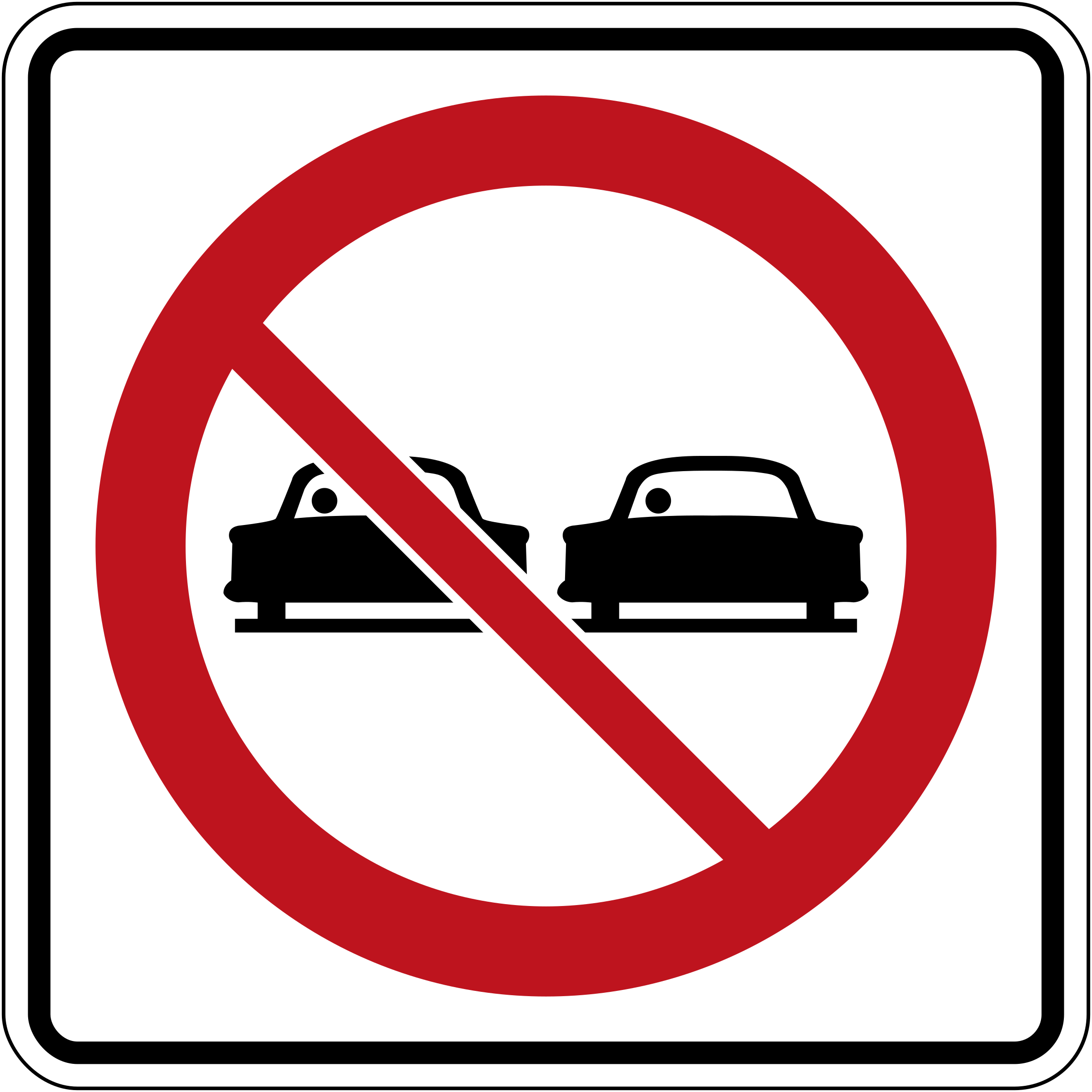
No passing Passing is not allowed. Do not pass other vehicles until a sign or a broken line allows it.
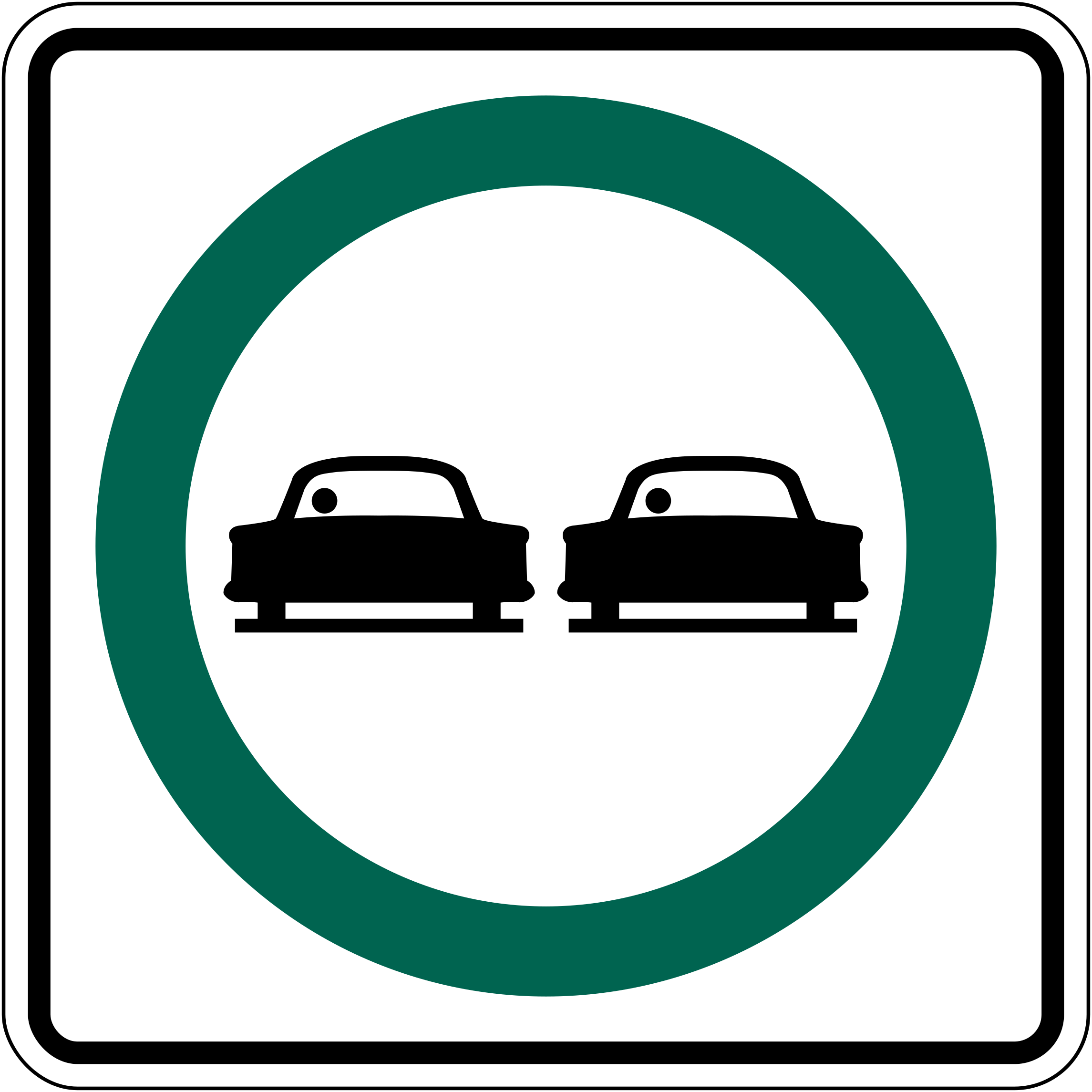
Passing permitted Passing is allowed when it is safe. Marks the end of a no-passing section on a two-lane road.
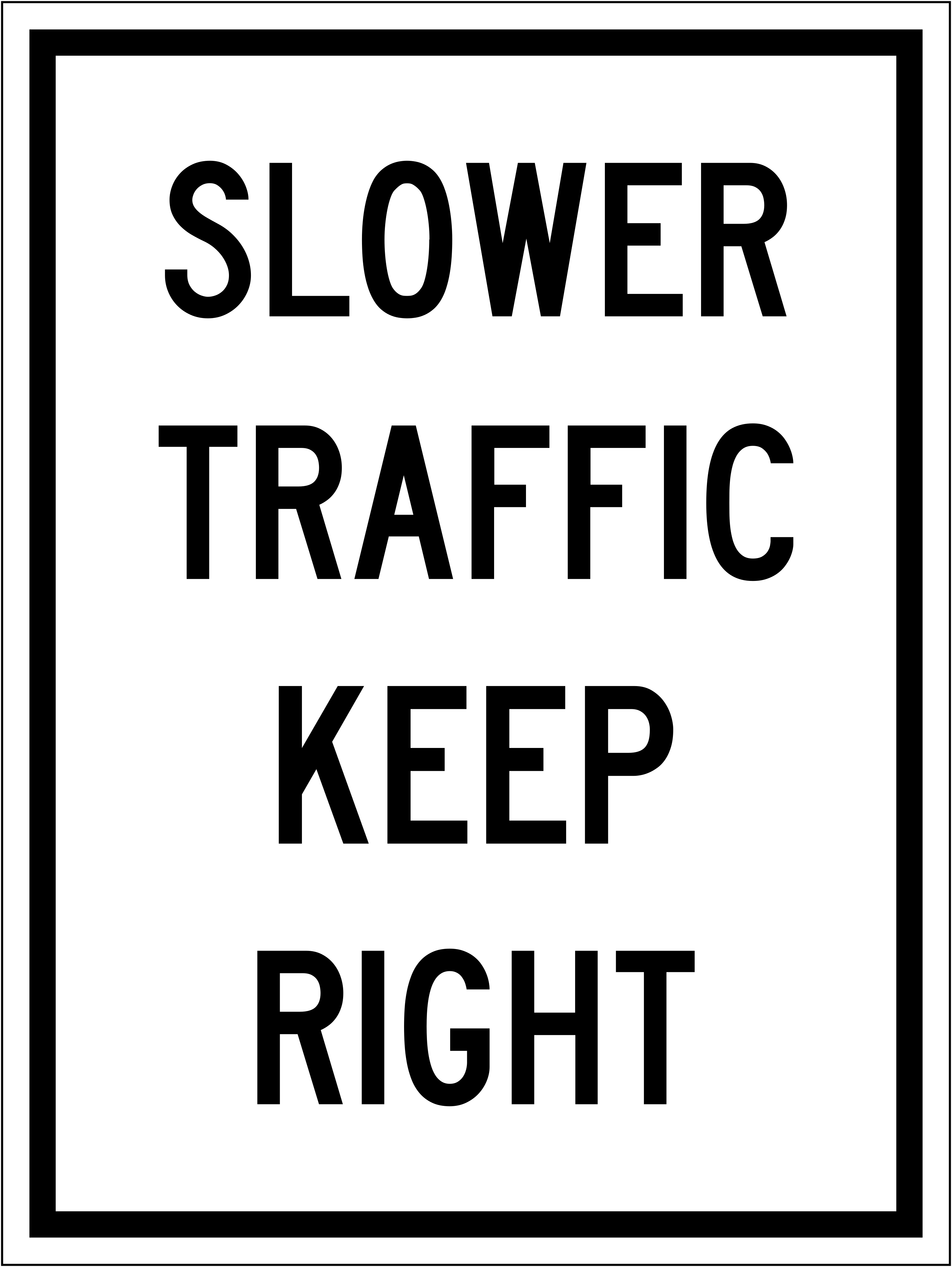
Slower traffic keep right Slower vehicles must use the right lane. On multi-lane roads, keep right unless you are passing.
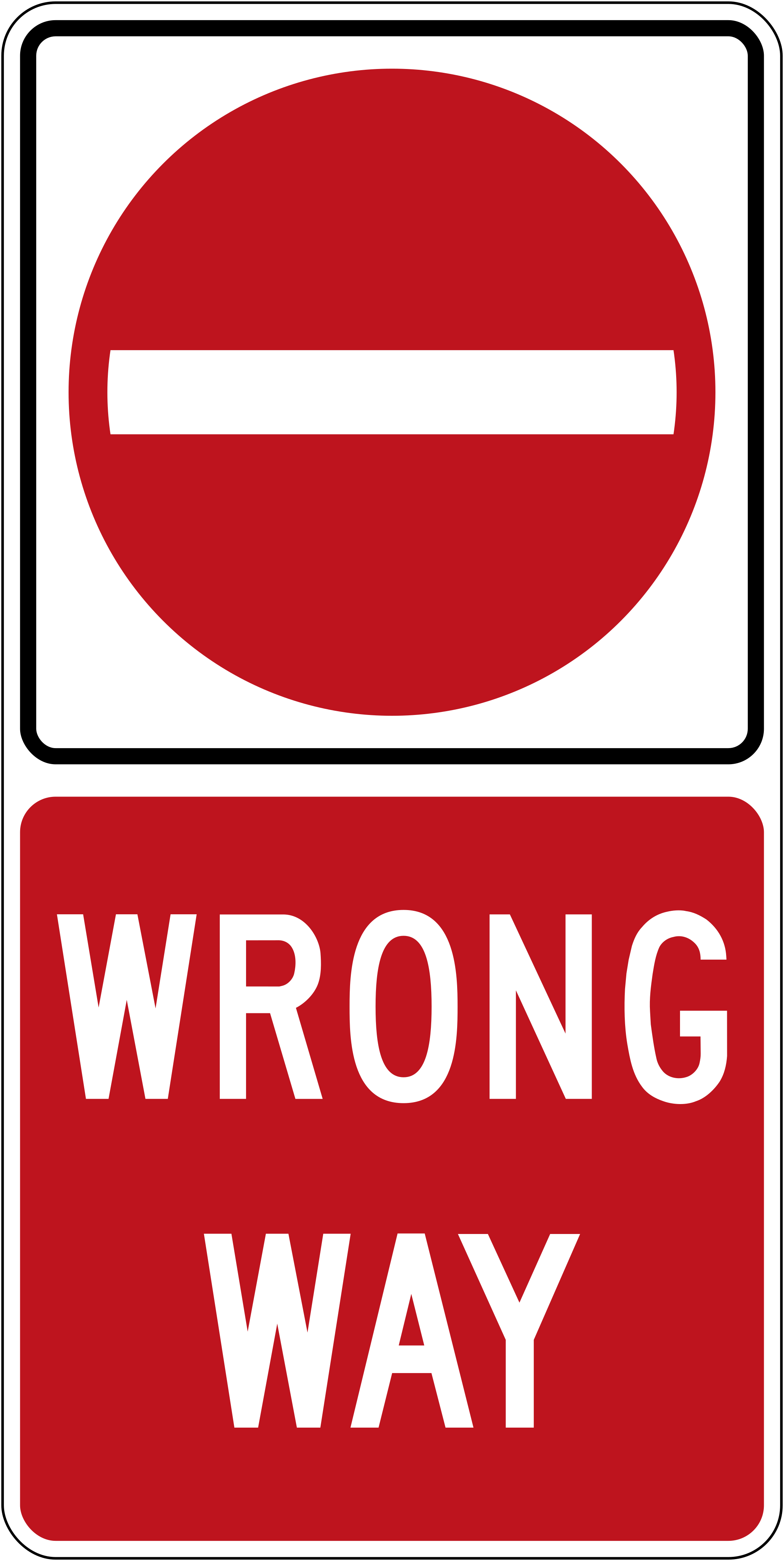
Wrong way You are going the wrong way. Posted with a Do Not Enter sign at the wrong end of one-way roads and ramps.
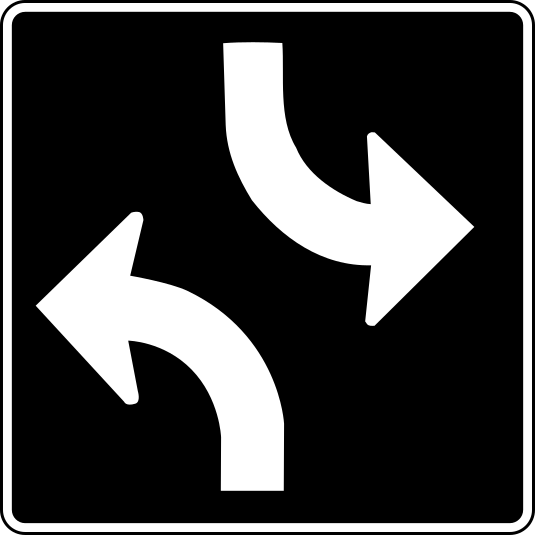
Two-way left-turn lane The centre lane is for left turns by traffic from both directions. Enter it only shortly before your turn; it is not a passing lane.
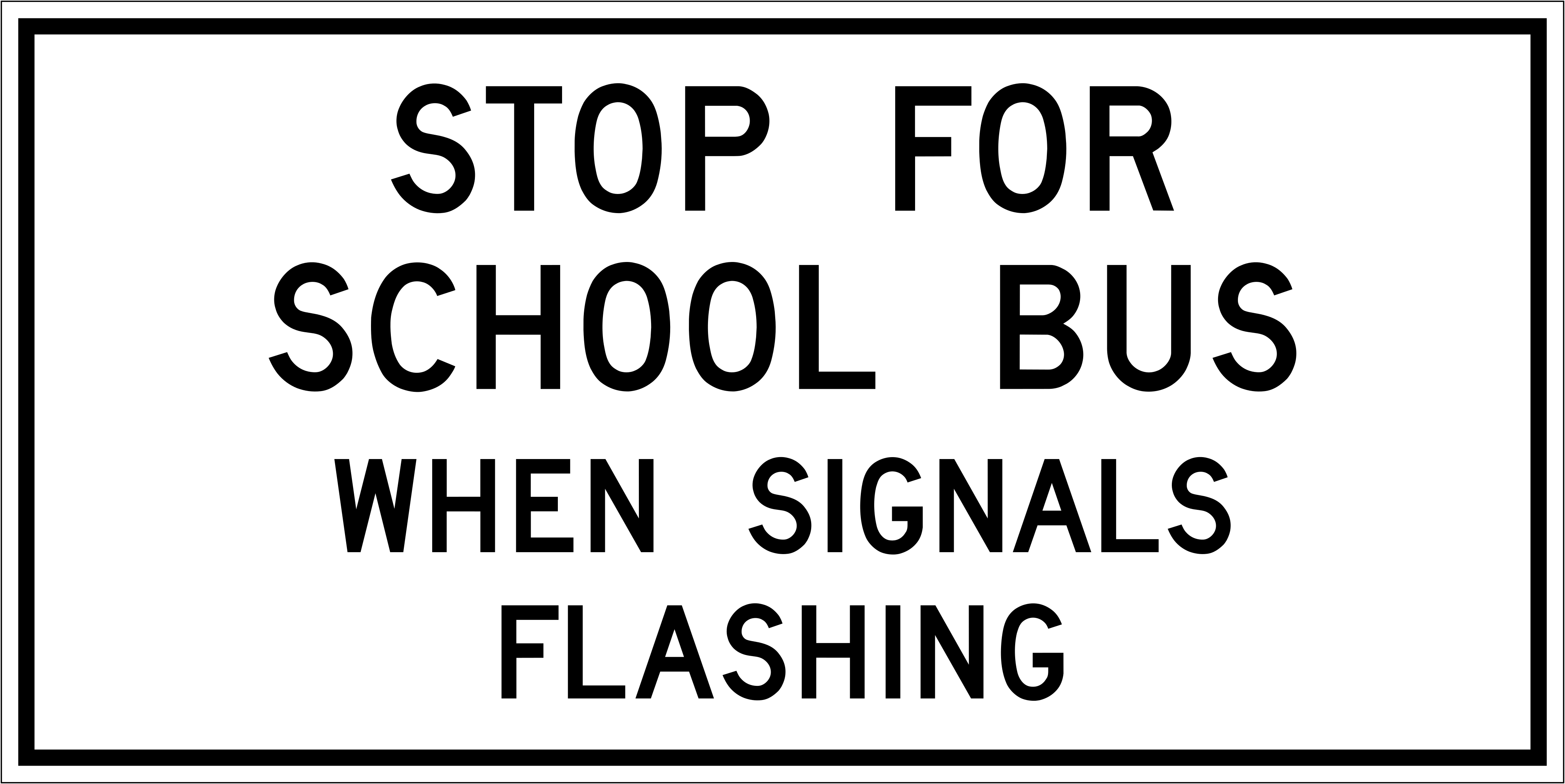
Stop for school bus Stop for a school bus when its signals are flashing. Stay stopped until the bus moves, the red lights stop and the stop arm folds.
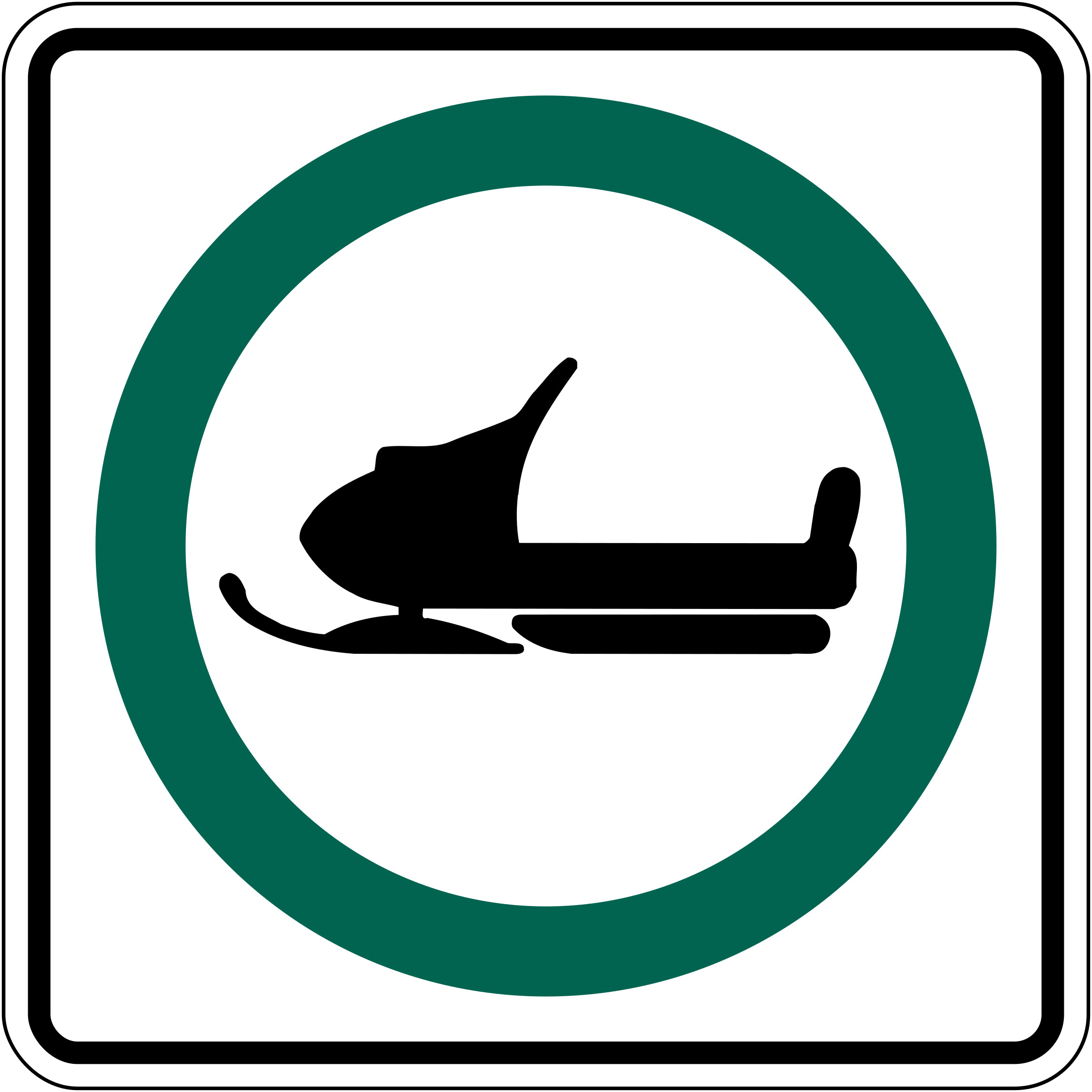
Snowmobiles permitted Snowmobiles may use this road. Expect snowmobiles on or beside the road.
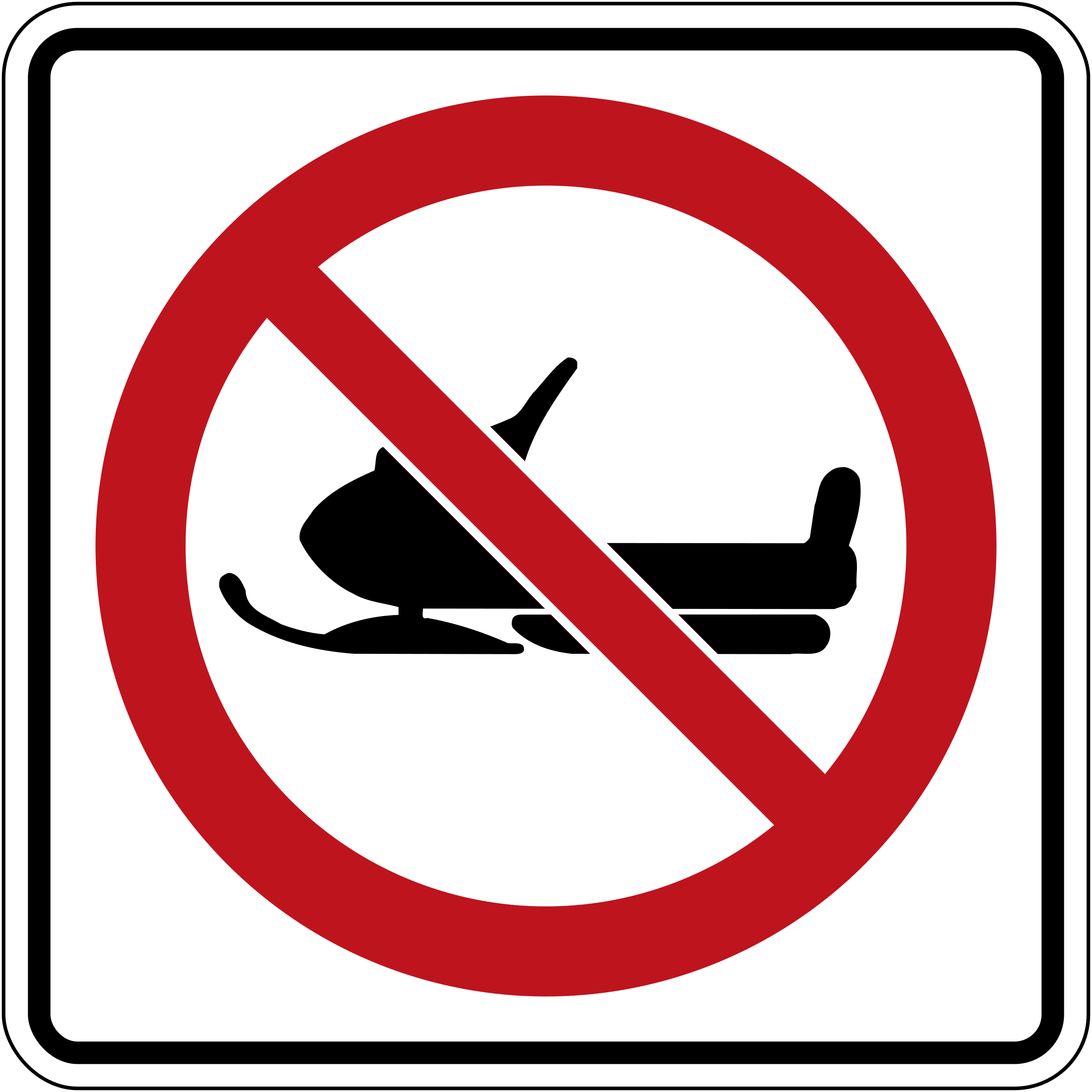
No snowmobiles Snowmobiles are not allowed. Snowmobiles must use another route.
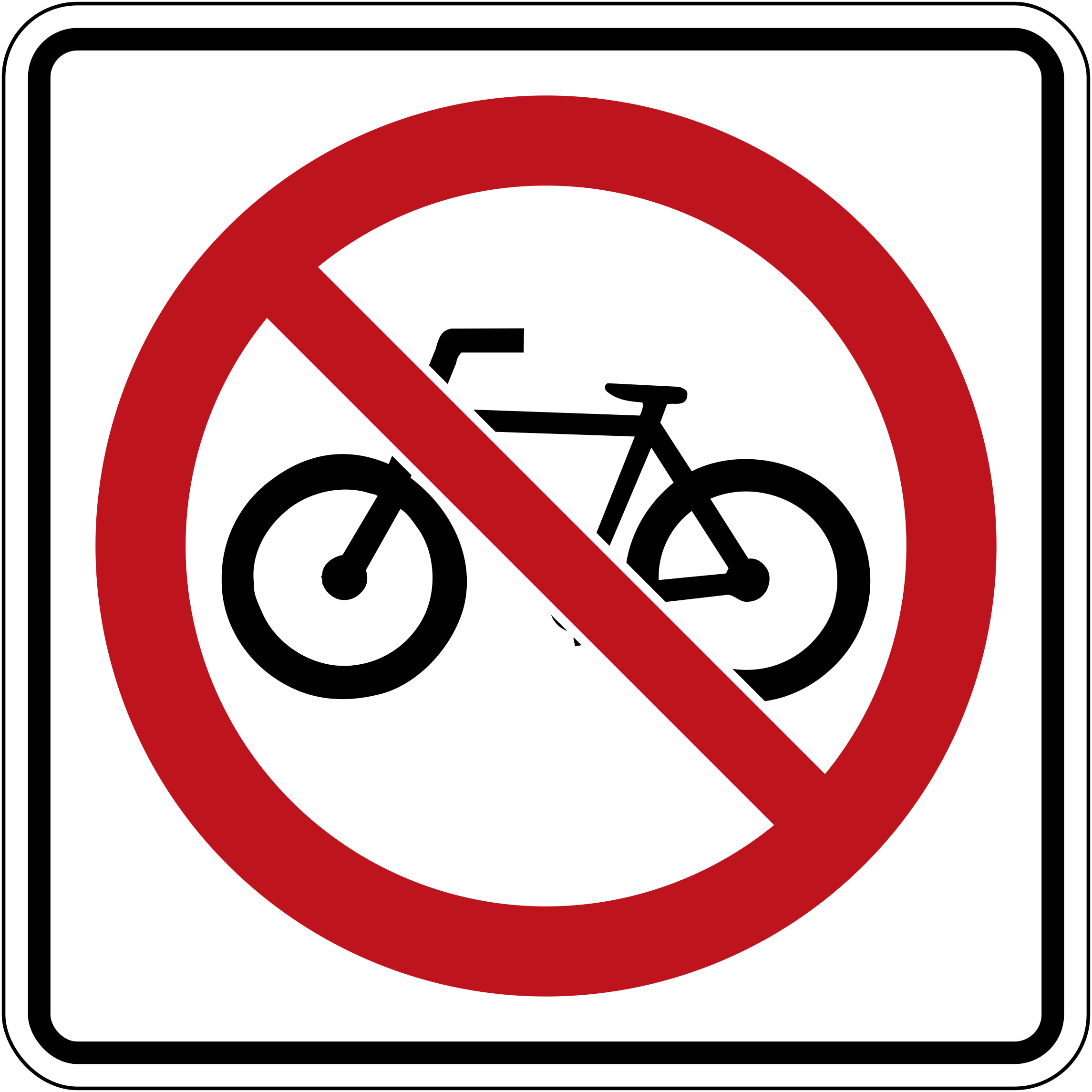
No bicycles Bicycles are not allowed on this road. Often posted at freeway entrances.
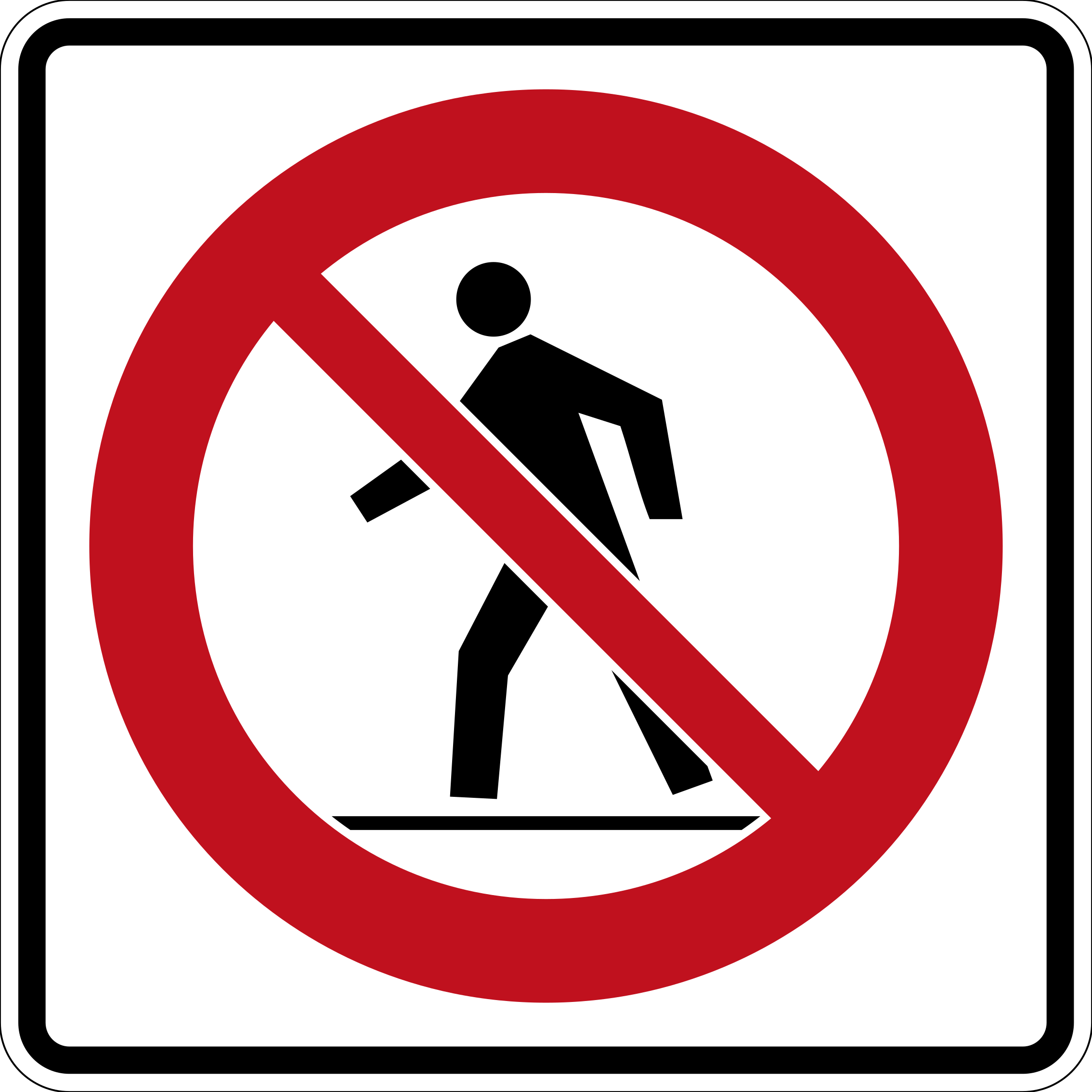
No pedestrians Pedestrians are not allowed on this road. Often posted at freeway entrances and ramps.
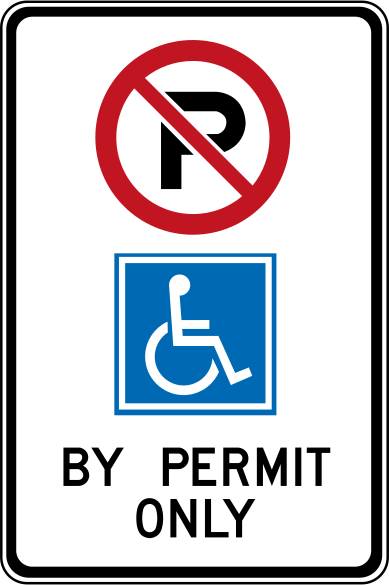
Accessible parking permit only Parking only for vehicles showing a valid accessible parking permit. Parking here without a permit brings a heavy fine.
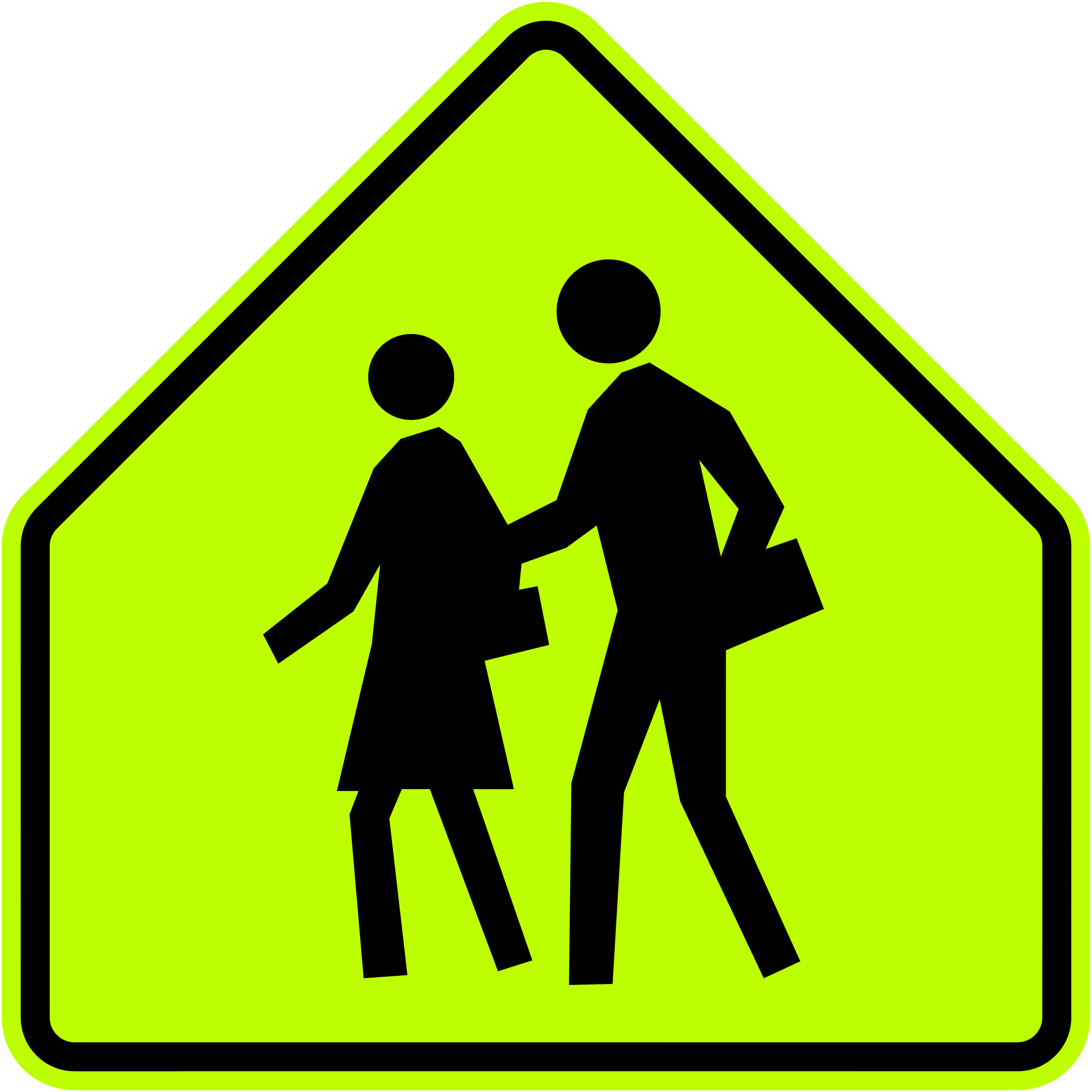
School zone School area or crossing ahead. Slow down and watch for children. Lower school-zone limits often apply.
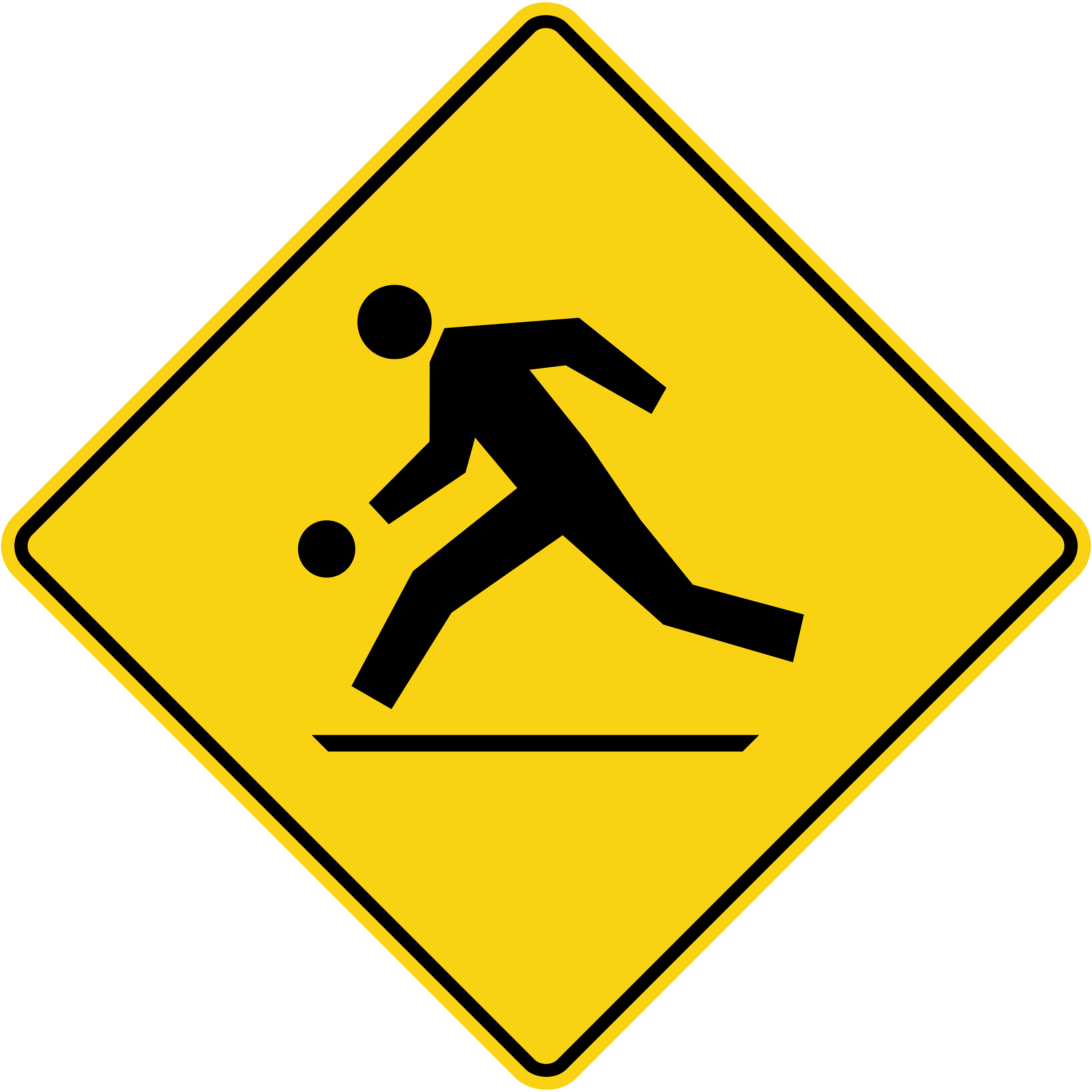
Playground ahead Children may be playing nearby. Slow down and be ready to stop for children running into the road.
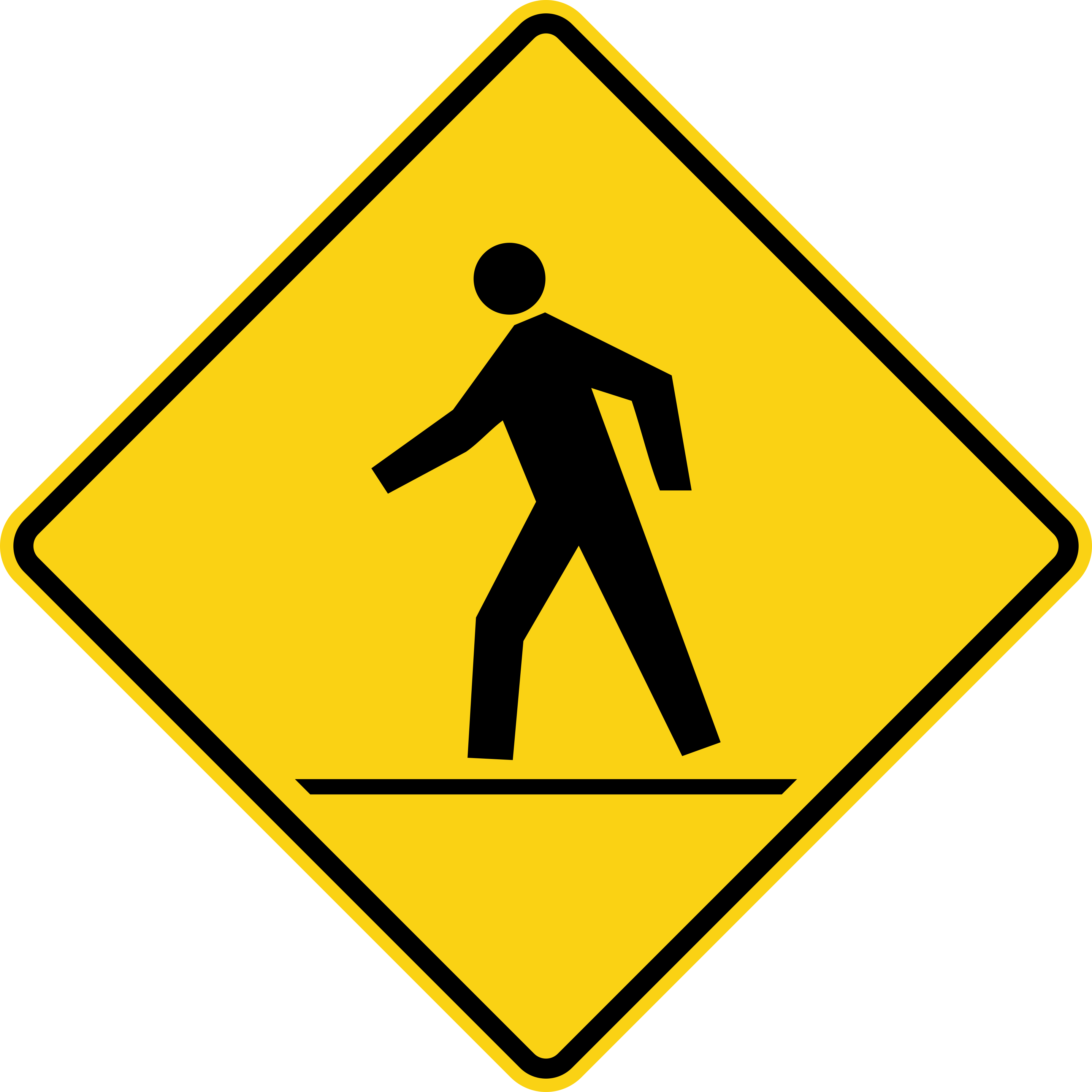
Pedestrian crossing ahead People may be crossing ahead. Slow down and be ready to stop for pedestrians.
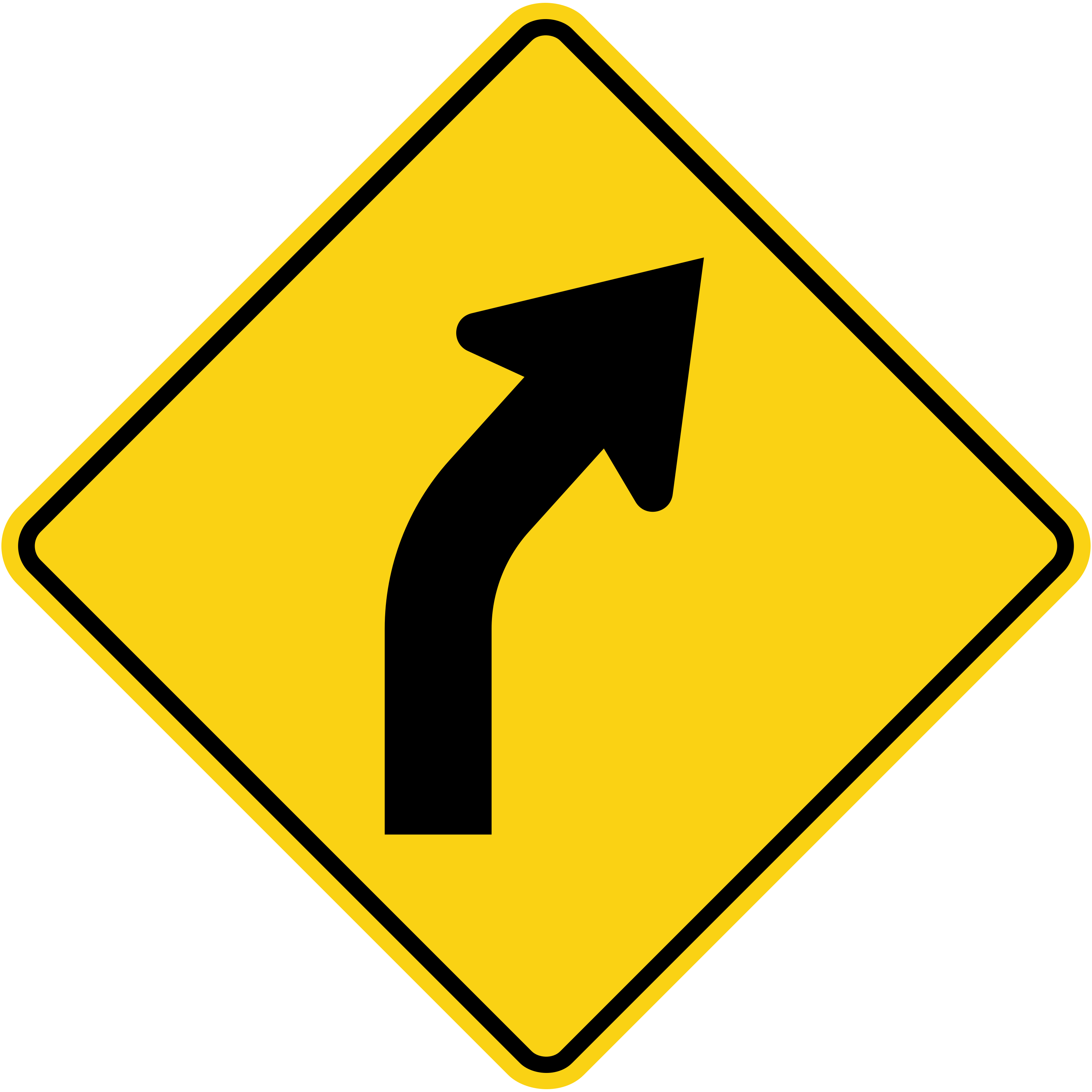
Curve to the right The road bends right ahead. Slow down before the curve, not in it.
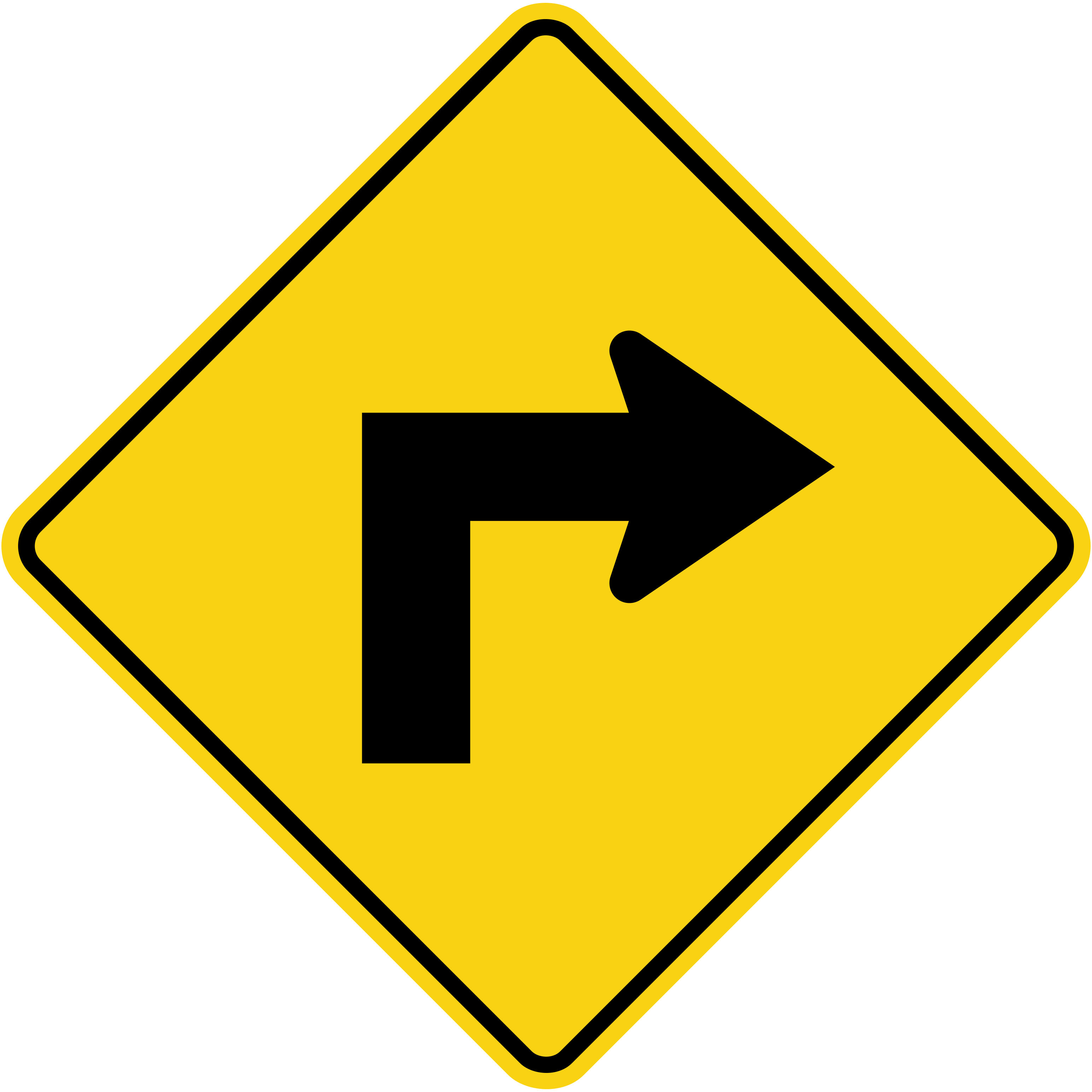
Sharp turn to the right A sharp right turn is ahead. Slow down well before the turn.
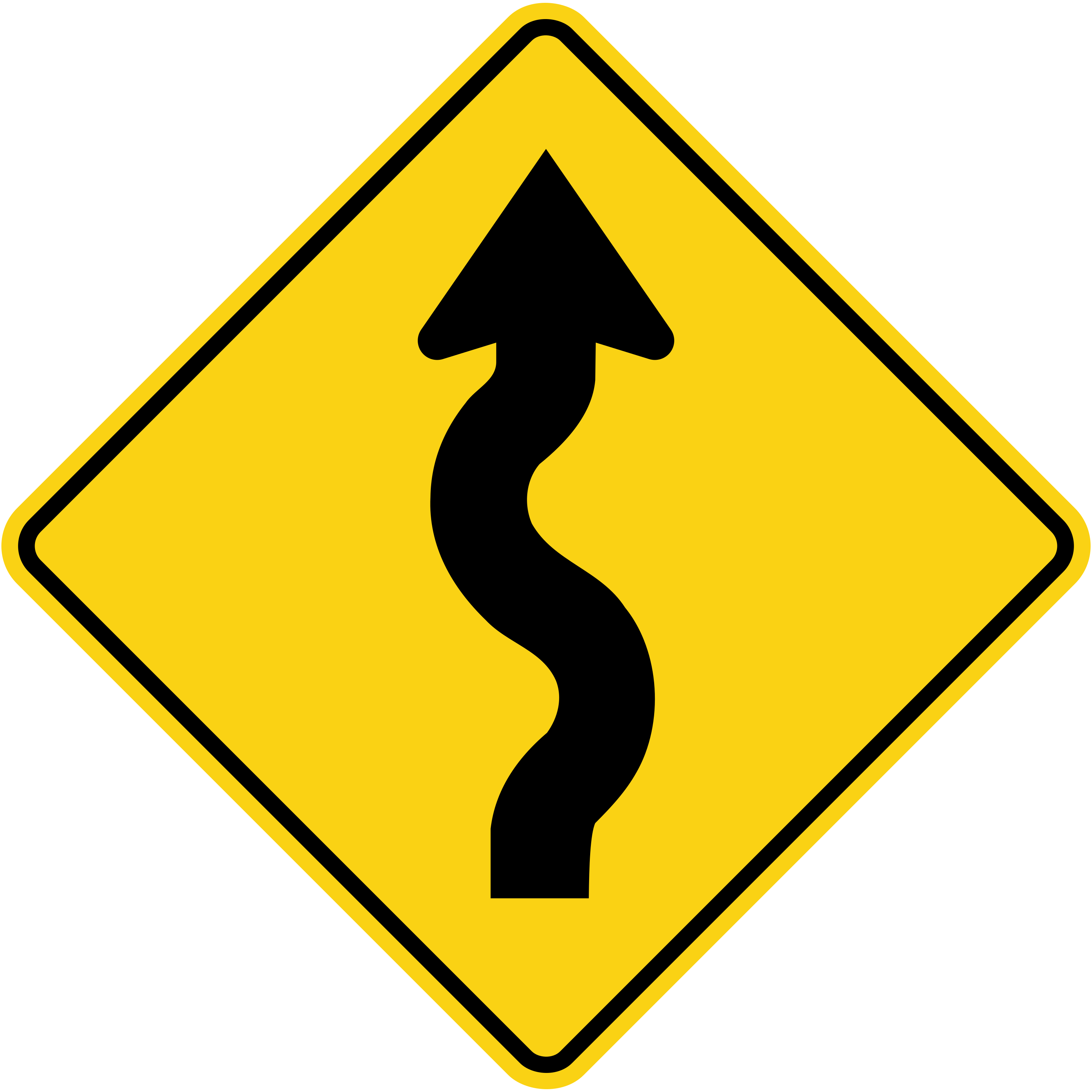
Winding road A series of curves is ahead. Reduce speed and stay in your lane through the bends.
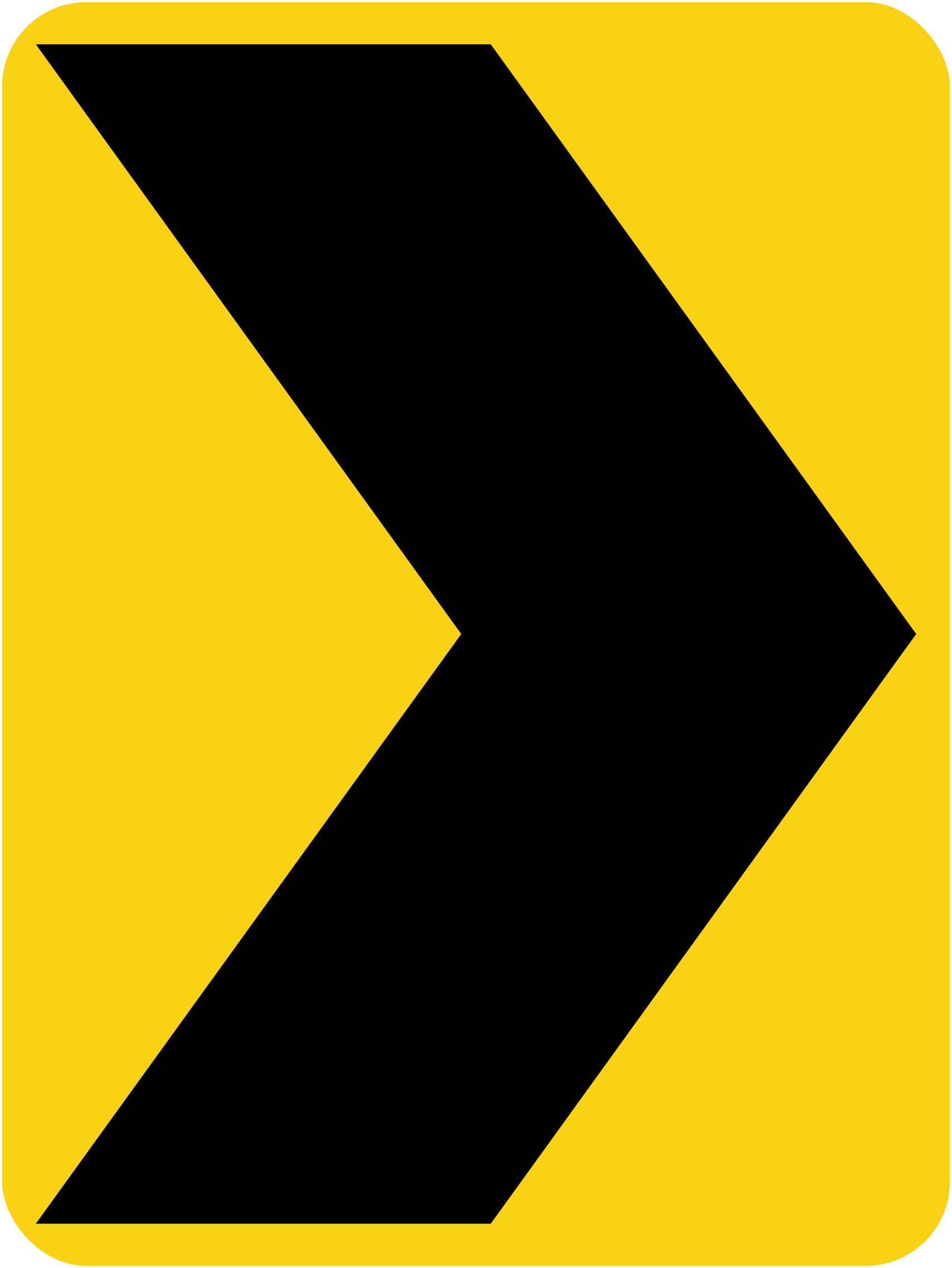
Chevron alignment Sharp change in road direction. Follow the direction the chevrons point and slow down.
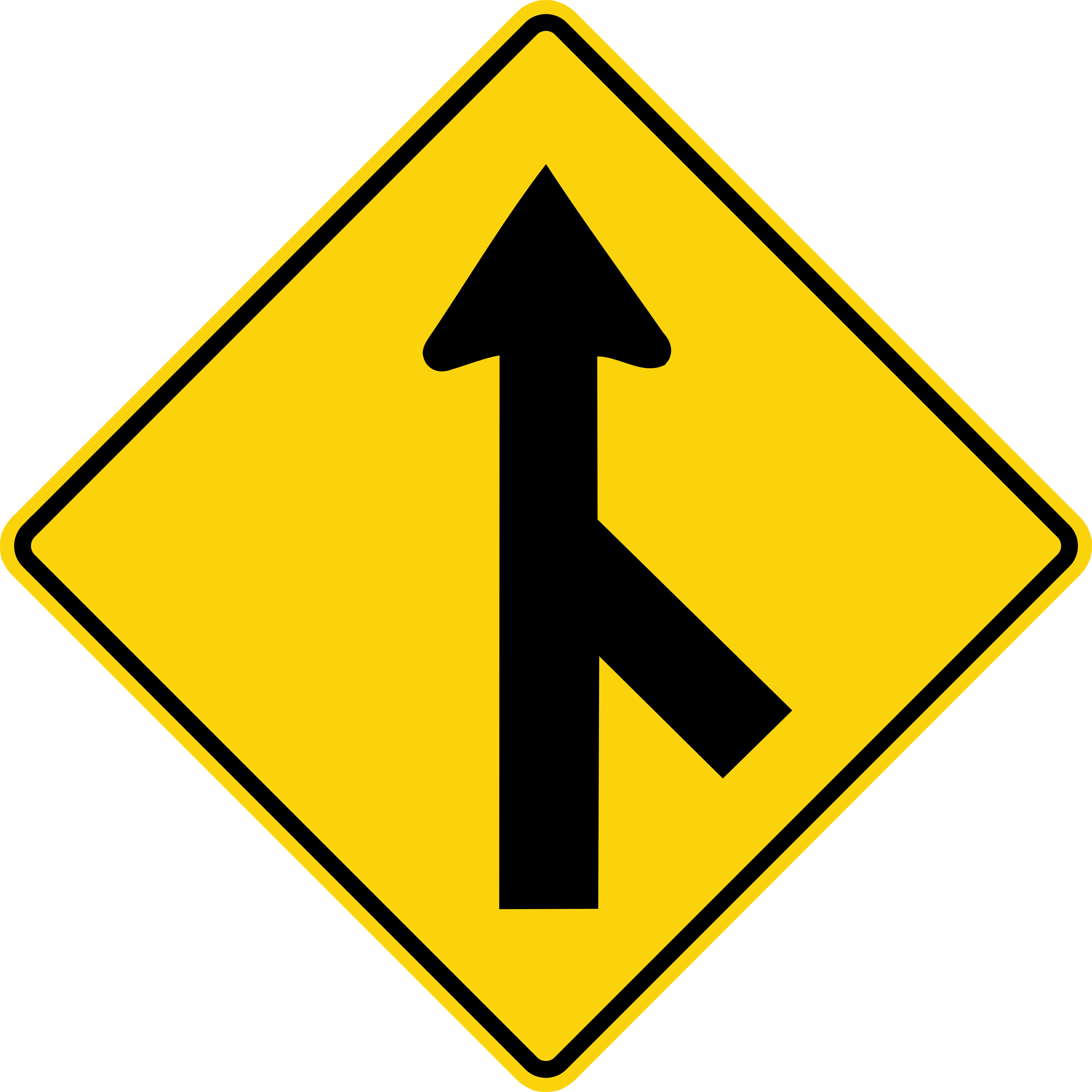
Merging traffic Traffic joins from the side ahead. Adjust speed to let merging traffic in smoothly.
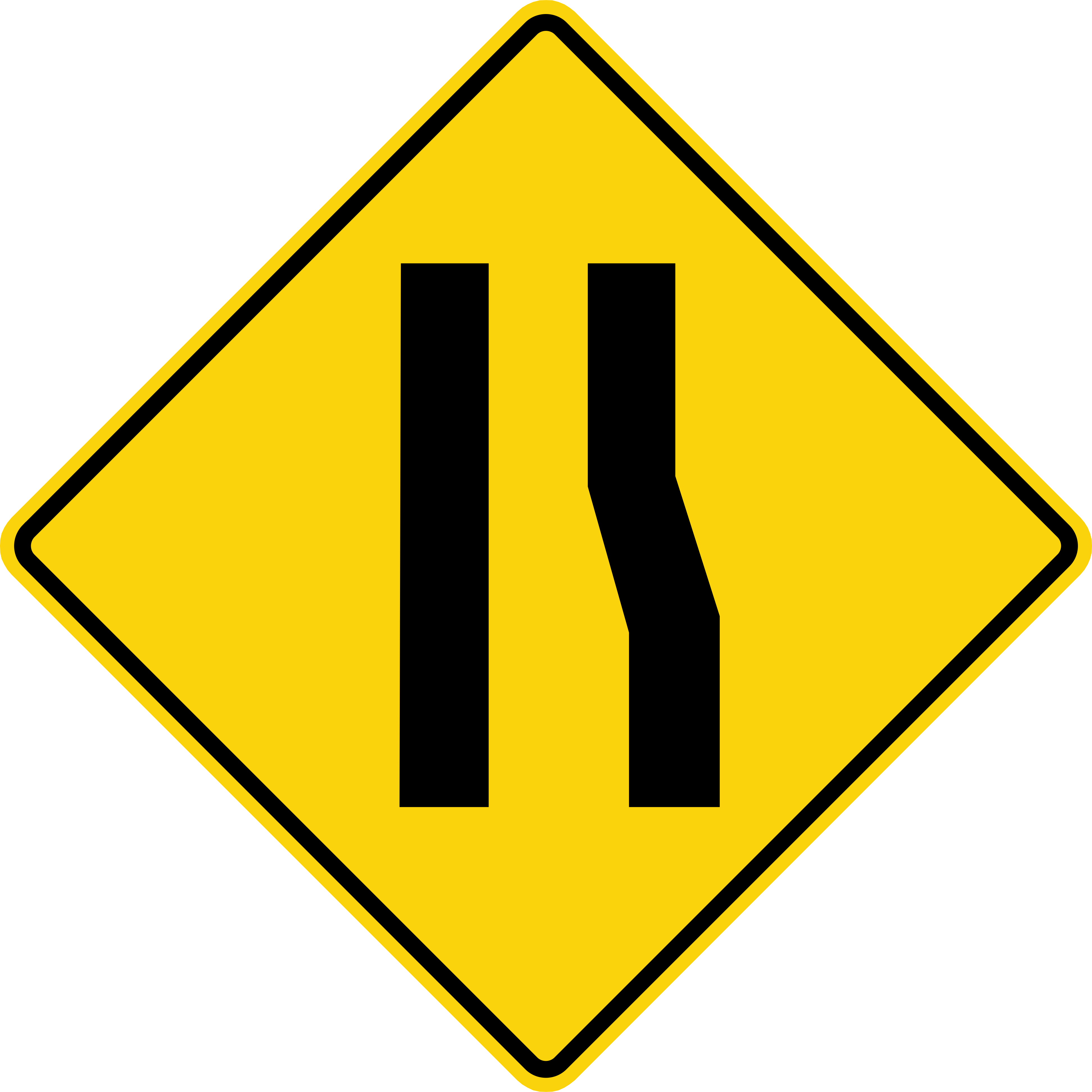
Lane ends / road narrows The right lane ends ahead. Signal and merge left when safe if you are in the ending lane.
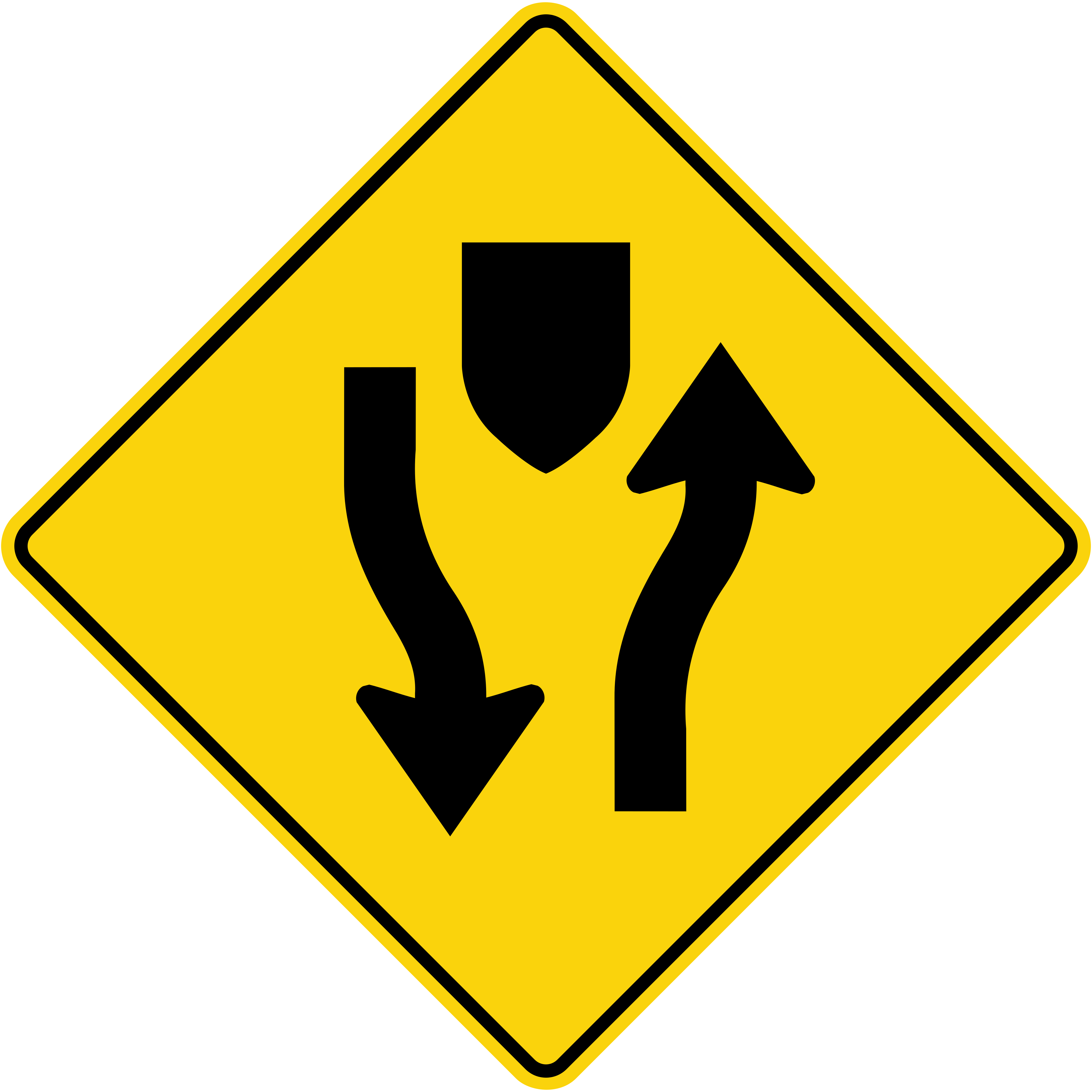
Divided highway begins A median will separate traffic ahead. Keep right of the median.
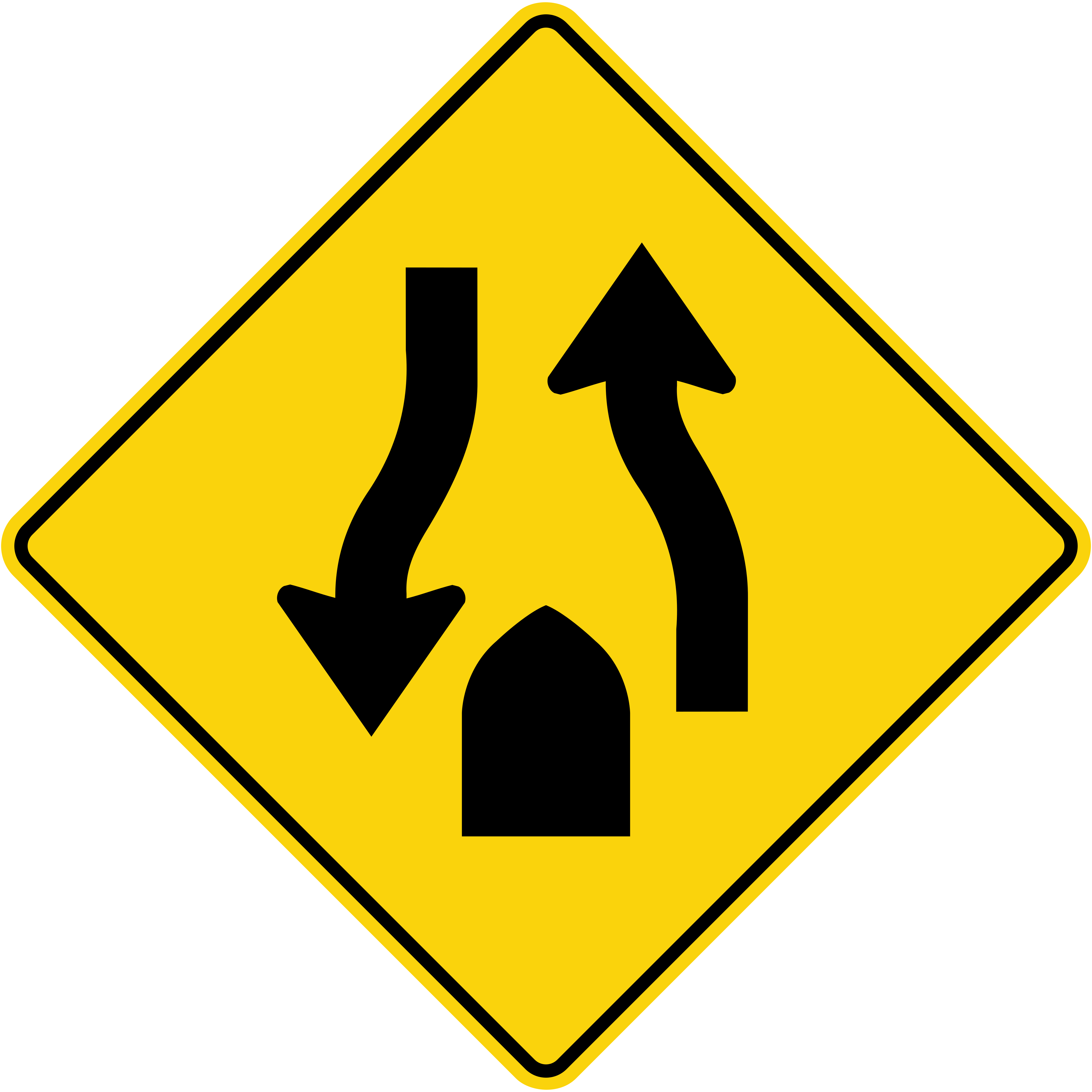
Divided highway ends The median ends; two-way traffic ahead. Keep right. Oncoming traffic will be beside you without a barrier.
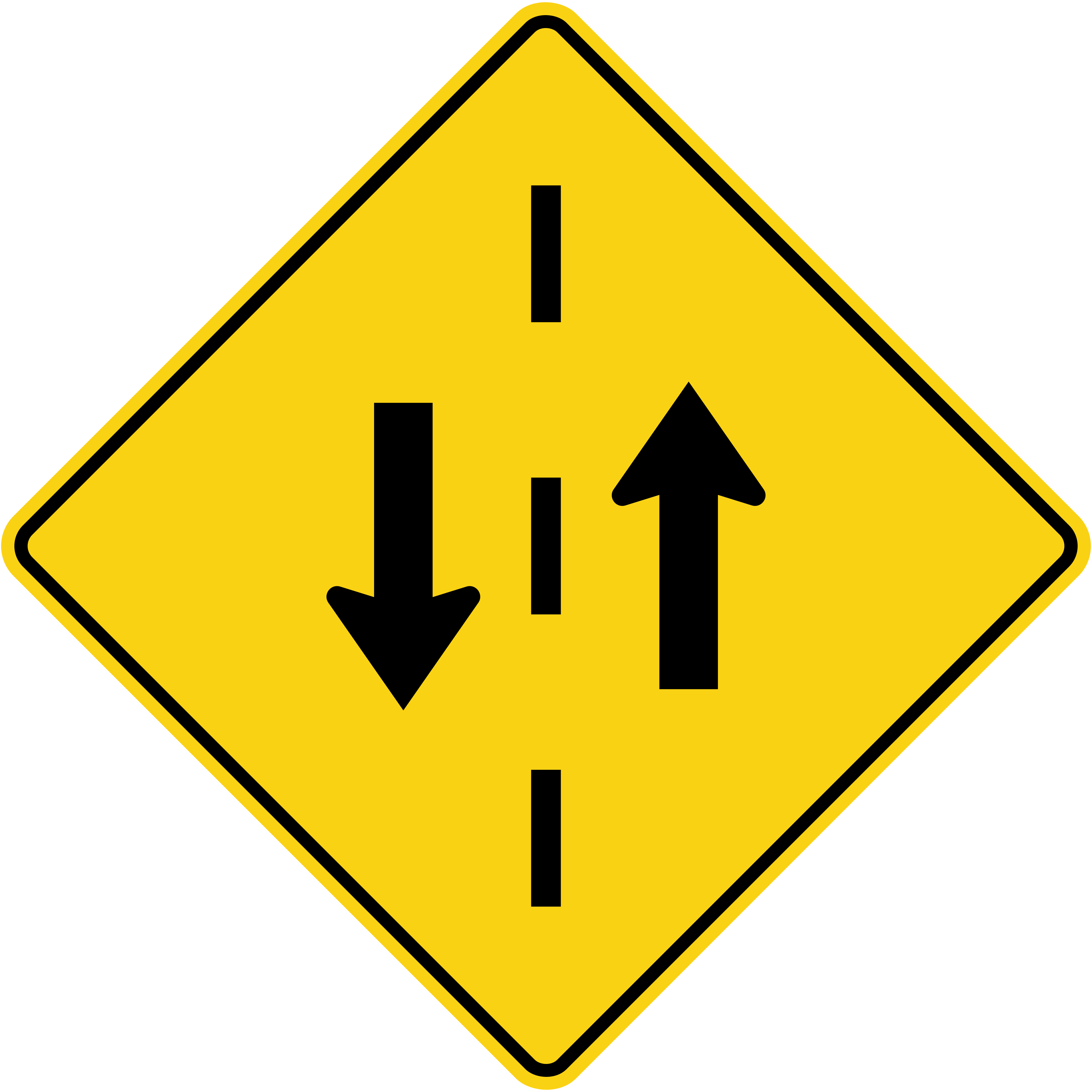
Two-way traffic Oncoming traffic ahead. Keep right; traffic is coming toward you.
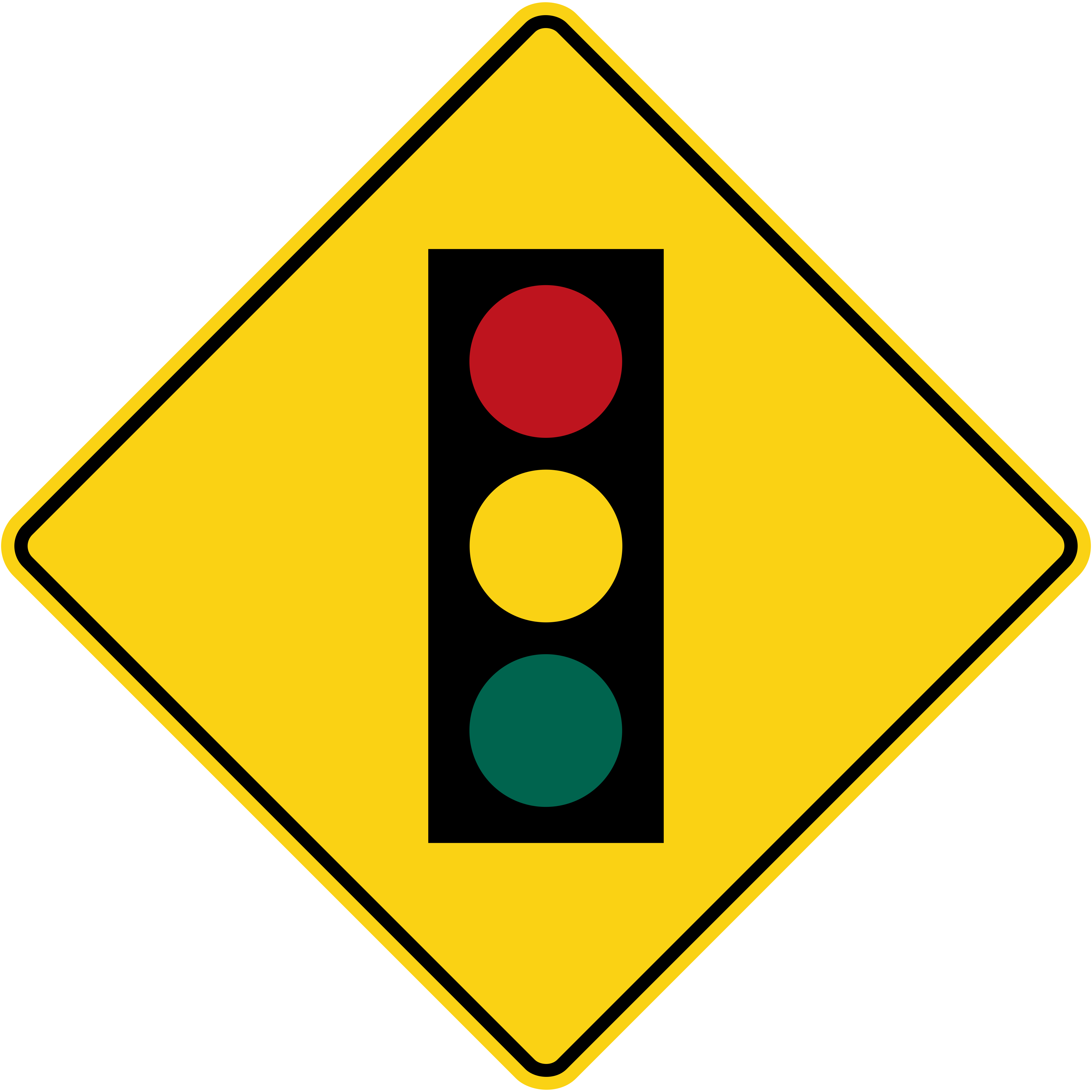
Traffic signals ahead Traffic lights ahead. Be ready to stop.
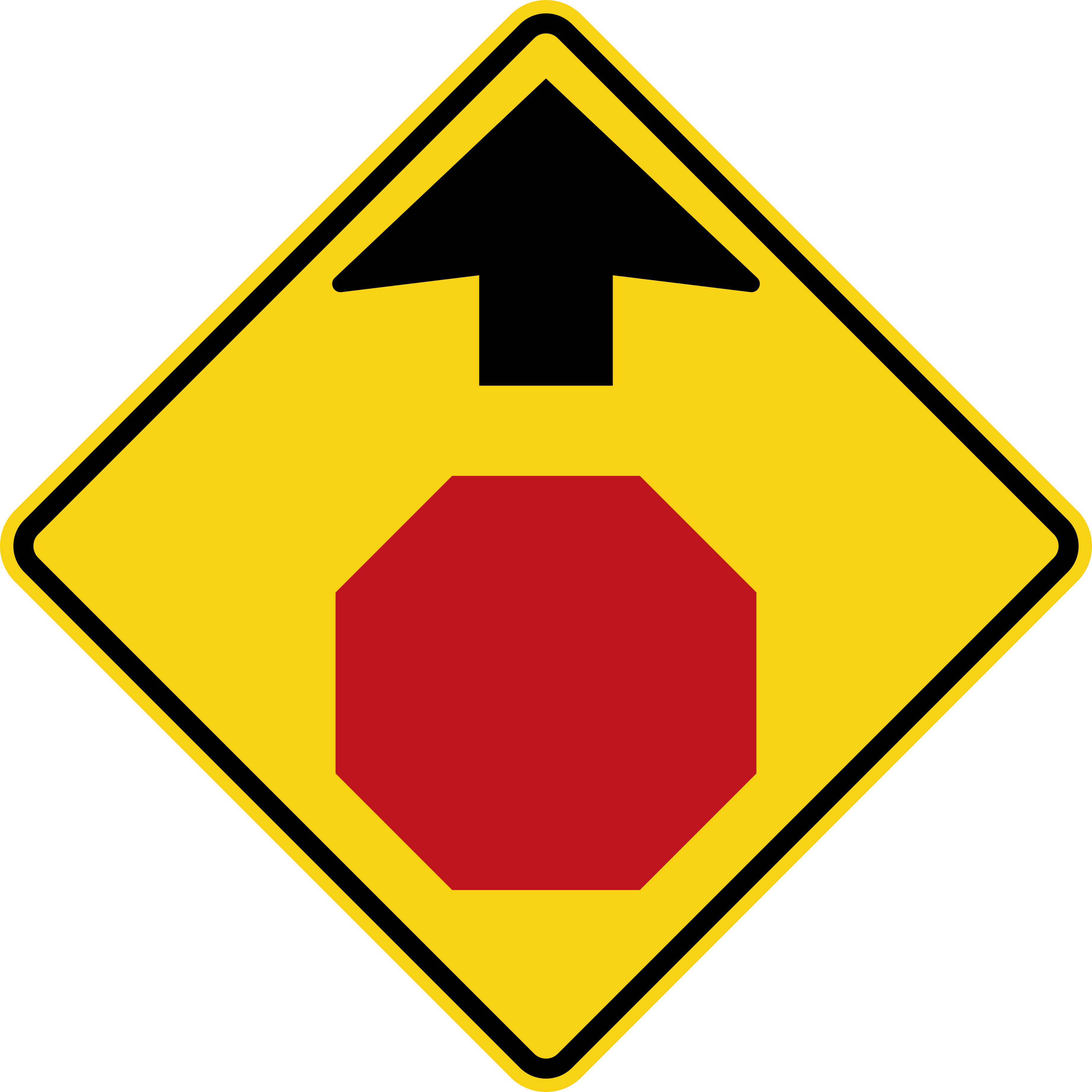
Stop sign ahead A stop sign is coming up. Start slowing now.
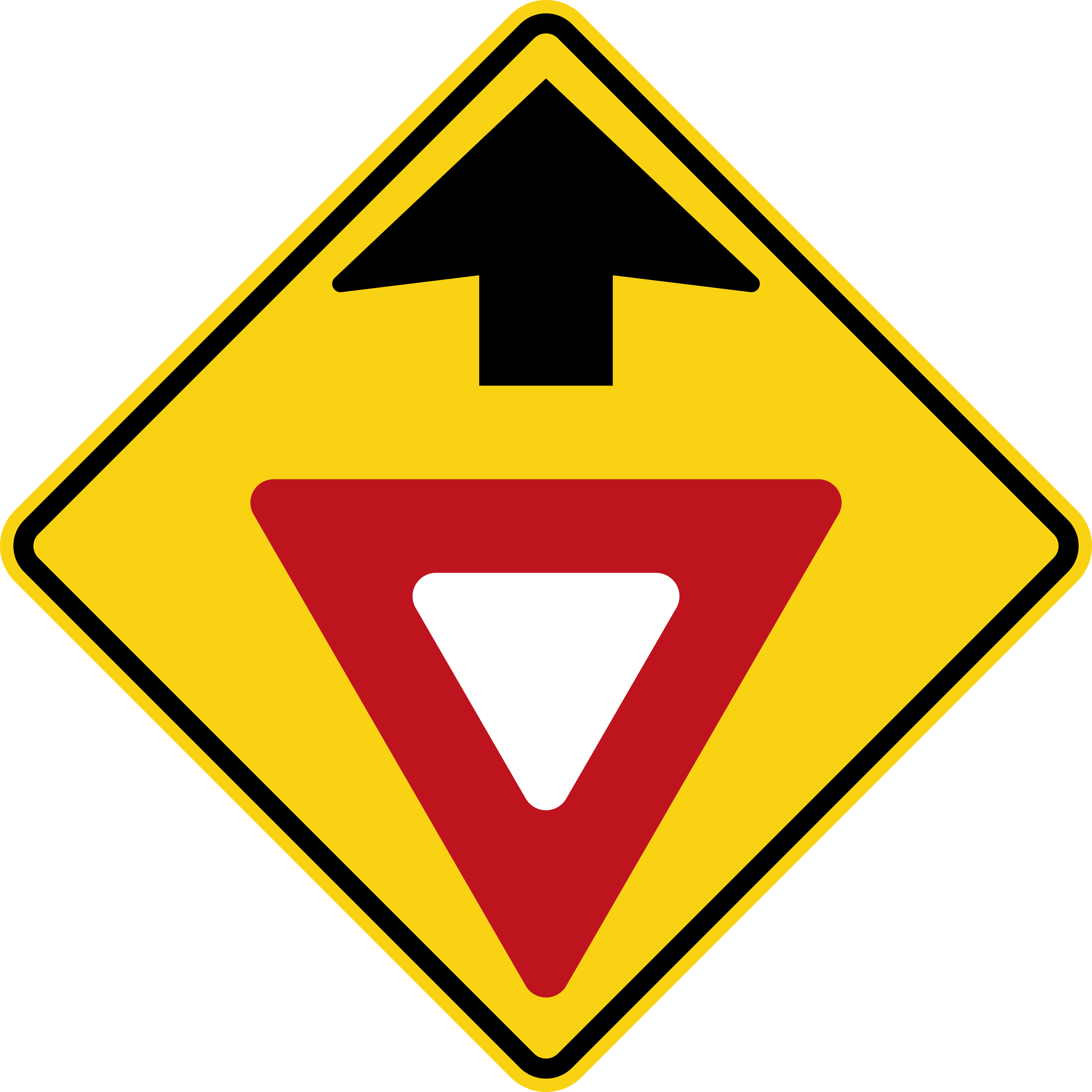
Yield sign ahead A yield sign is coming up. Slow down and get ready to give way.
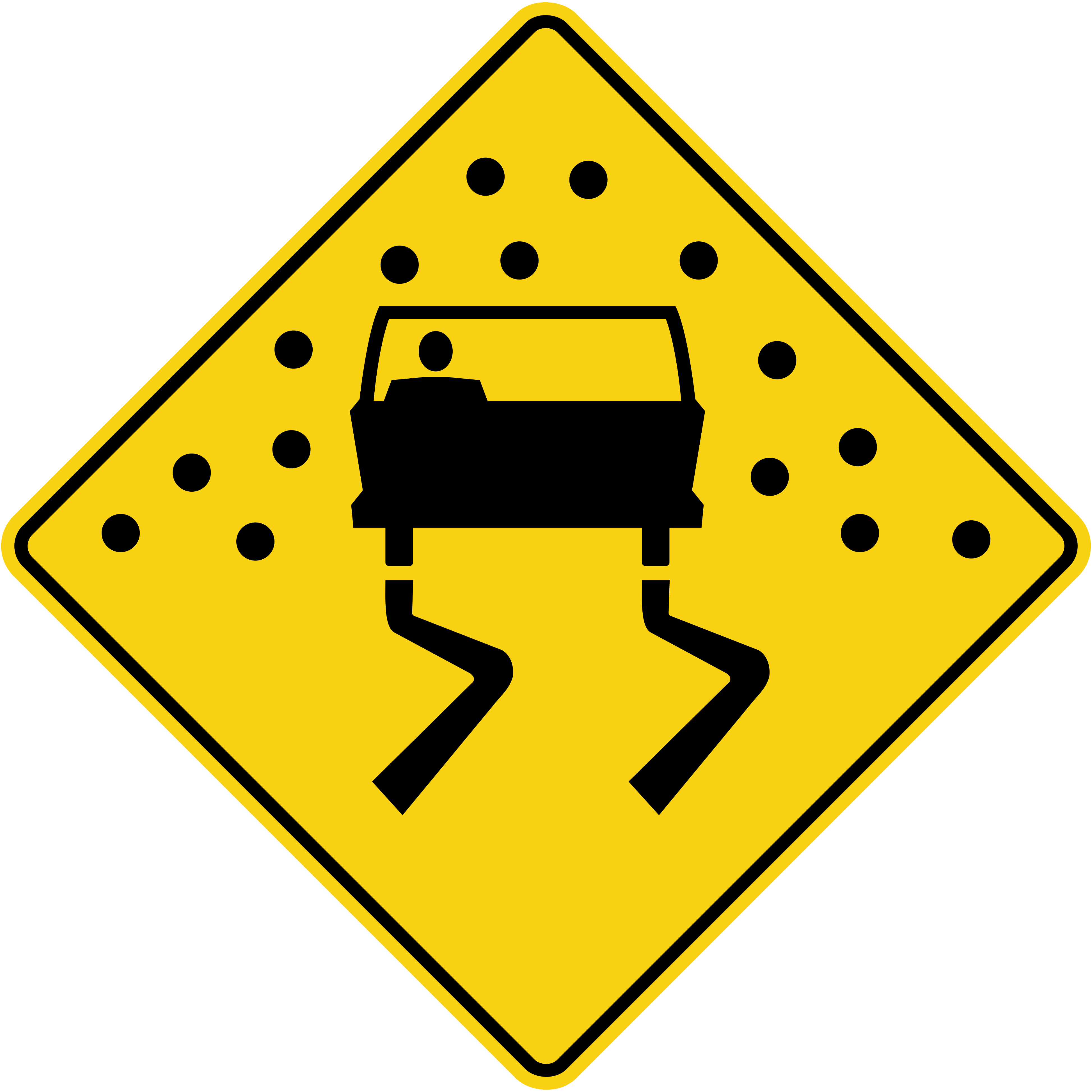
Slippery when wet Road becomes slippery in rain. Slow down, leave more room and avoid sudden braking.
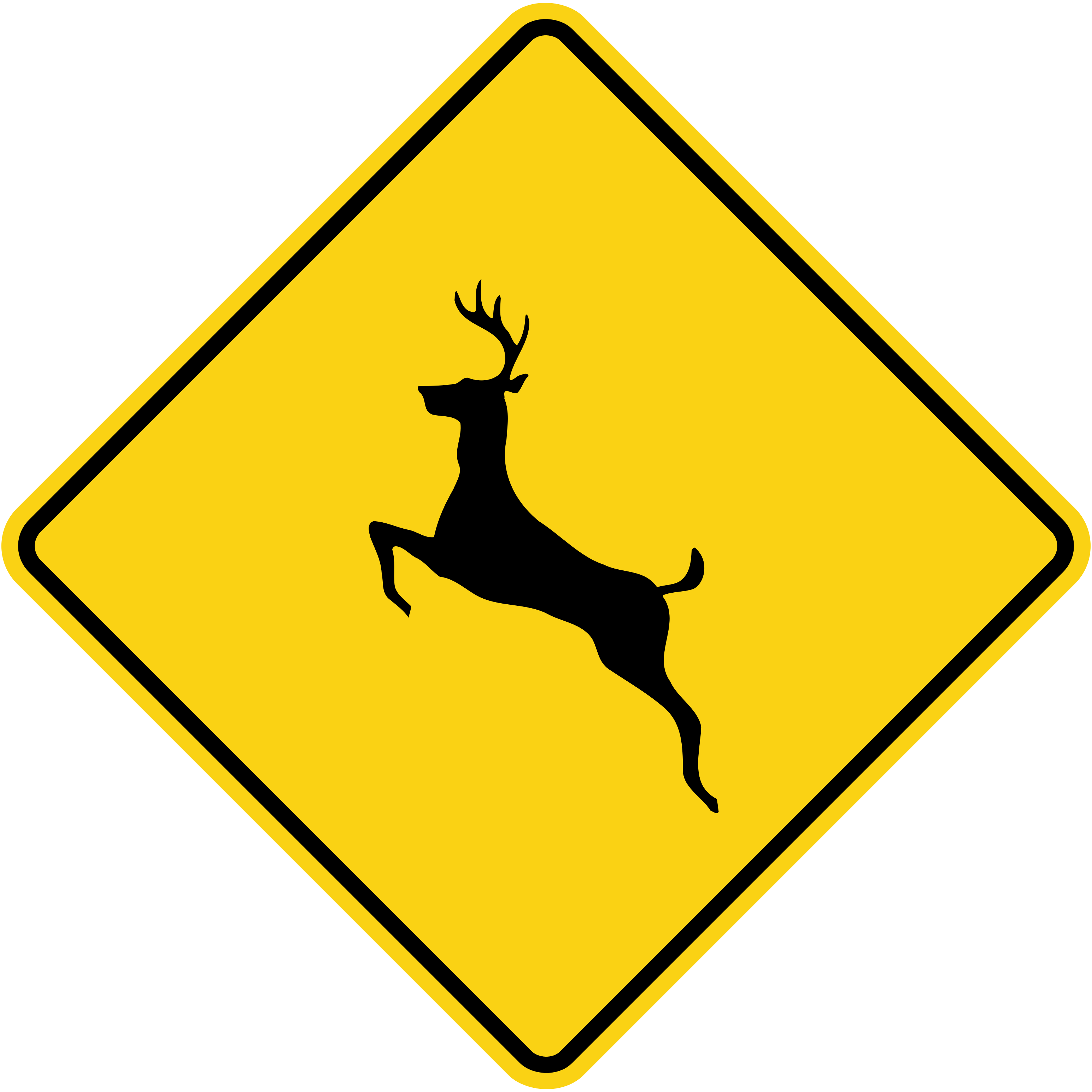
Deer crossing Deer often cross here. Slow down at dawn and dusk and scan the roadside.
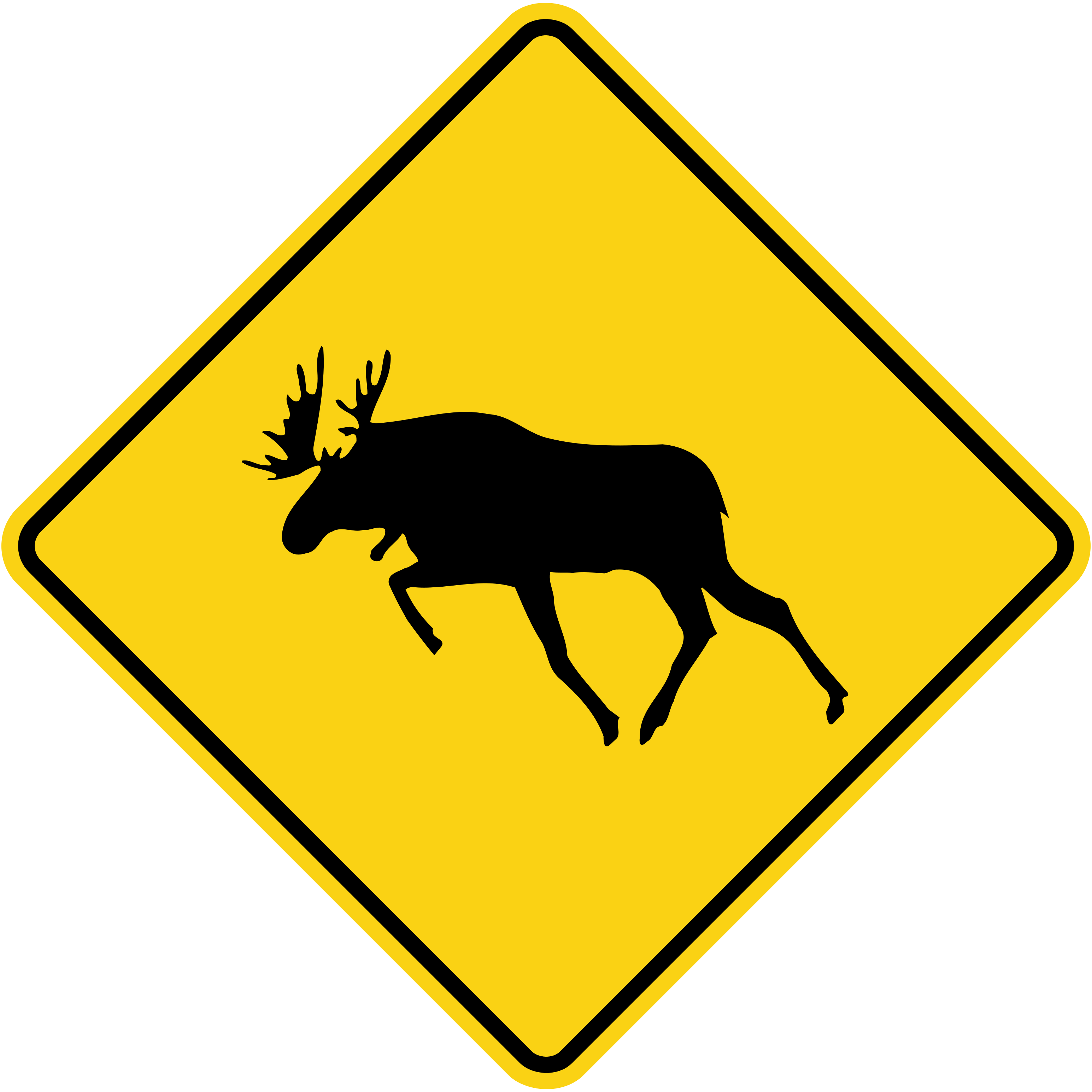
Moose crossing Moose often cross here. Slow down, especially at night. A moose is tall; headlights often miss its eyes.

Bump A bump or uneven road ahead. Slow down to keep control.
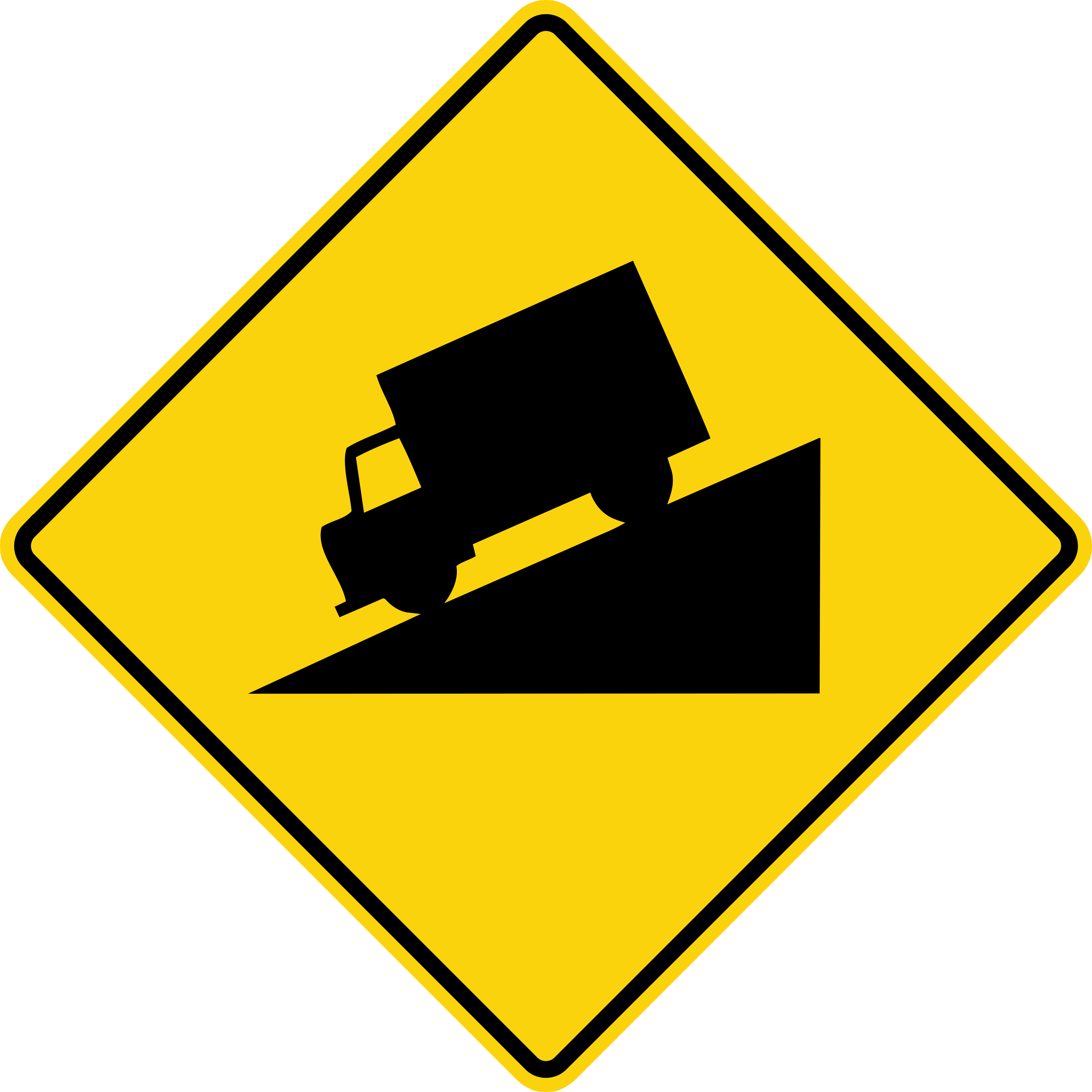
Steep hill Steep downgrade ahead. Shift to a lower gear before the descent; do not ride the brakes.
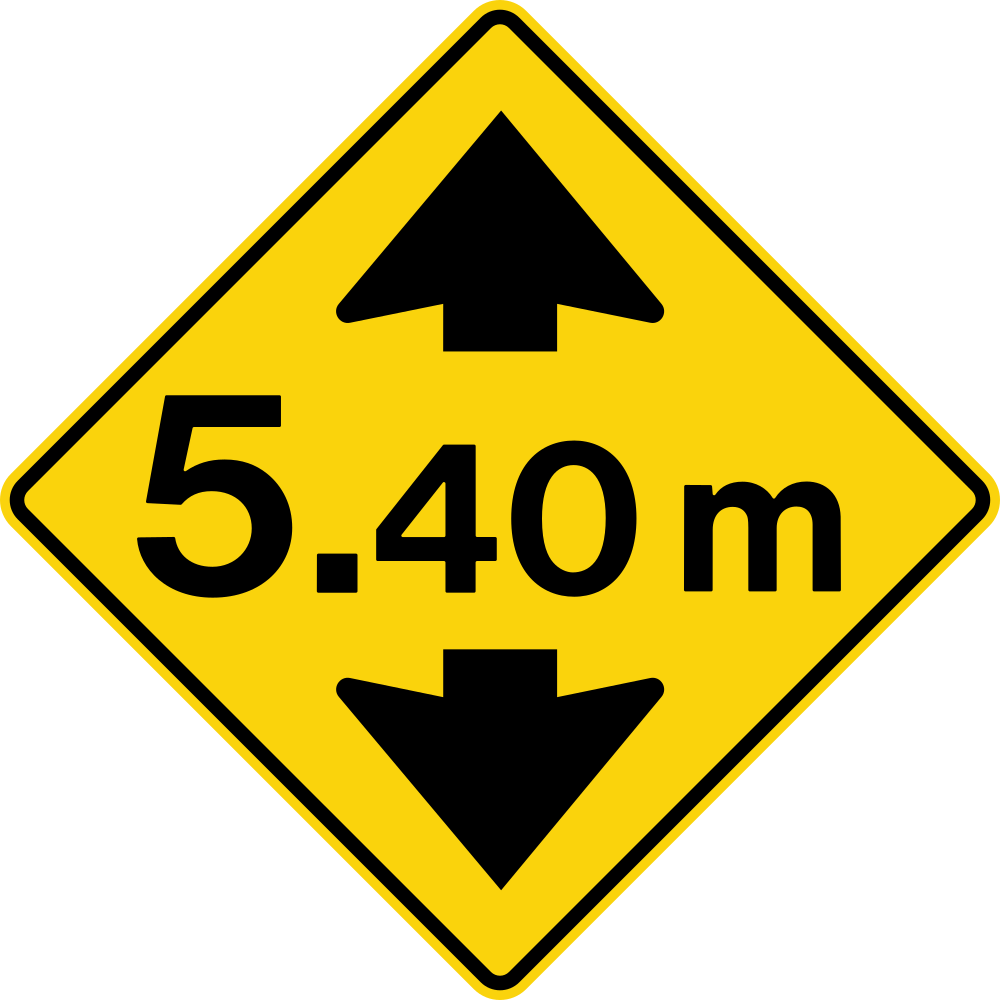
Low clearance Low overhead structure ahead. Vehicles taller than the posted height must not go under it.
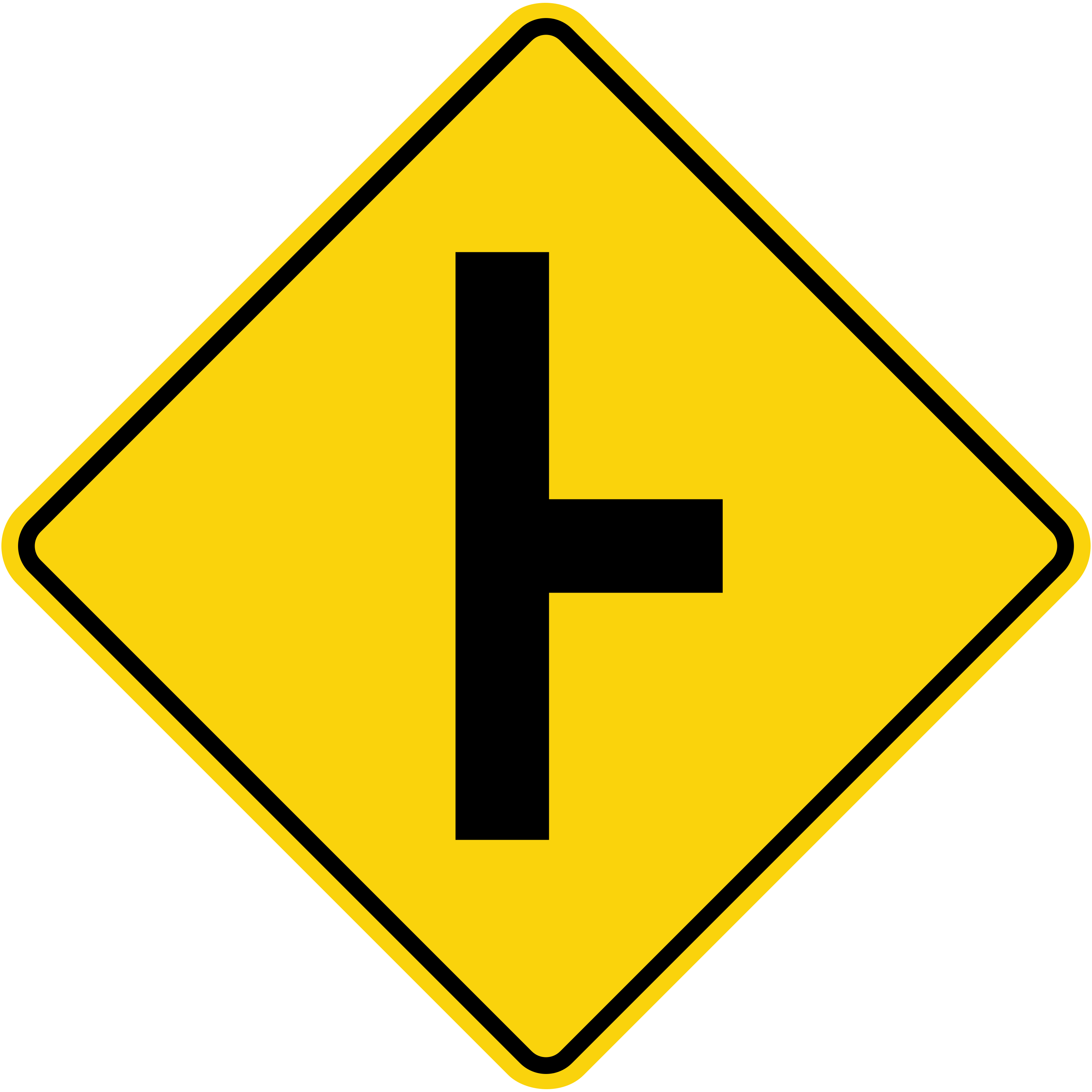
Side road A road joins from the side ahead. Watch for vehicles entering from the side road.
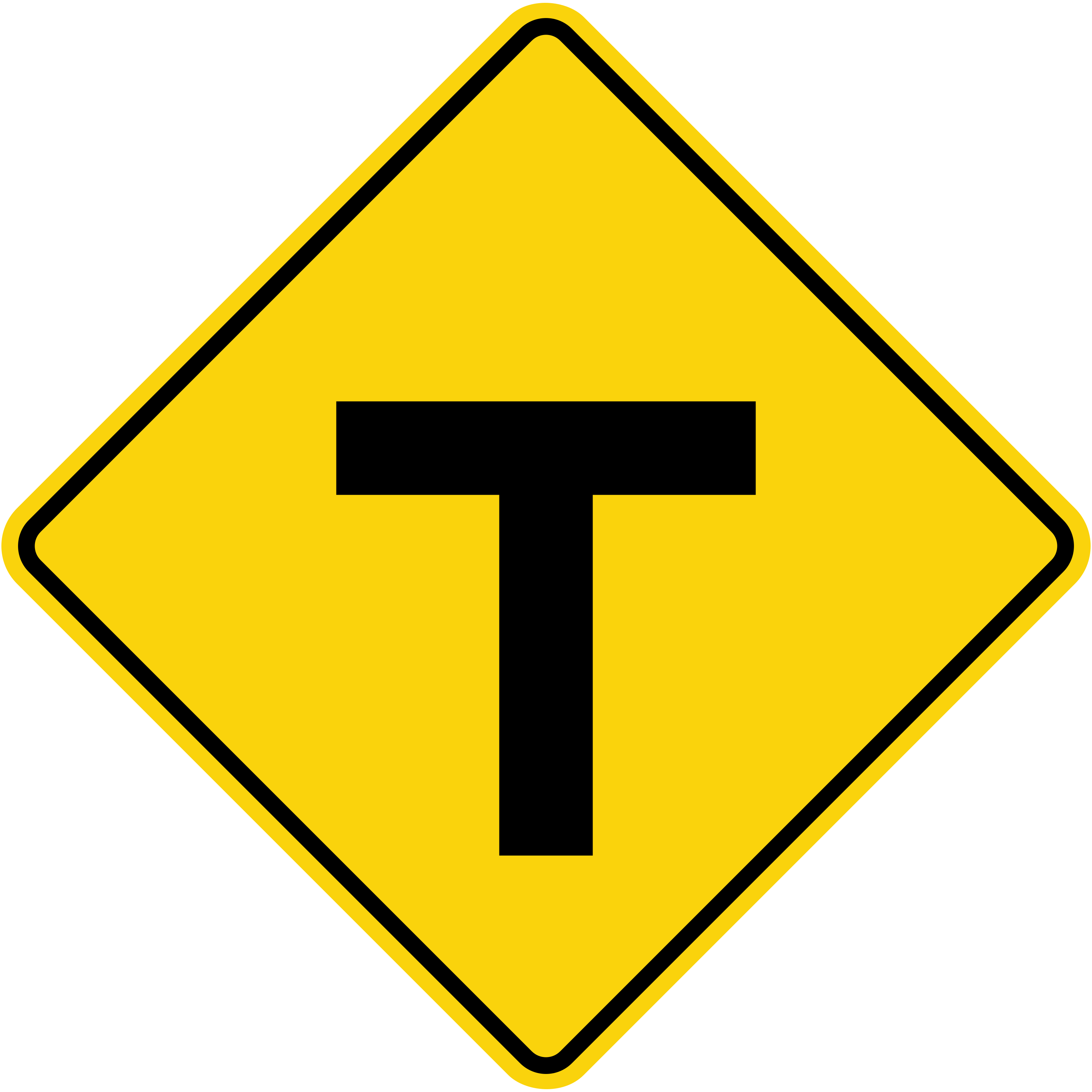
T intersection Your road ends at a crossroad ahead. Prepare to stop and turn left or right.
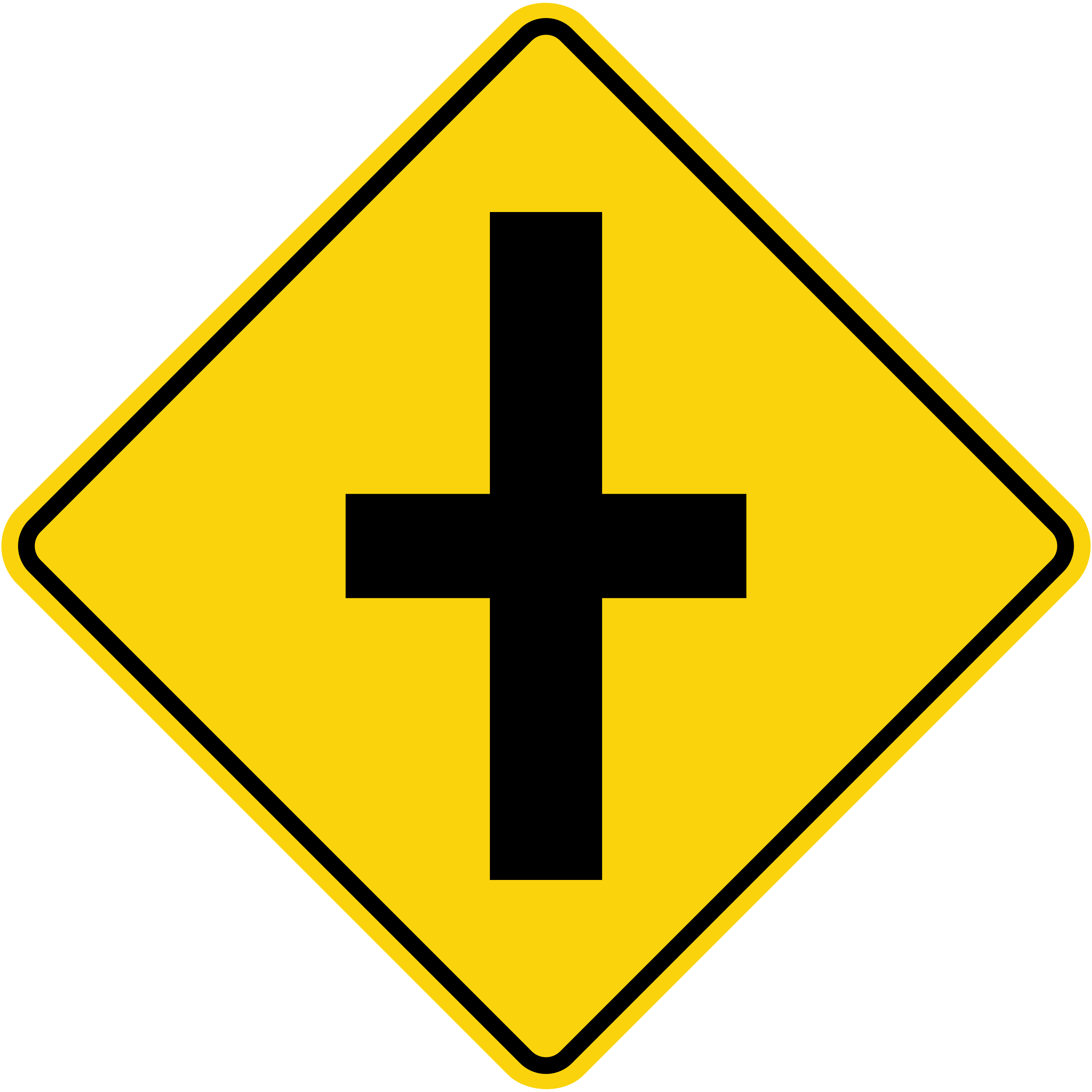
Intersection ahead A crossroad is ahead. Watch for cross traffic.
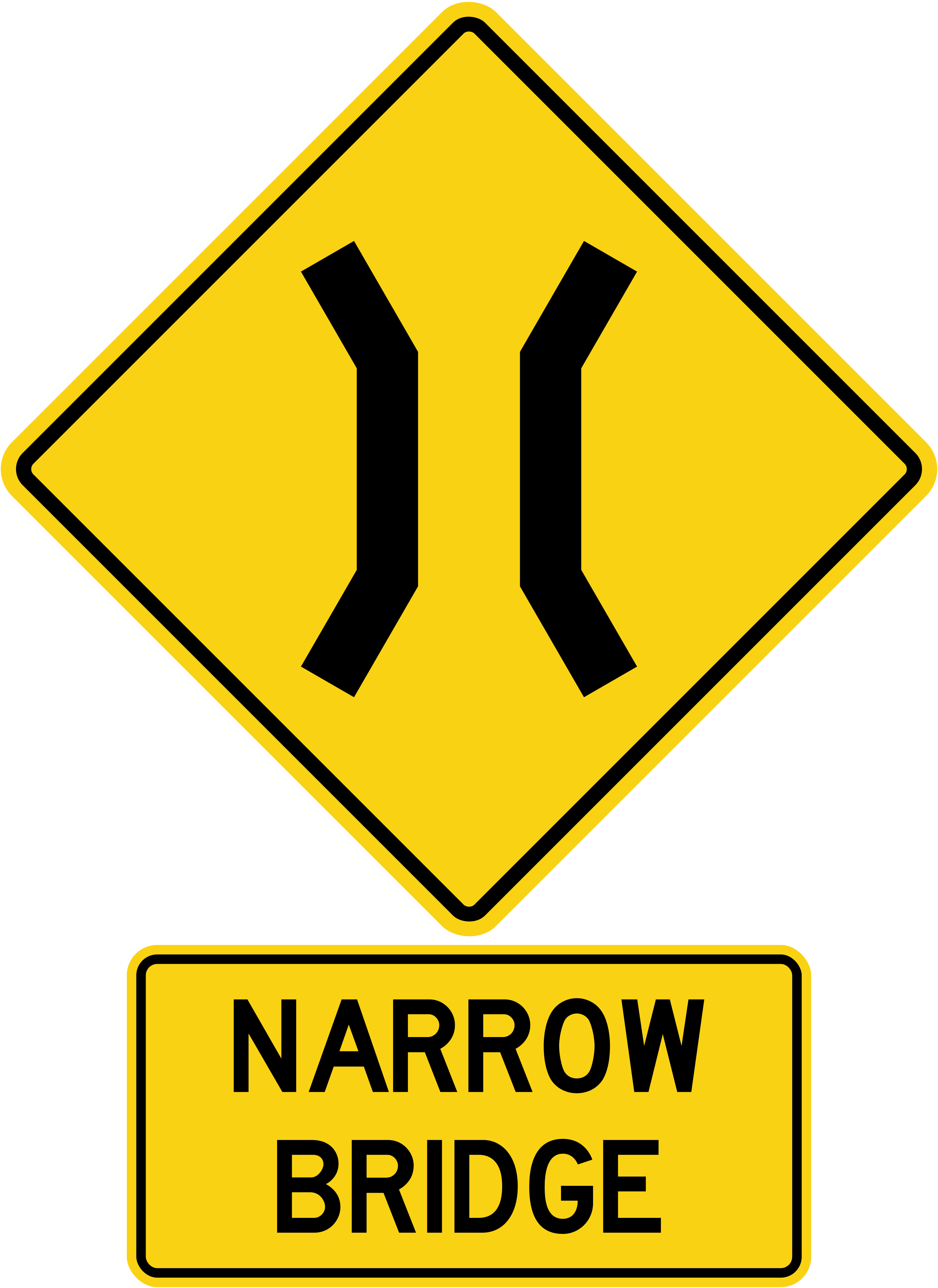
Narrow bridge The road narrows at a bridge ahead. Slow down and be ready to yield to oncoming traffic.
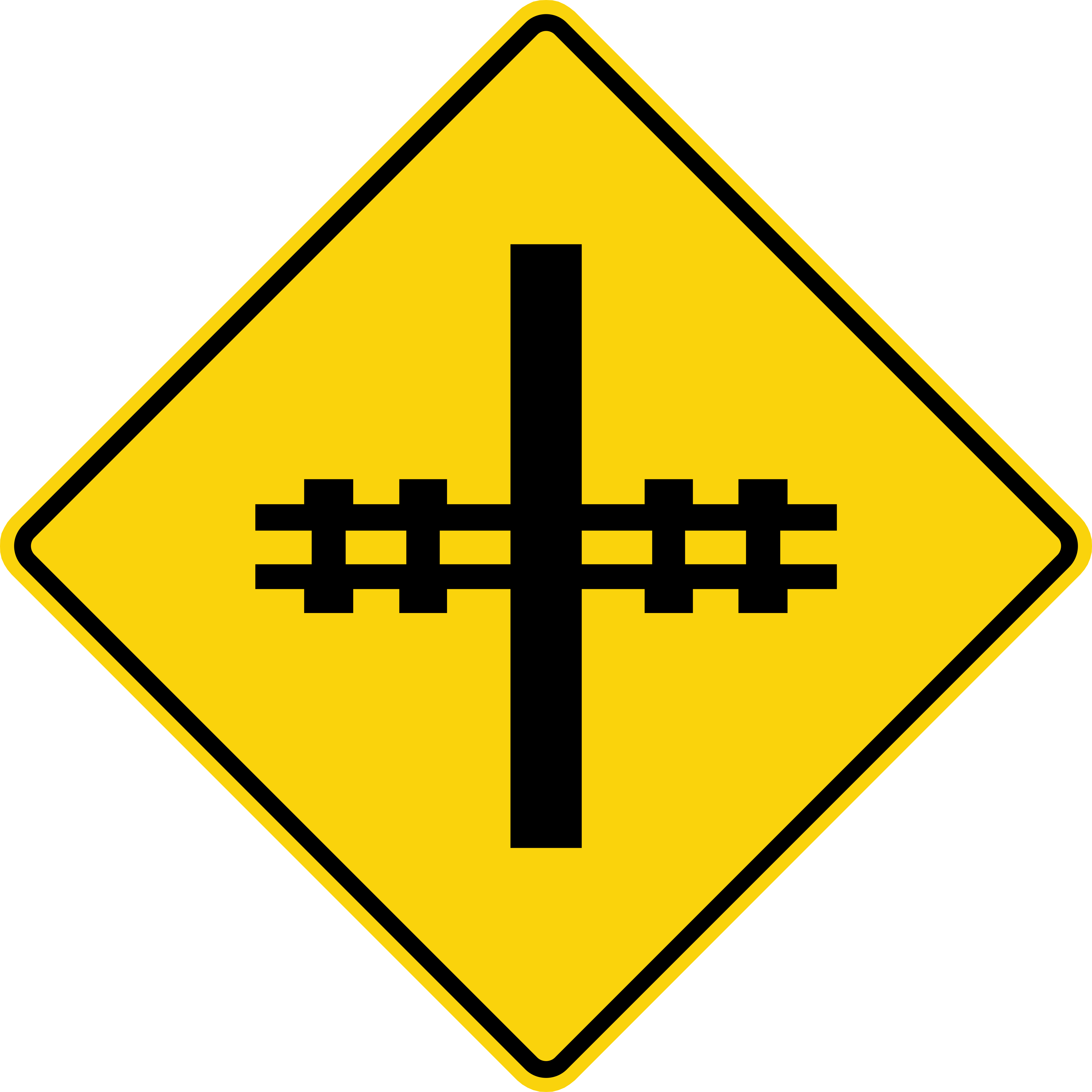
Railway crossing ahead Railway tracks cross the road ahead. Slow down, look and listen both ways.

Slow-moving vehicle Vehicle travelling under 40 km/h. Slow down early and pass only when safe and legal.
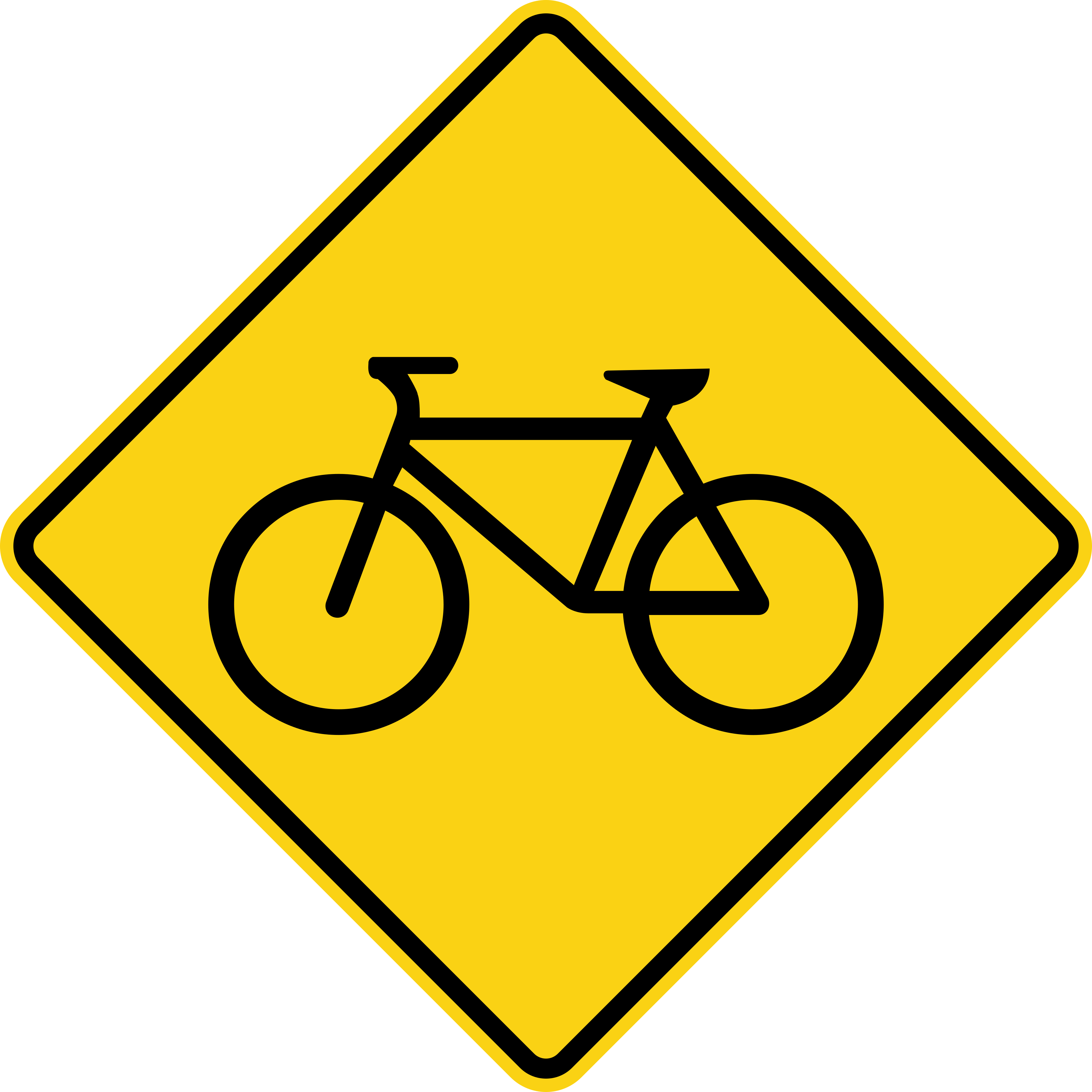
Bicycle crossing Cyclists may cross or ride on the road ahead. Slow down and watch for cyclists.
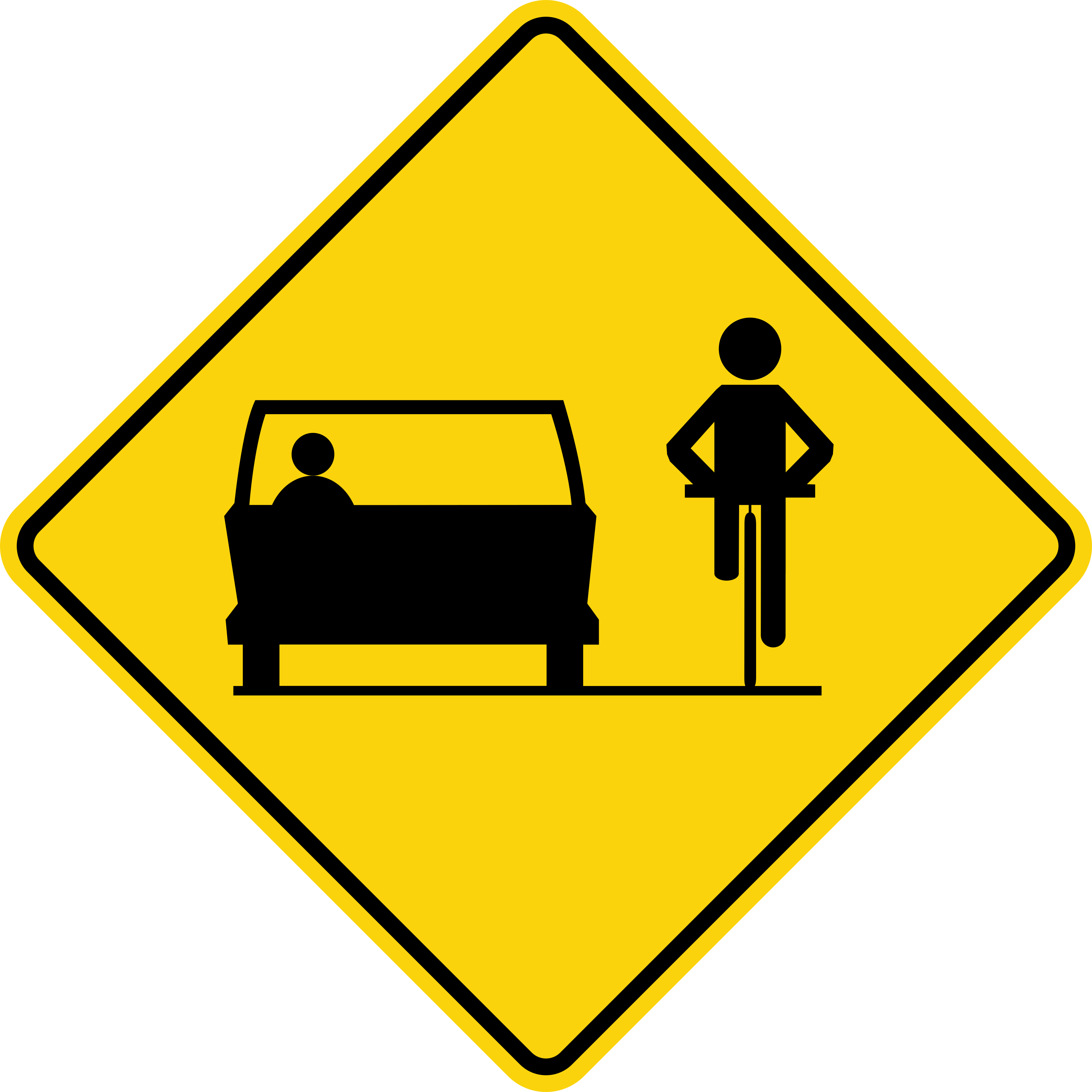
Share the road Give cyclists and other vehicles safe space on this road. The lane may be too narrow to pass a cyclist safely in it.
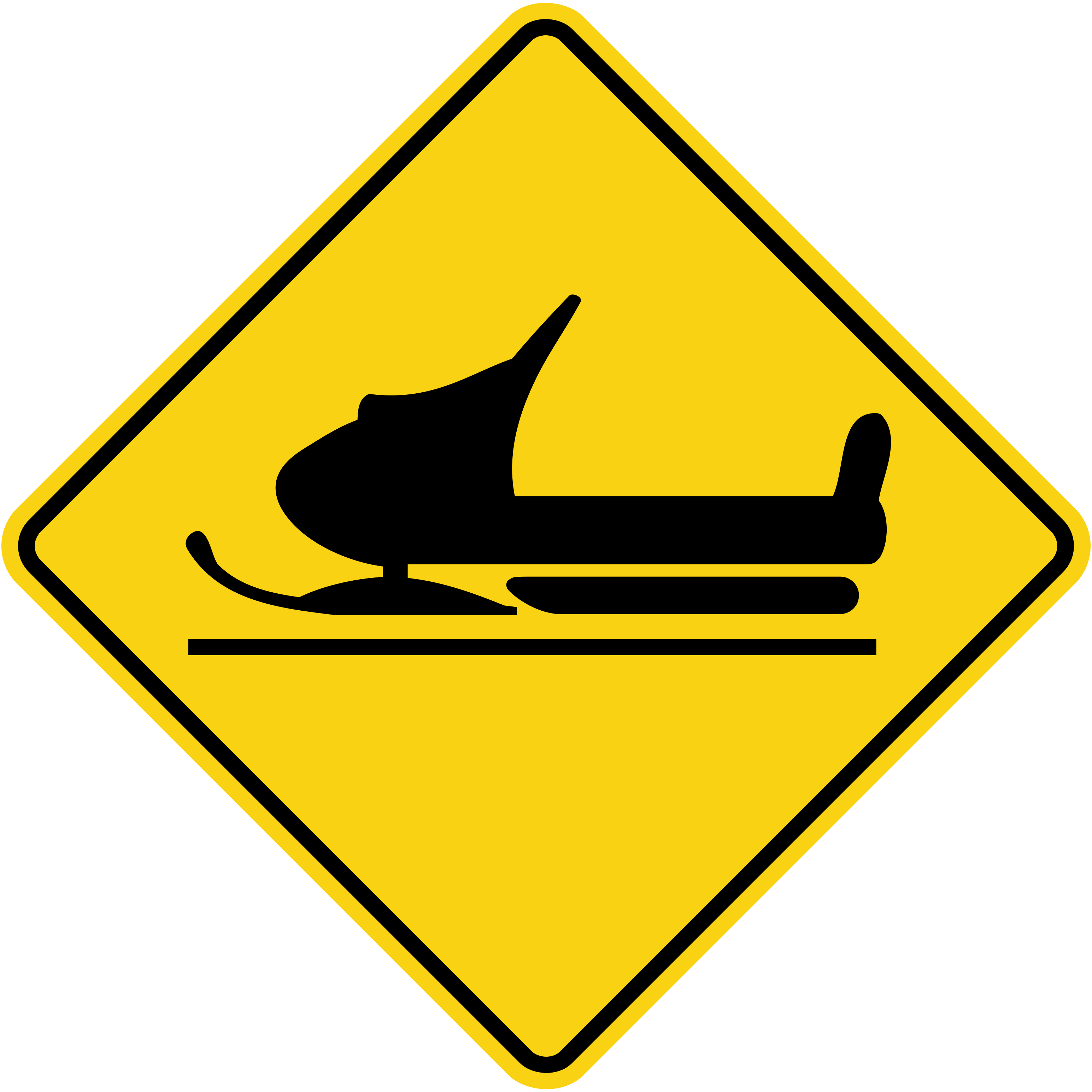
Snowmobile crossing Snowmobiles cross this road. Slow down and watch for snowmobiles, especially at night.
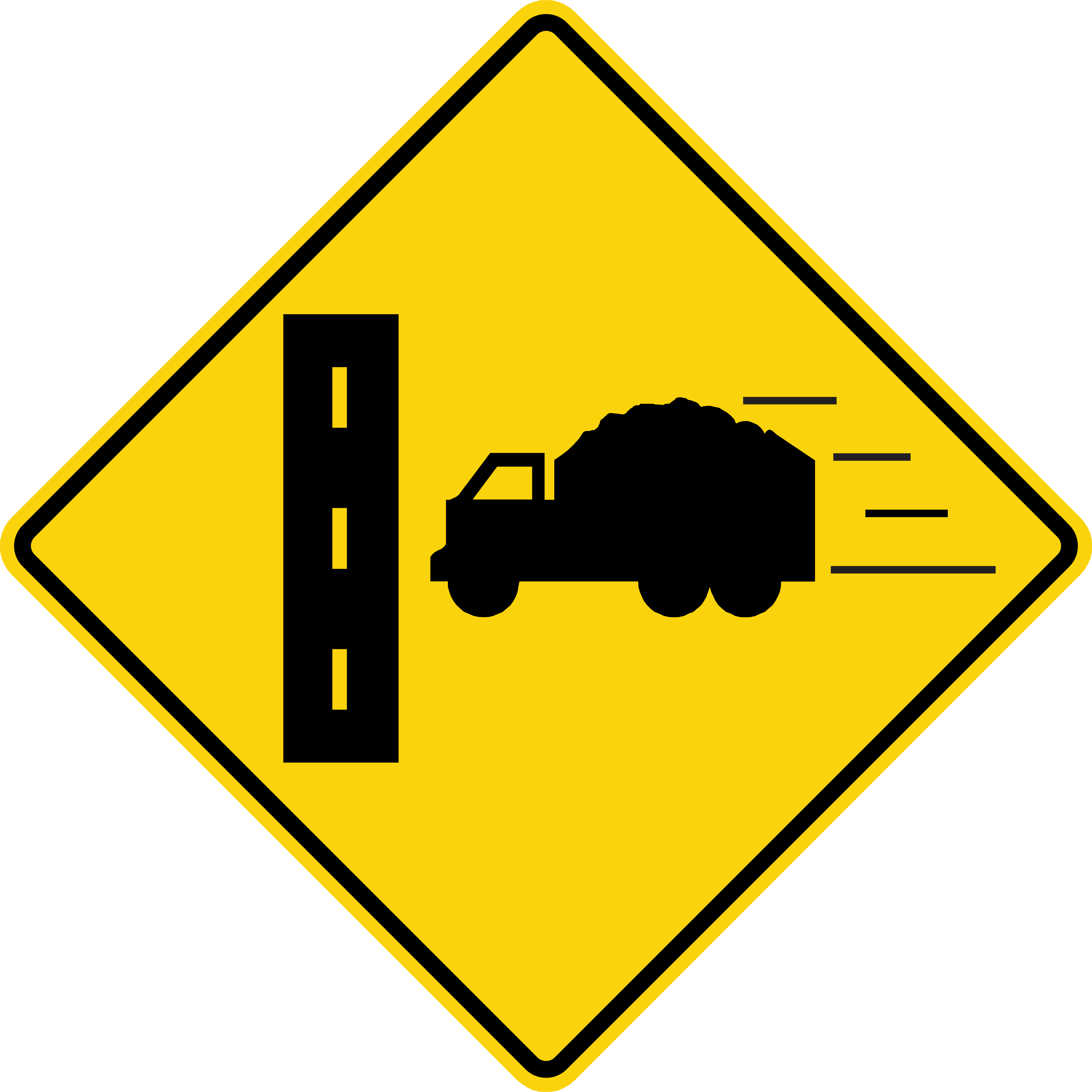
Truck entrance Trucks may enter the road from the side shown. Be ready to slow down for slow, turning trucks.
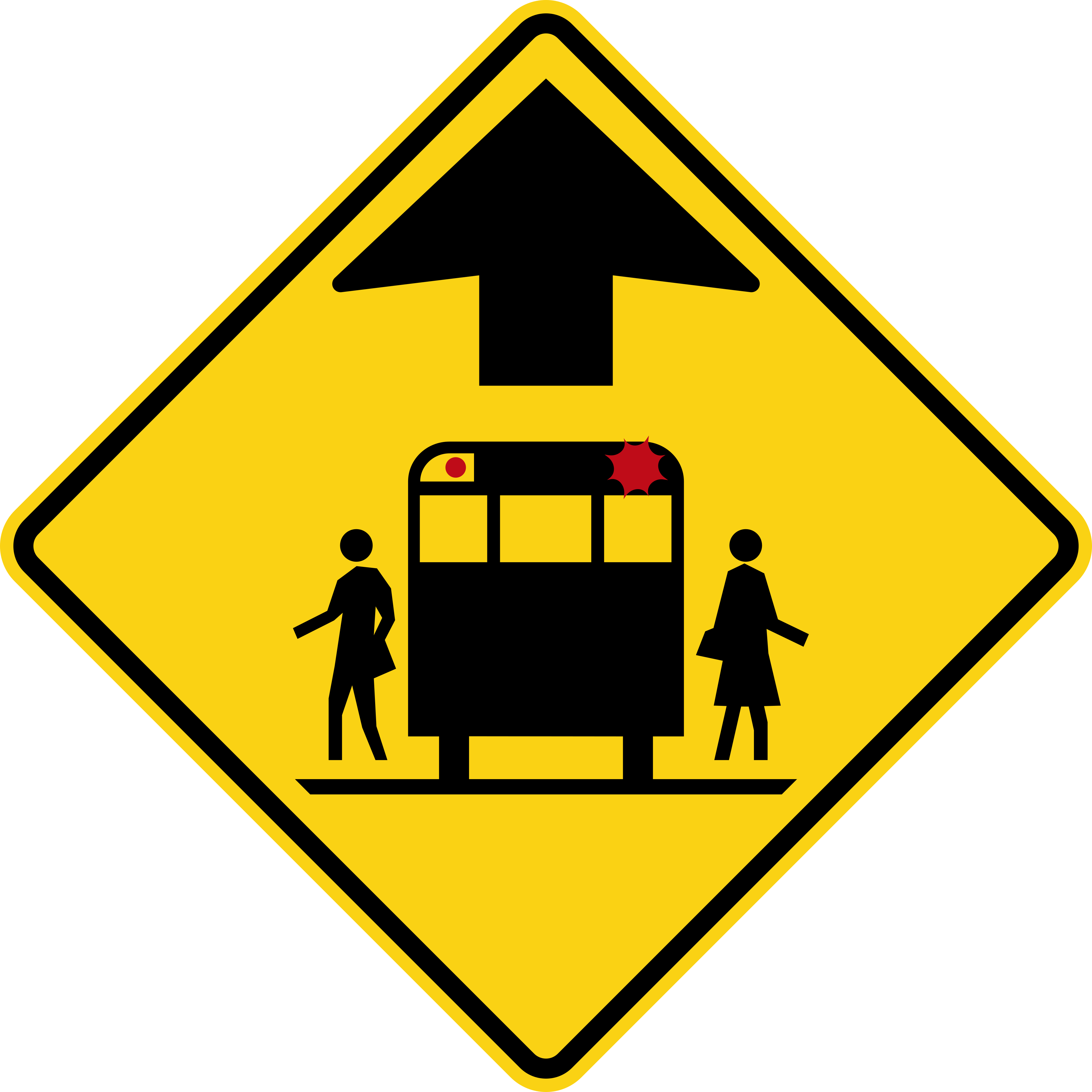
Hidden school bus stop ahead A school bus stops ahead where you may not see it in time. Slow down and be ready to stop for its flashing lights.
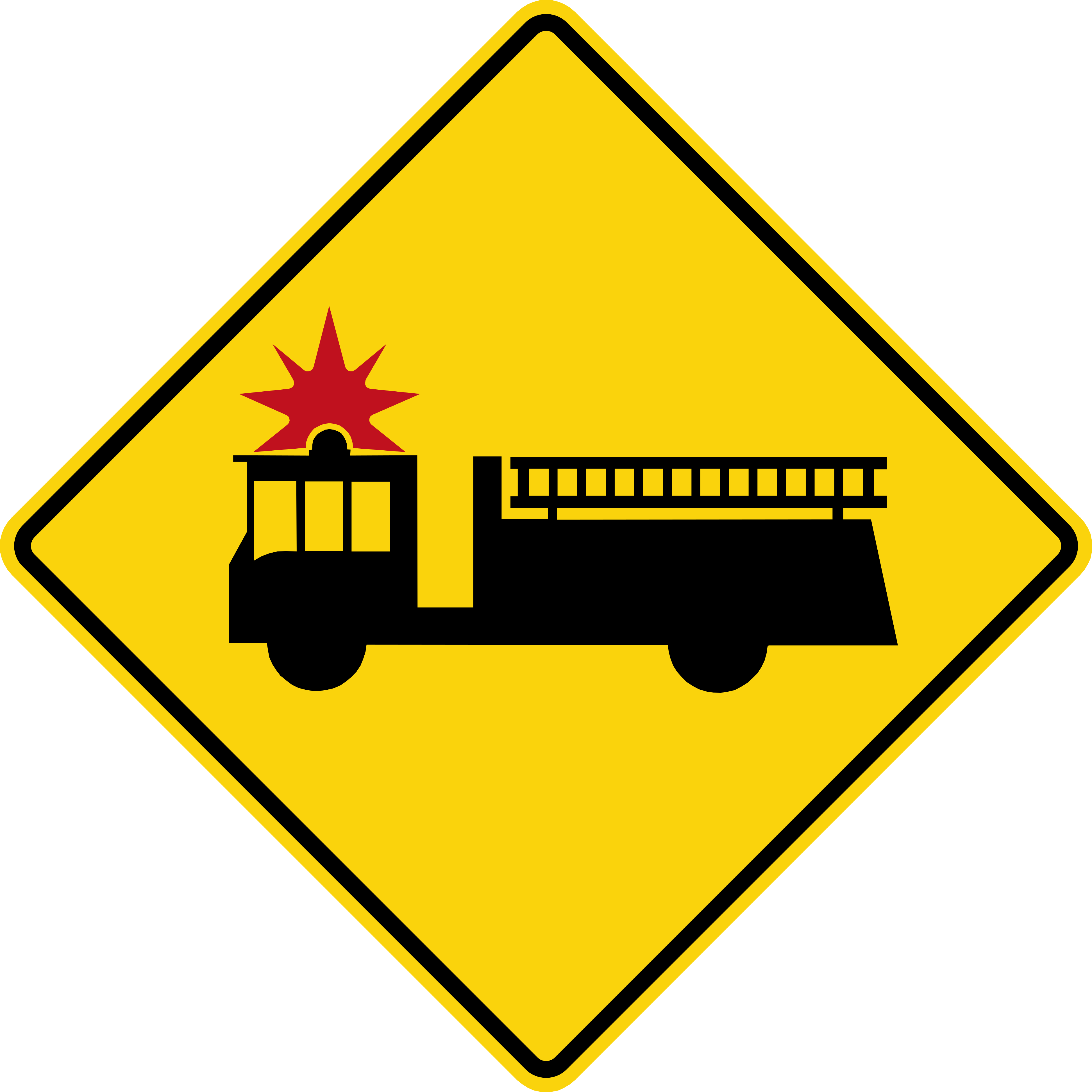
Fire truck entrance Fire trucks may enter the road from the side shown. Be ready to stop and let them out.
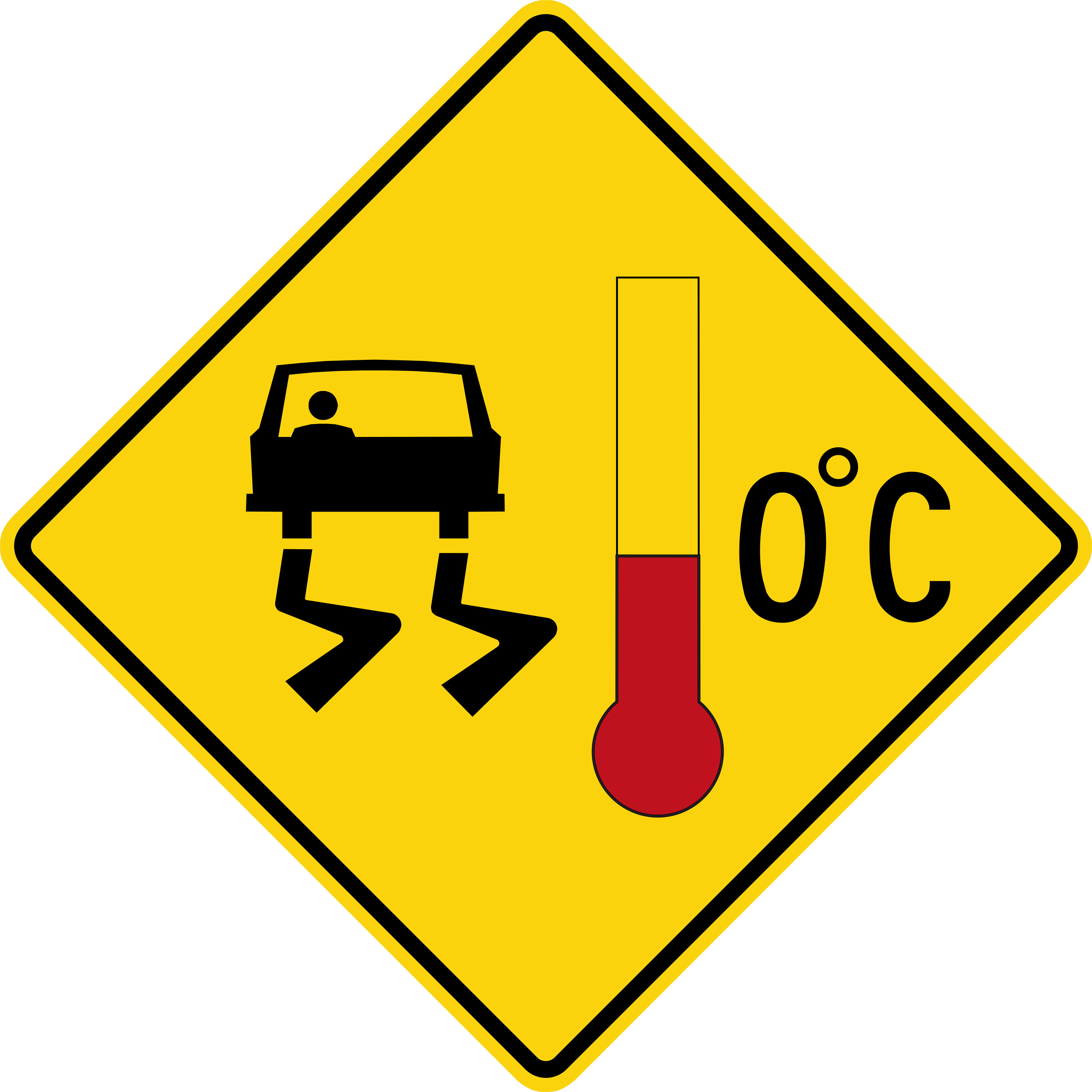
Slippery when frosty The pavement ahead may be icy near freezing temperatures. Slow down and avoid sudden braking or steering.
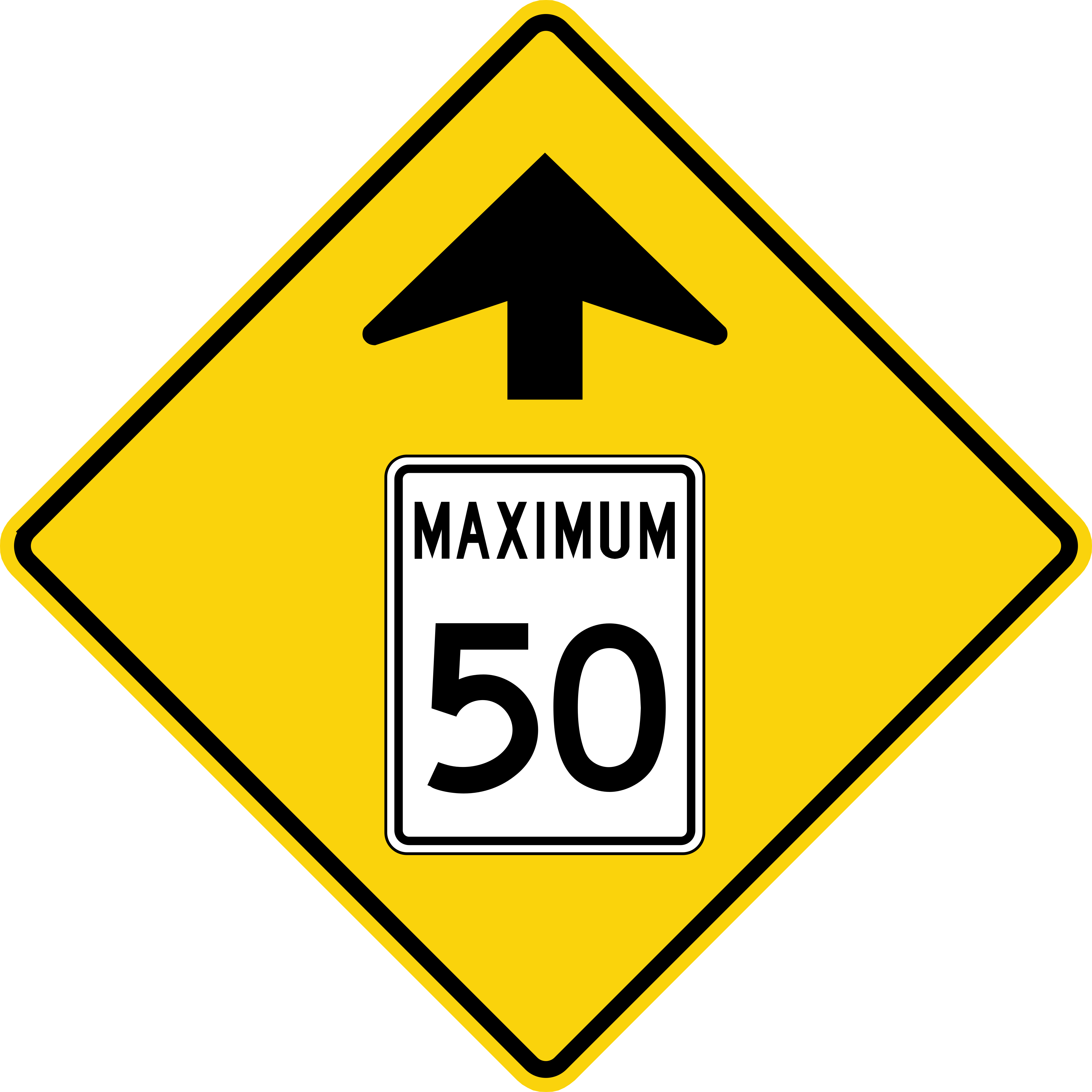
Maximum speed ahead A lower maximum speed limit begins ahead. Start slowing down before you reach the new limit.
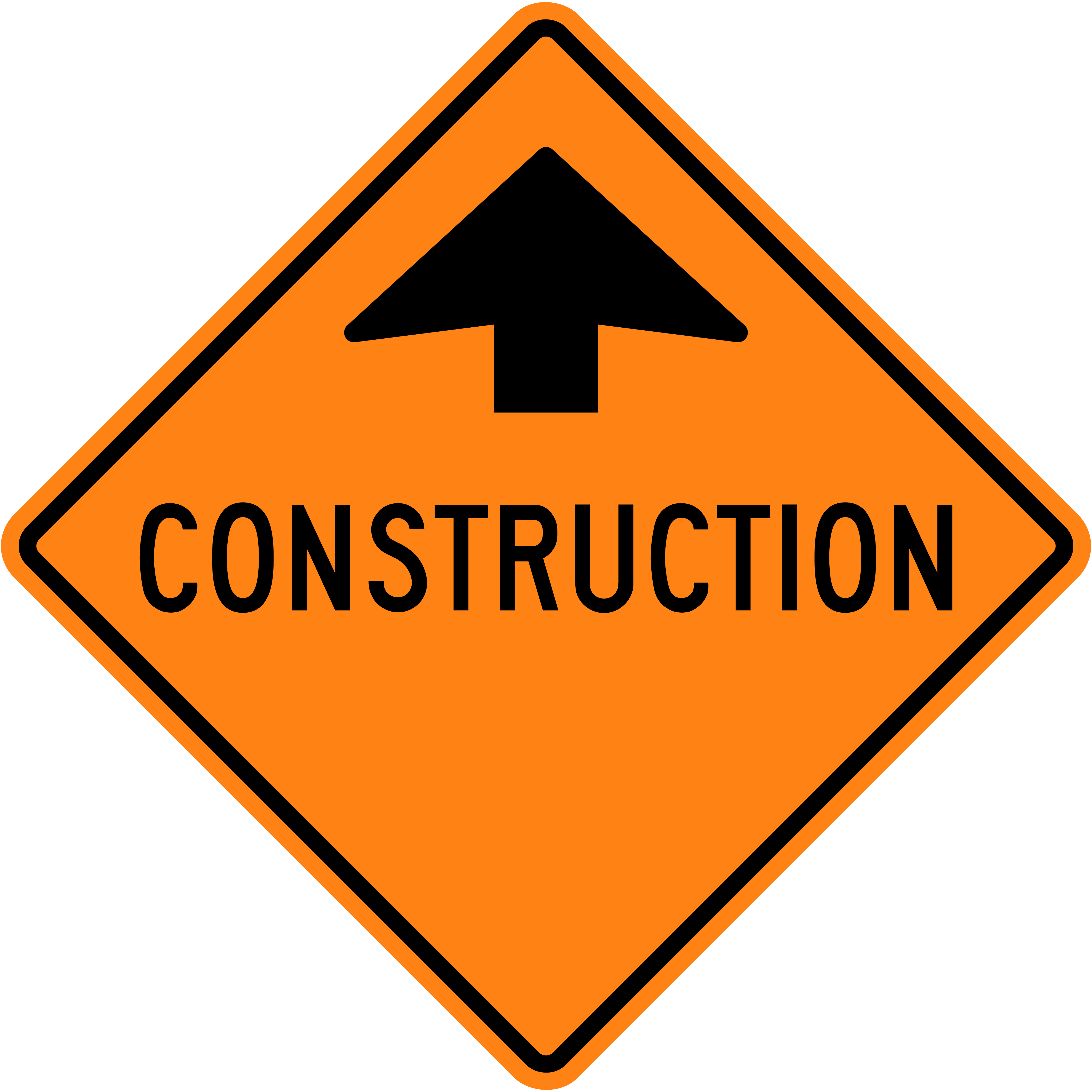
Construction ahead Road work ahead. Slow down, obey workers and signs, and watch for equipment.
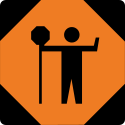
Traffic control person ahead A flagger is directing traffic ahead. Obey the traffic control person; their signals override other signs.
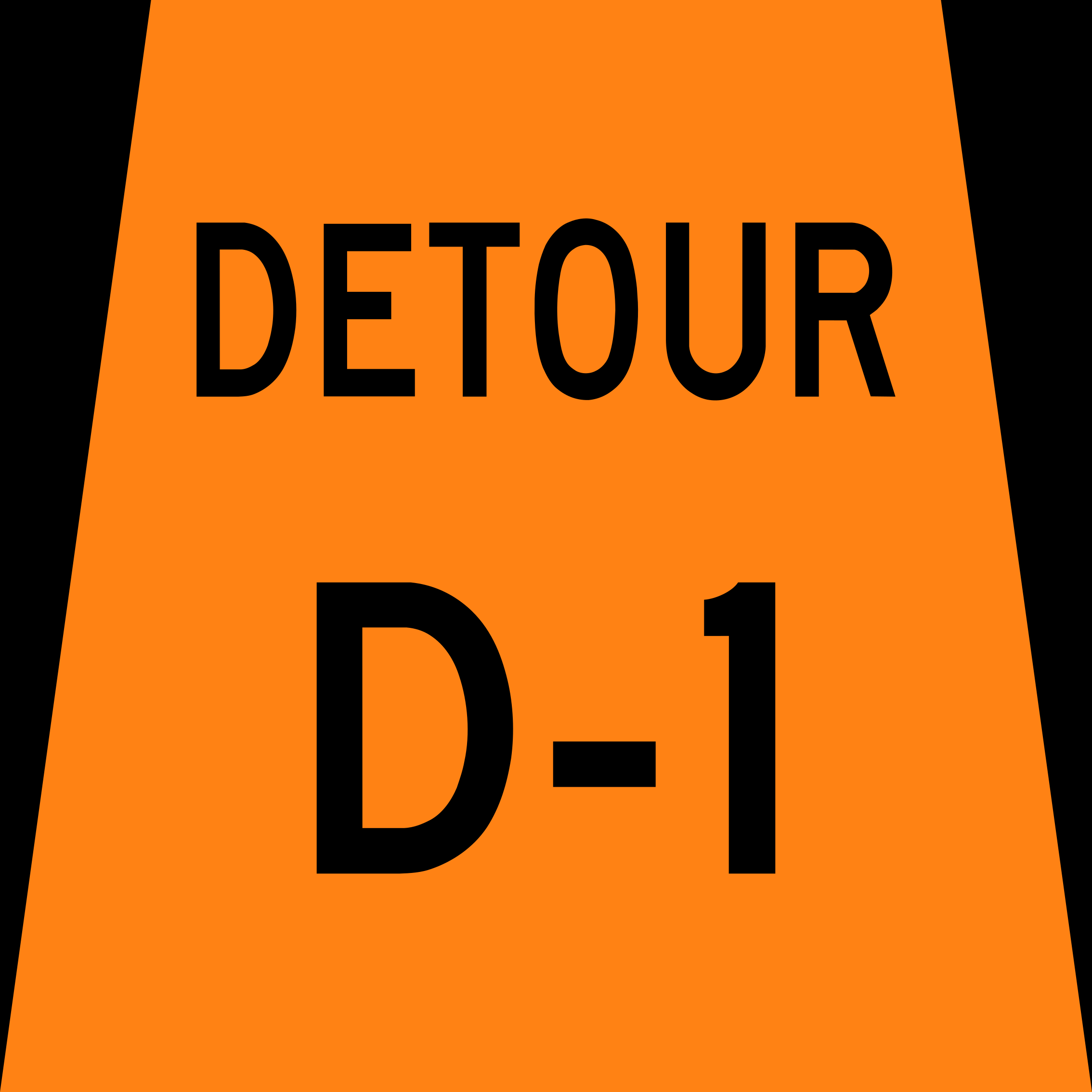
Detour Follow the marked detour route. The usual road is closed. Follow the orange detour signs.
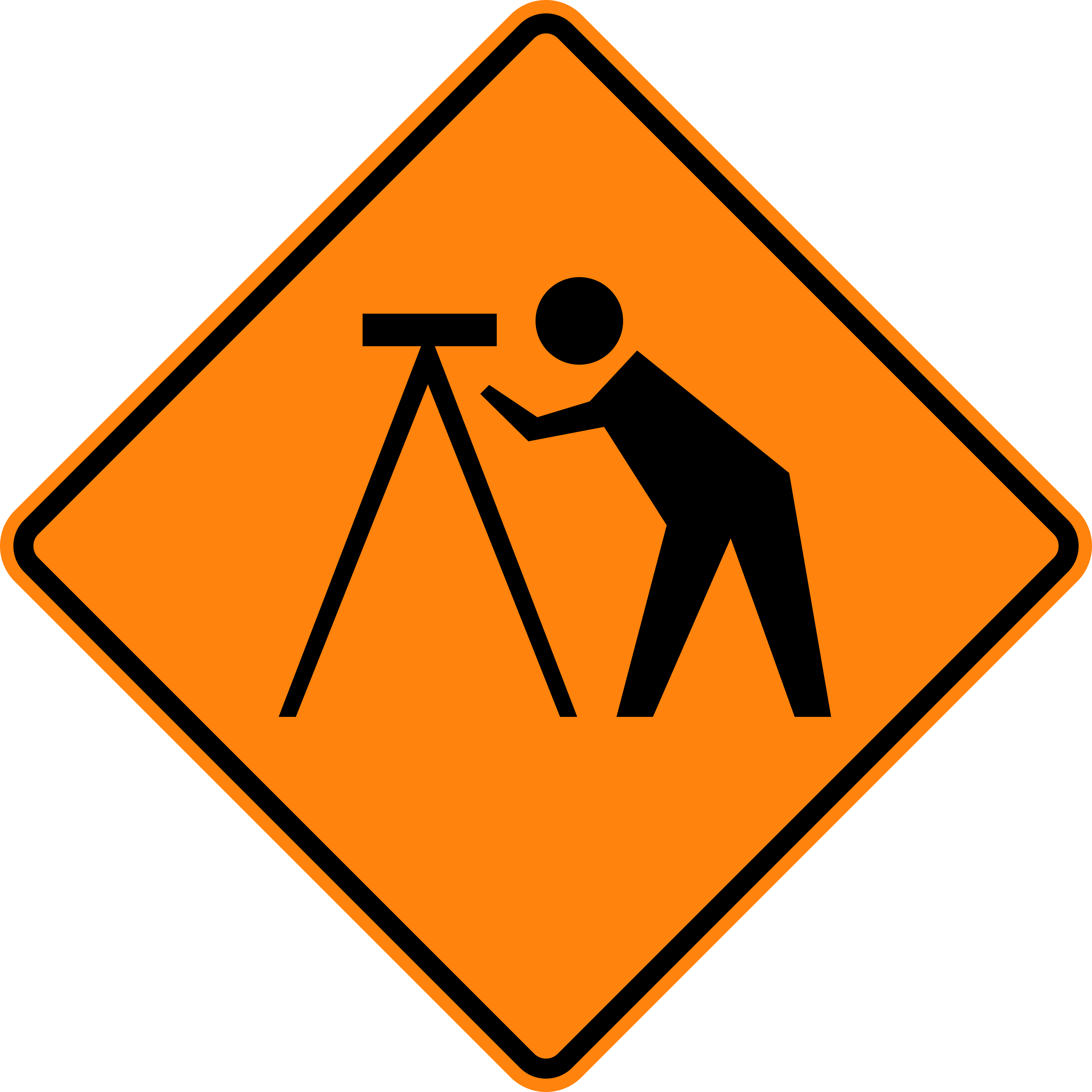
Survey crew A survey crew is working on the road ahead. Slow down and watch for workers near the lane.
Construction ends The construction zone ends. Watch for the regular speed limit again.
Ramp closed This ramp is closed. Continue to the next ramp or follow the detour.
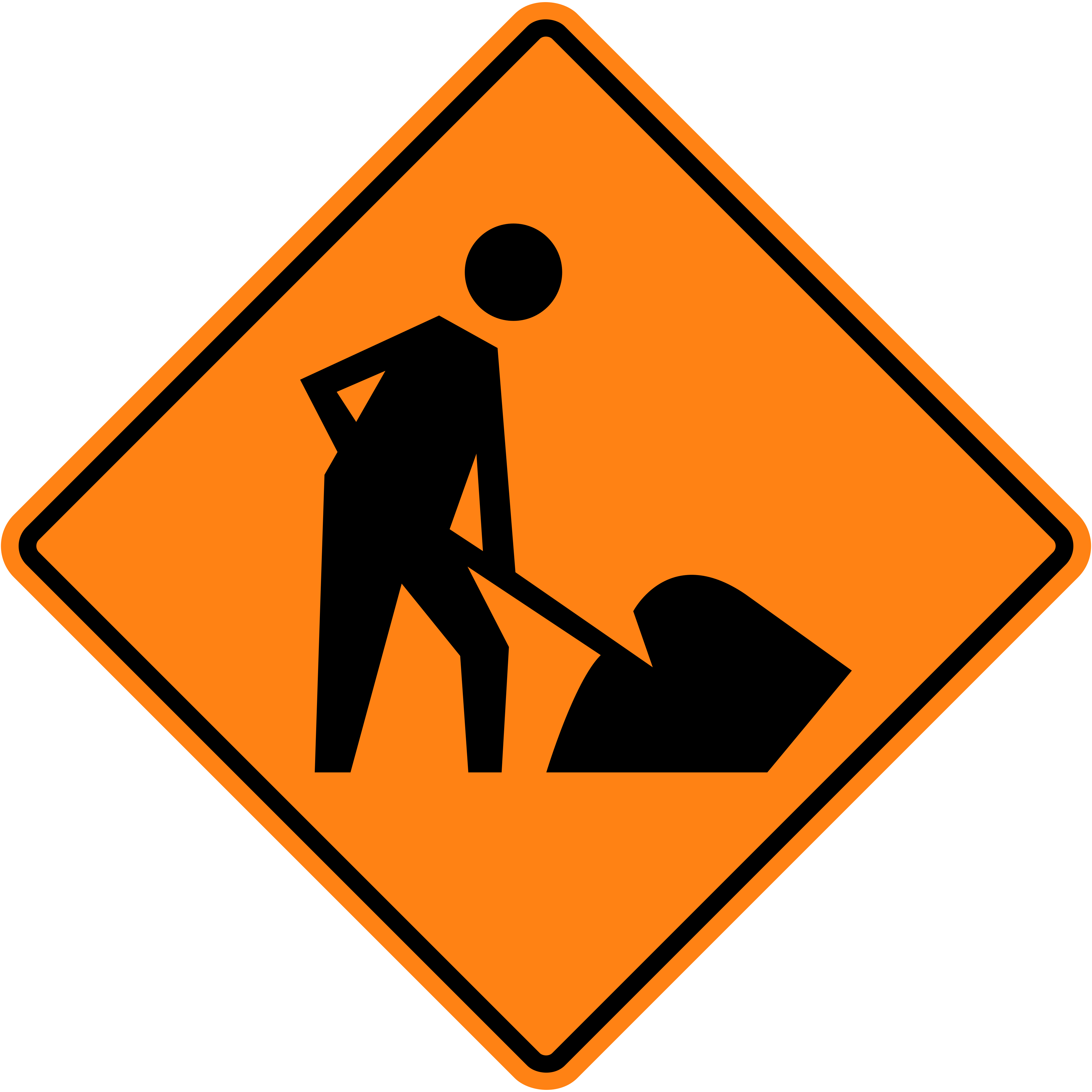
Workers ahead People are working on or near the road ahead. Slow down, obey the posted limit and give workers room.
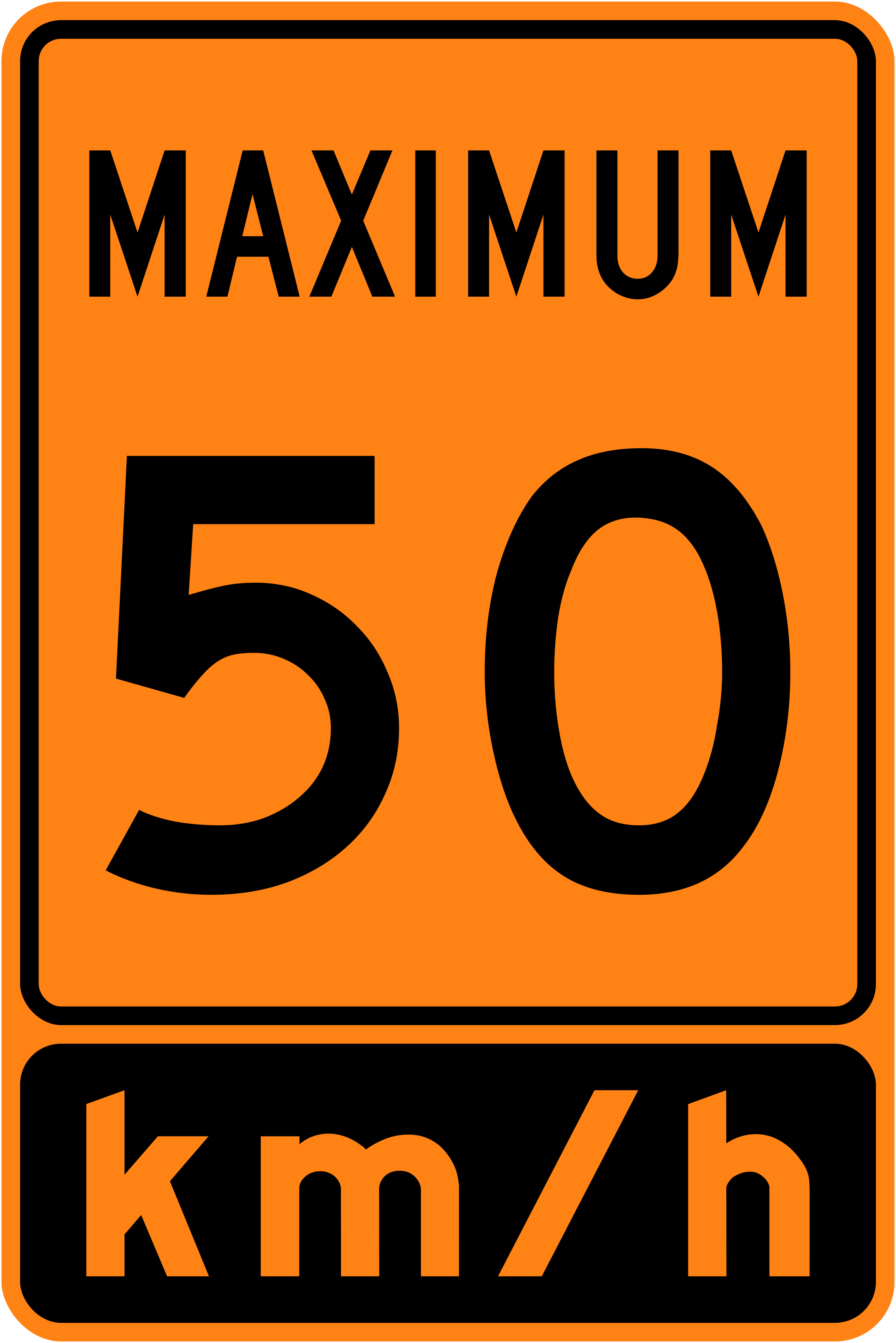
Construction zone speed limit The maximum speed in this work zone. Obey it even when no workers are in sight.
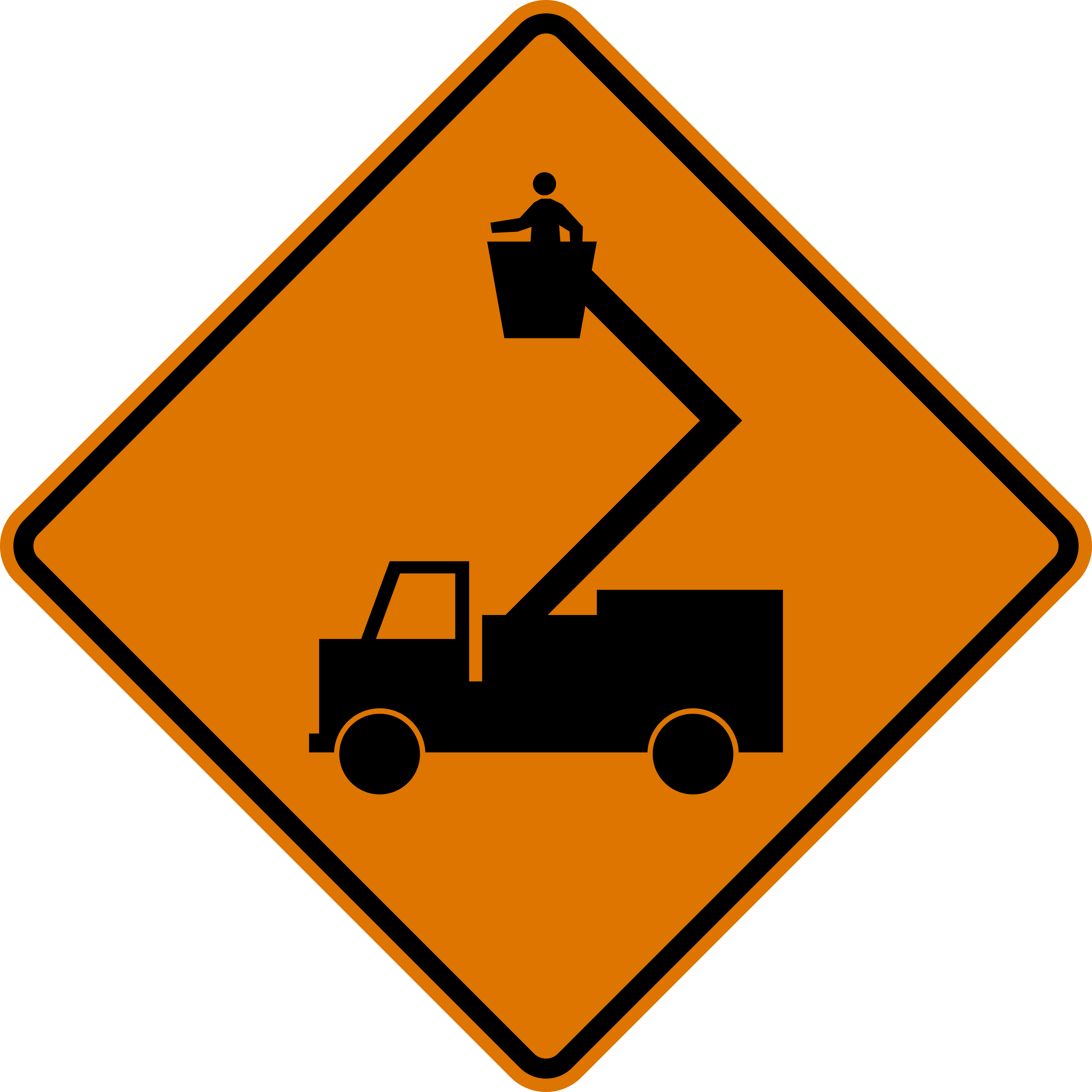
Overhead work A crew is working overhead from a bucket truck. Slow down and be ready to stop or move over.
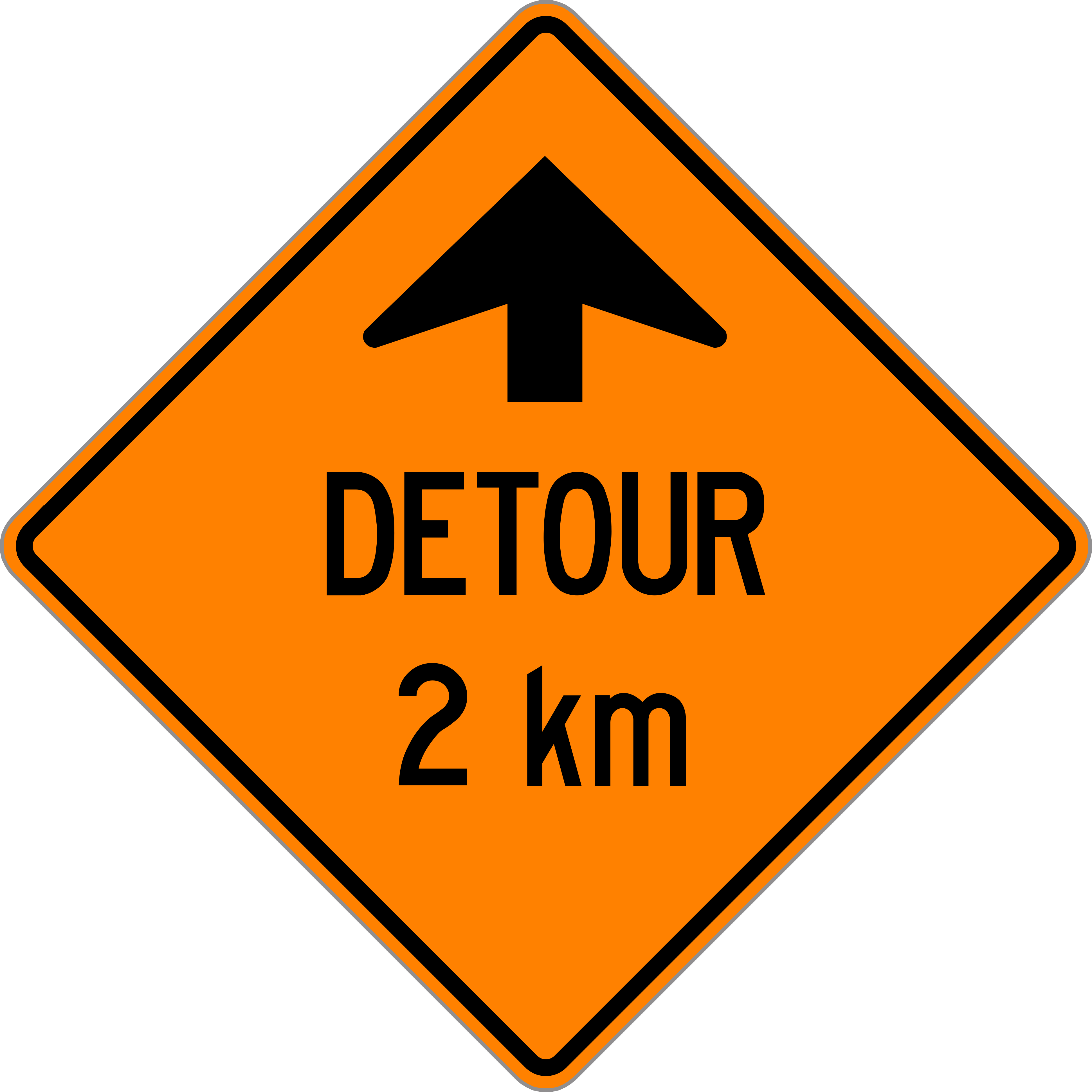
Detour ahead A detour begins ahead. Get ready to follow the orange detour signs.
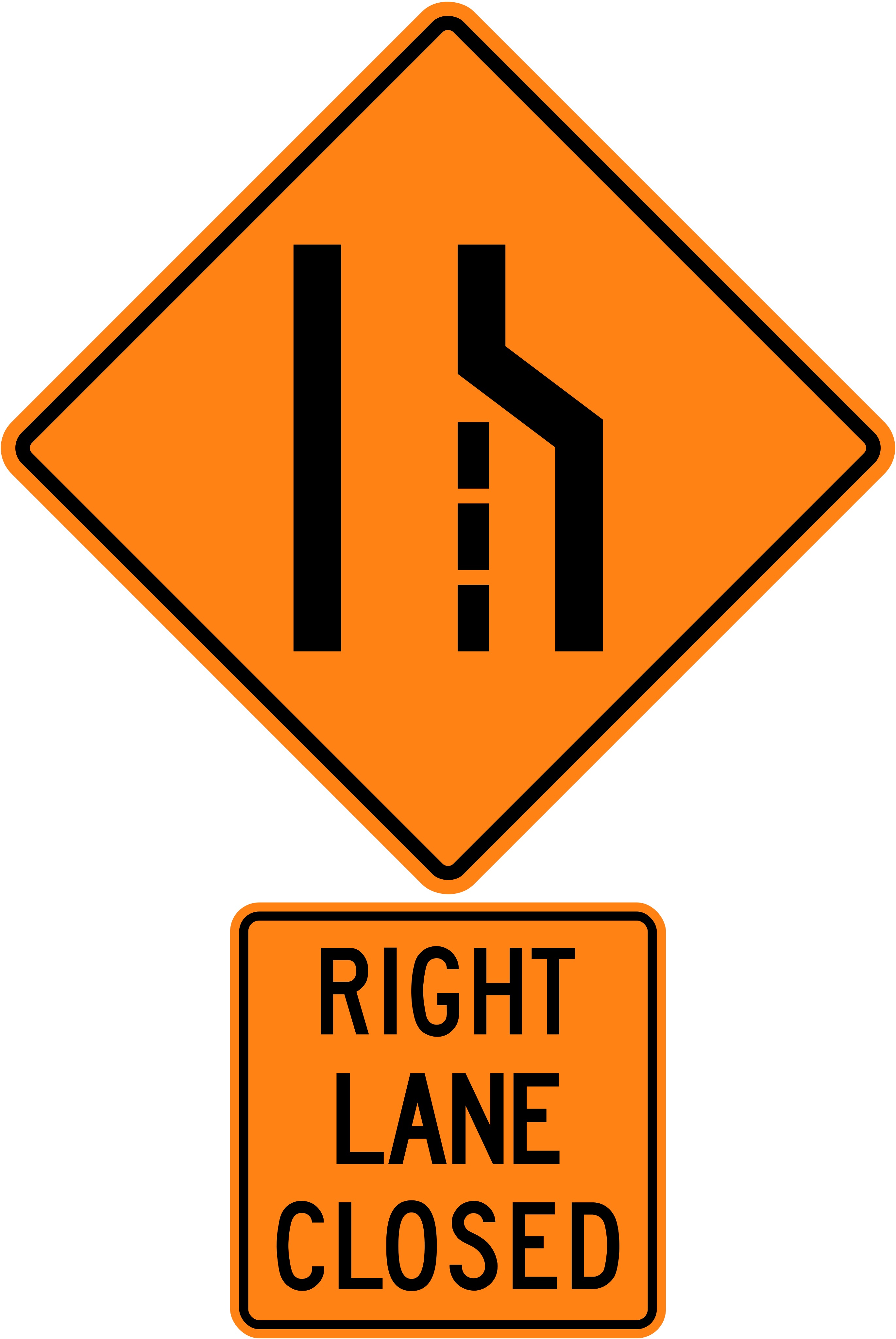
Right lane closed ahead The right lane is closed ahead. Signal and merge left early when it is safe.
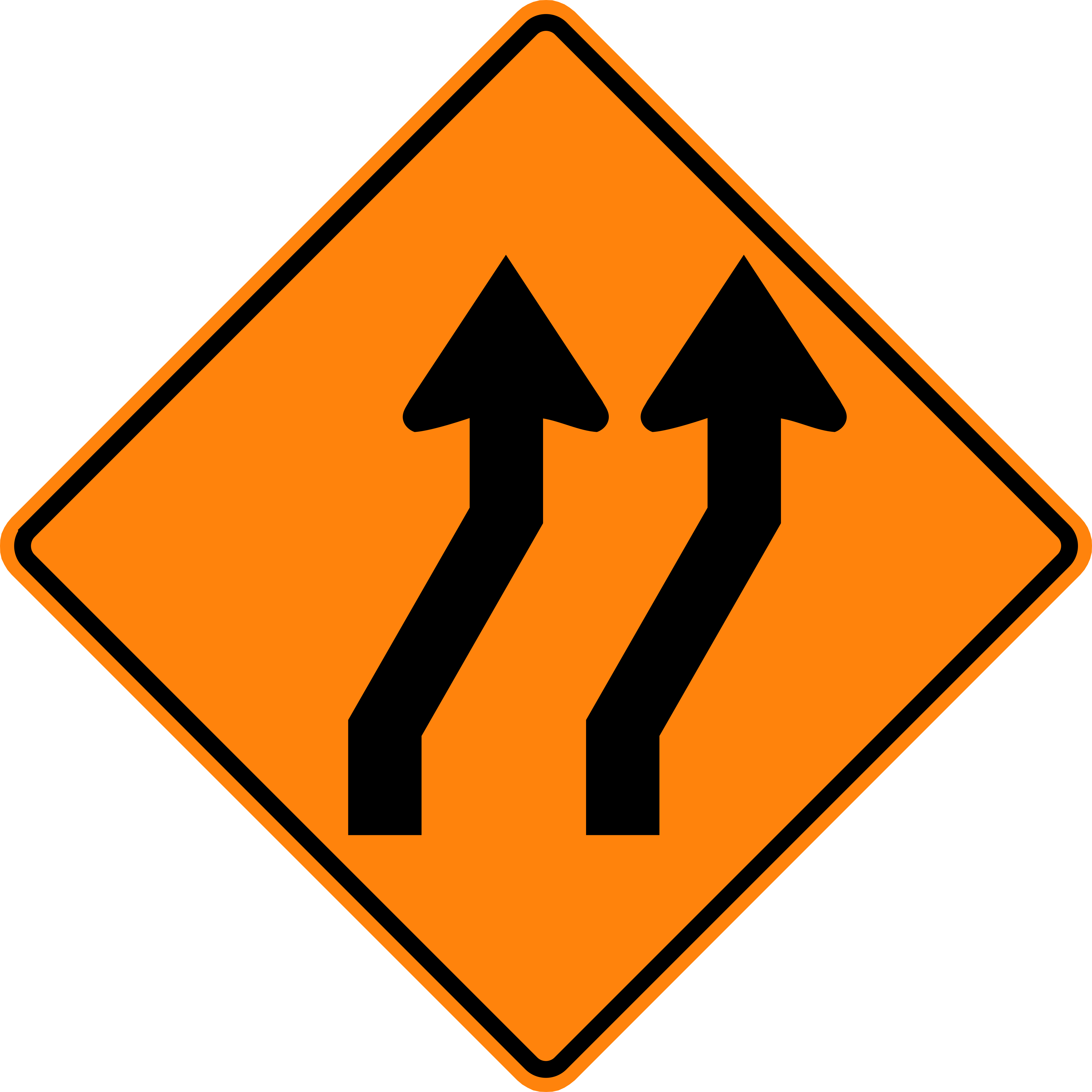
Lanes shift The lanes move sideways ahead for the work zone. Slow down and follow the new lane lines.
Road narrows (construction) The road narrows on the right ahead because of work. Slow down and keep to your lane.
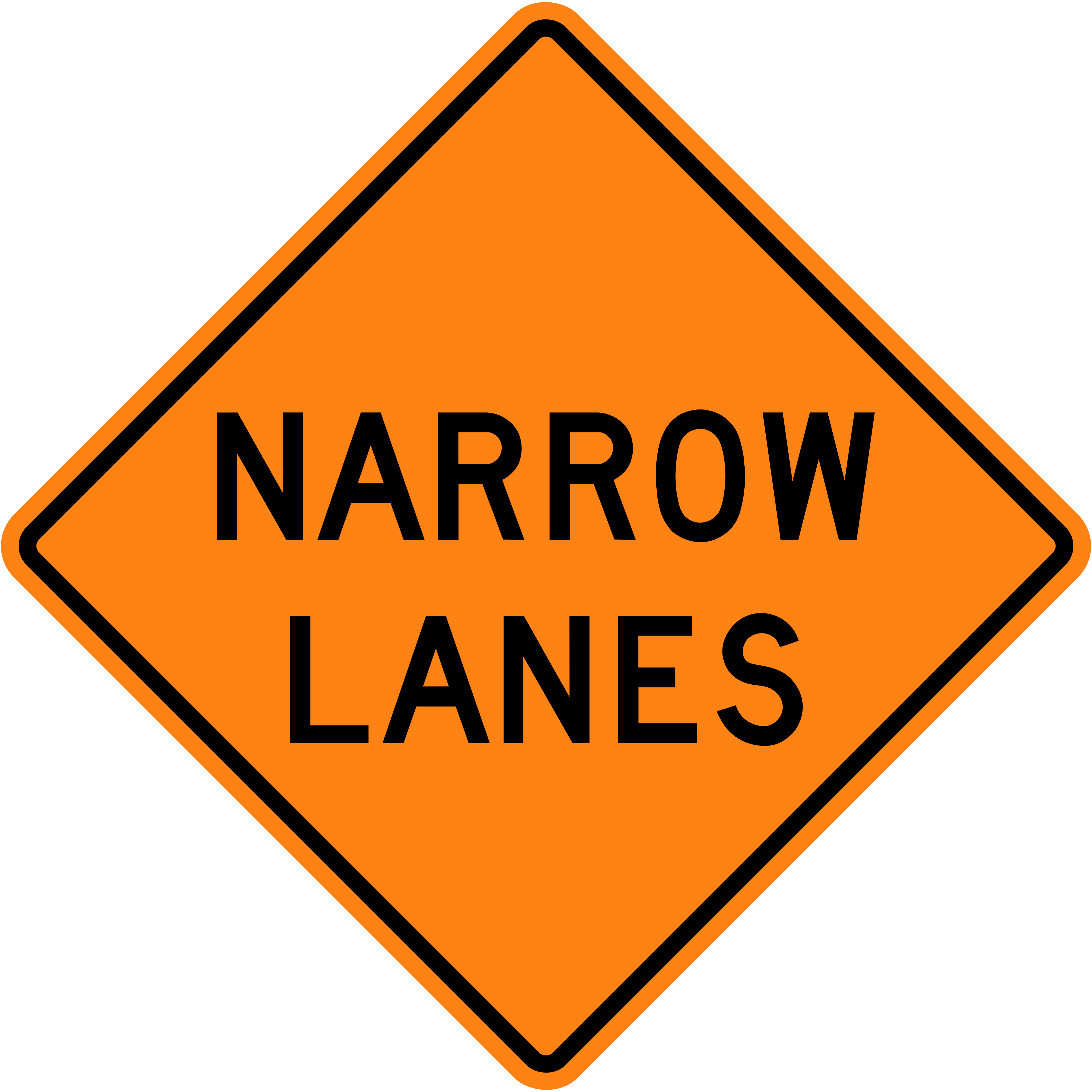
Narrow lanes Lanes are narrower than usual through the work zone. Slow down and keep well within your lane.
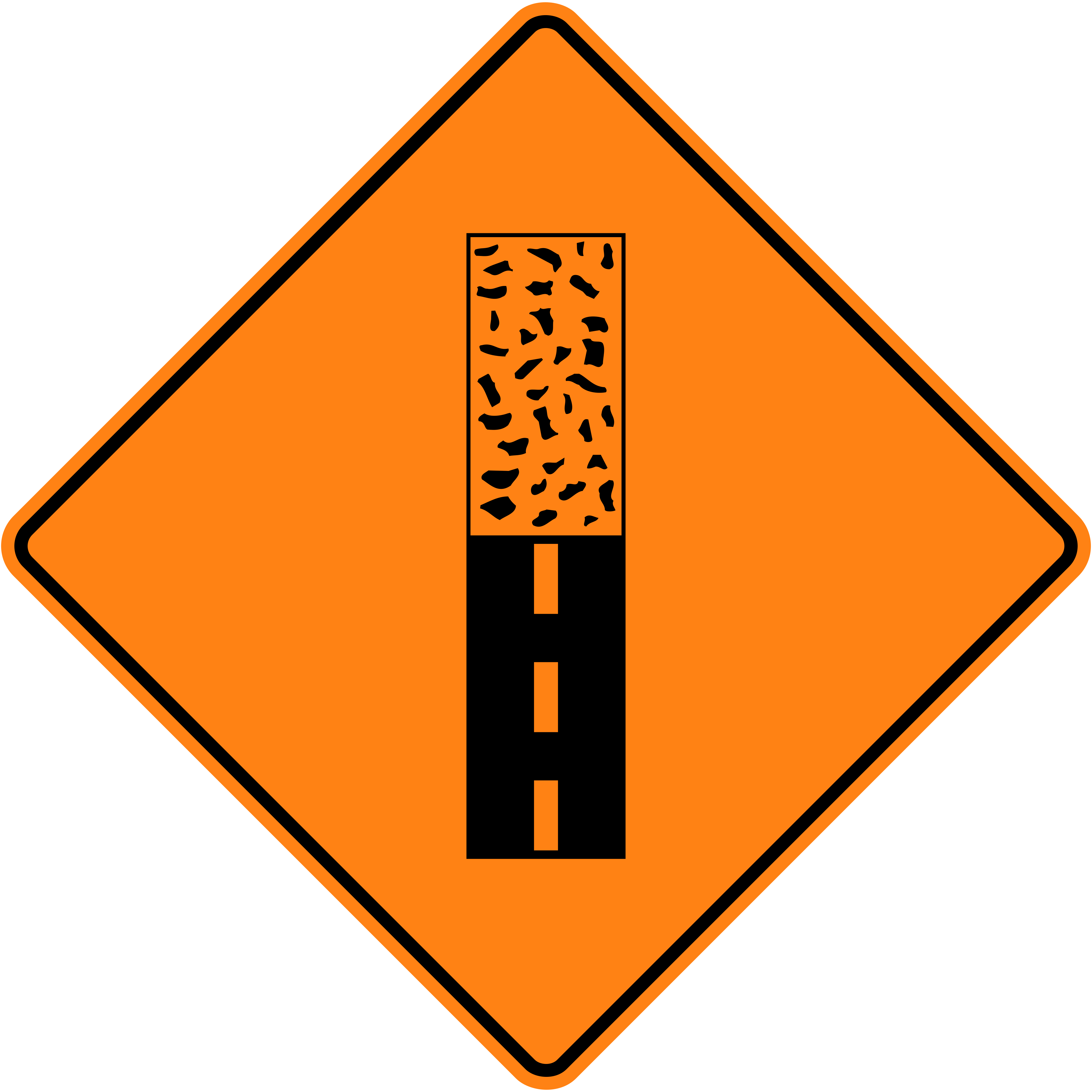
Pavement ends The paved surface ends ahead. Slow down before you reach gravel or broken road.
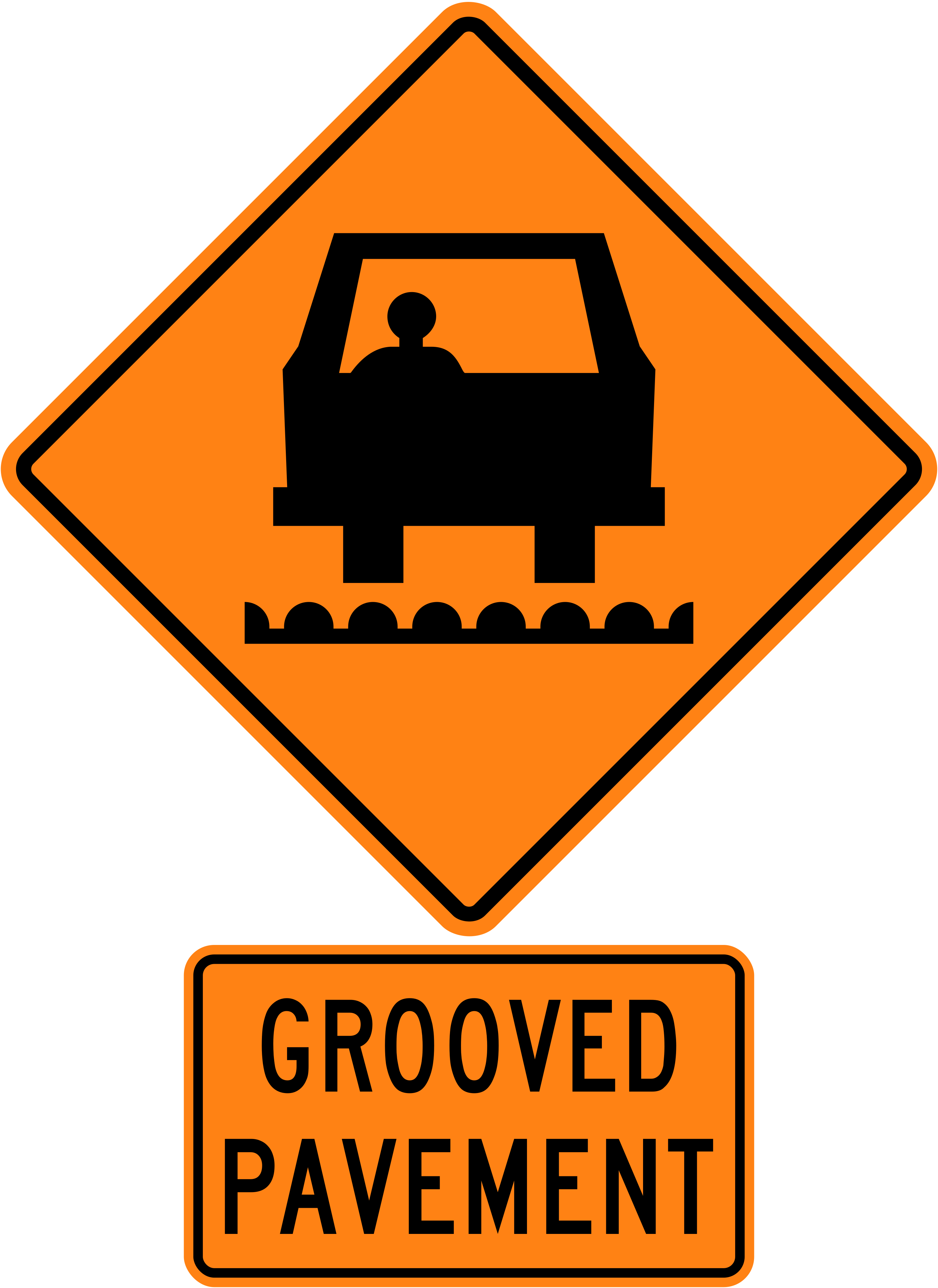
Grooved pavement The road surface has been grooved or milled. Slow down; steering can feel different.
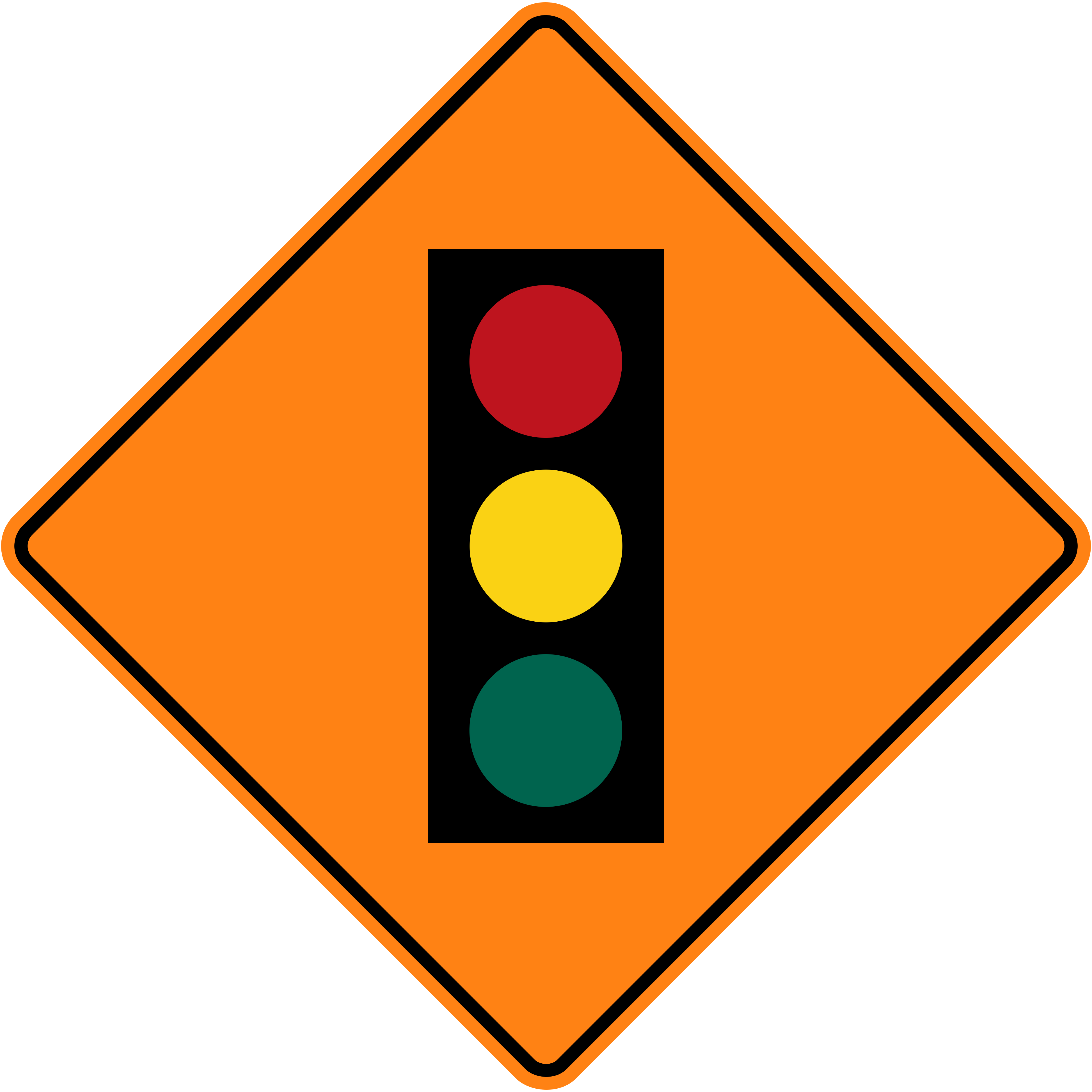
Traffic signals ahead (construction) Temporary traffic lights control traffic ahead. Be ready to stop.
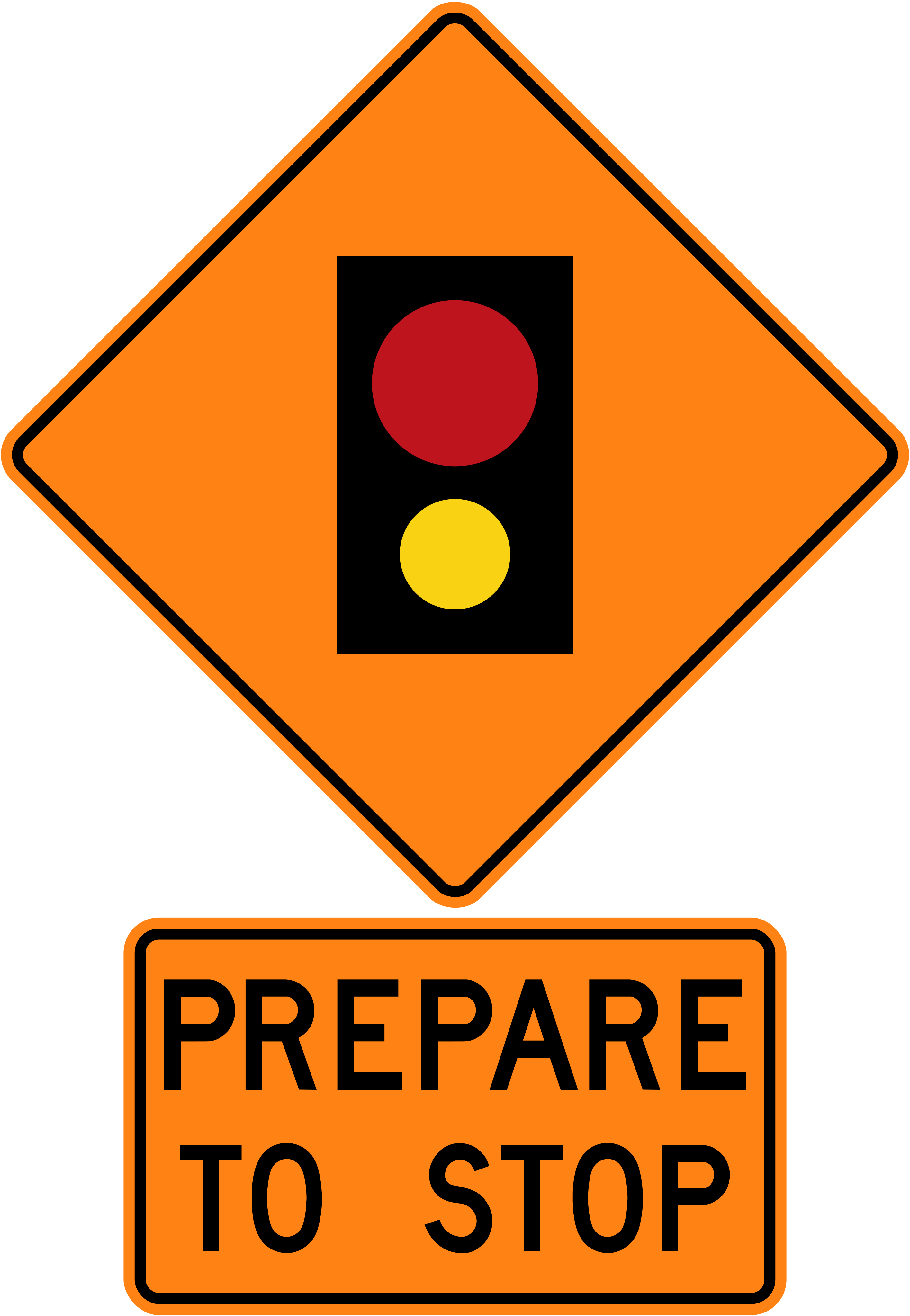
Automated flagger ahead A traffic signal device controls traffic through the work zone ahead. Prepare to stop and obey the signal.

Prepare to stop Traffic may be stopped ahead. Slow down and be ready to stop.
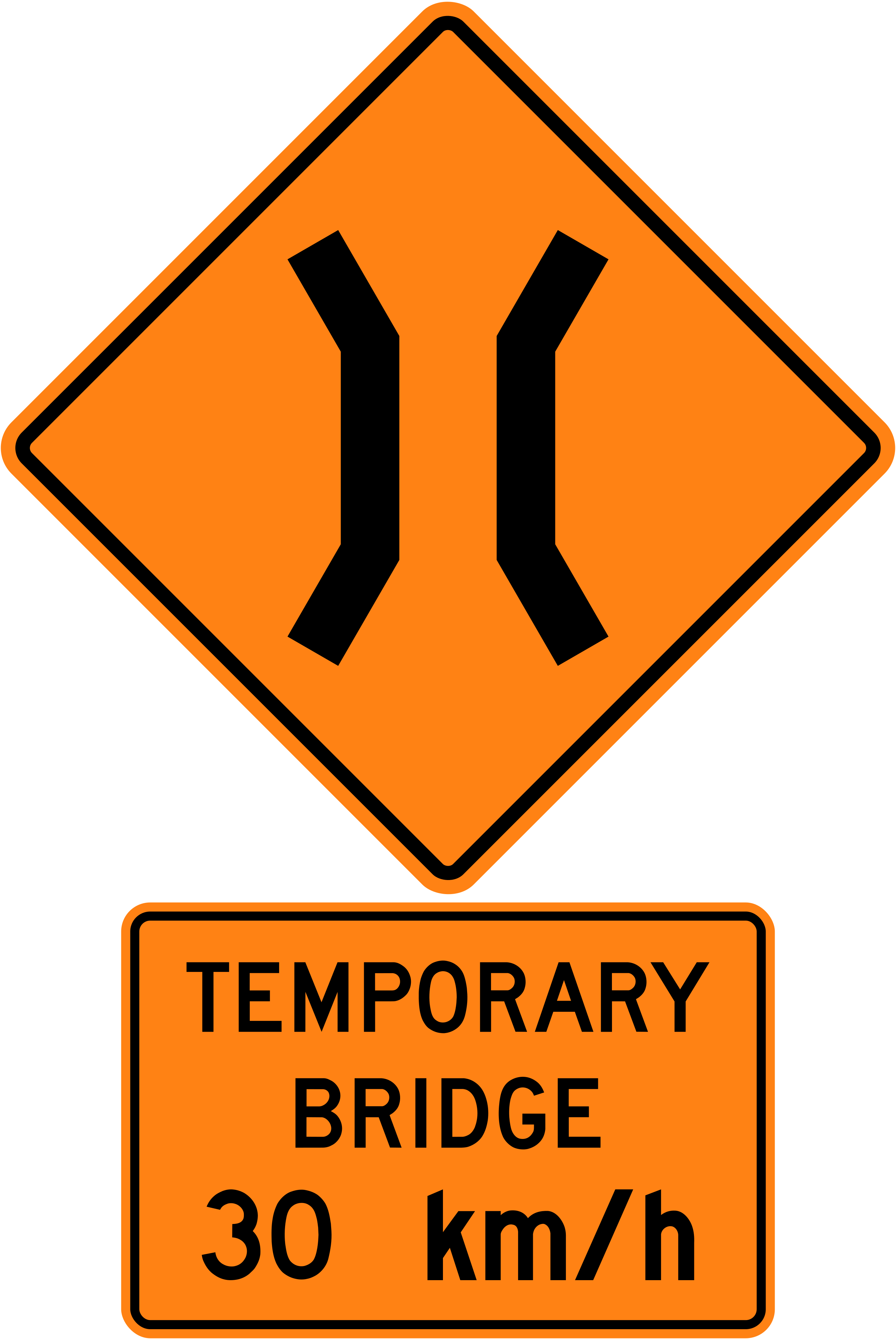
Temporary bridge A temporary bridge is ahead. Slow down to the advisory speed shown.
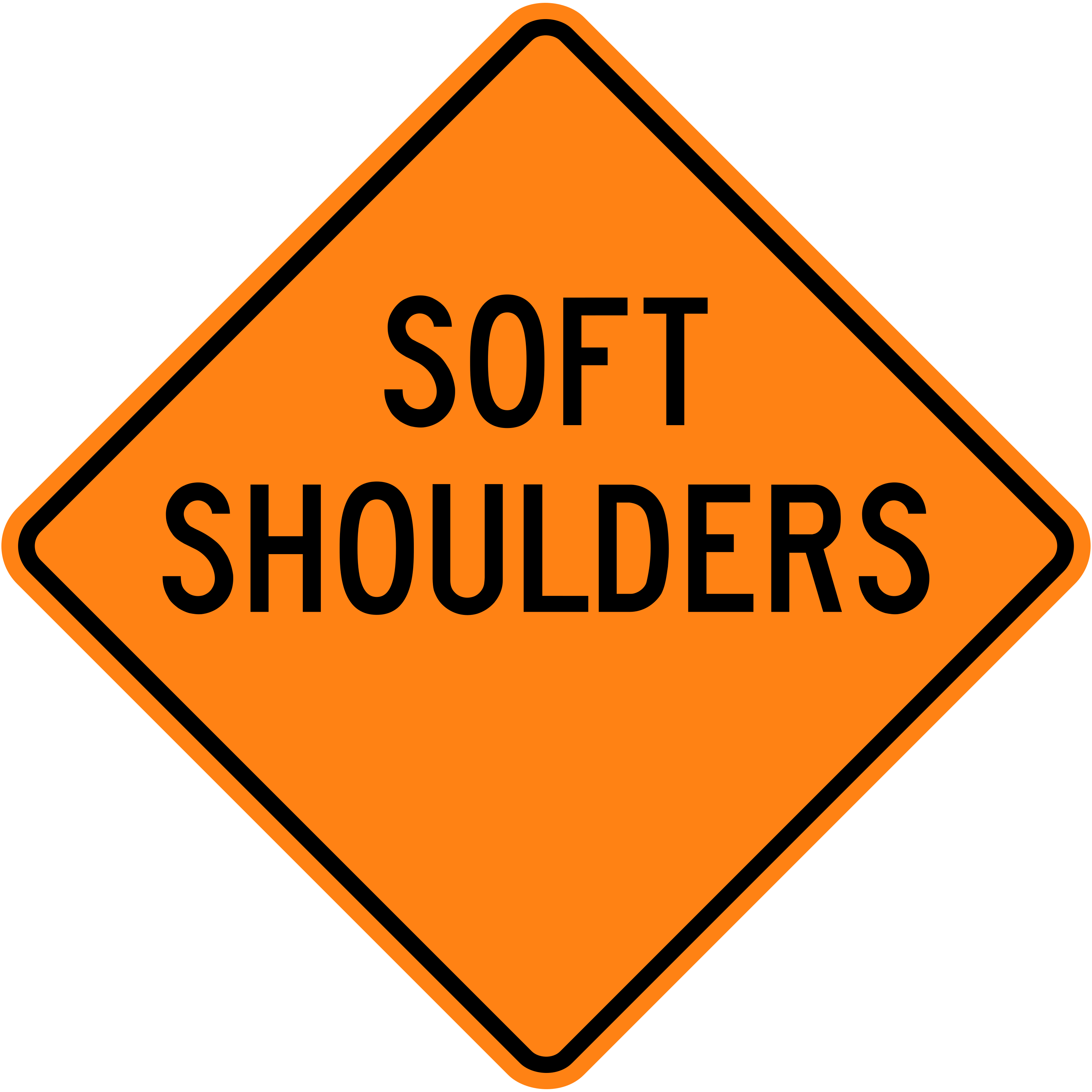
Soft shoulders The shoulders beside the road are soft. Keep your wheels on the pavement.
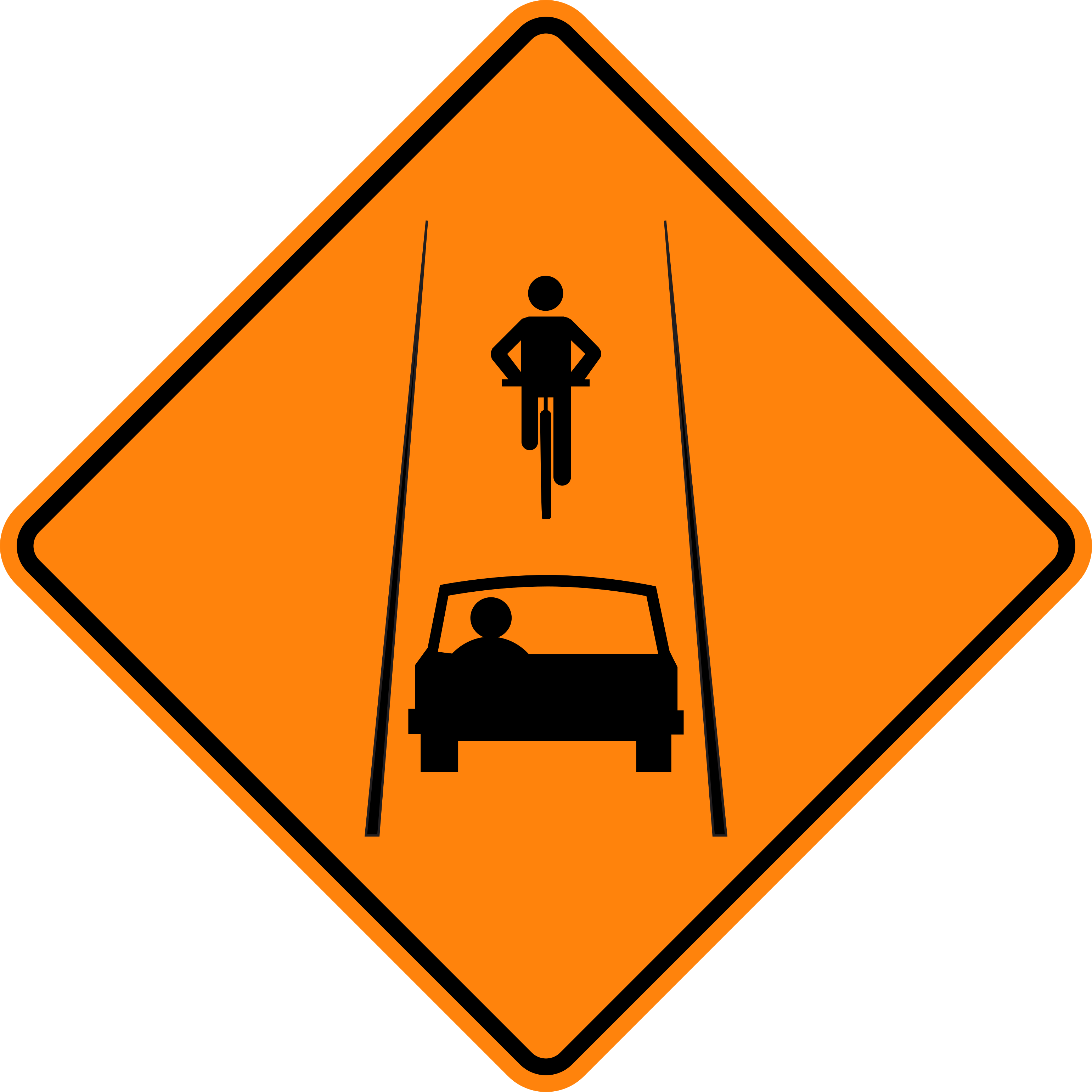
Share the lane with cyclists Drivers and cyclists share one lane through the work zone. Slow down and wait to pass a cyclist until it is safe.
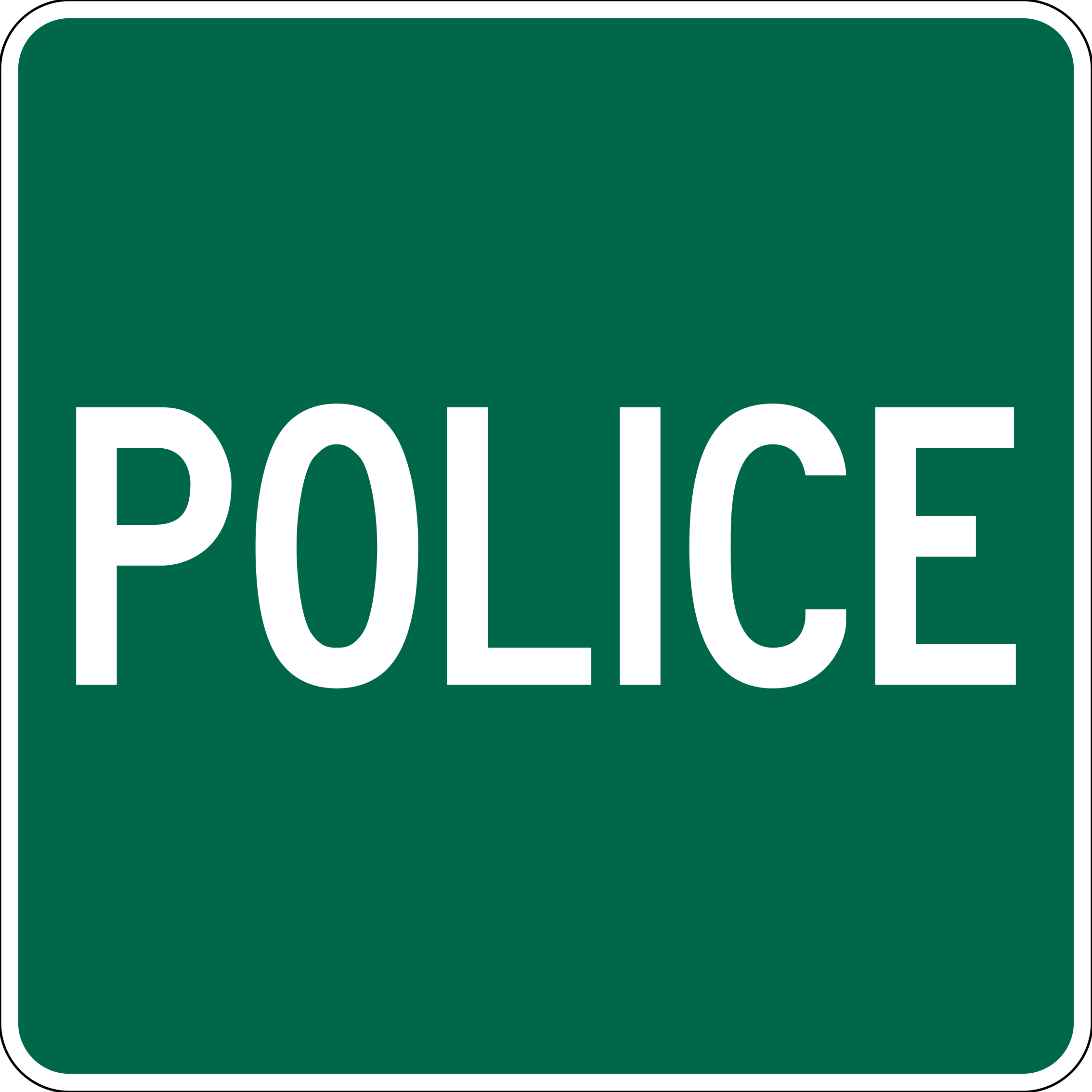
Police A police station is nearby. Follow the sign to reach police services.
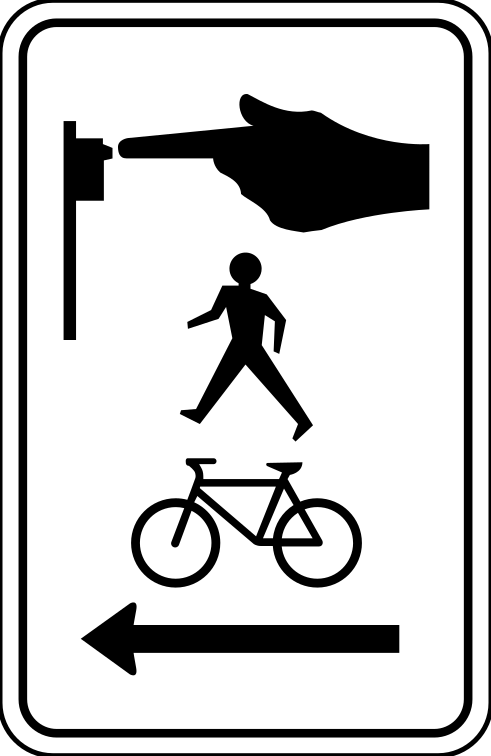
Pedestrians and cyclists push button Pedestrians and cyclists press the button to cross. Watch for people waiting at the push button.
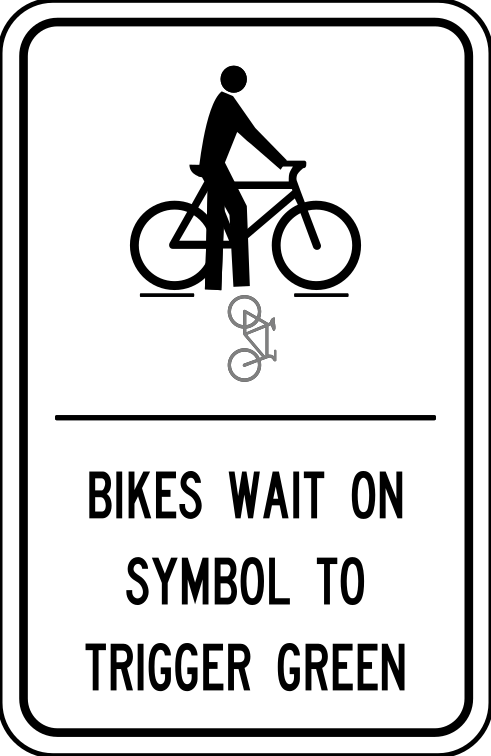
Bikes wait on symbol Cyclists should wait on the bicycle symbol to trigger the green light. The symbol marks the spot that detects bicycles.

Trans-Canada Highway You are on the Trans-Canada Highway. The route marker shows the highway number.
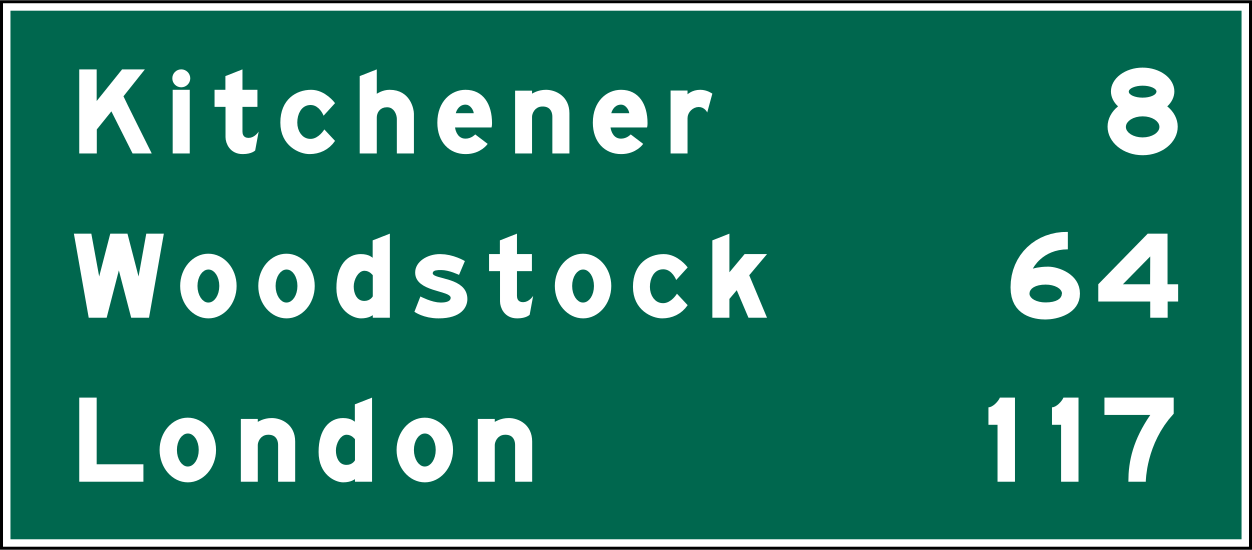
Distance sign Shows the distance to the places ahead, in kilometres. Use it to plan your trip and your stops.
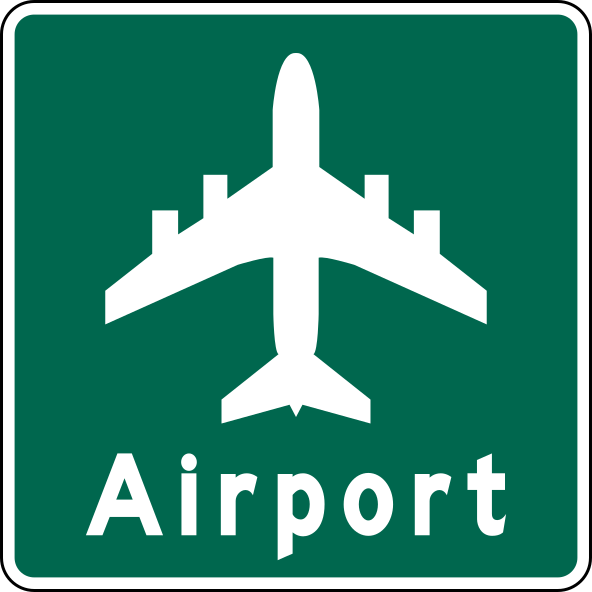
Airport An airport is nearby. Follow the signs to reach the airport.
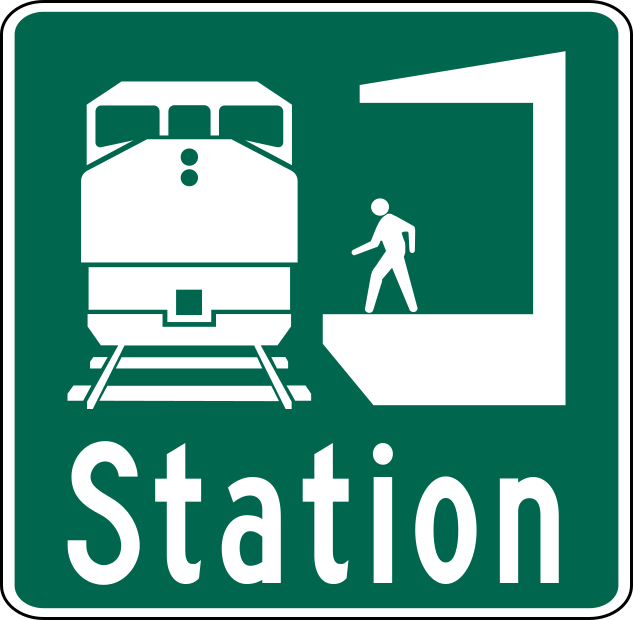
Train station A passenger train station is nearby. Follow the signs to reach the station.
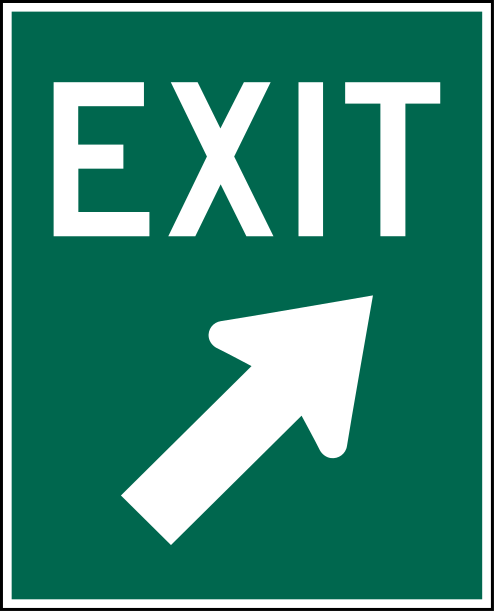
Exit The exit ramp leaves the highway here. Signal early and slow down on the ramp, not on the highway.
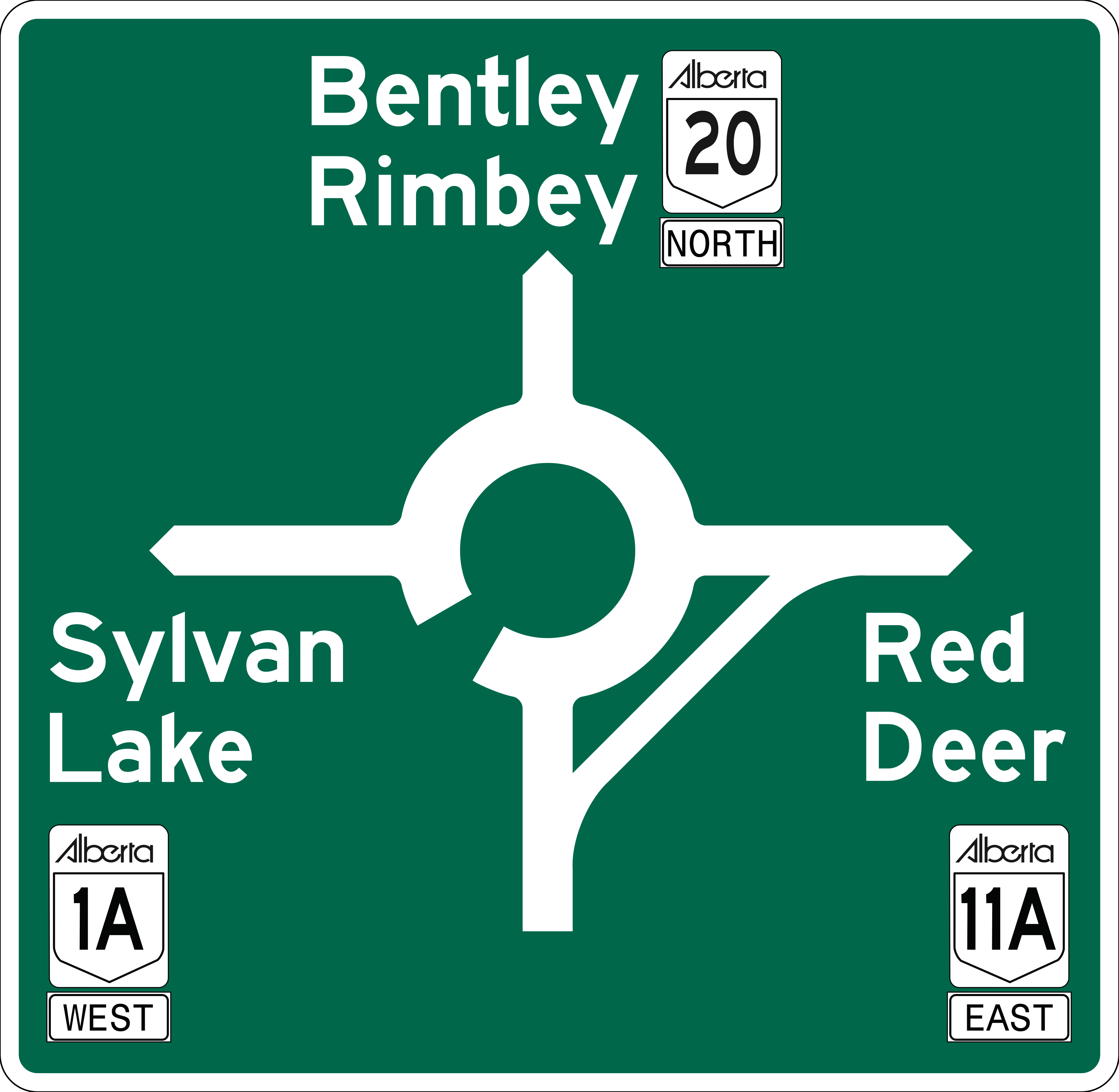
Roundabout direction sign Shows where each exit of the roundabout leads. Choose your exit and lane before you enter.
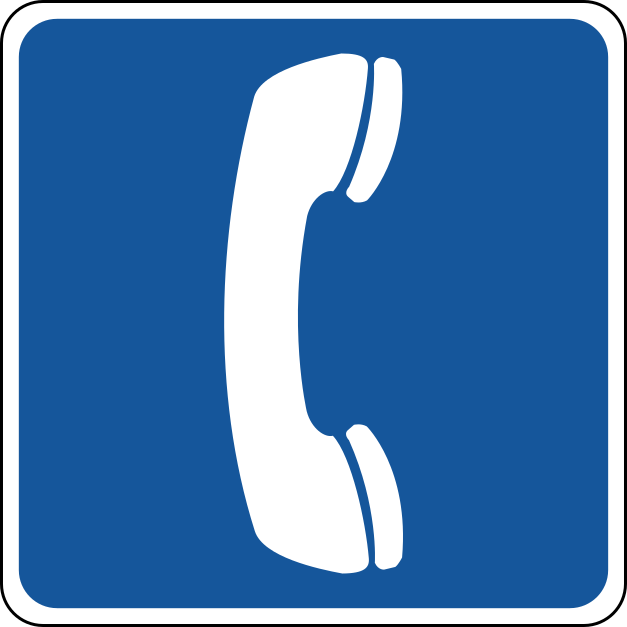
Telephone A public telephone is nearby. Service signs show what is available ahead.
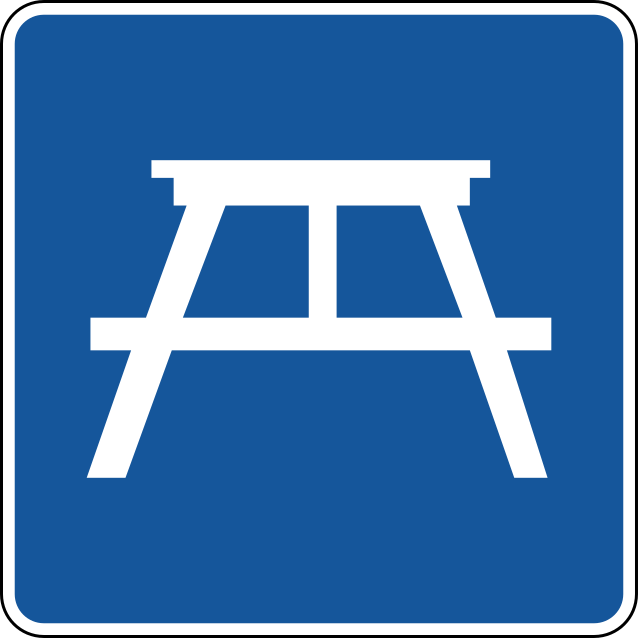
Picnic area A picnic or rest area is nearby. Pull off to rest if you are tired.
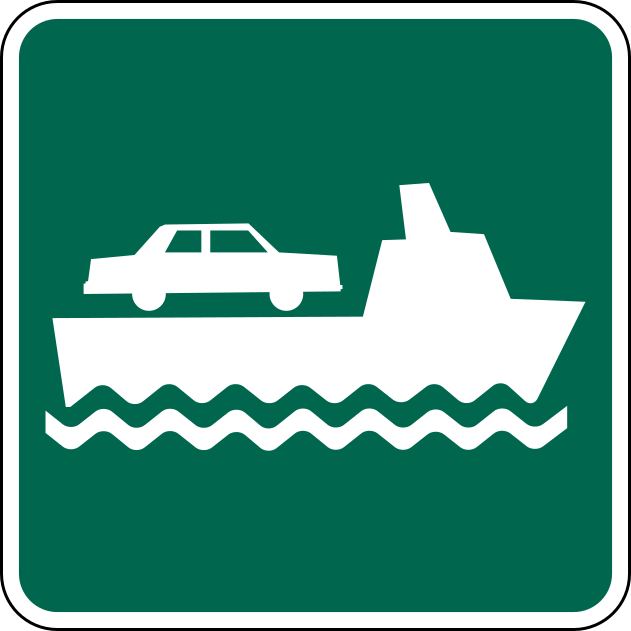
Ferry A car ferry is nearby. Follow the signs to the ferry terminal.
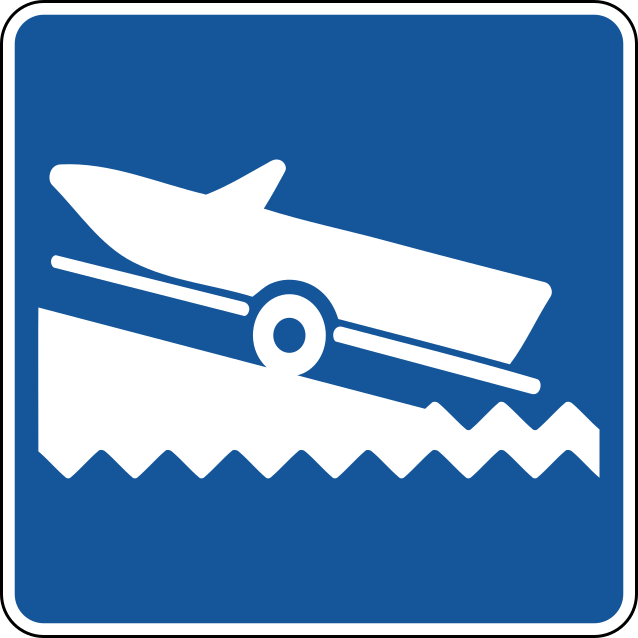
Boat launch A boat launch is nearby. Watch for vehicles towing boats.
Signs are easier to remember by group: the shape and colour tell you the kind of message before you read it. The Alberta signs on this page fall into these groups:
Pick an answer, then open "Show answer" to check it. For the real test format, take a free AT practice test.
Turn on JavaScript to take the interactive mock tests.