The learner's licence test covers three parts: the use of vehicle controls, road traffic signs, signals and markings, and the rules of the road. The Department of Transport has not published the question count in a form PassDriveTest could confirm; it is most often reported as 8 questions on controls (6 to pass), 28 on signs (23 to pass) and 28 on rules (22 to pass), and you must pass every part. This practice test uses that format. Your testing centre confirms the format when you book. Below is every South Africa sign we cover, with its official image and meaning. After the signs: the sign groups, a short quiz and study tips.
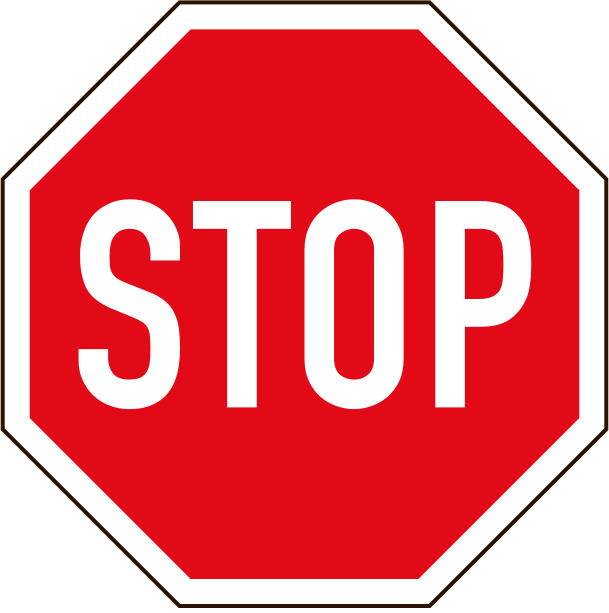
Stop (R1.1) Stop: bring your vehicle to a complete stop behind the stop line. Stop behind the line (or before the intersection if there is none), then go only when it is safe.
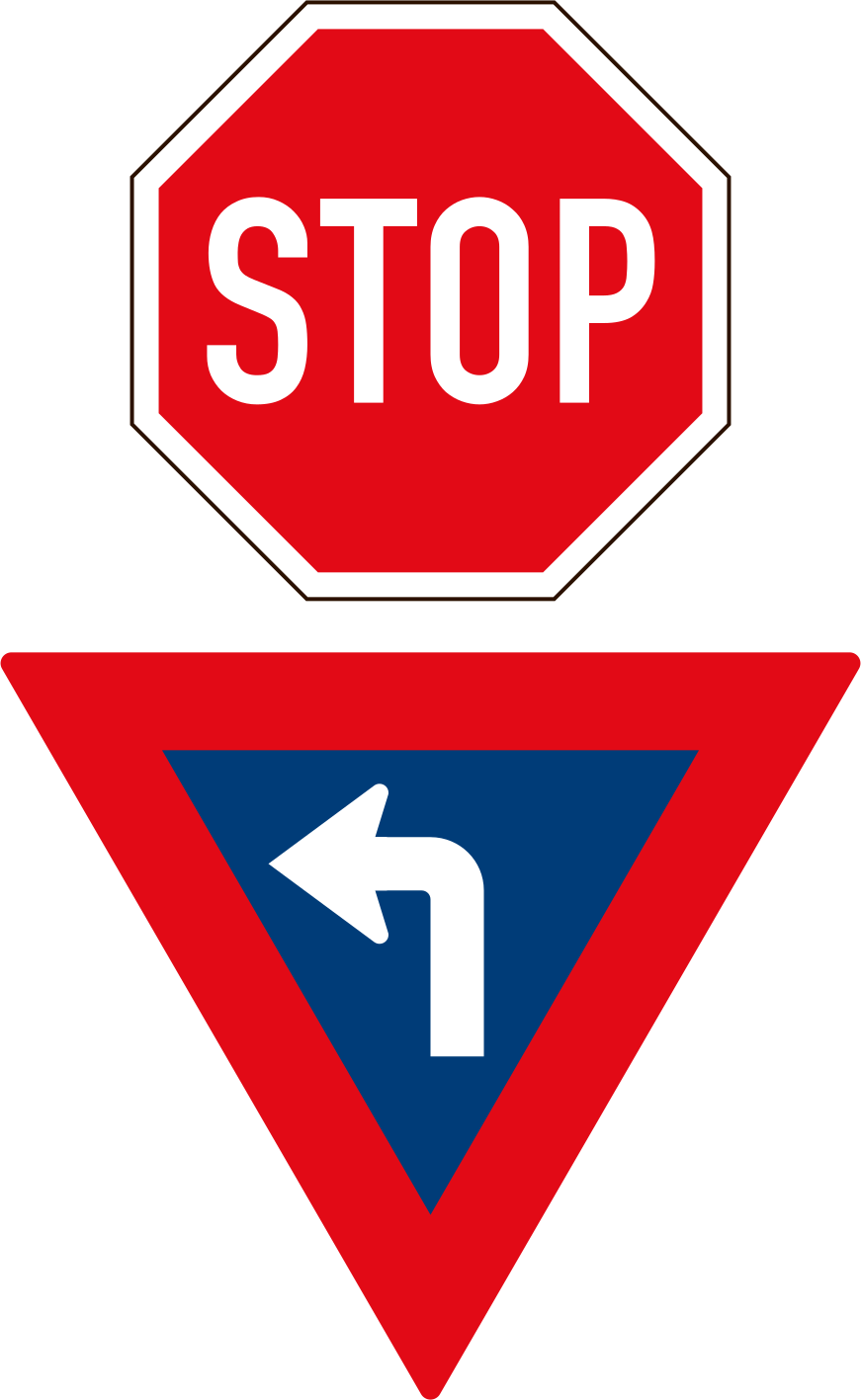
Stop / yield (R1.2) Stop if you go straight on; you may turn left without stopping if you yield to cross traffic. Going straight: stop behind the line. Turning left: yield, and stop if you need to.
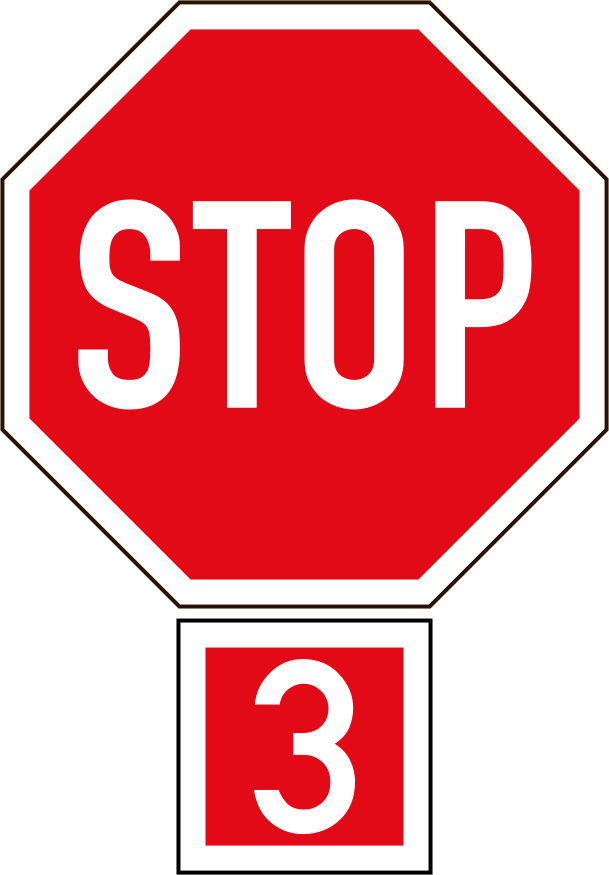
3-way stop (R1.3) Traffic from all three directions must stop. The vehicle that stopped first moves off first.
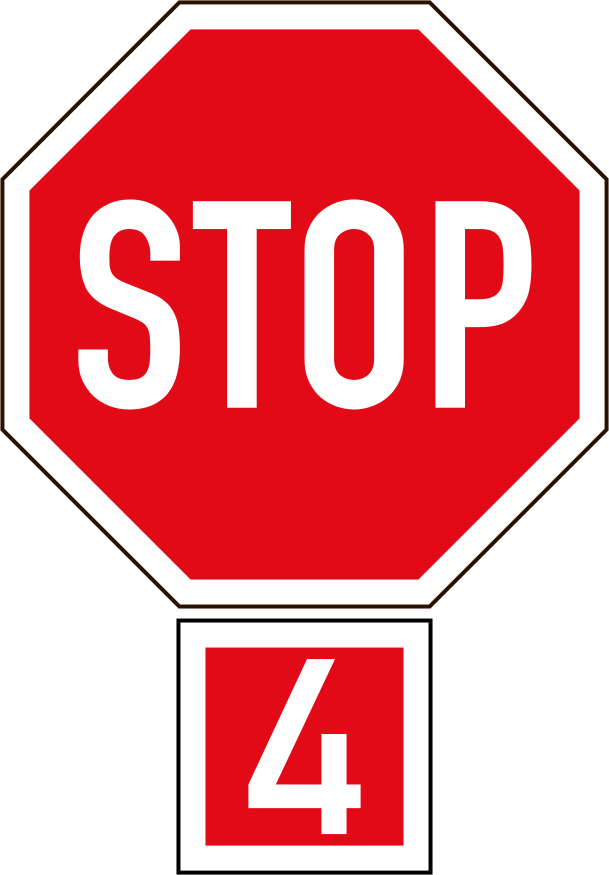
4-way stop (R1.4) Traffic from all four directions must stop. Stop behind the line; the vehicle that stopped first moves off first.
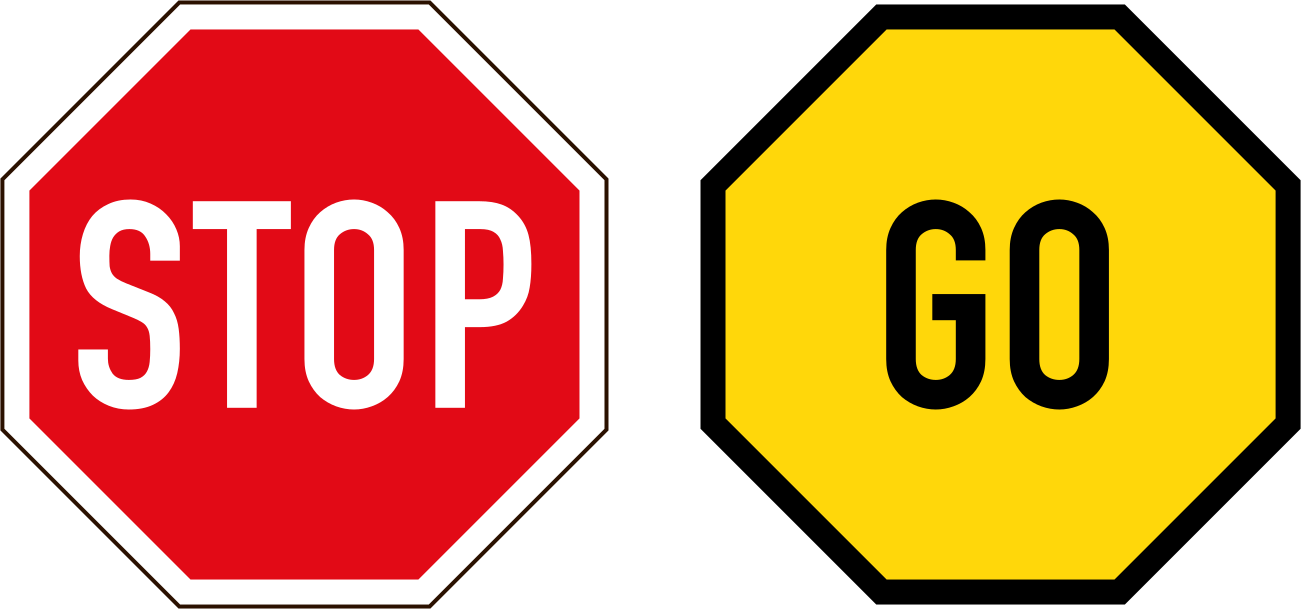
Stop / go (R1.5) A two-sided sign held at roadworks: STOP on one side, GO on the other. Stop when STOP faces you; move off with care when GO is shown.
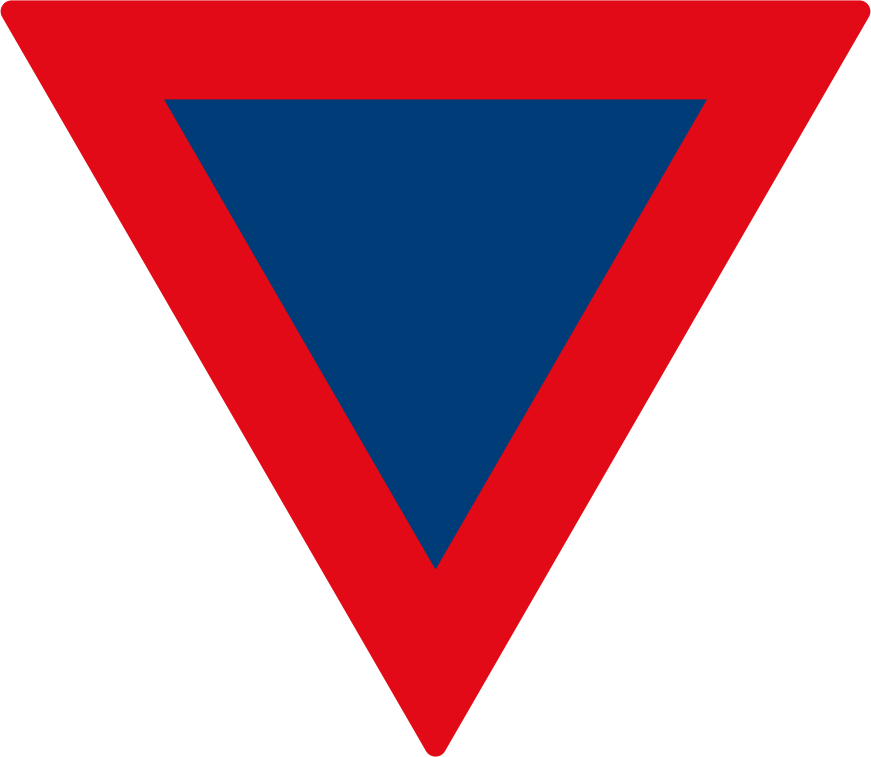
Yield (R2) Yield to other traffic on the road you are entering. Slow down and stop if necessary; go only when it is safe.
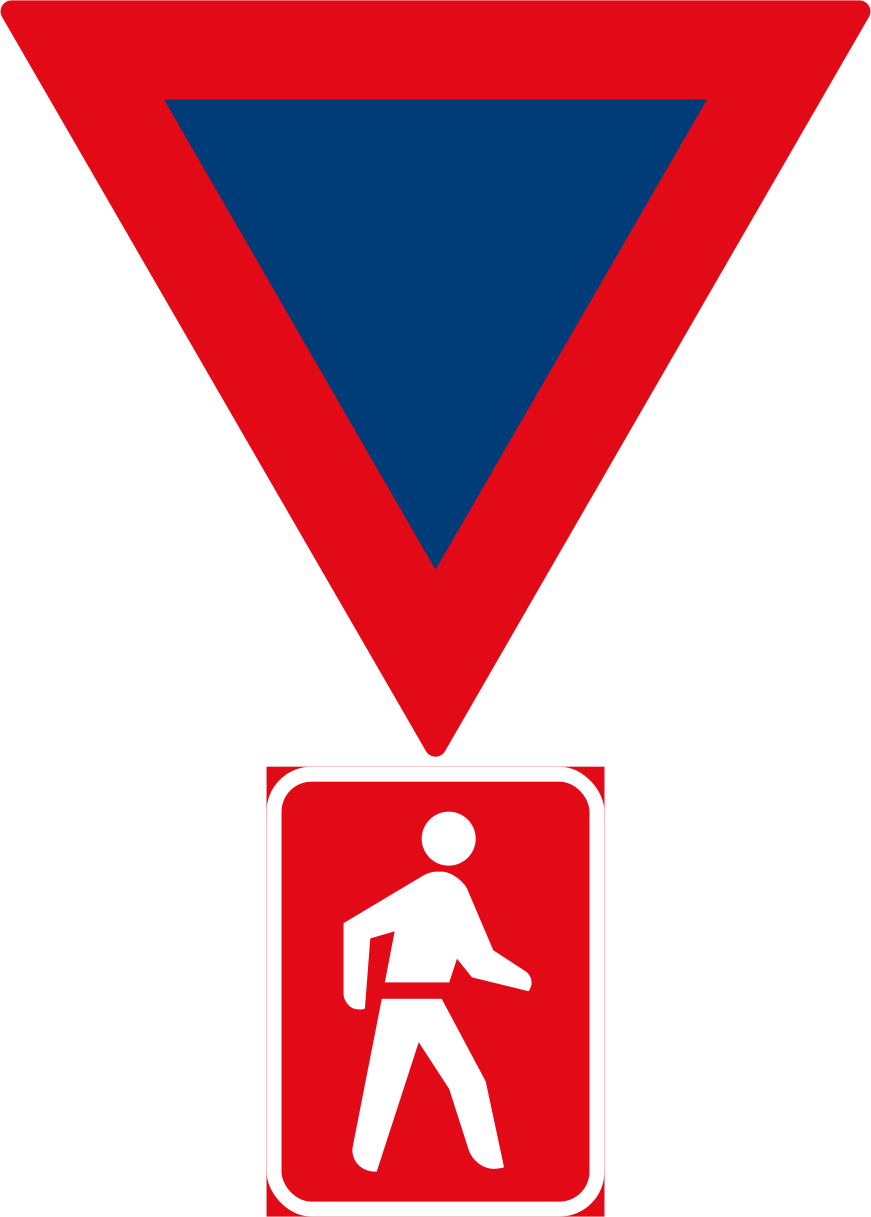
Yield to pedestrians (R2.1) Give priority to pedestrians crossing or about to cross the road. Look out for pedestrians and be ready to stop.
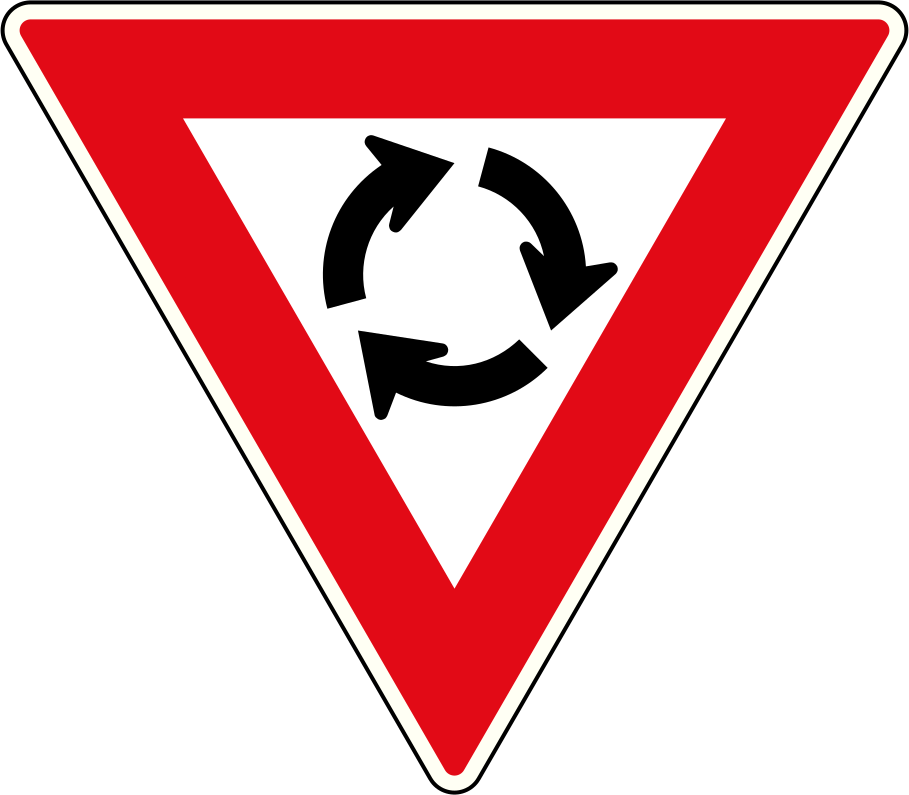
Yield at traffic circle (R2.2) You must yield at the traffic circle ahead. Yield to vehicles already in the circle or that will cross the yield line first.
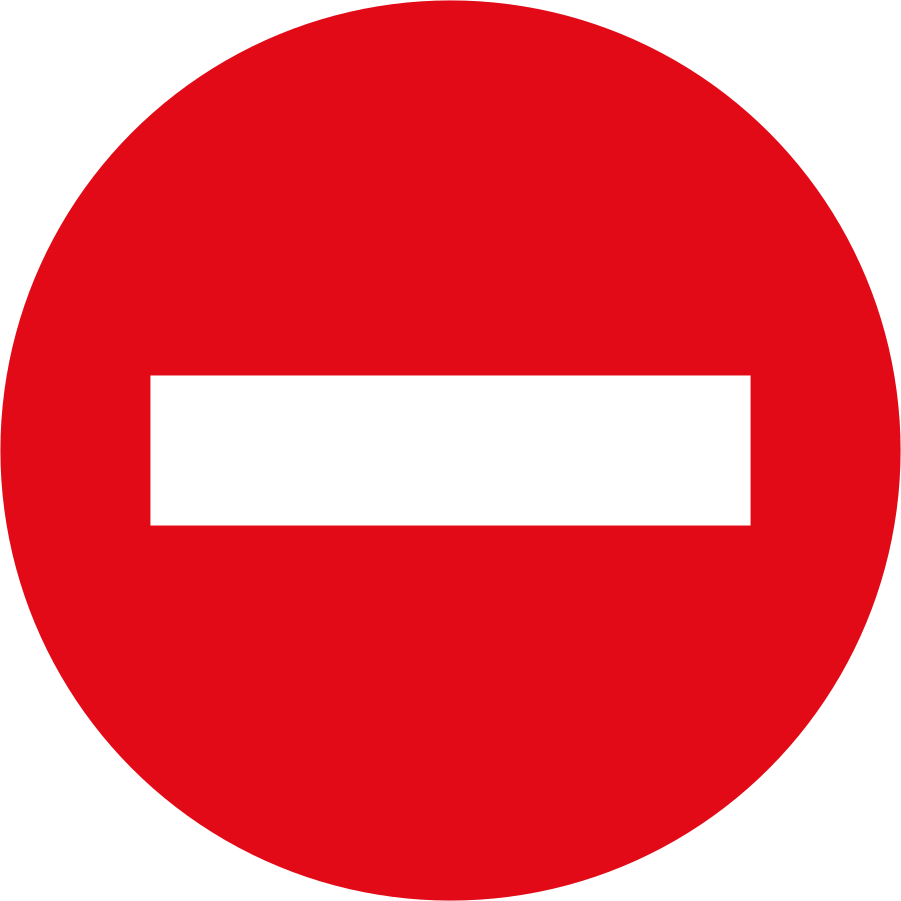
No entry (R3) No entry for vehicles past this sign. Do not drive past the sign.
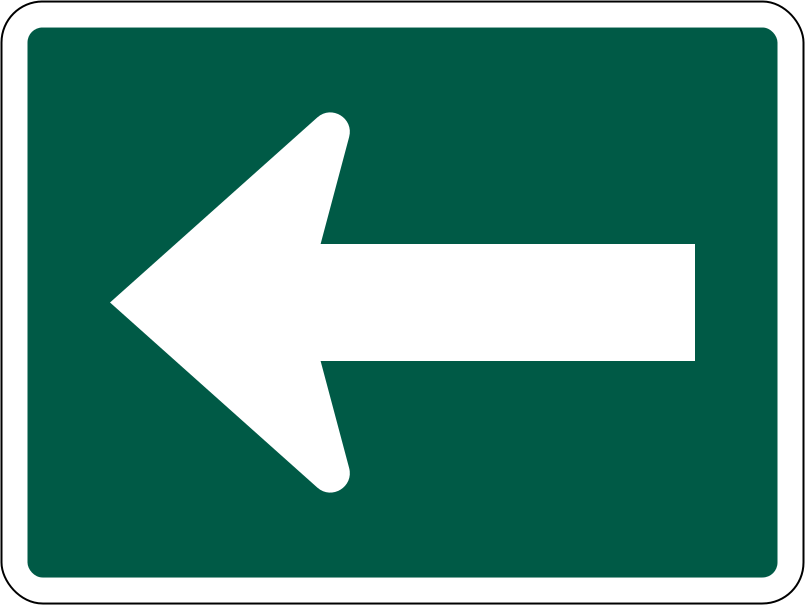
One-way roadway (R4.1) A one-way roadway in the direction of the arrow. Turn into it only in the direction shown.
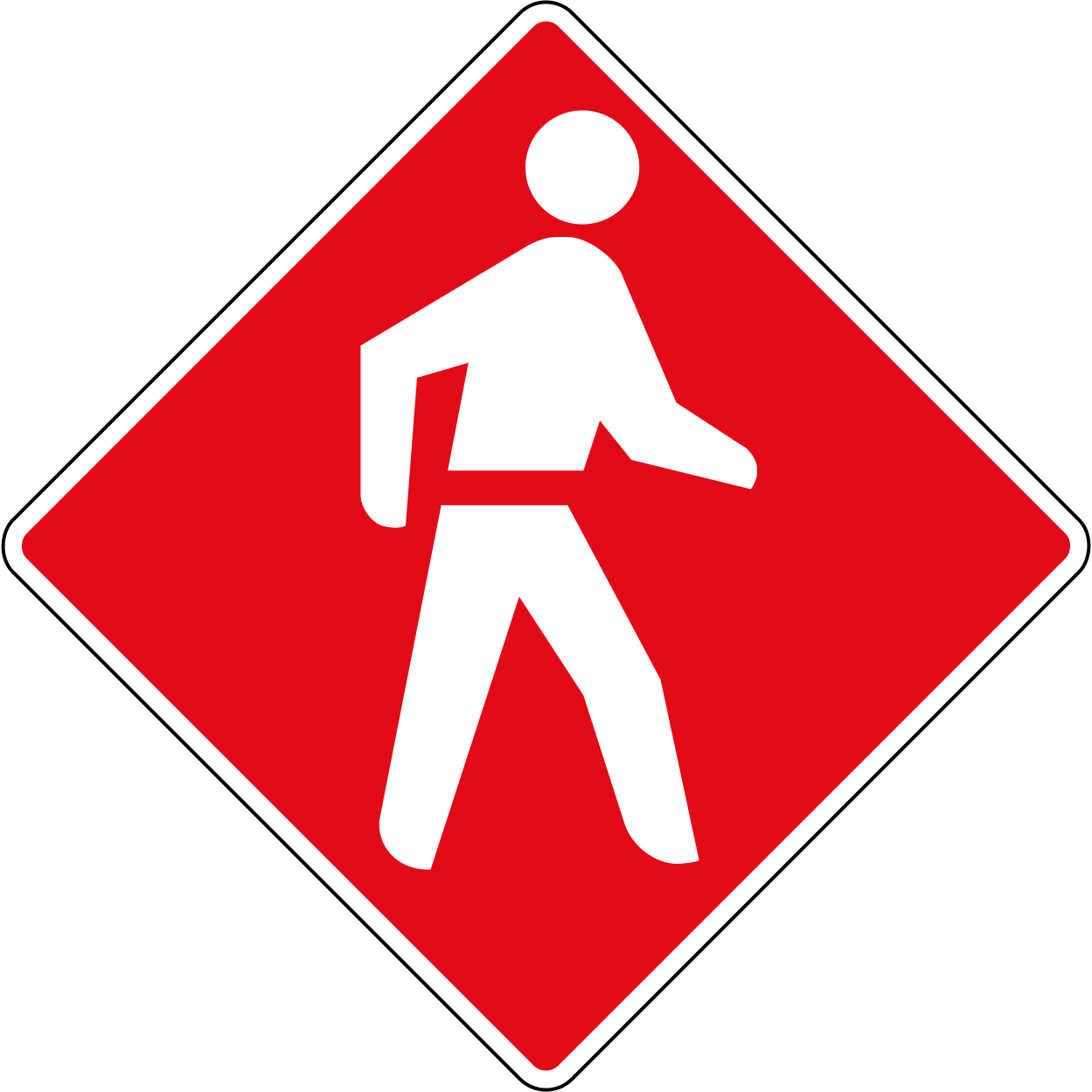
Pedestrian priority (R5) Pedestrians have priority on this road. Drive slowly and give way to pedestrians.
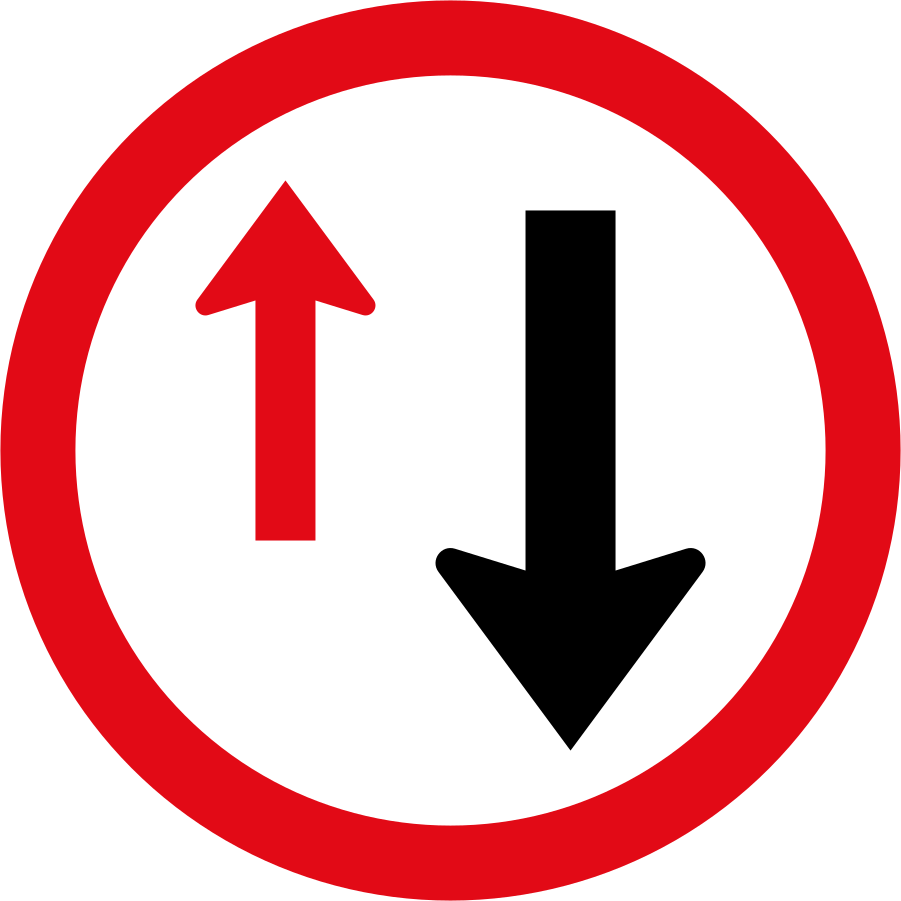
Yield to oncoming traffic (R6) Yield to oncoming traffic at a narrow section. Wait until oncoming vehicles have passed.
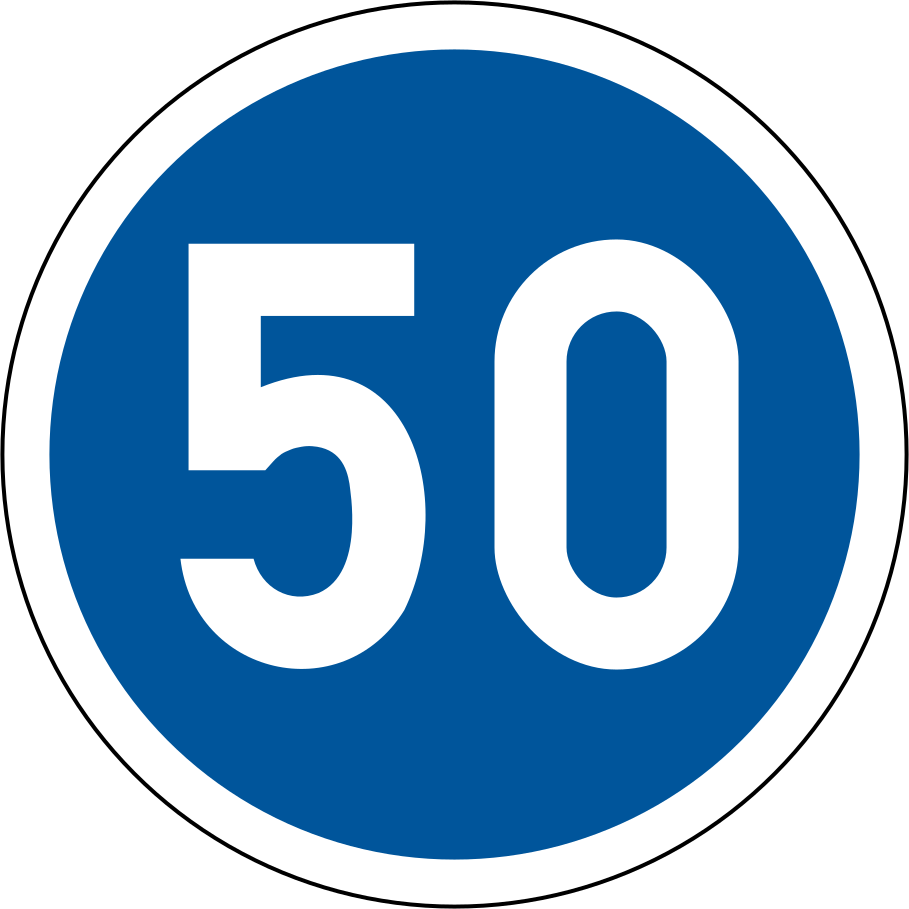
Minimum speed (R101) You must drive at least the speed shown. Keep to at least that speed unless it is unsafe.
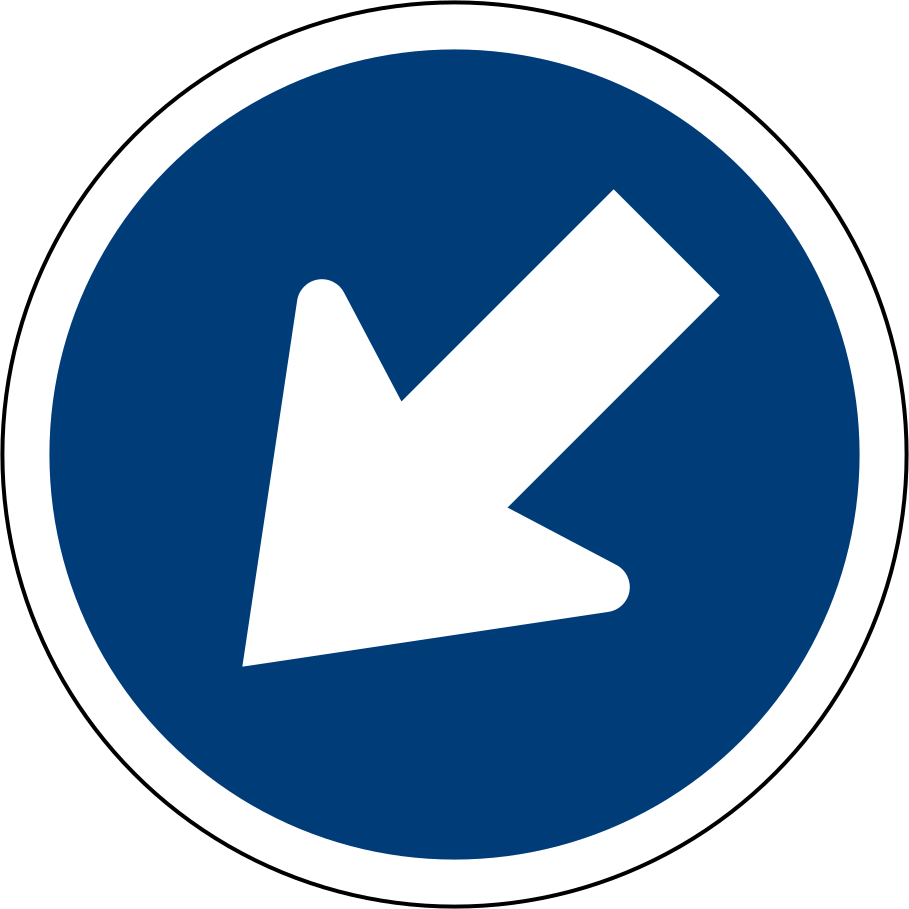
Keep left (R103) Pass to the left of the obstruction. Keep to the side shown by the arrow.

Keep right (R104) Pass to the right of the obstruction. Keep to the side shown by the arrow.
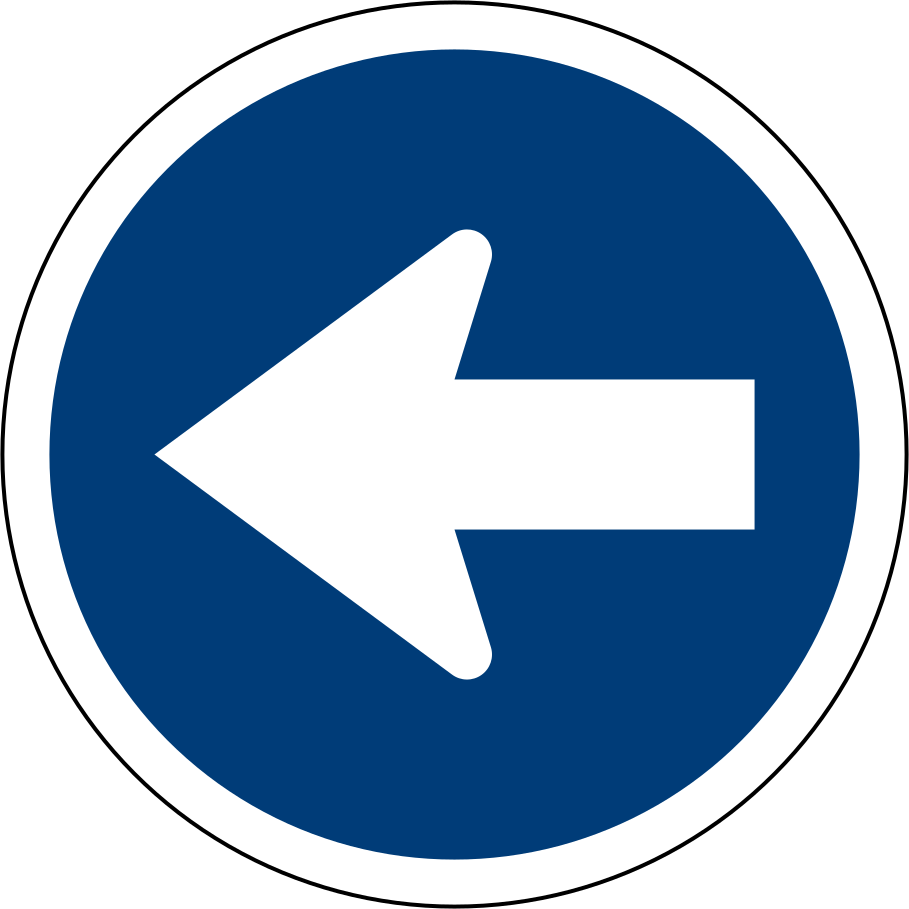
Proceed left only (R105) You may only go left at this point. Drive only in the direction of the arrow.
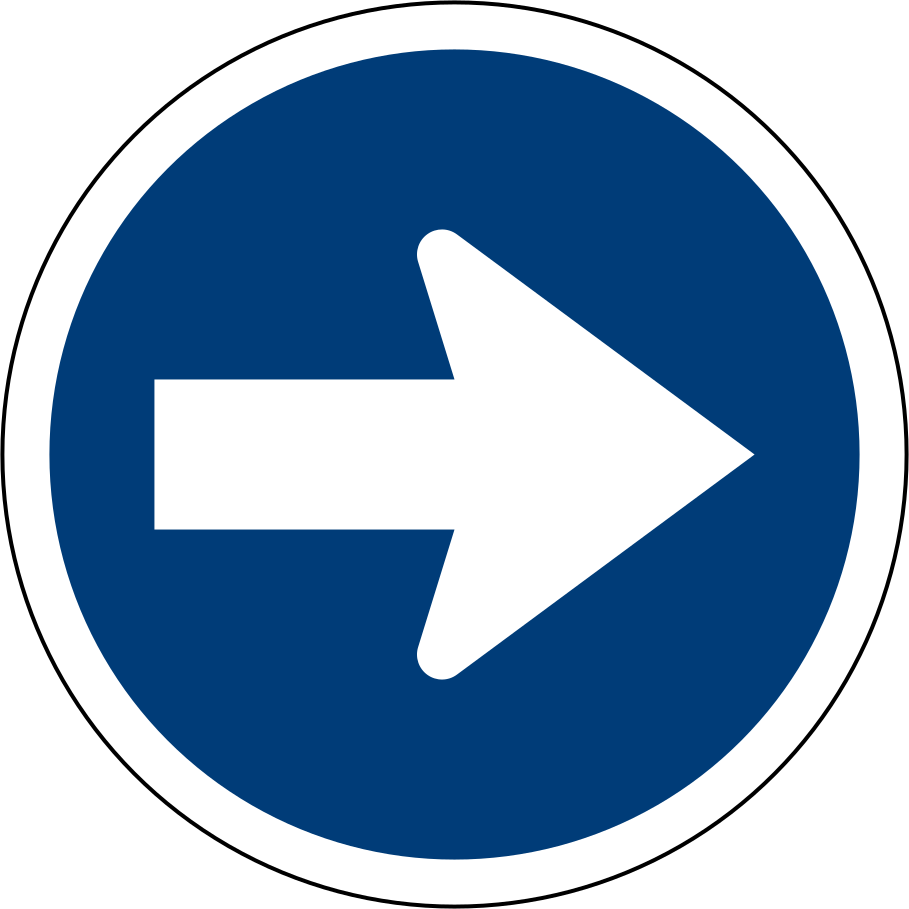
Proceed right only (R106) You may only go right at this point. Drive only in the direction of the arrow.
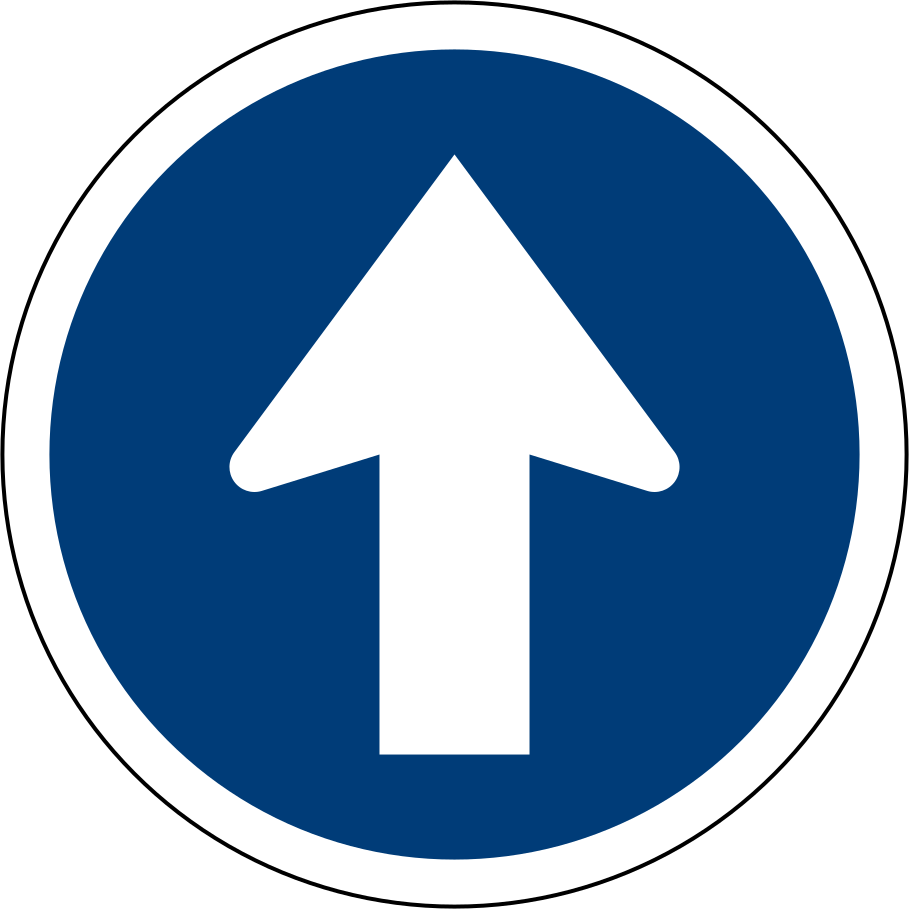
Proceed straight only (R107) You may only go straight on. Do not turn left or right.
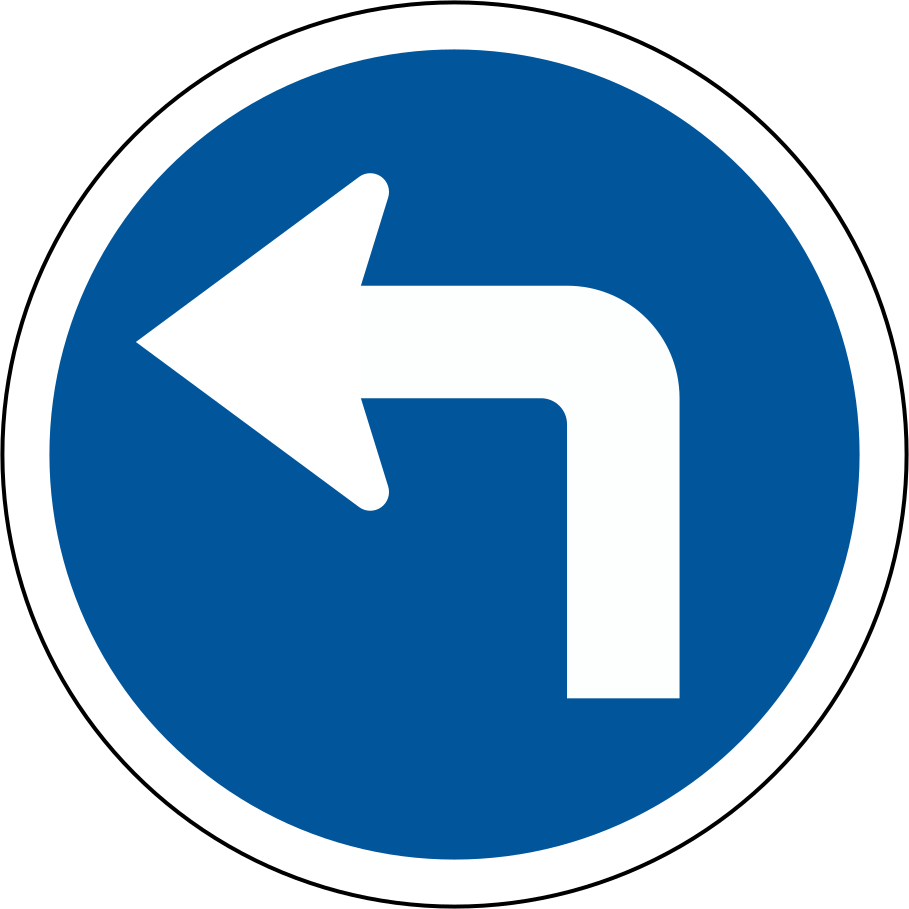
Turn left only (R108) At the intersection ahead you must turn left. Get into the correct lane in good time.
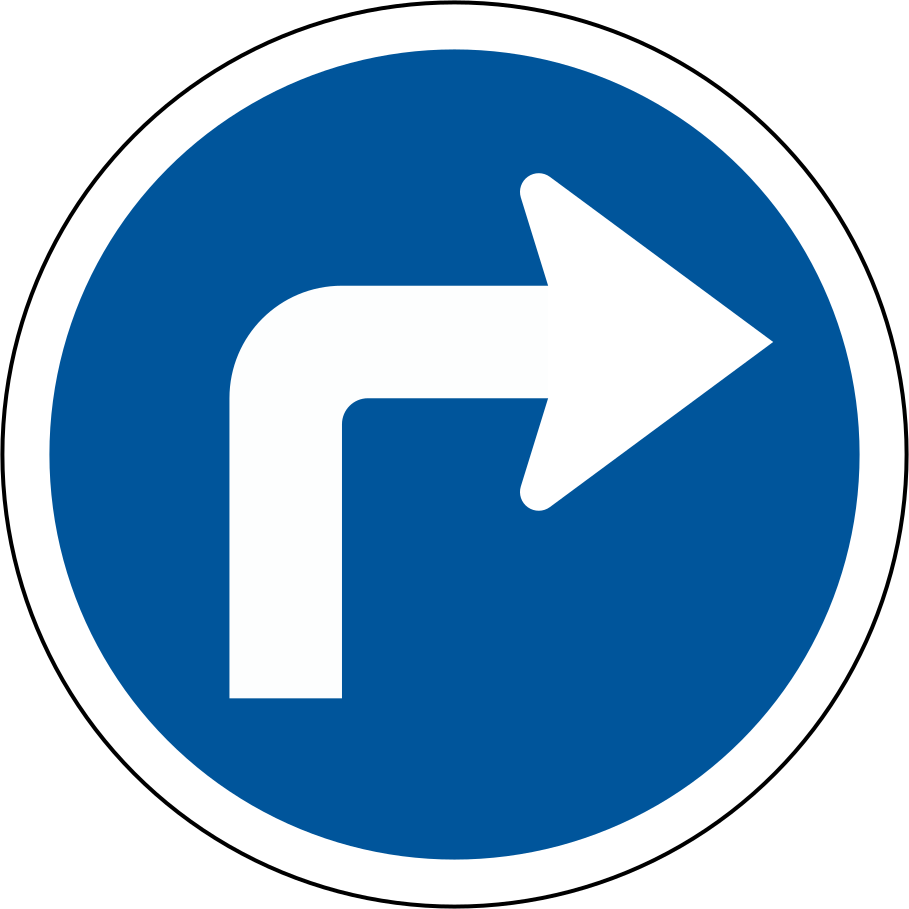
Turn right only (R109) At the intersection ahead you must turn right. Get into the correct lane in good time.
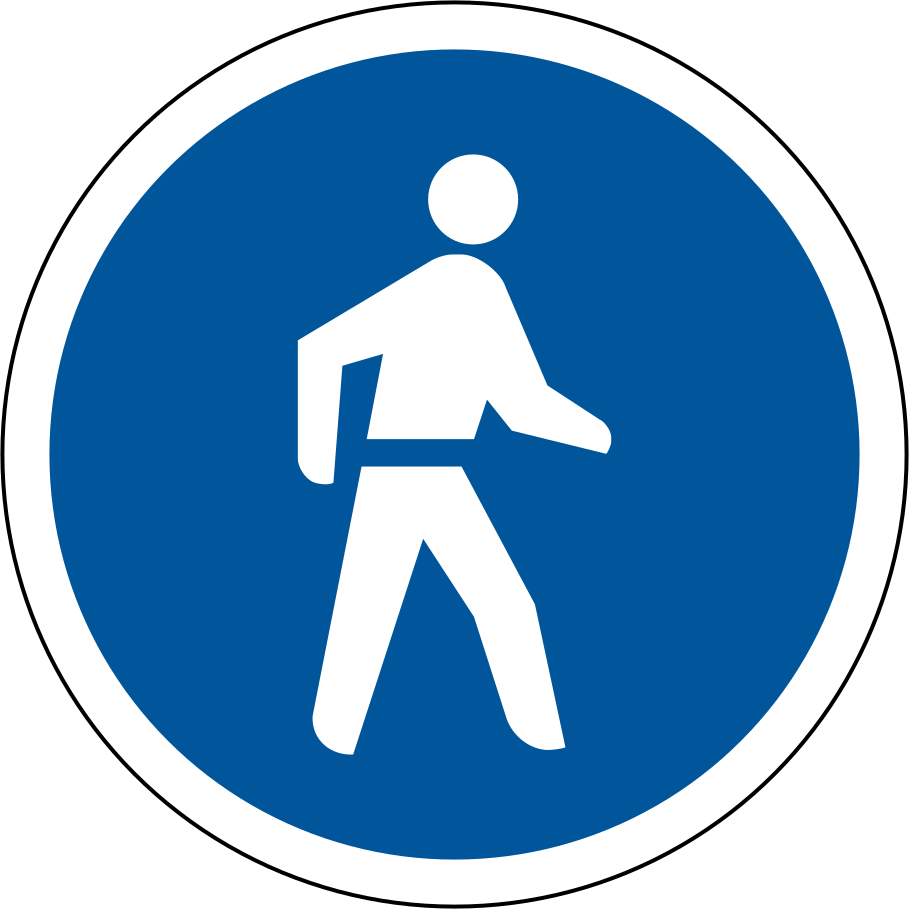
Pedestrians only (R110) The road or path is for pedestrians only. Do not drive or ride on it.
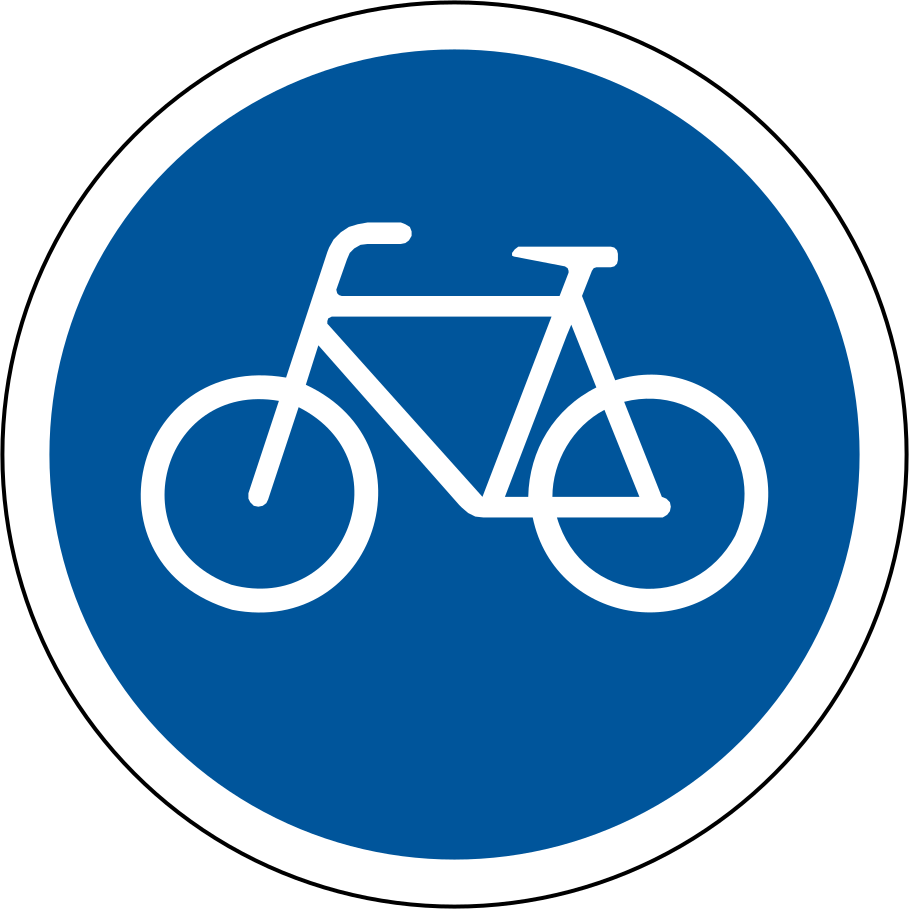
Cyclists only (R111) The road or lane is for pedal cyclists only. Do not drive in it.
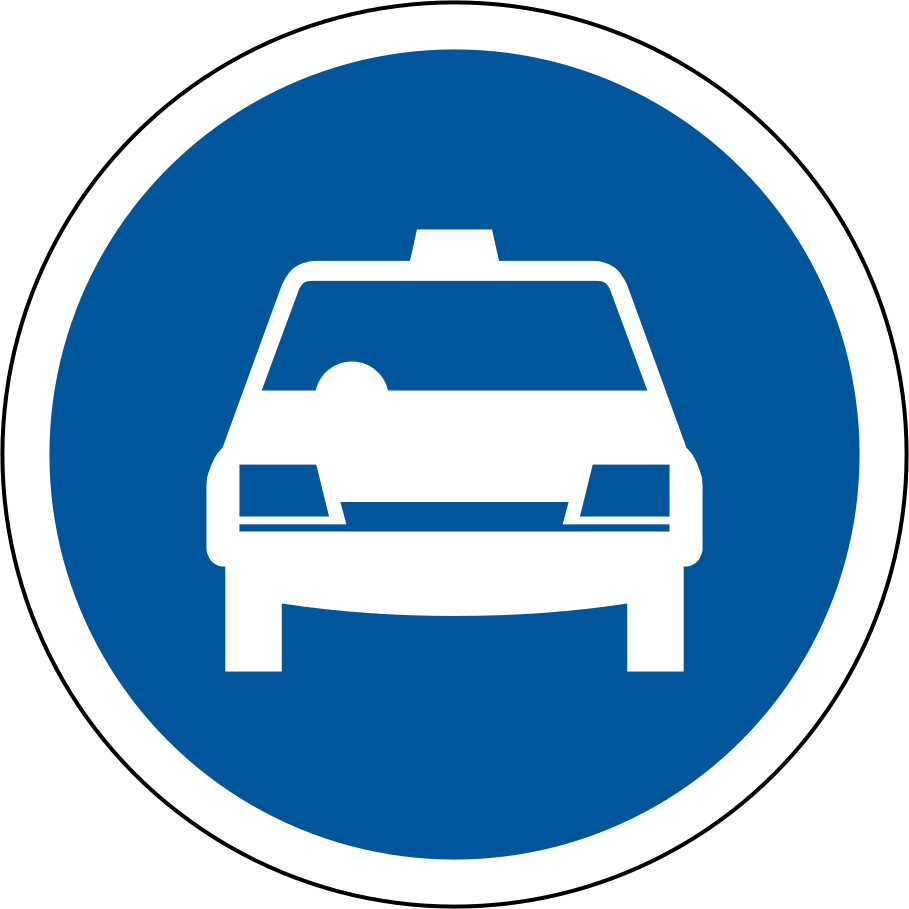
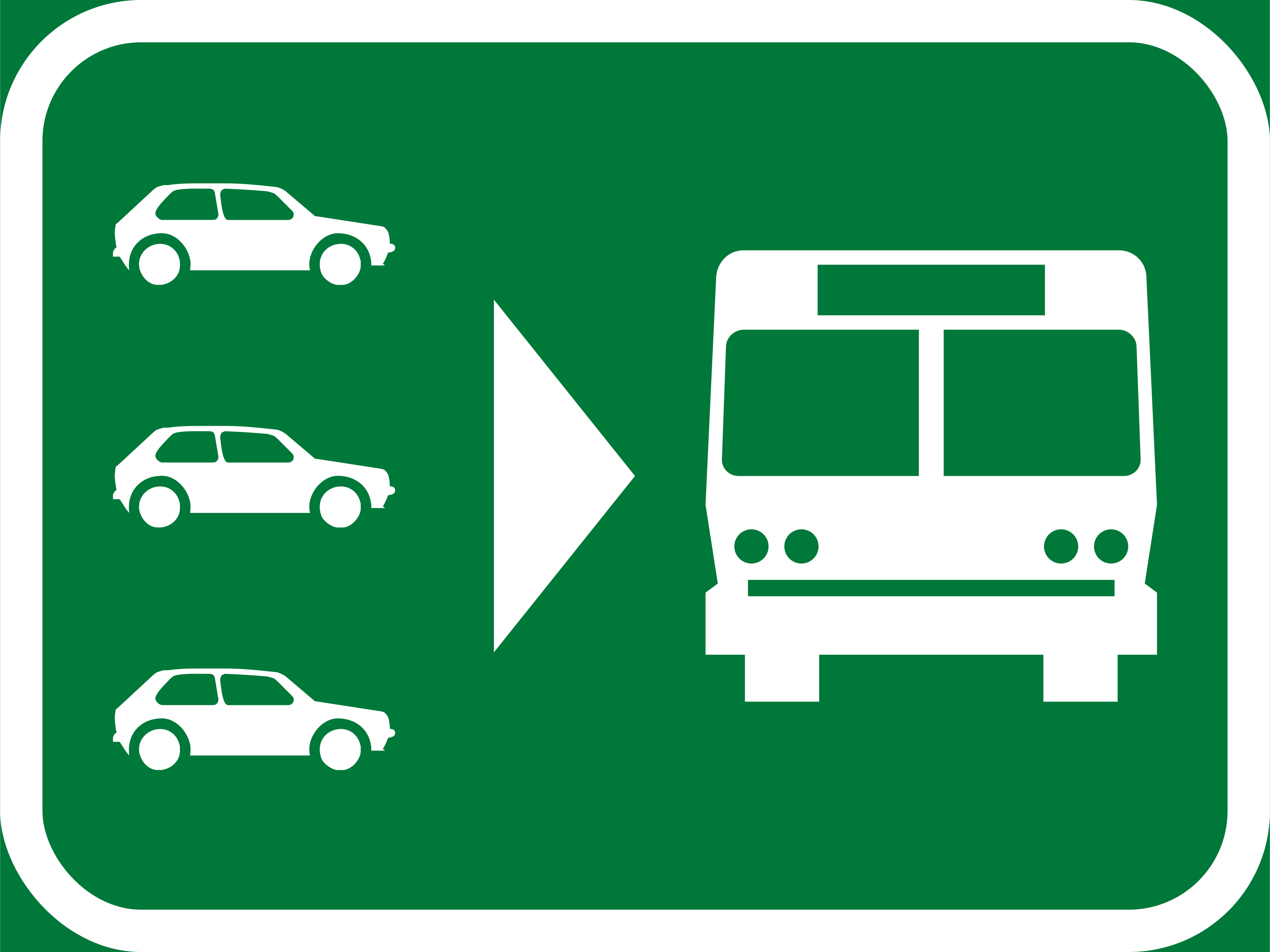
Taxis only (R118) The lane or road is reserved for taxis. Other vehicles may not use it.
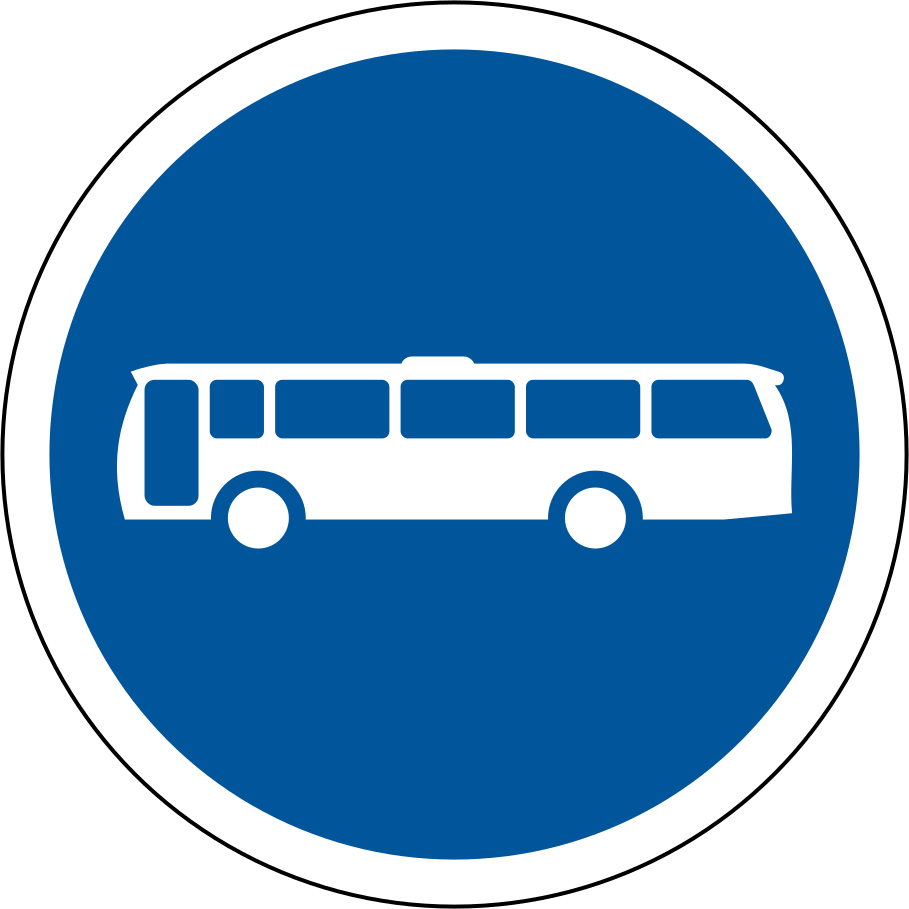
Buses only (R121) The lane or road is reserved for buses. Other vehicles may not use it.

Pay toll (R132) You must stop and pay a toll ahead. Slow down for the toll plaza.
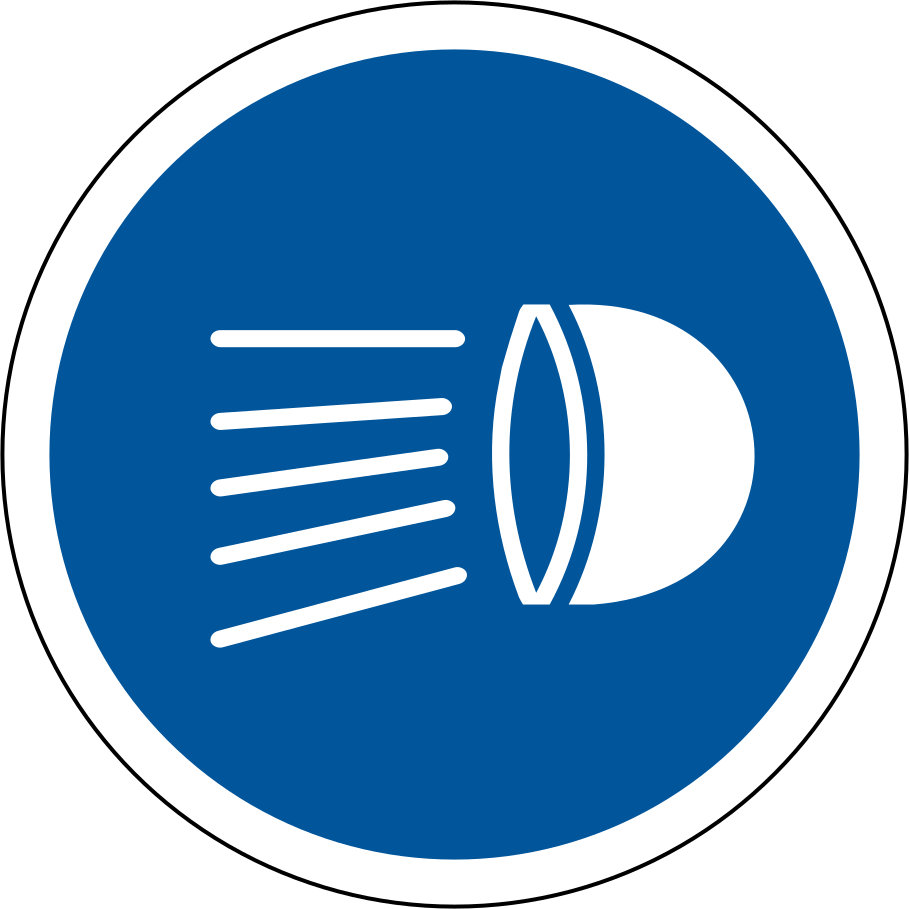
Switch headlamps on (R133) You must switch on your headlamps. Switch on your headlamps, for example before a tunnel.
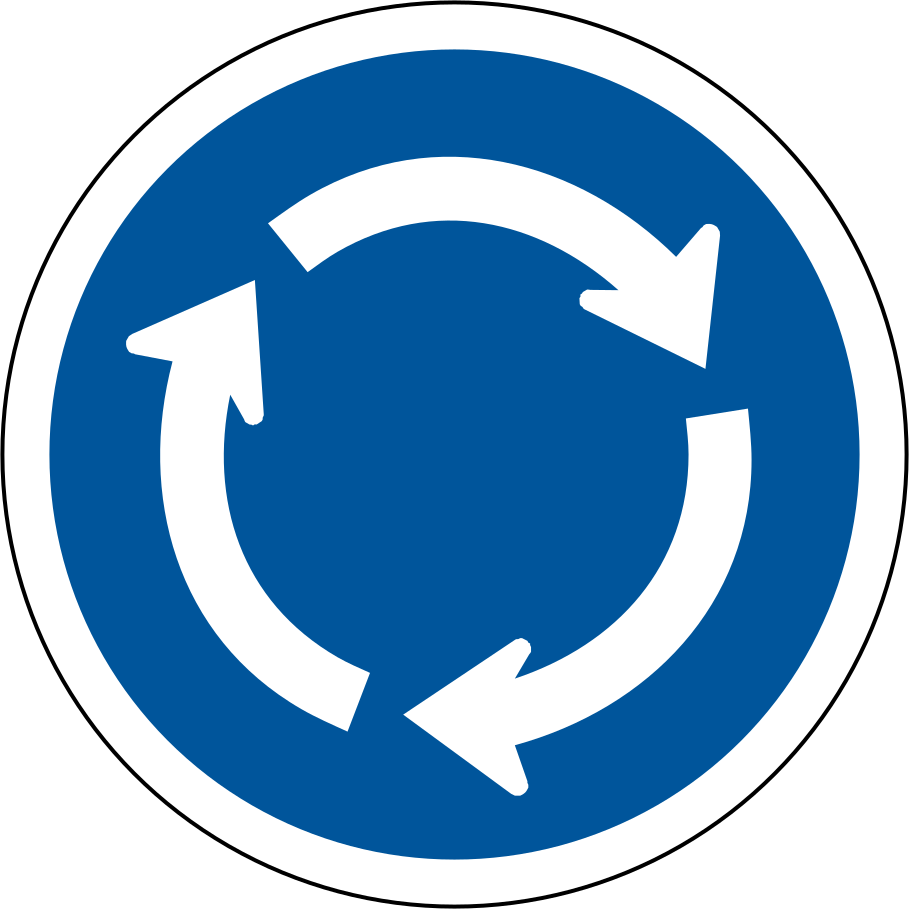
Roundabout (R137) Mini-circle or roundabout: drive clockwise around the island. Yield to traffic approaching from your right within the junction.
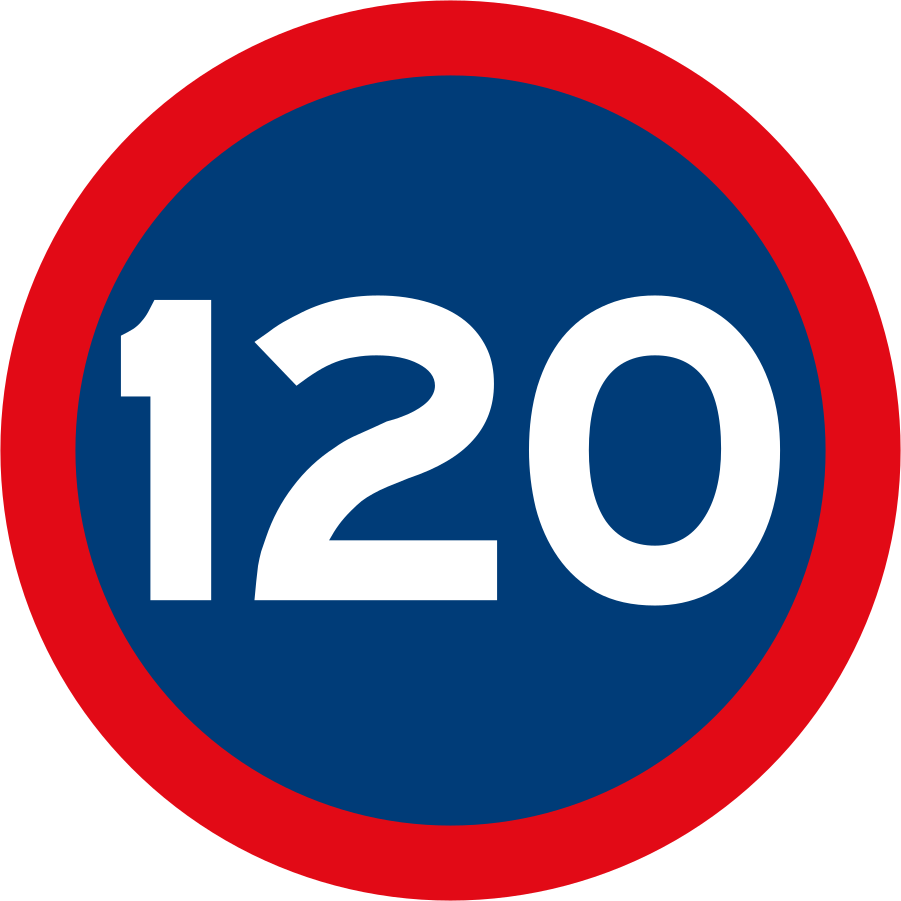
Speed limit 120 (R201) Maximum 120 km/h. Do not drive faster than 120 km/h.
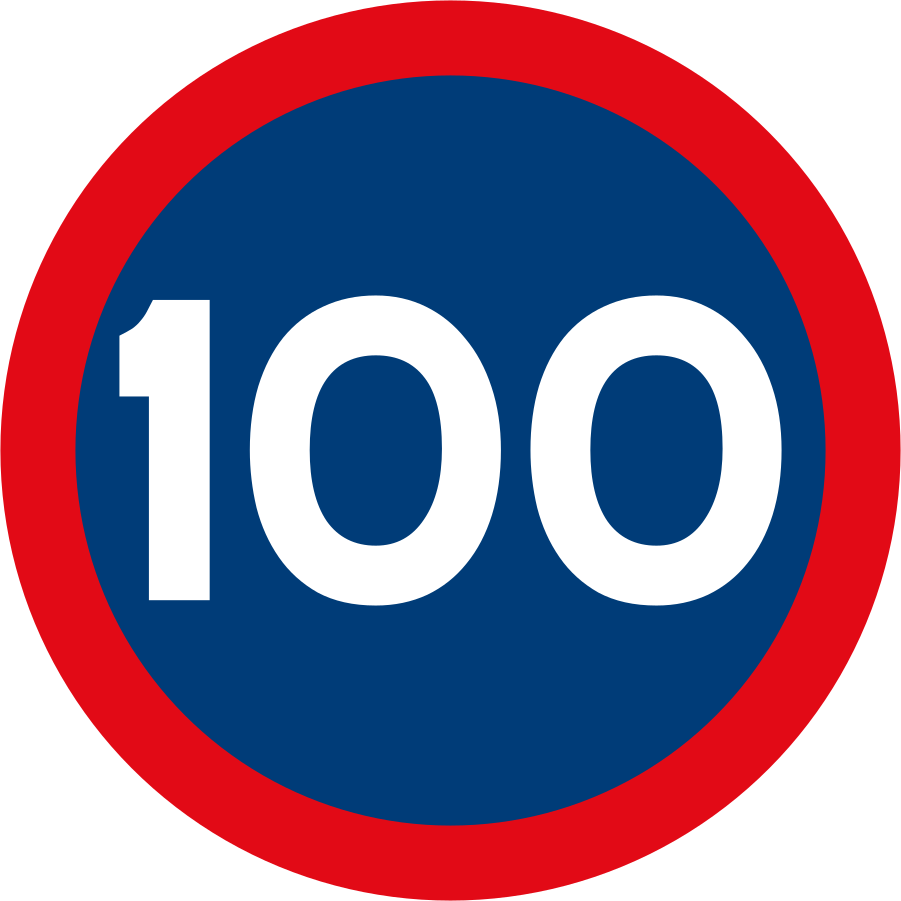
Speed limit 100 (R201) Maximum 100 km/h. Do not drive faster than 100 km/h.
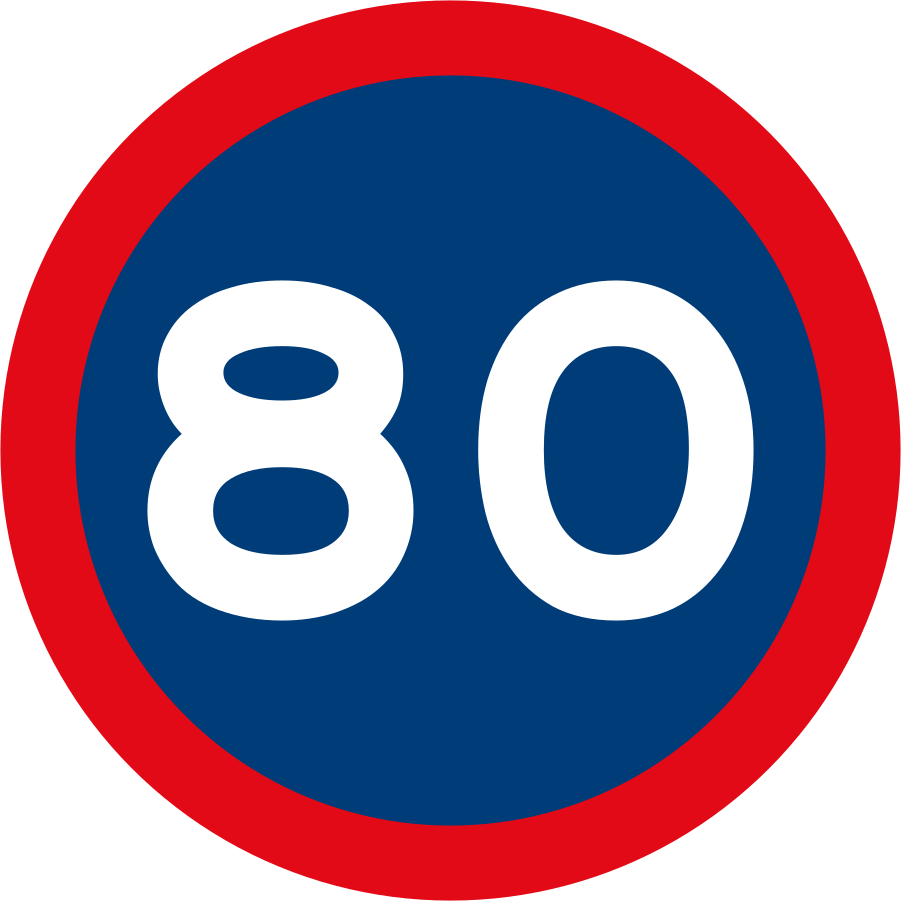
Speed limit 80 (R201) Maximum 80 km/h. Do not drive faster than 80 km/h.
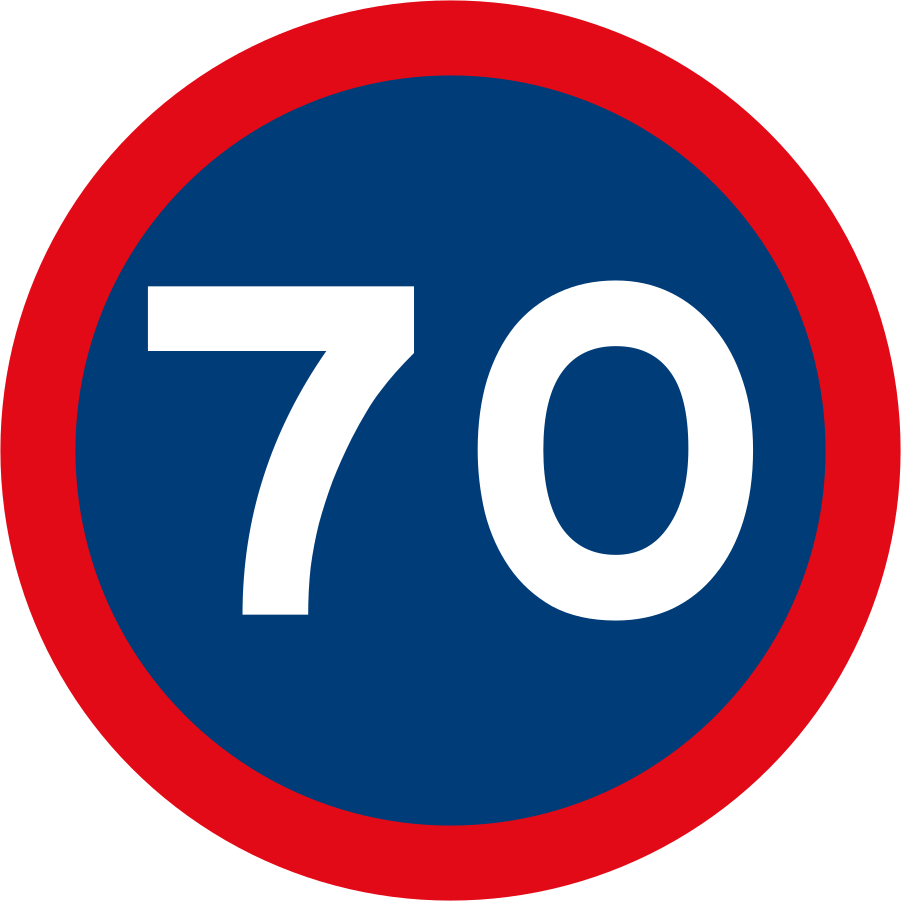
Speed limit 70 (R201) Maximum 70 km/h. Do not drive faster than 70 km/h.
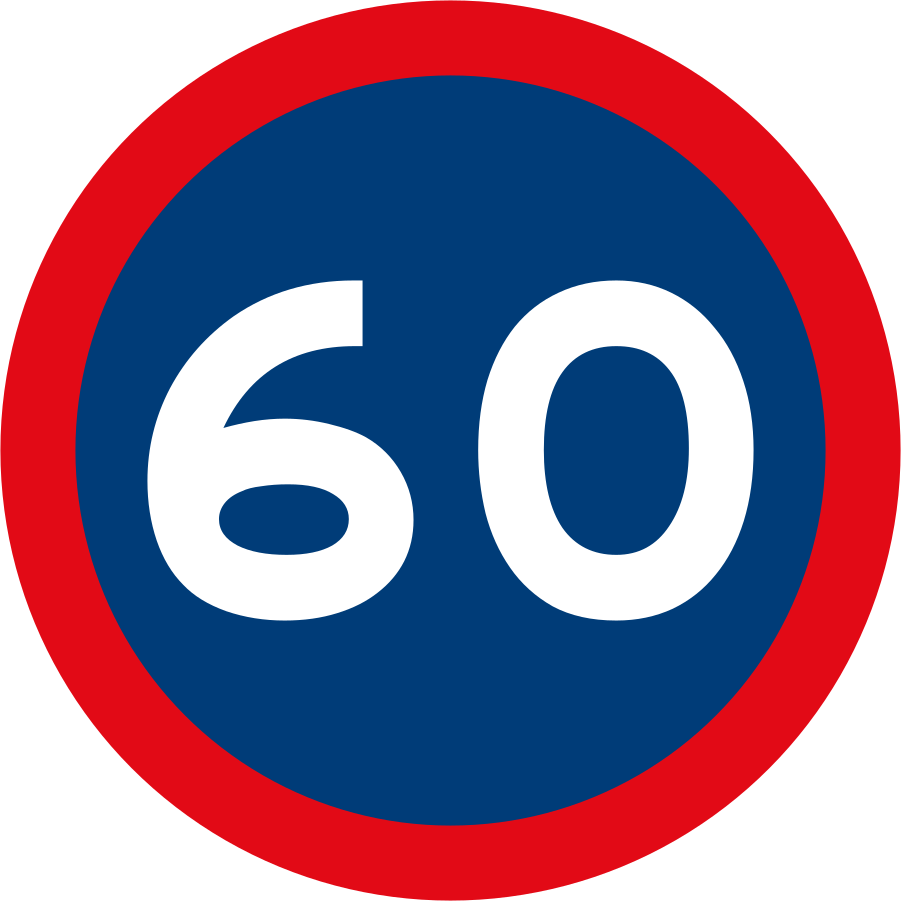
Speed limit 60 (R201) Maximum 60 km/h. Do not drive faster than 60 km/h.
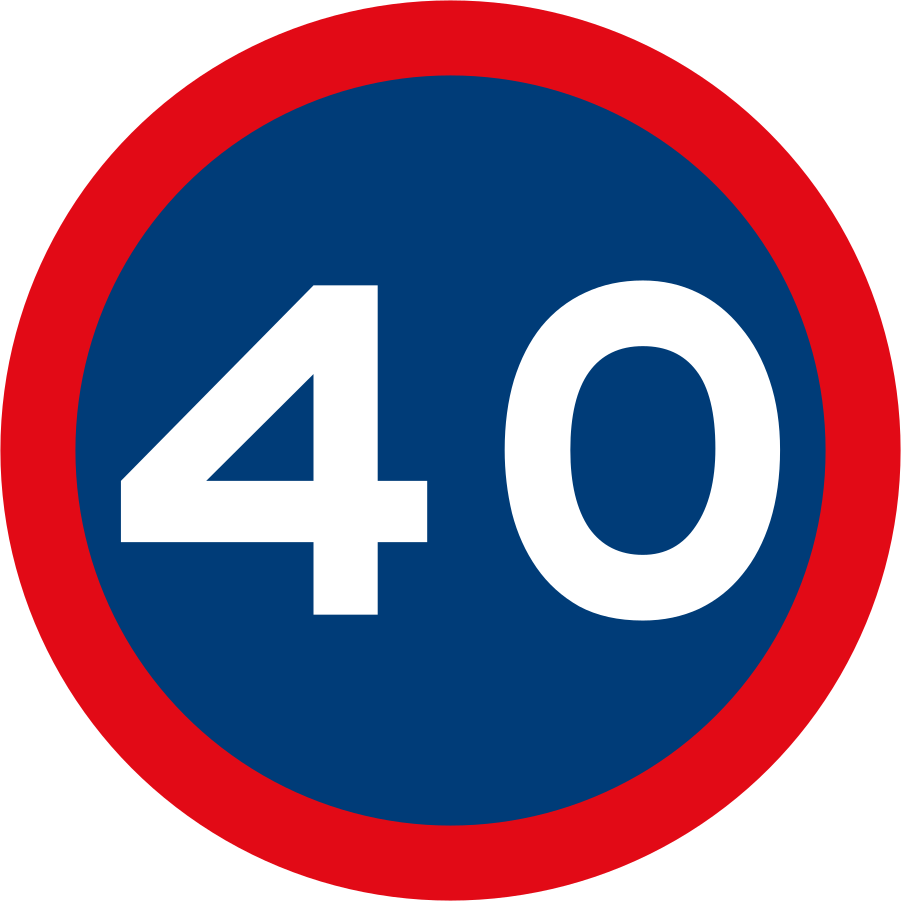
Speed limit 40 (R201) Maximum 40 km/h. Do not drive faster than 40 km/h.
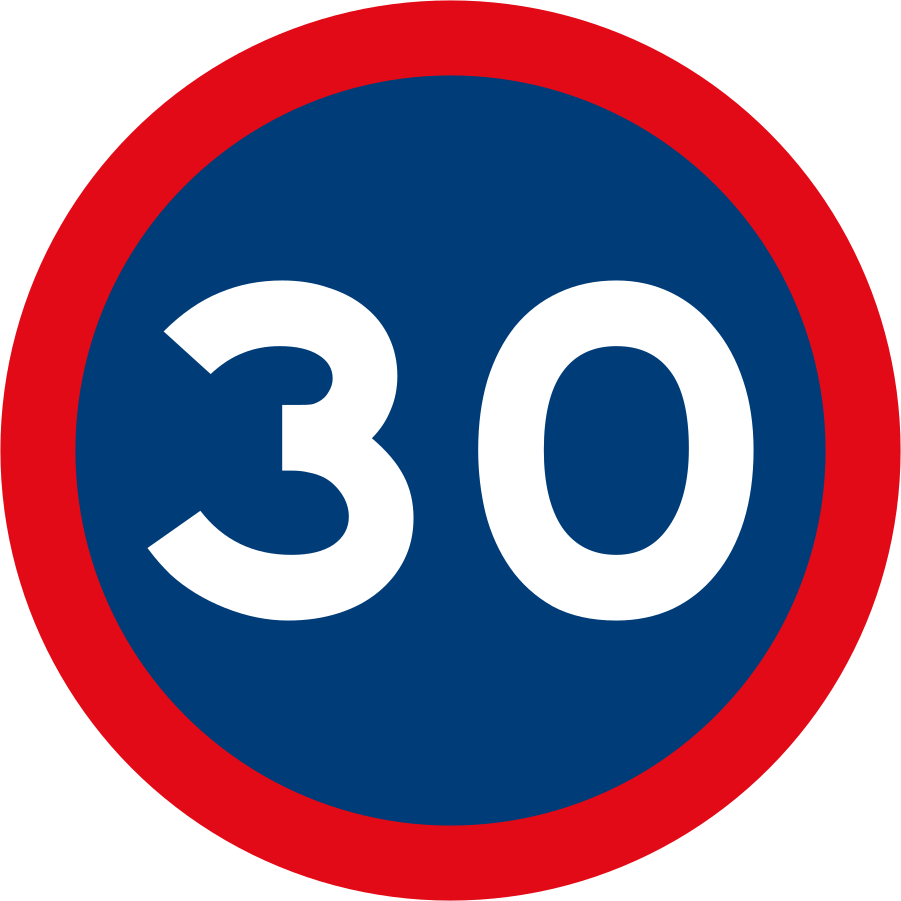
Speed limit 30 (R201) Maximum 30 km/h. Do not drive faster than 30 km/h.
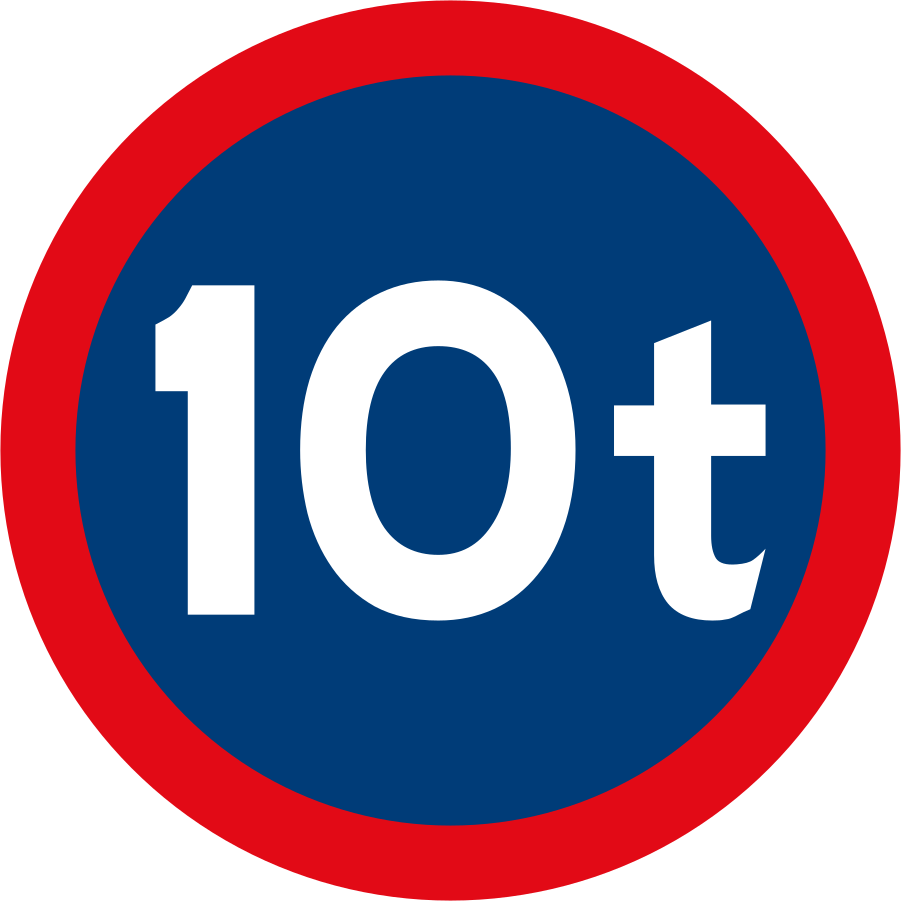
Mass limit (R202) Vehicles heavier than the mass shown may not pass. Use another route if your vehicle is heavier.
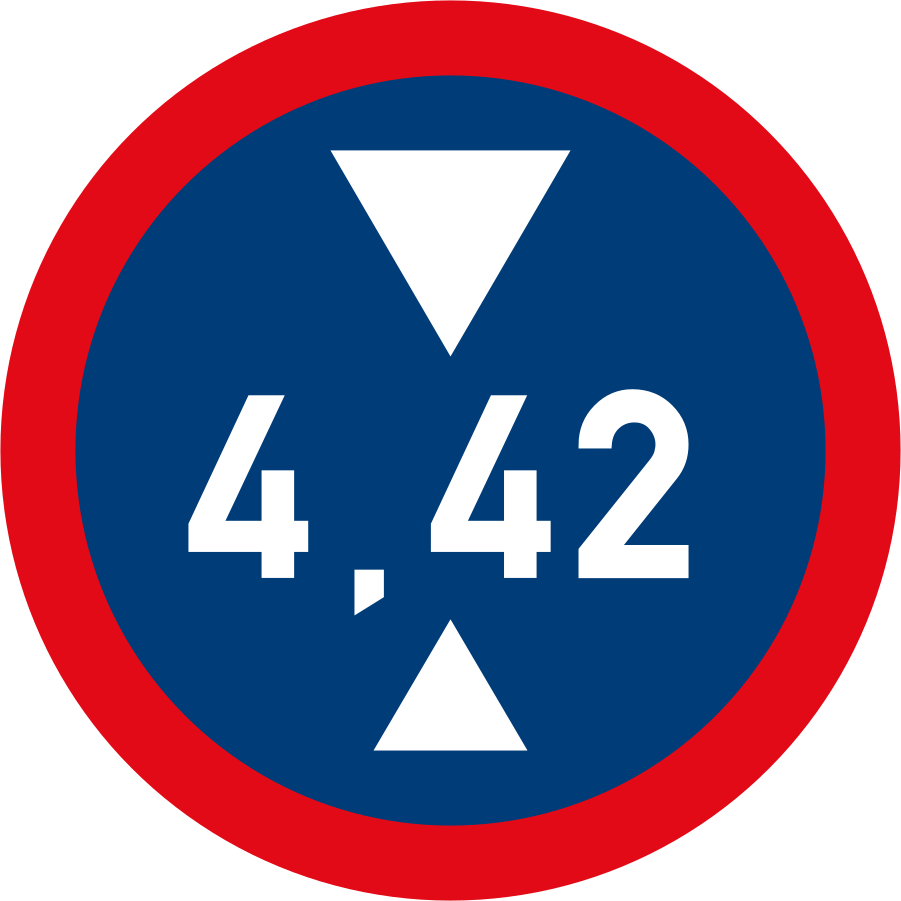
Height limit (R204) Vehicles higher than the height shown may not pass. Use another route if your vehicle or load is higher.
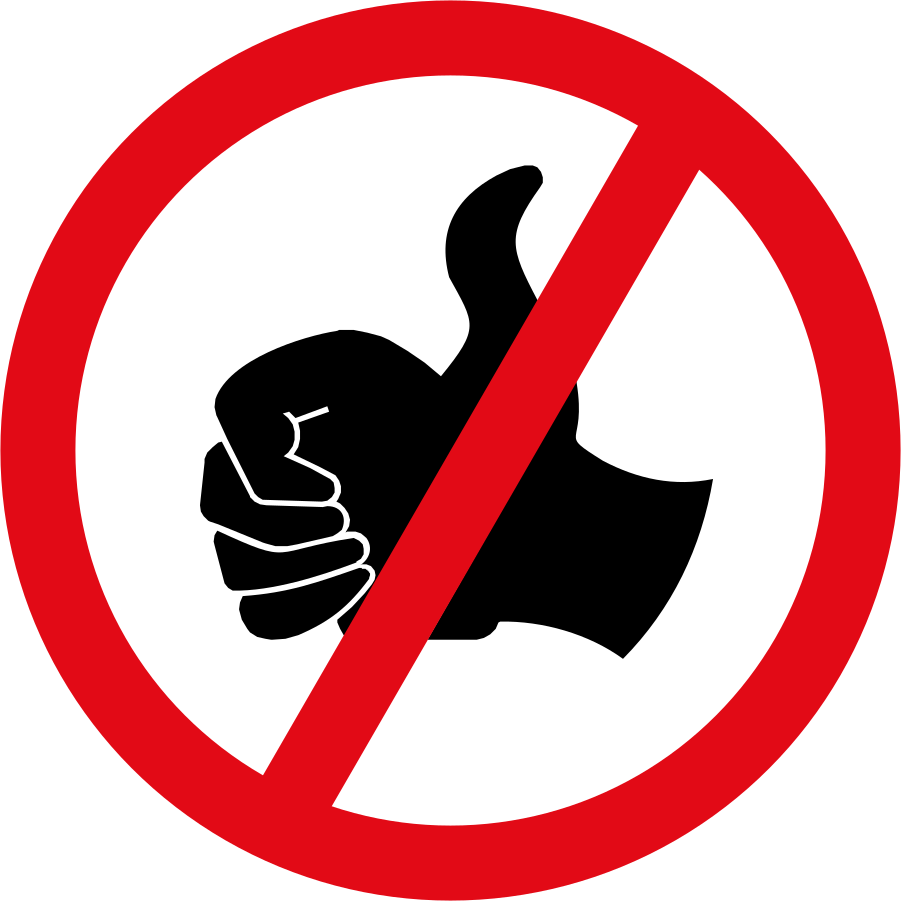
Hitch-hiking prohibited (R207) No hitch-hiking on this road. Do not stop to pick up hitch-hikers here.
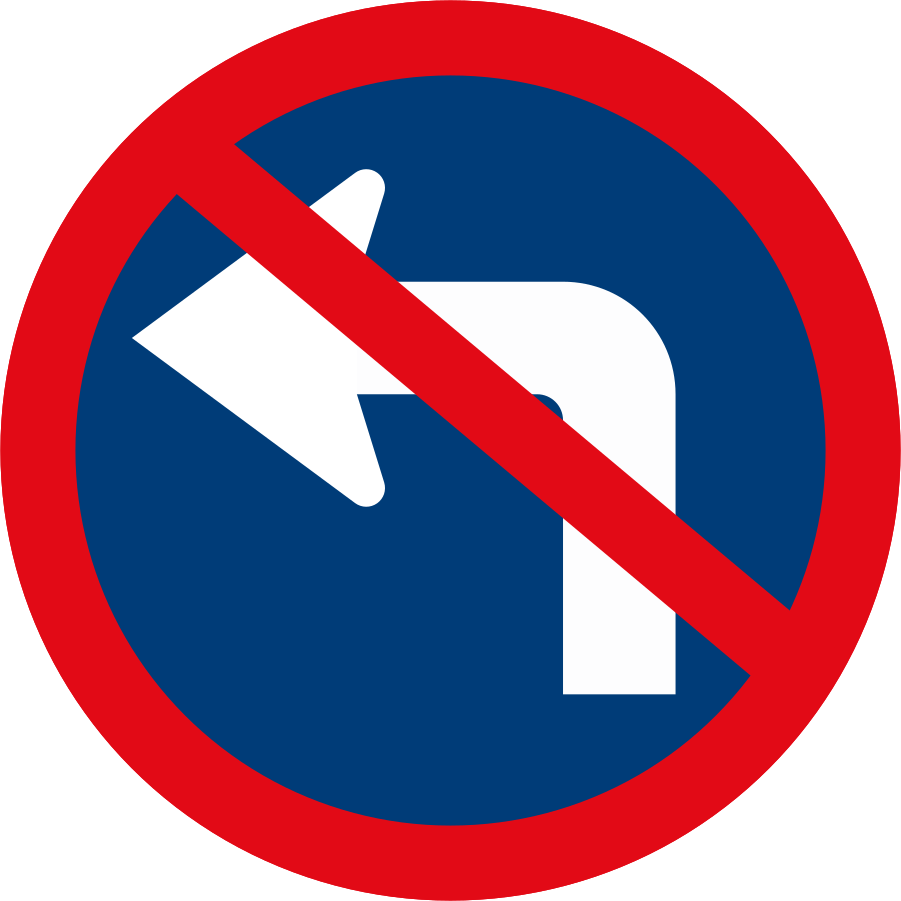
Left turn ahead prohibited (R209) You may not turn left at the junction ahead. Plan another route.
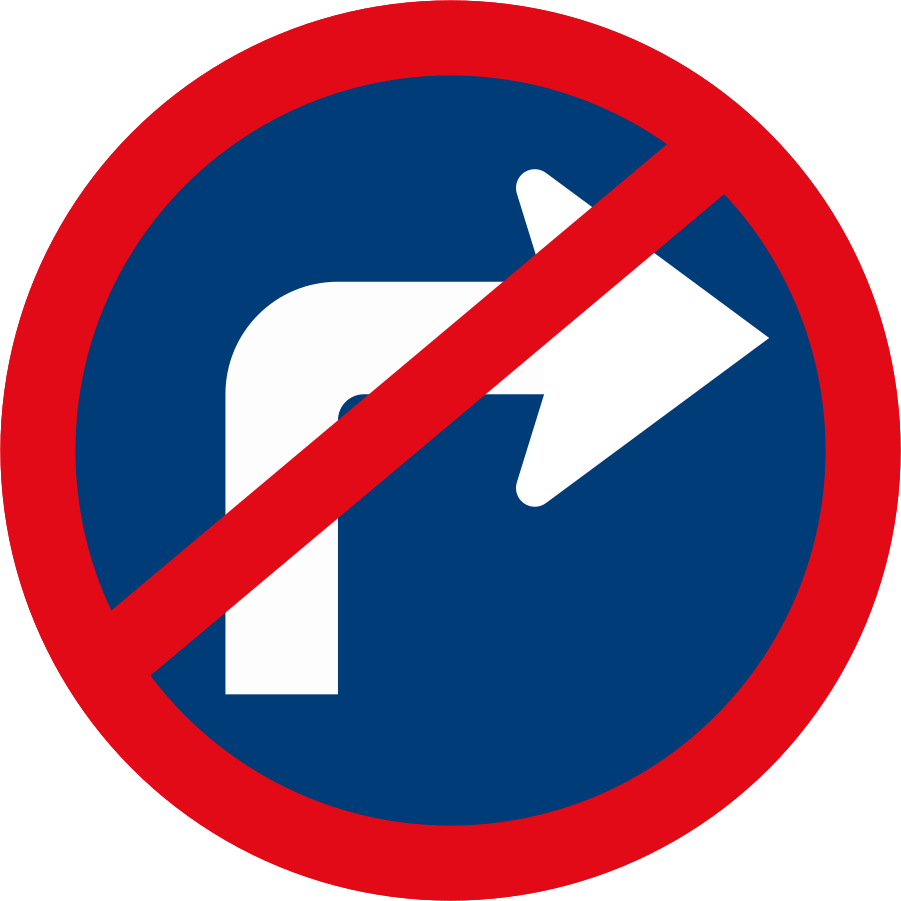
Right turn ahead prohibited (R210) You may not turn right at the junction ahead. Plan another route.
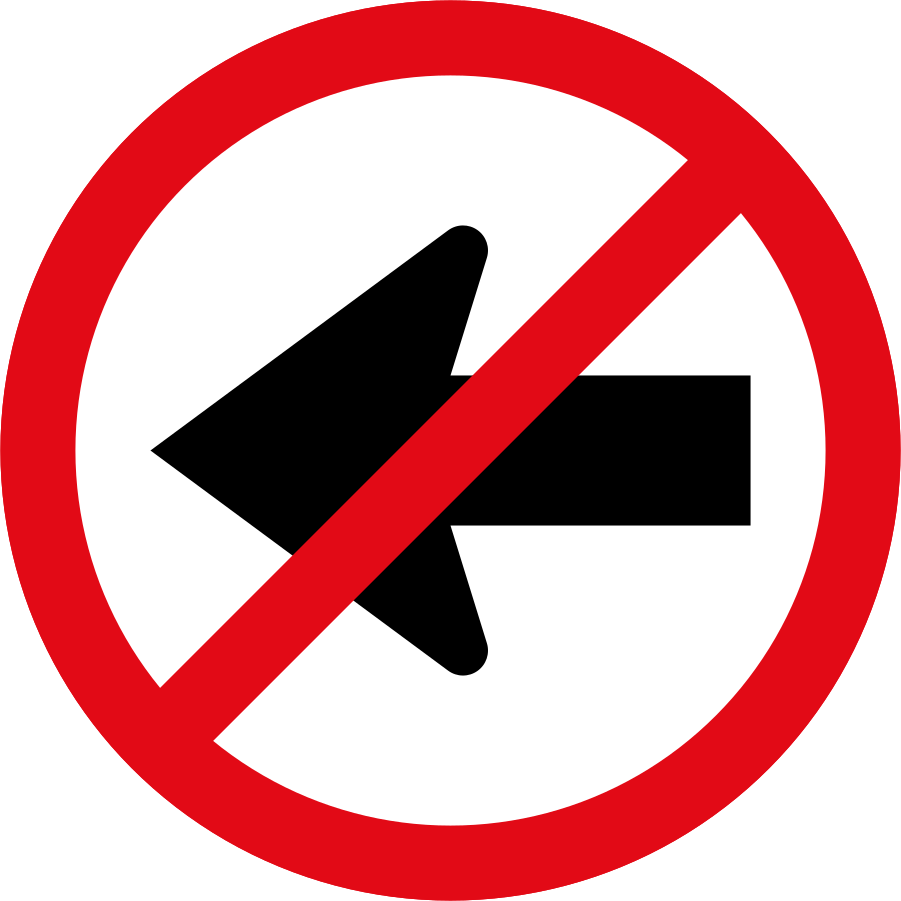
Left turn prohibited (R211) You may not turn left here. Go straight or turn right.
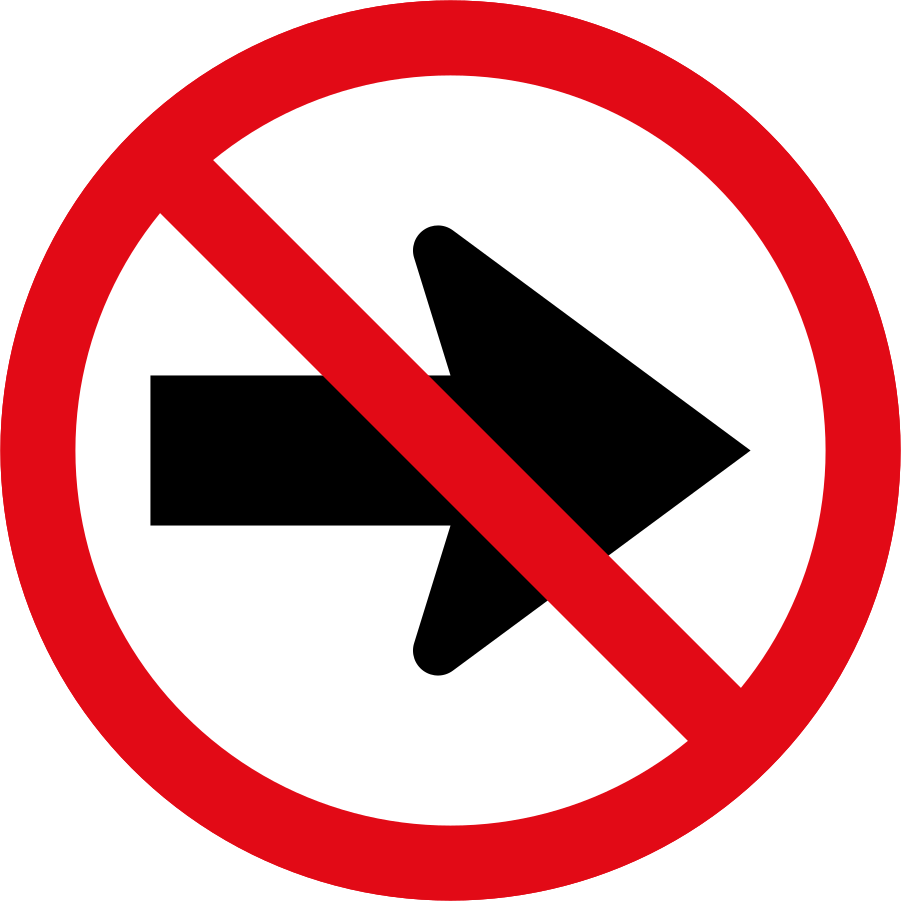
Right turn prohibited (R212) You may not turn right here. Go straight or turn left.
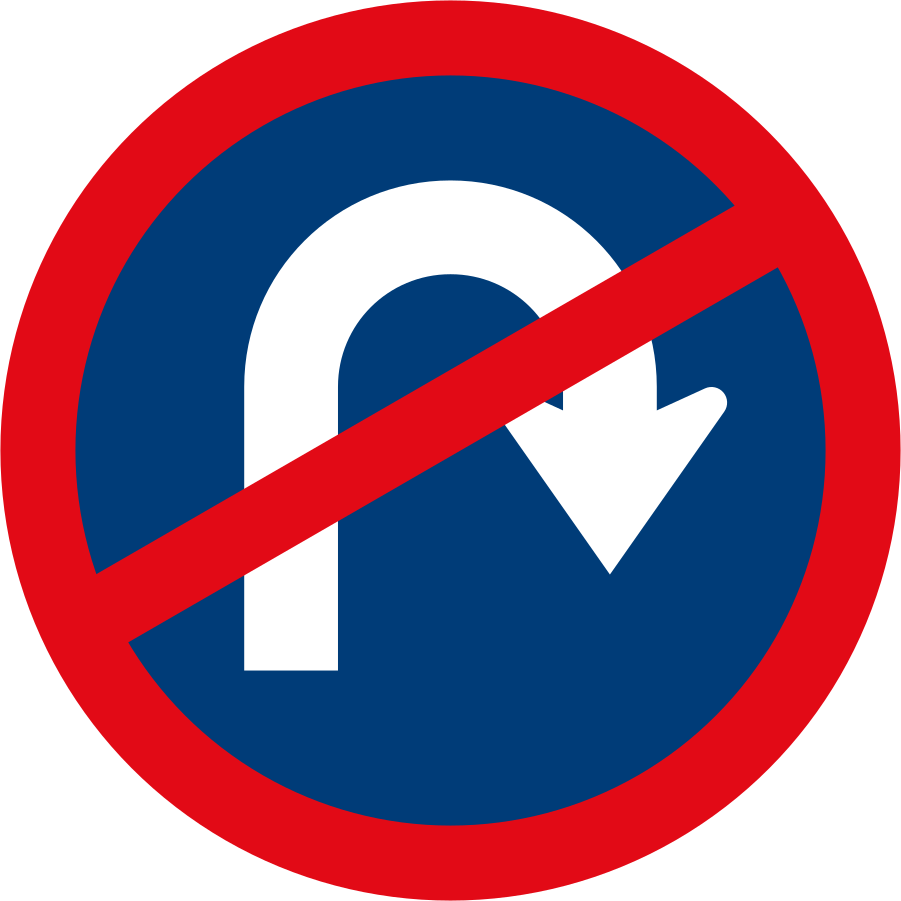
U-turn prohibited (R213) You may not make a U-turn. Continue and turn safely elsewhere.
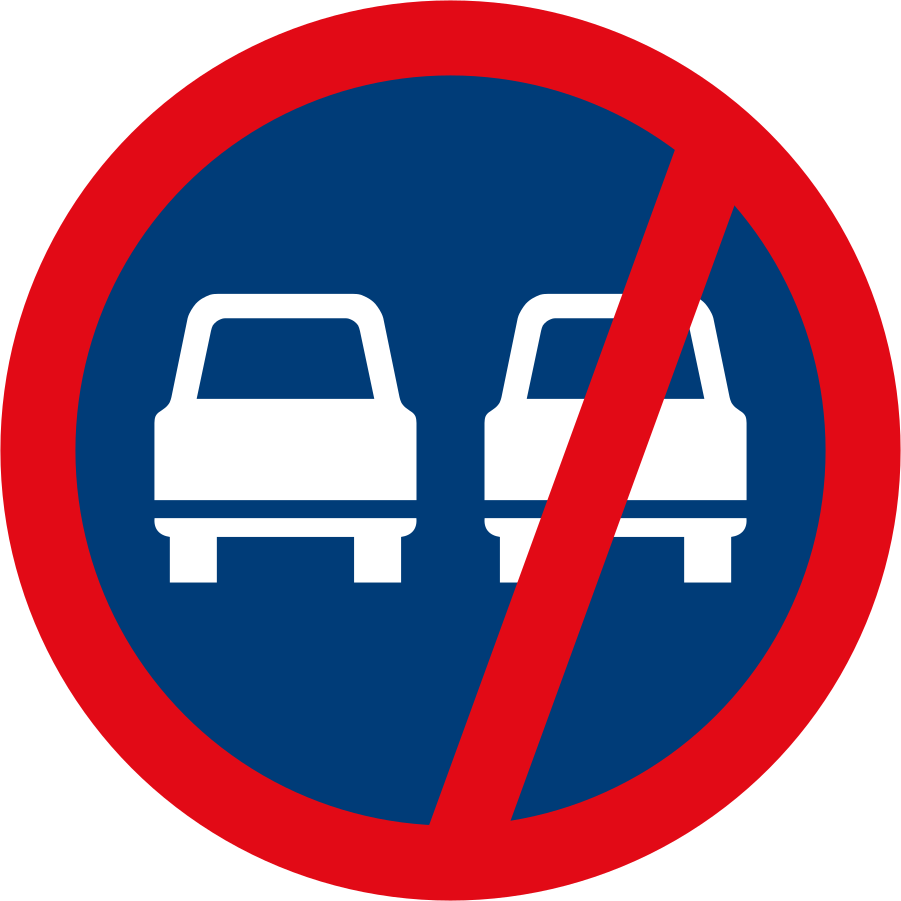
Overtaking prohibited (R214) You may not overtake other vehicles. Stay behind the vehicle ahead until the restriction ends.
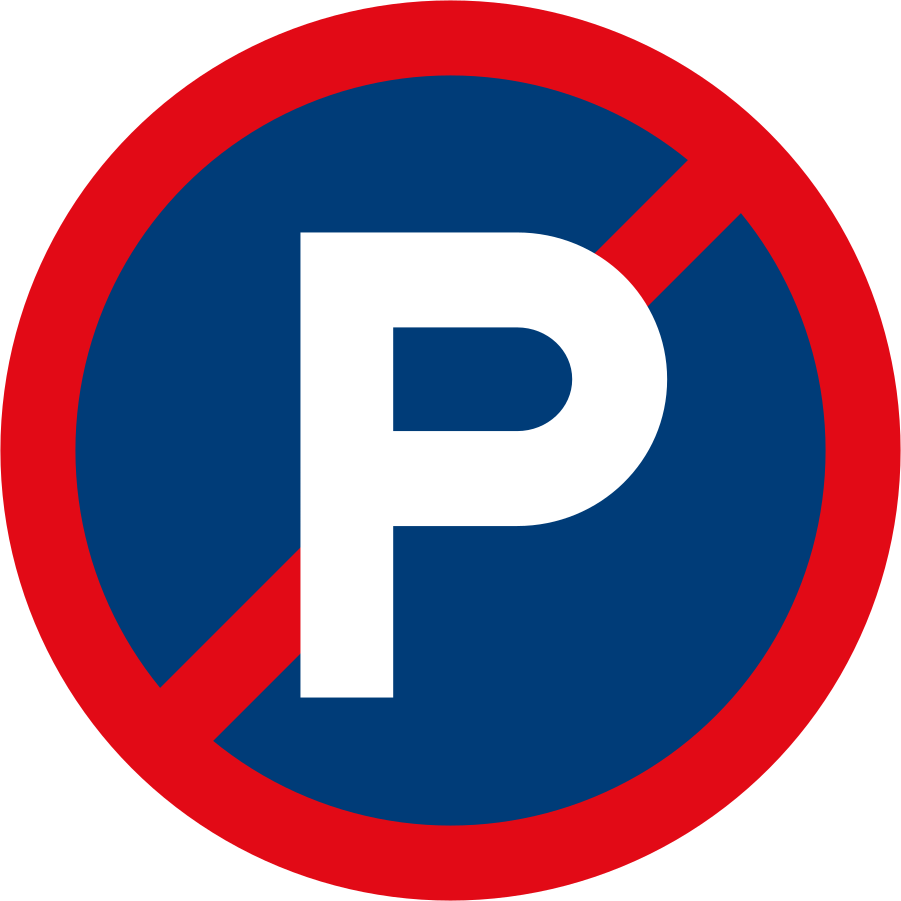
Parking prohibited (R216) You may not park here. You may stop briefly to load or unload, but not park.
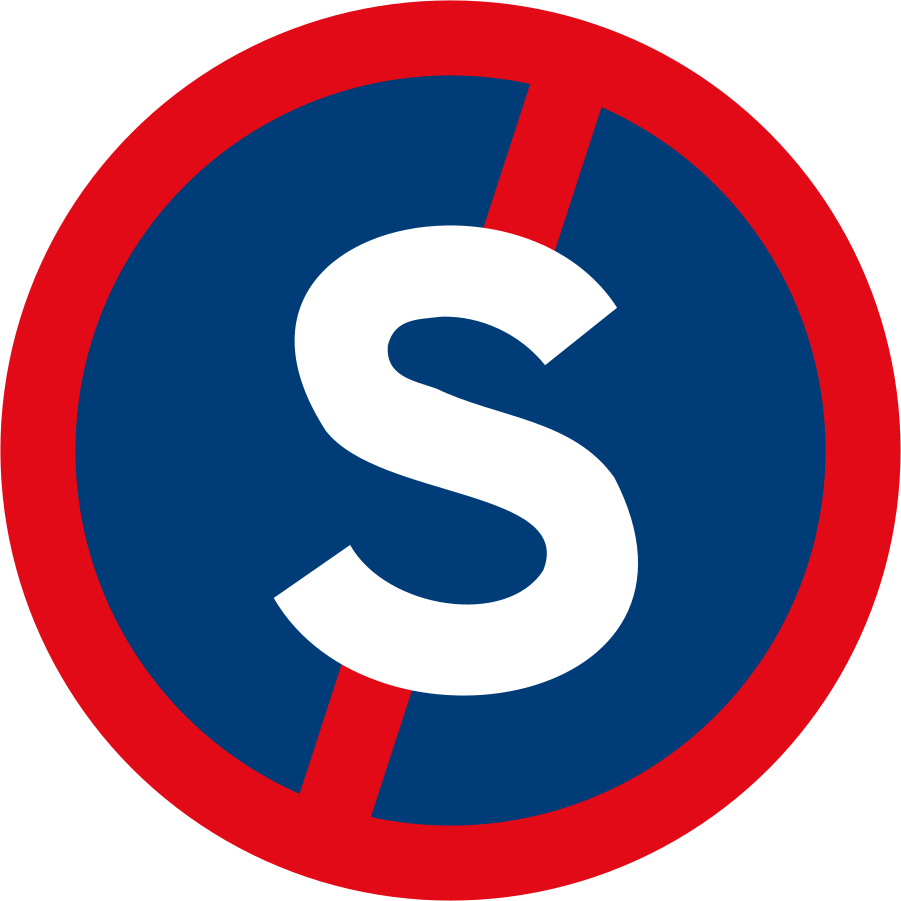
Stopping prohibited (R217) You may not stop here at all. Do not stop, even briefly, except to avoid an accident or when told to by a traffic officer.
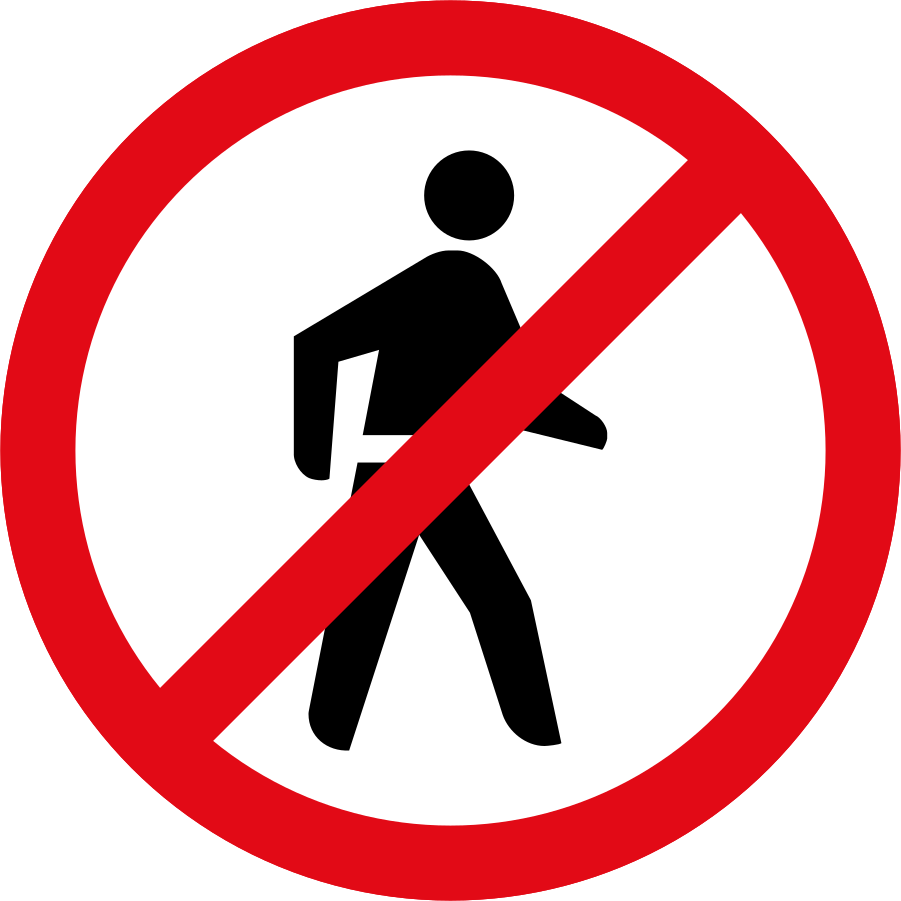
Pedestrians prohibited (R218) Pedestrians may not use this road. Pedestrians must use another route.
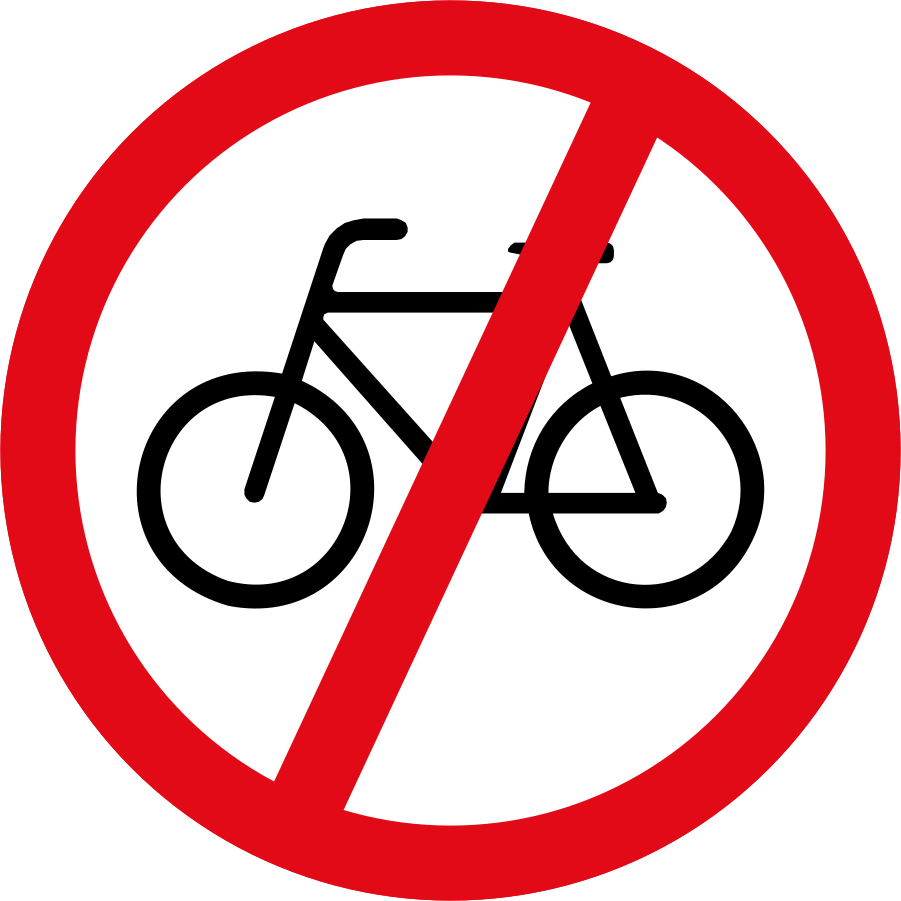
Pedal cycles prohibited (R219) Pedal cycles may not use this road. Cyclists must use another route.
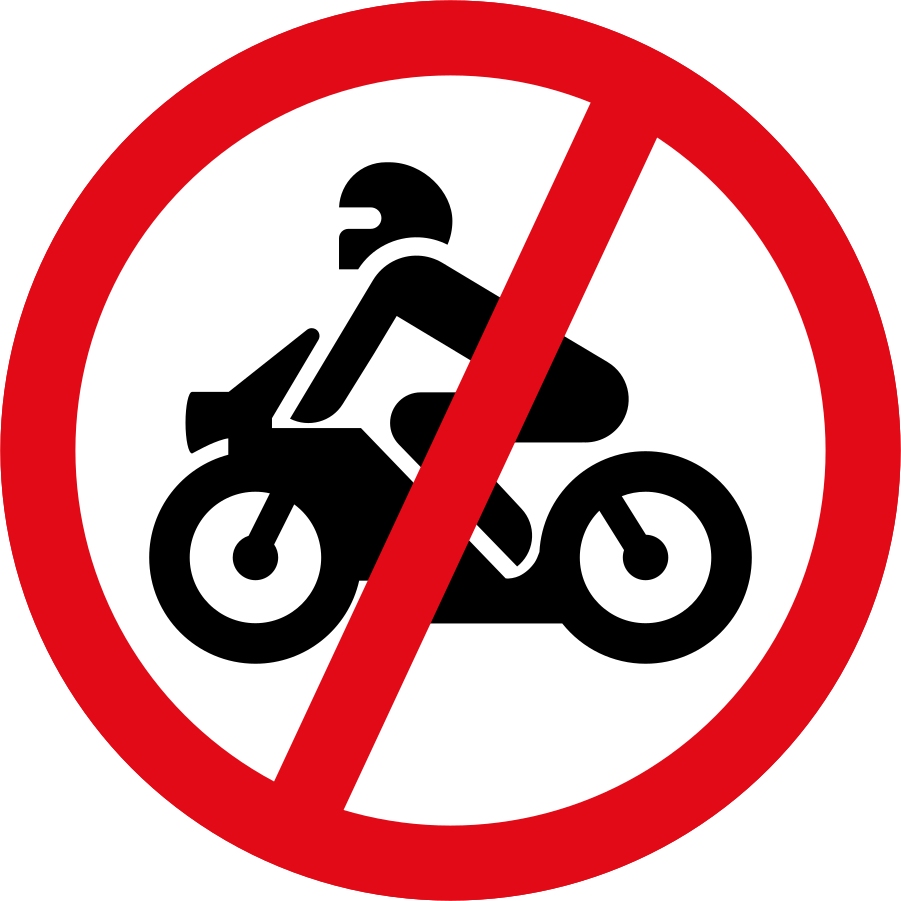
Motorcycles prohibited (R222) Motorcycles may not use this road. Motorcyclists must use another route.
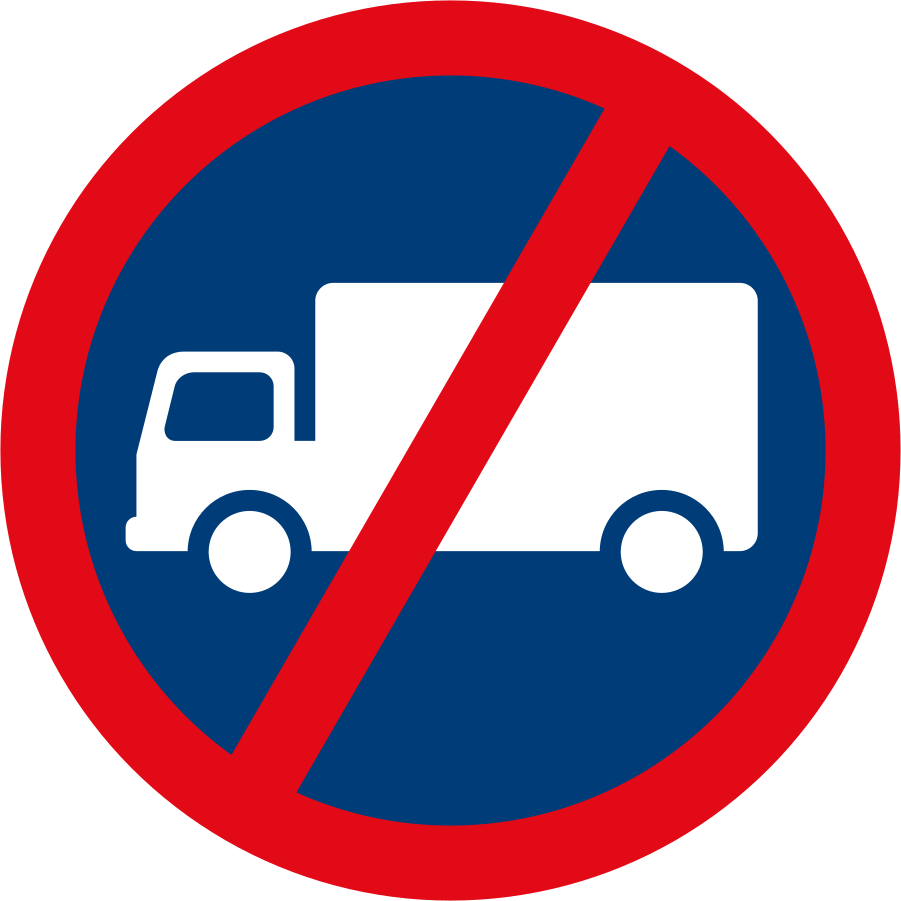
Goods vehicles prohibited (R229) Goods vehicles may not use this road. Drivers of goods vehicles must use another route.
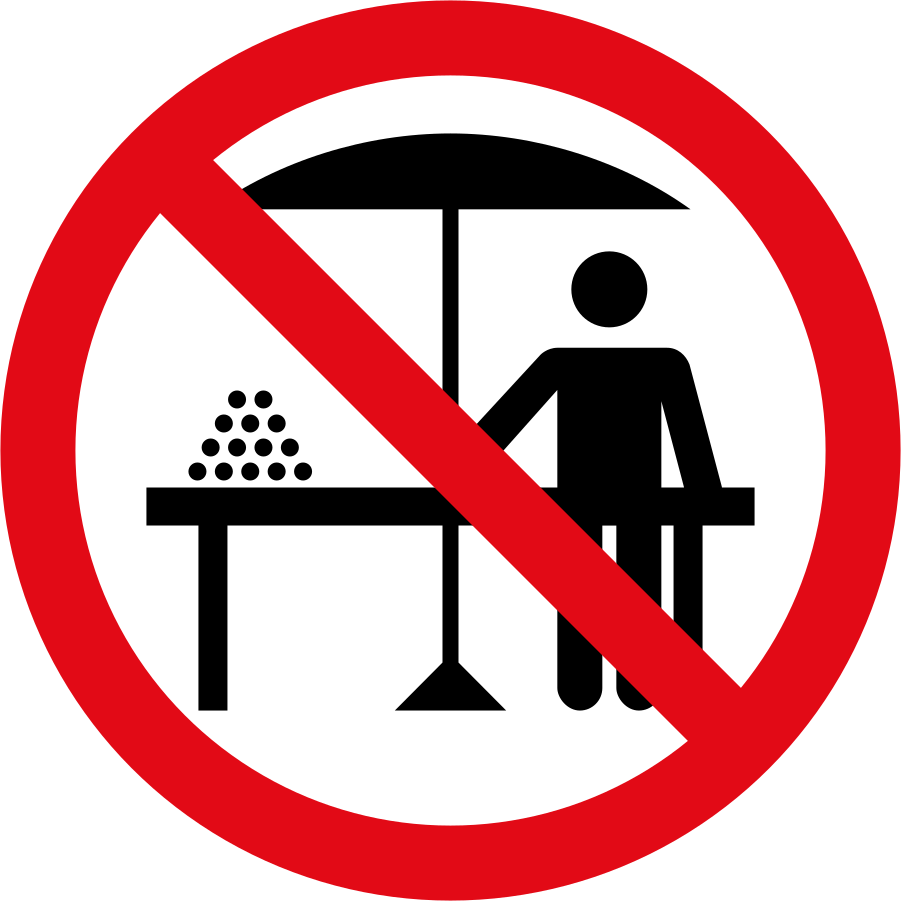
Hawkers prohibited (R241) Hawkers may not trade here. Do not stop to buy from or sell to hawkers here.
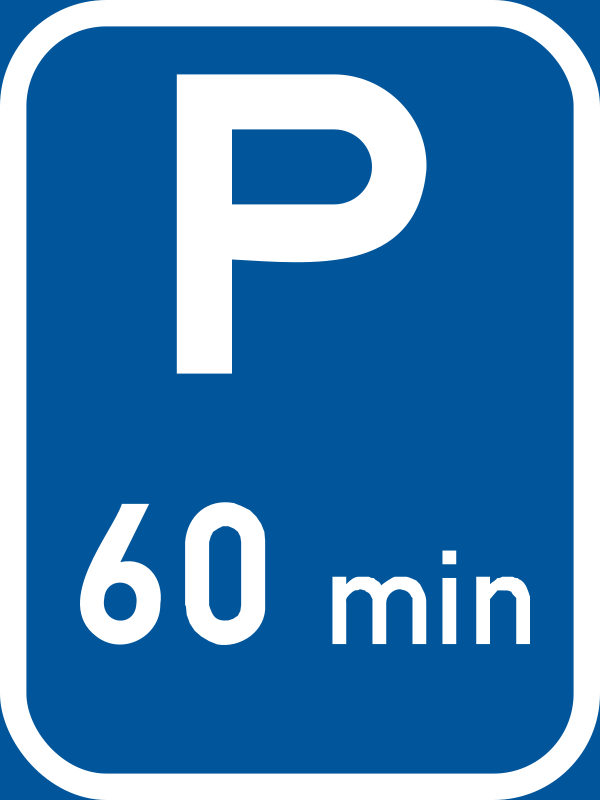
Limited parking (R306) Parking is allowed for the time shown only. Do not park longer than the time on the sign.
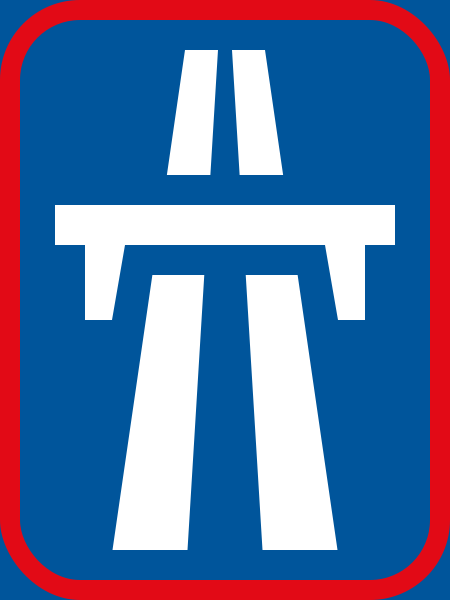
Freeway begins (R401) A dual-carriageway freeway begins: freeway rules apply from here. No pedestrians, pedal cycles, animal-drawn vehicles or motorcycles of 50 cc or less. Do not stop except in an emergency.
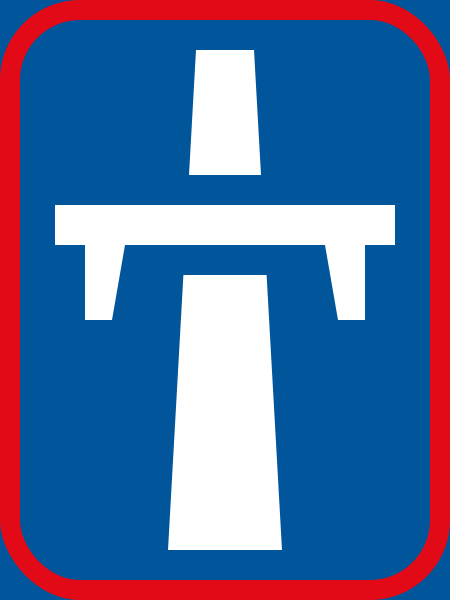
Single-carriageway freeway begins (R402) A single-carriageway freeway begins: freeway rules apply from here. Follow all freeway rules.
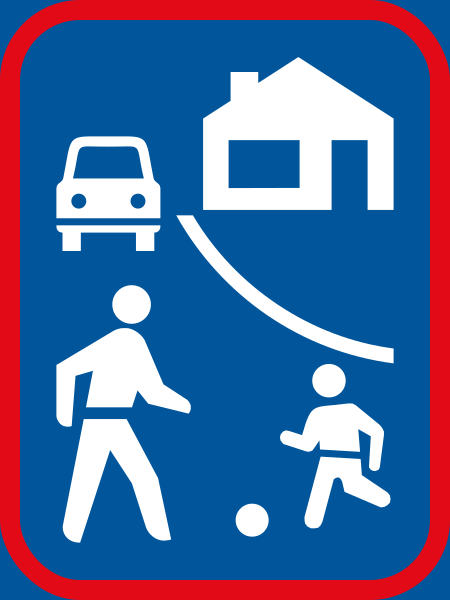
Woonerf (R403) A residential area where you must yield to pedestrians in the street and may not drive through without stopping on your journey. Keep to 30 km/h or less and yield to pedestrians.
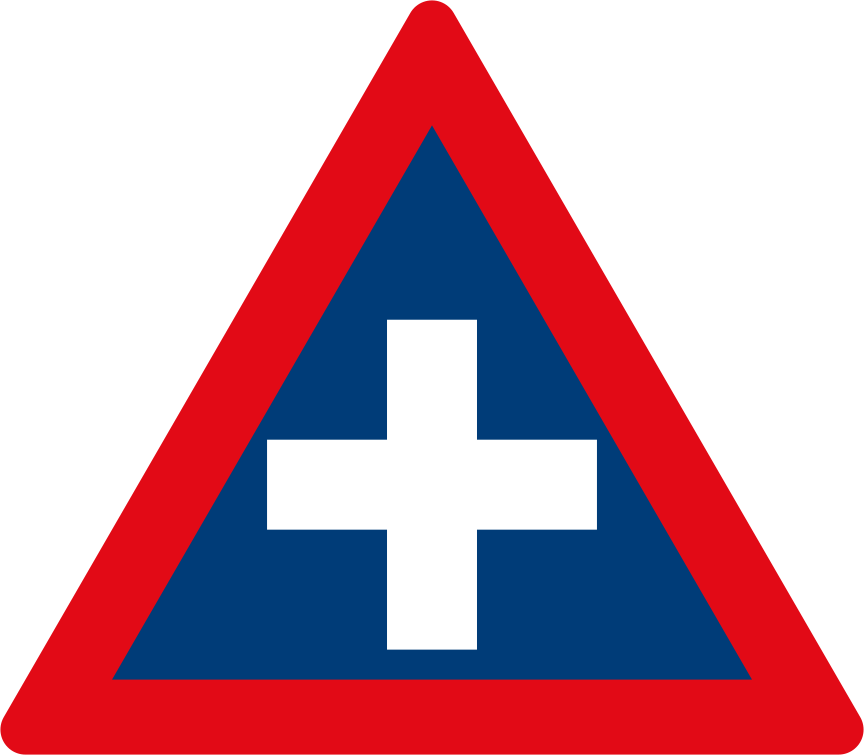
Crossroad (W101) A crossroad ahead. Slow down and look out for cross traffic.
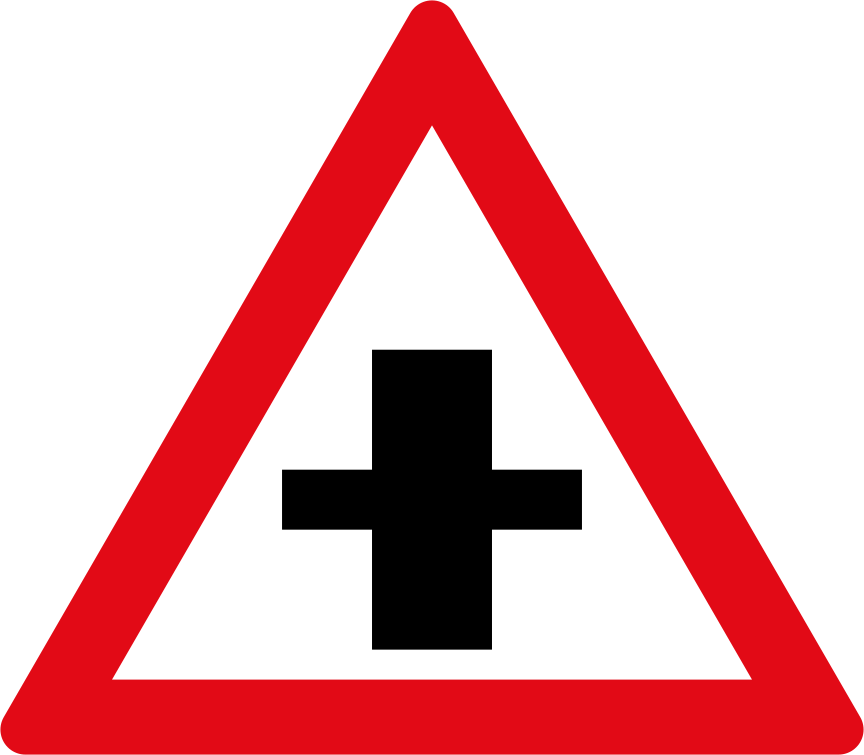
Priority crossroad (W102) A crossroad ahead where you have right of way. Approach carefully: cross traffic may not yield.
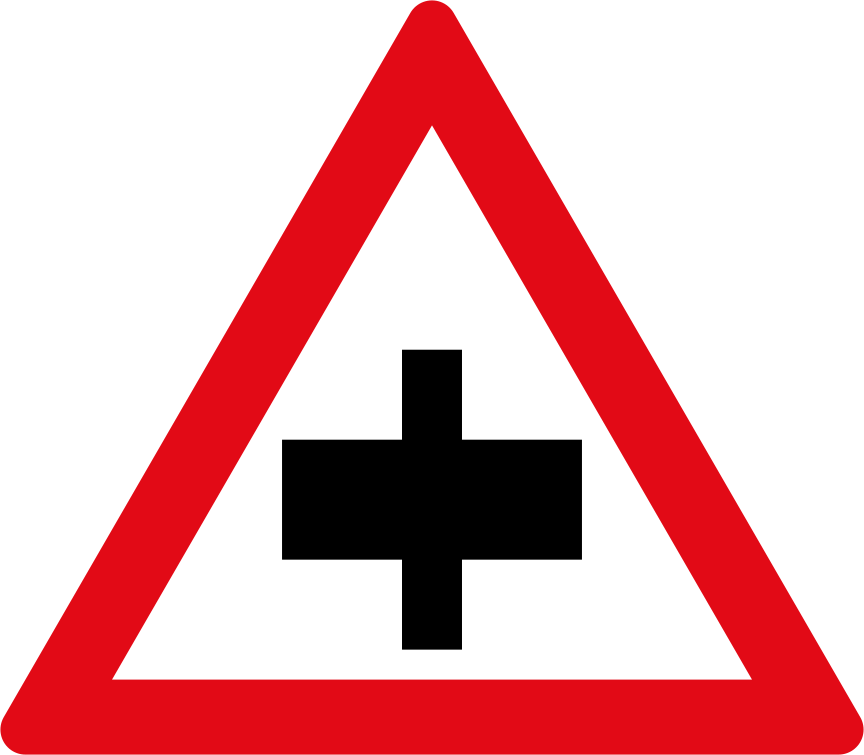
Secondary crossroad (W103) A crossroad ahead where you must yield to cross traffic. Slow down and yield to traffic from the left and right.
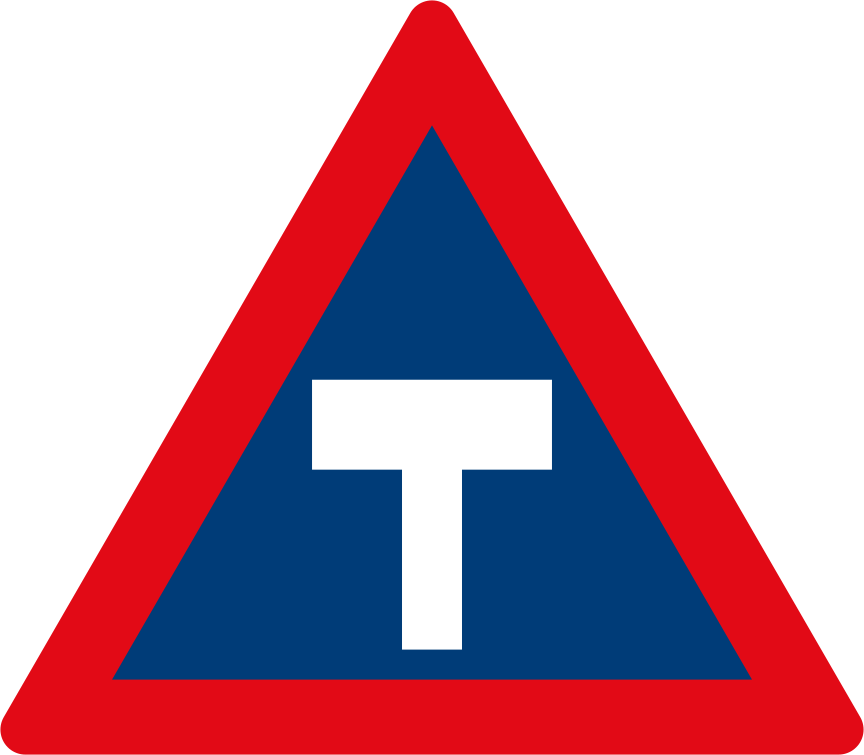
T-junction (W104) The road ends at a T-junction ahead. Slow down; you will have to turn left or right.
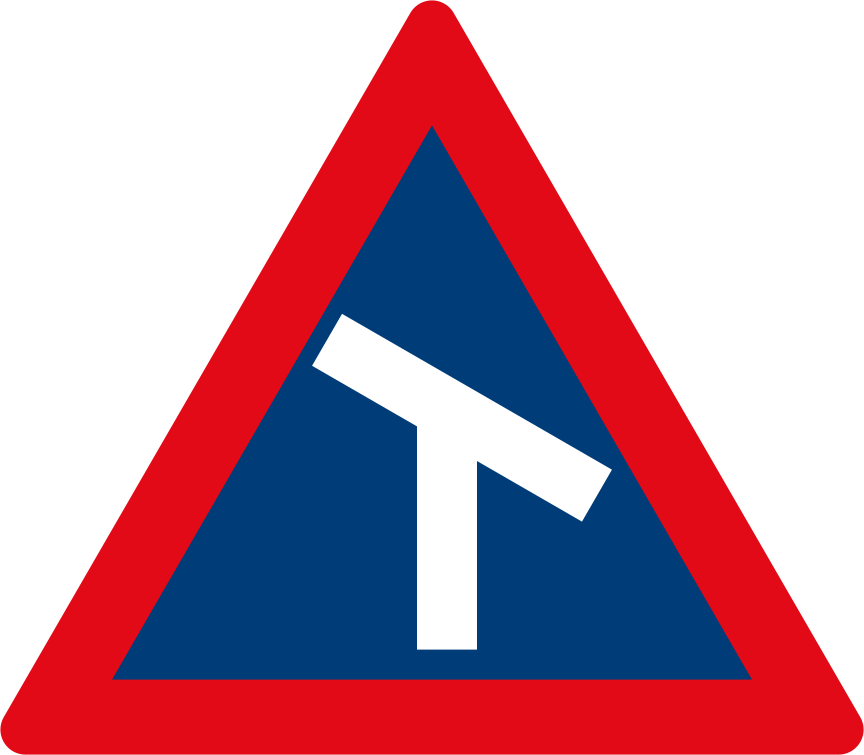
Skew T-junction (W105) A road joins yours at an angle ahead. Look out for cross traffic and be ready to stop.
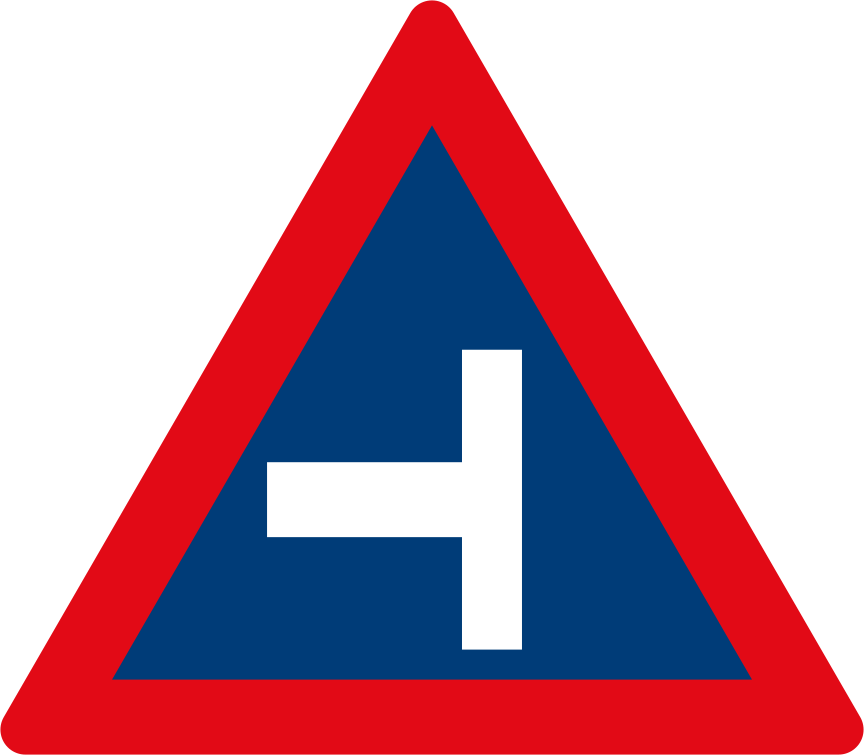
Side road from the left (W107) A side road joins from the left. Watch for vehicles entering your road.
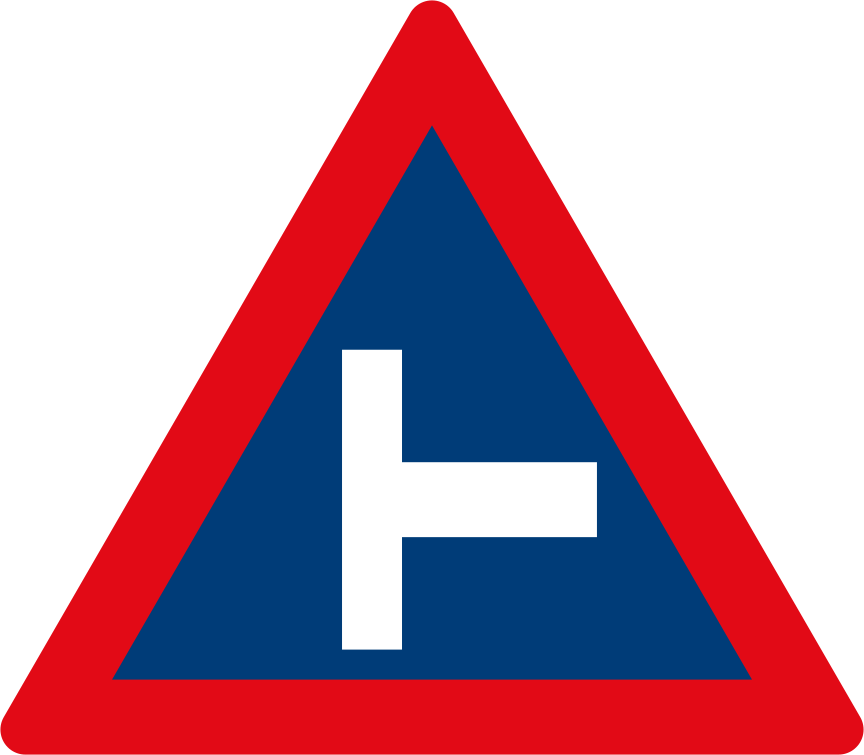
Side road from the right (W108) A side road joins from the right. Watch for vehicles entering your road.
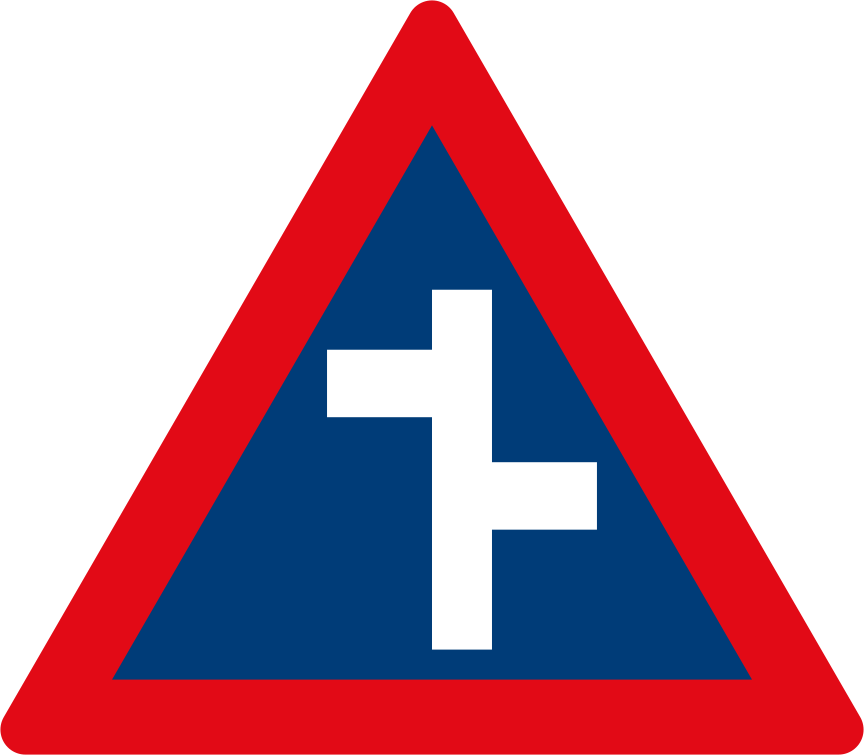
Staggered junction (W109) Side roads join a short distance apart. Slow down and watch for vehicles from both sides.
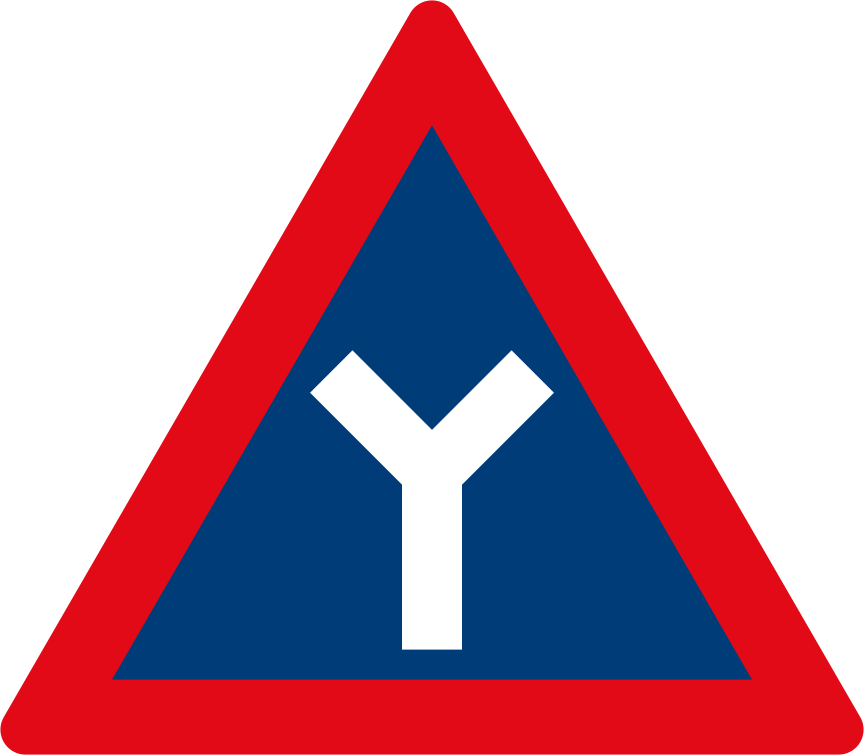
Y-junction (W115) The road splits ahead. Choose your direction in good time.
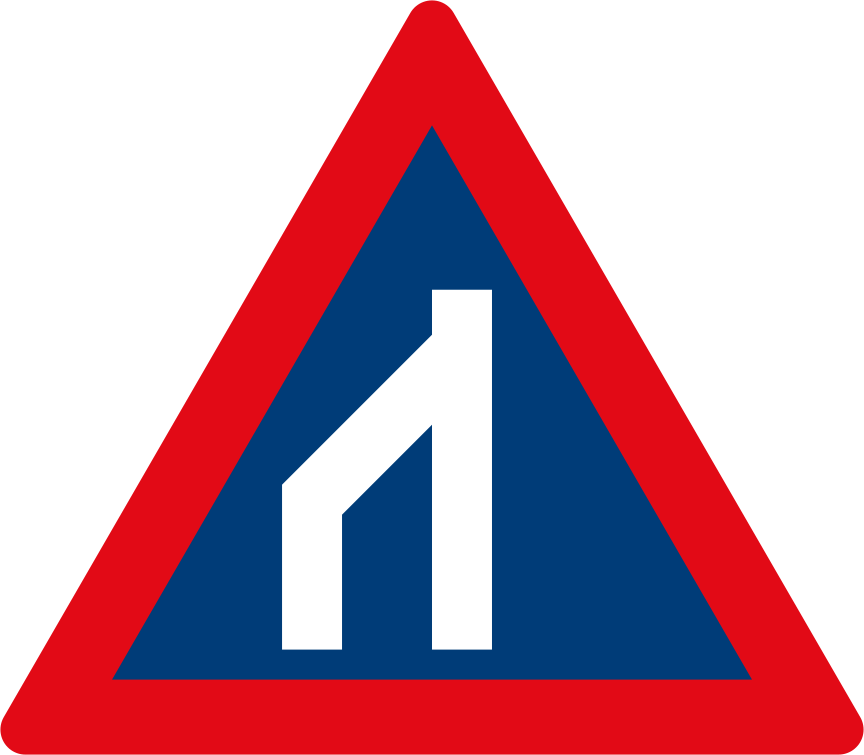
End of dual roadway (W116) The divided road ends; two-way traffic ahead. Keep left and expect oncoming traffic.
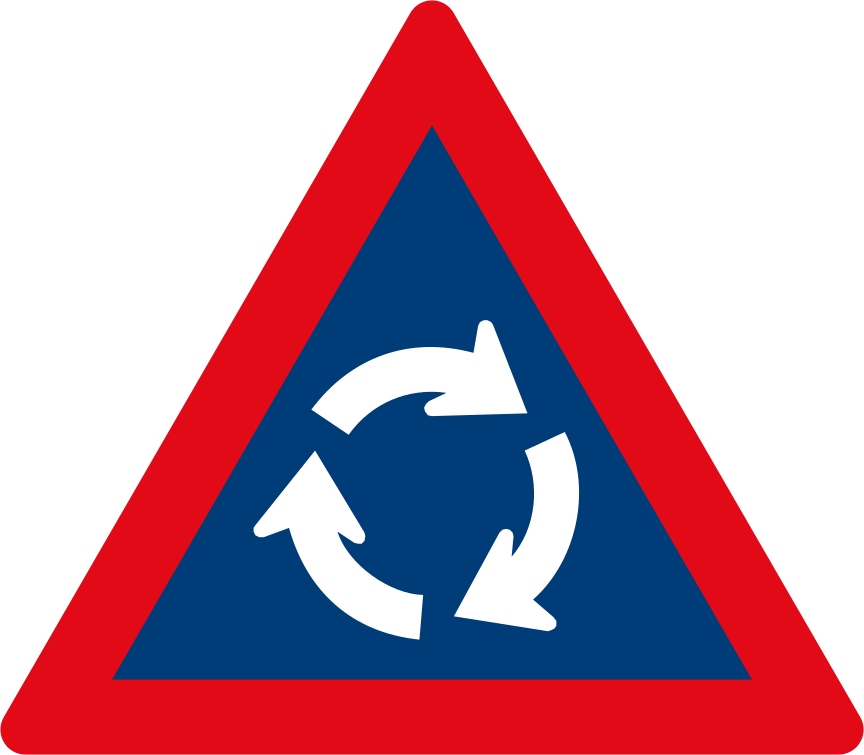
Traffic circle ahead (W201) A traffic circle ahead. Slow down and be ready to yield.
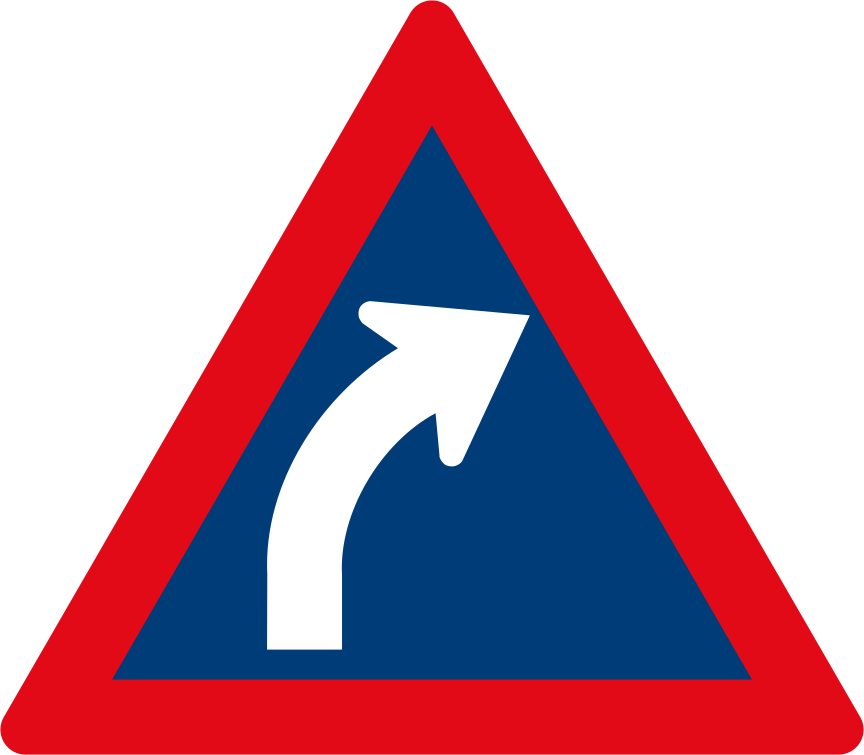
Gentle curve (W202) A gentle curve ahead in the direction shown. Slow down before the curve.
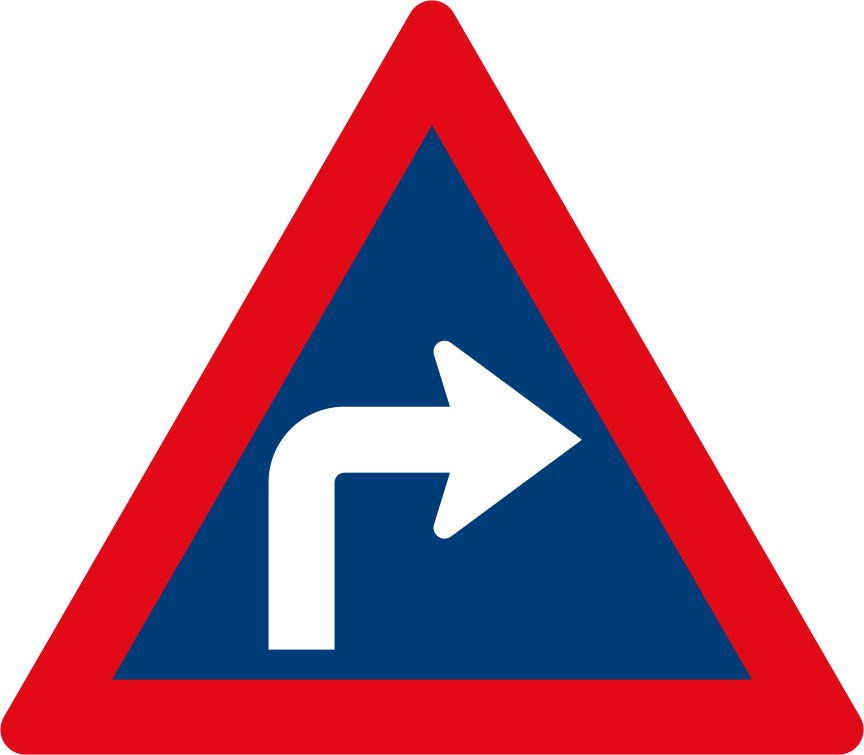
Sharp curve (W204) A sharp curve ahead. Slow down before the curve, not in it.
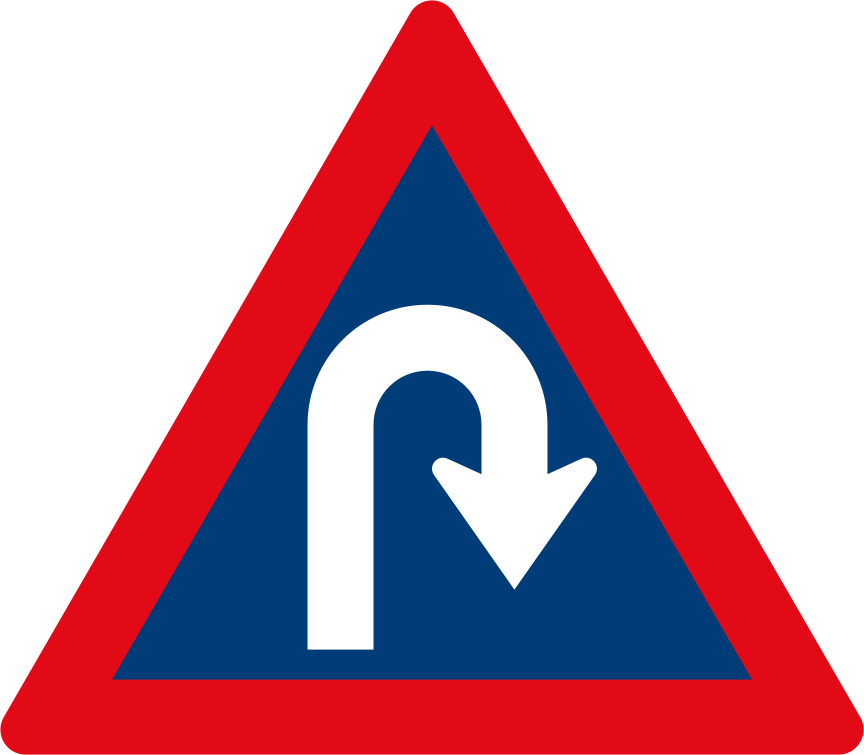
Hairpin bend (W206) A hairpin bend ahead. Slow right down and keep left.
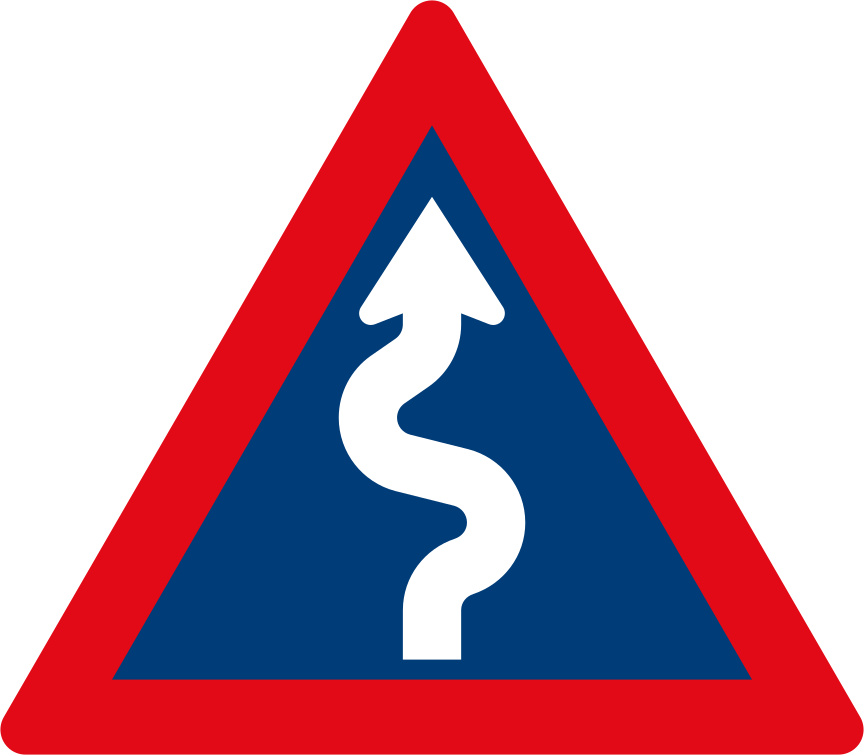
Winding road (W208) A series of curves ahead. Slow down and do not overtake.
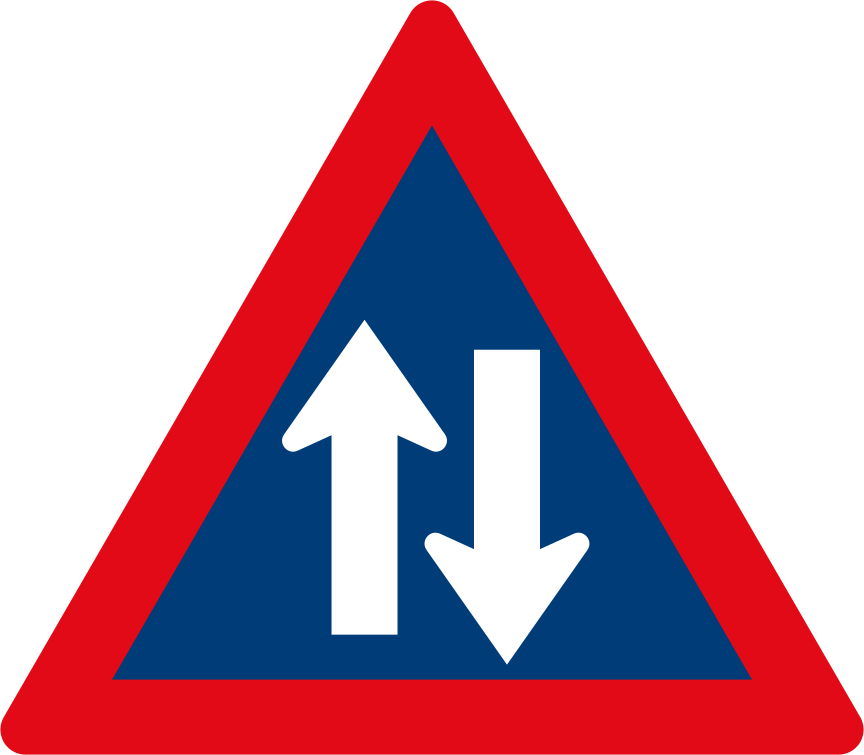
Two-way traffic (W212) Traffic travels in both directions ahead. Keep left and expect oncoming vehicles.
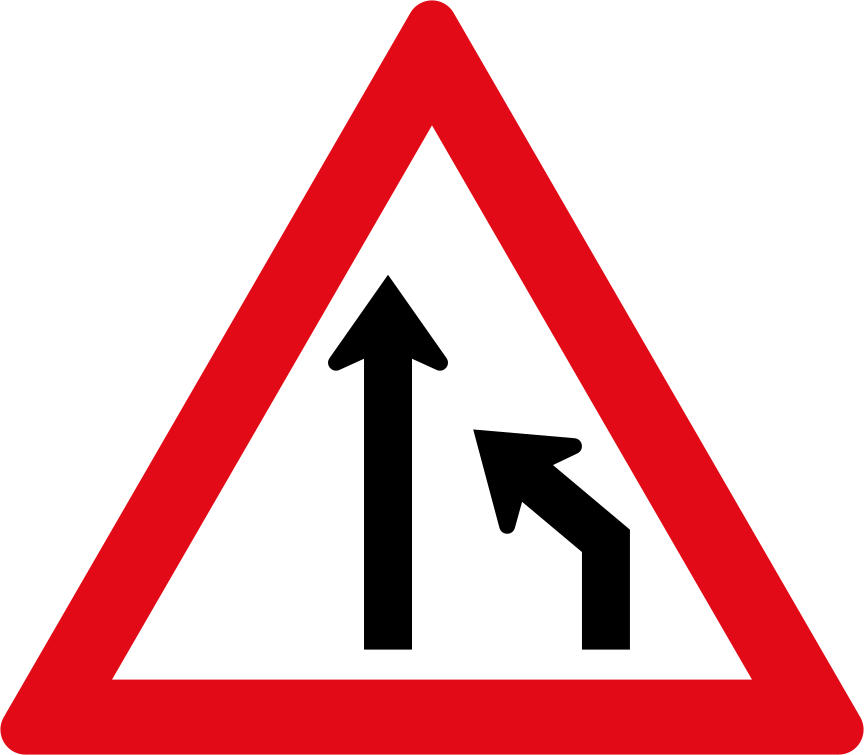
Lane ends (W214) A lane ends ahead. Merge safely in good time.
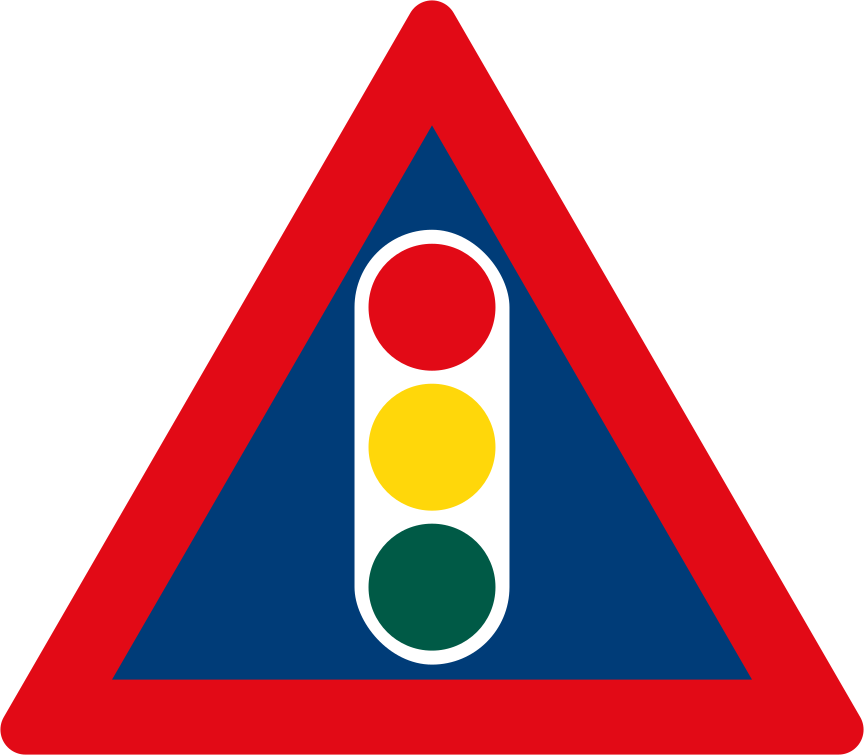
Traffic signals ahead (W301) Traffic lights ahead. Slow down and be ready to stop.
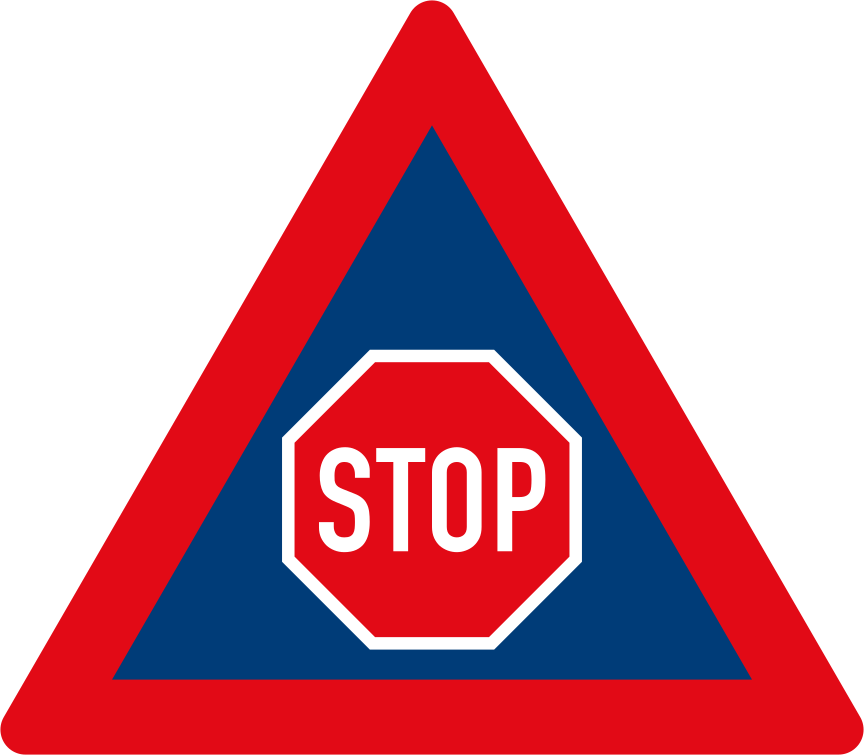
Stop sign ahead (W302) A stop sign ahead that you may not see in time. Slow down in good time and be ready to stop.
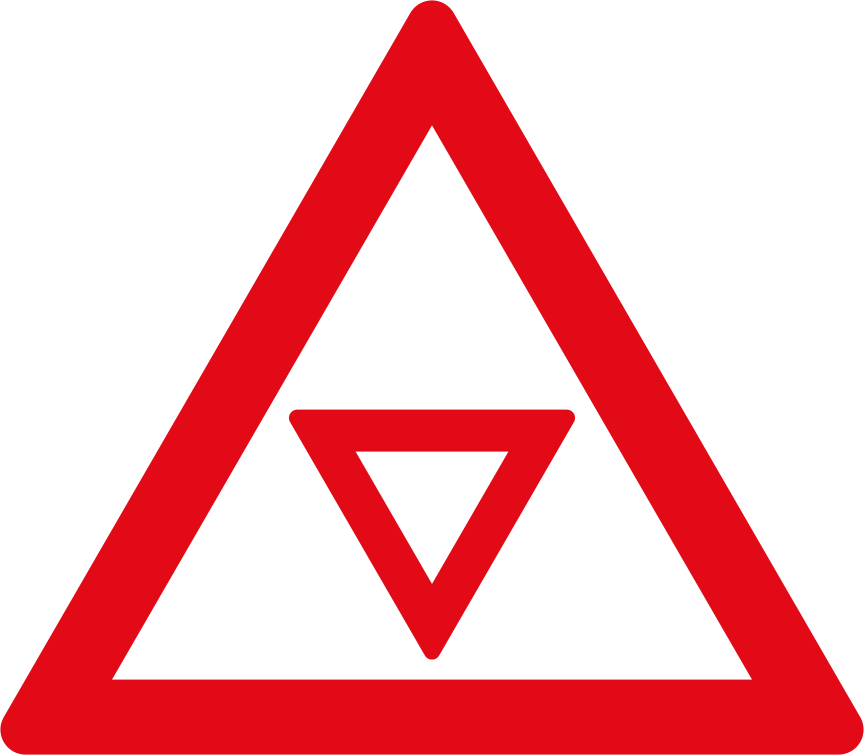
Yield sign ahead (W303) A yield sign ahead. Slow down and be ready to stop if necessary.
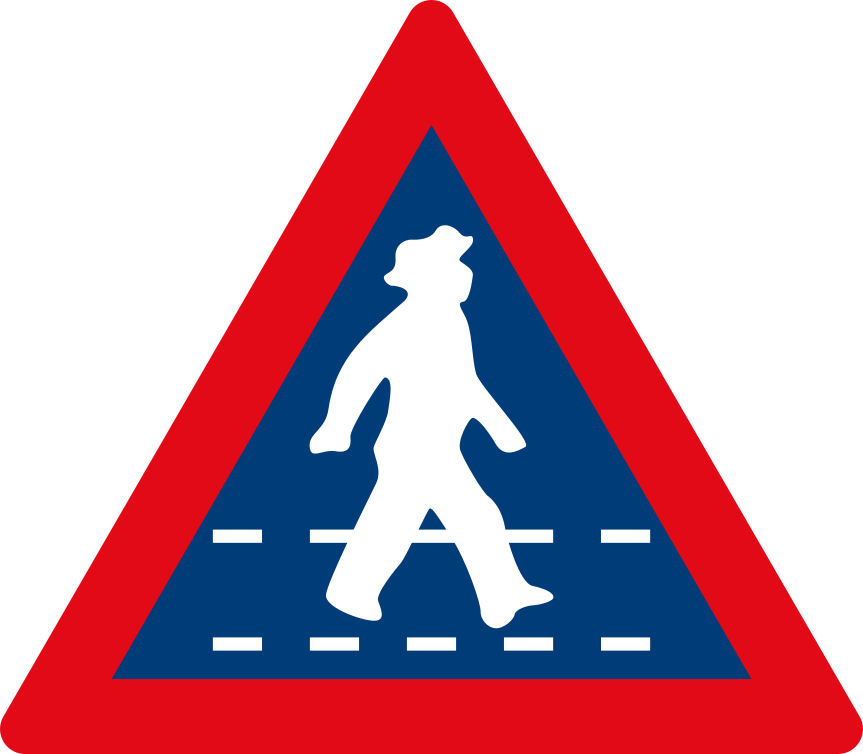
Pedestrian crossing (W306) A pedestrian crossing ahead. Slow down and stop if a pedestrian is waiting. Do not overtake a vehicle that has stopped at the crossing.
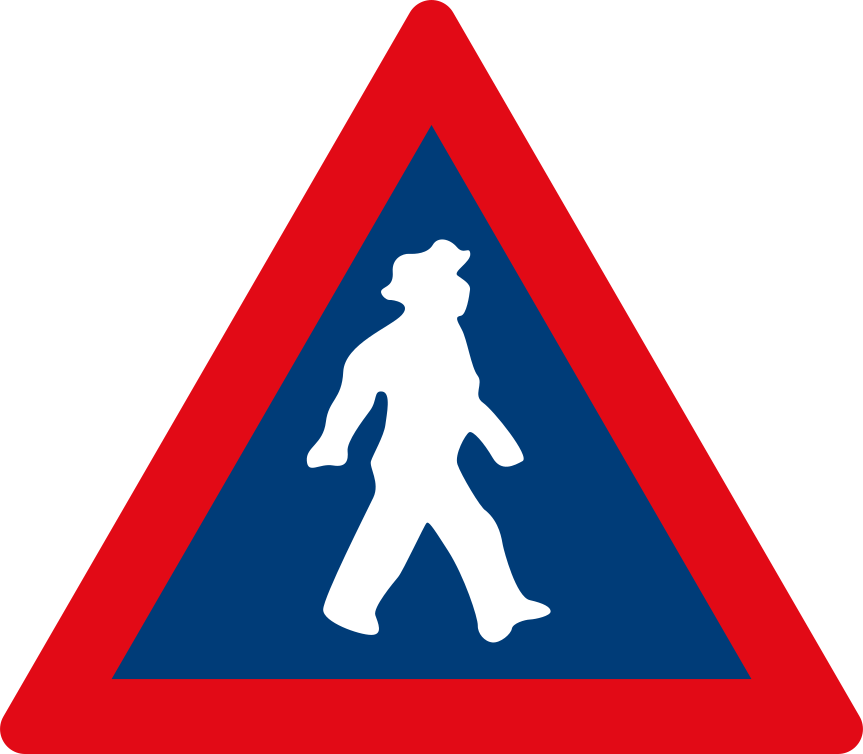
Pedestrians (W307) More pedestrians than usual may cross the road for the next 2 km. Slow down and look out for pedestrians.
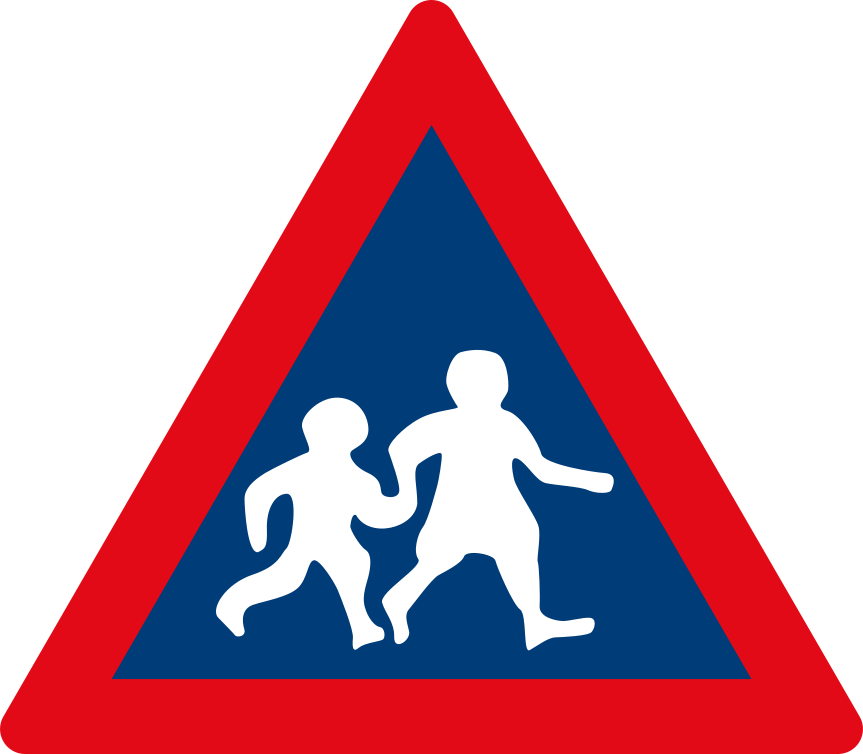
Children (W308) Children may be crossing the road. Slow down immediately and look out for children.
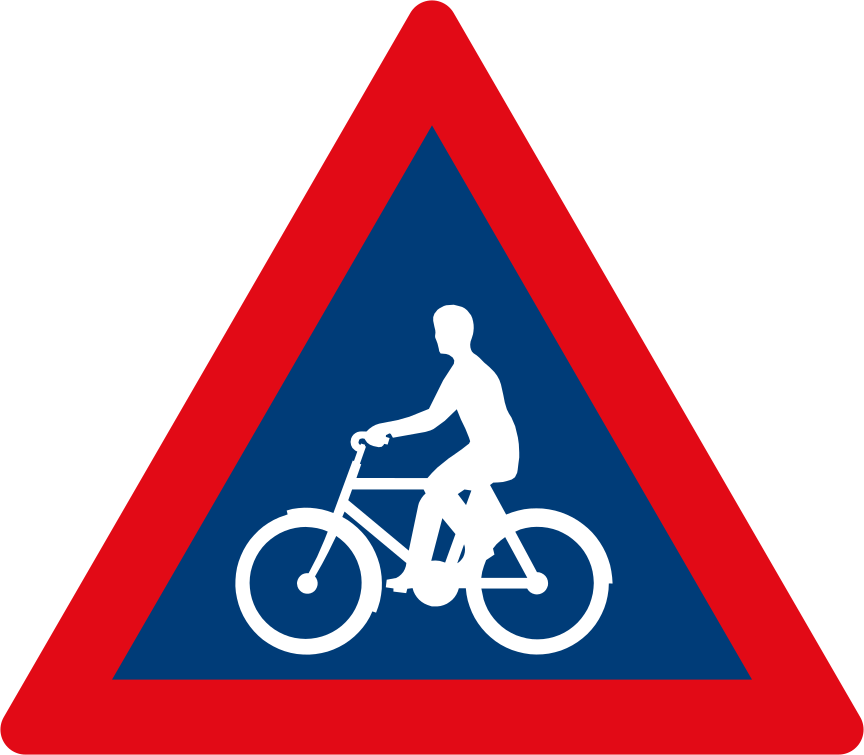
Pedal cyclists (W309) Cyclists may be on or crossing the road for the next 2 km. Slow down and give cyclists room.
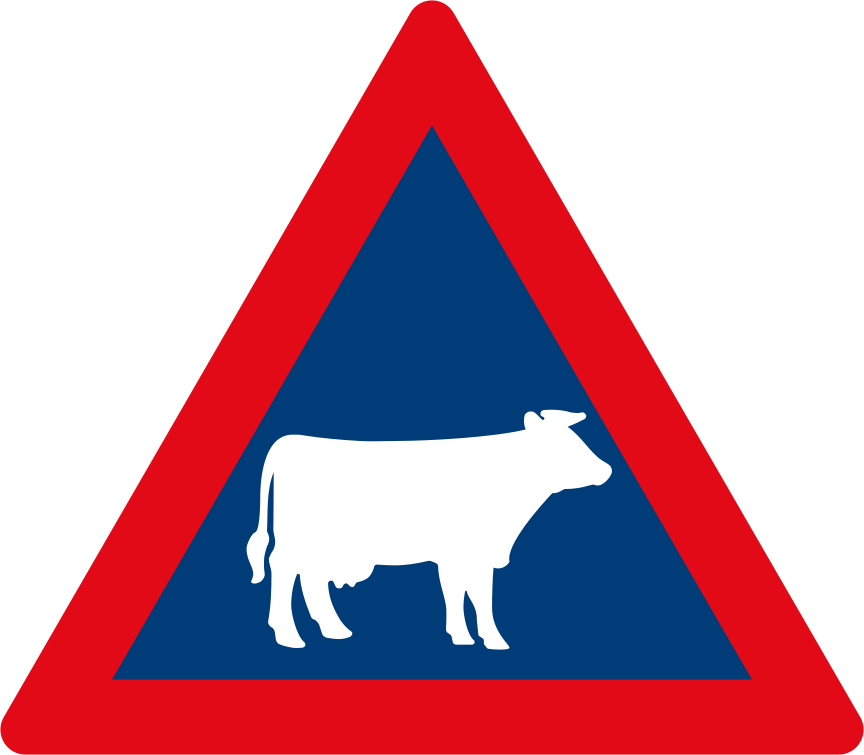
Domestic animals (W310) Cattle, horses or sheep may be on the road for the next 2 km. Slow down and look out for animals.
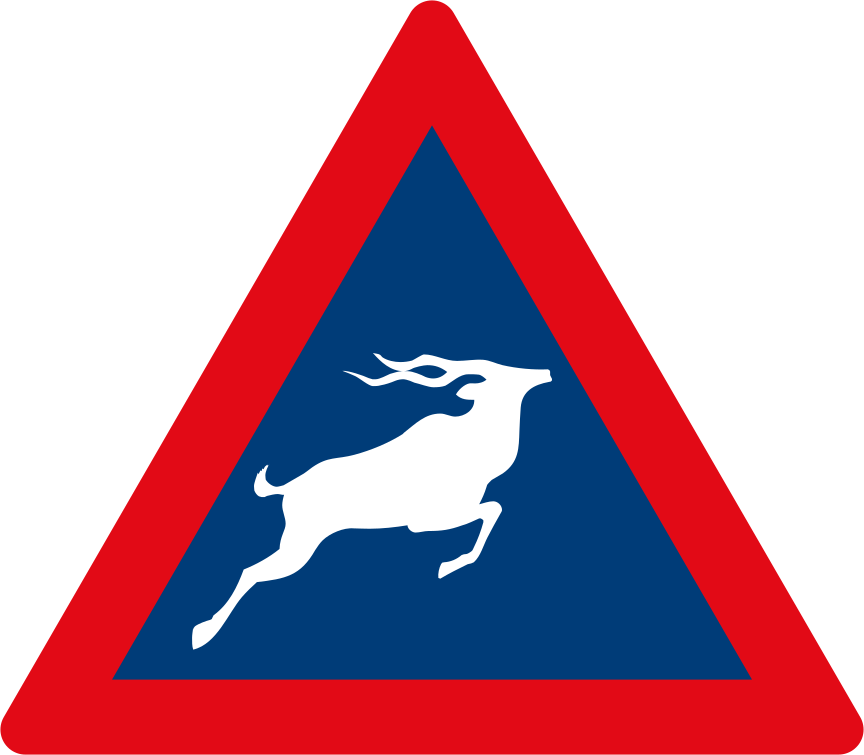
Wild animals (W313) Wild animals may be on or crossing the road for the next 2 km. Slow down and look out for animals.
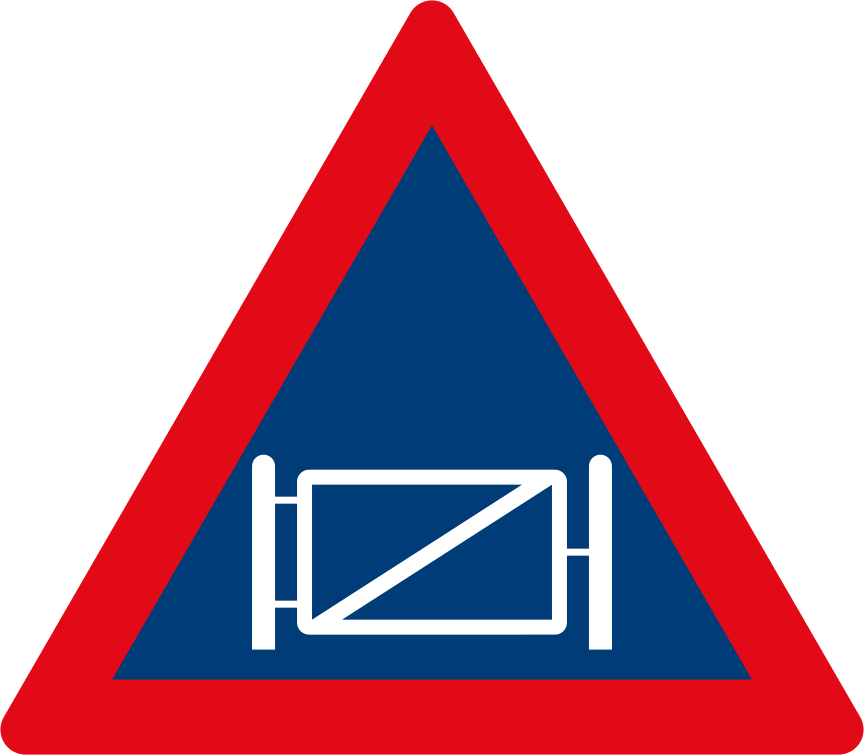
Gate (W314) A gate or boom across the road ahead. Slow down and be ready to stop if it is closing or closed.
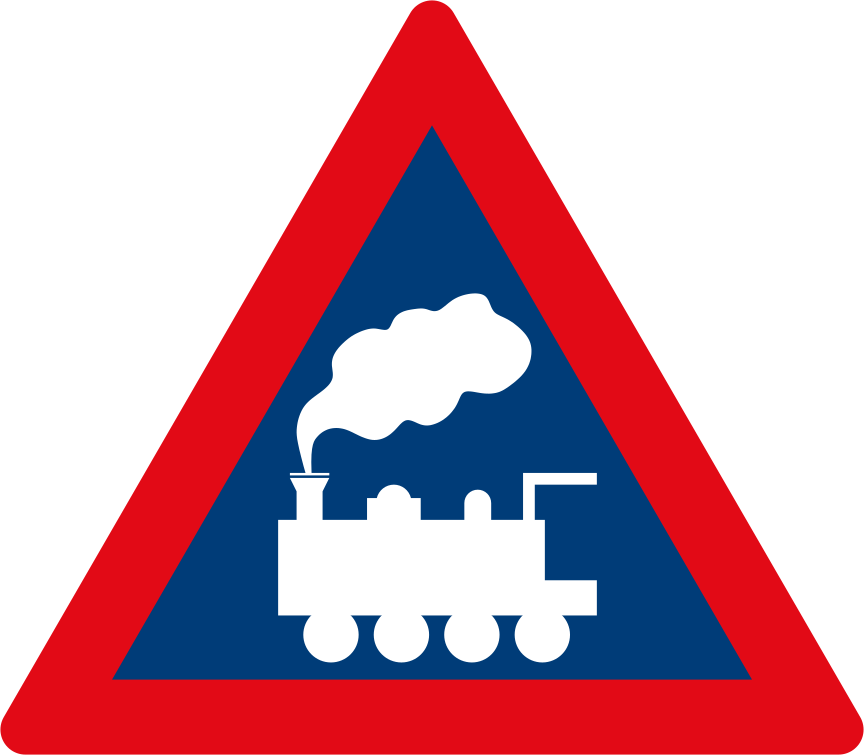
Railway crossing (W318) A railway crossing ahead. Slow down, look right and left for trains, and stop in time if one is coming, not within the railway reserve.
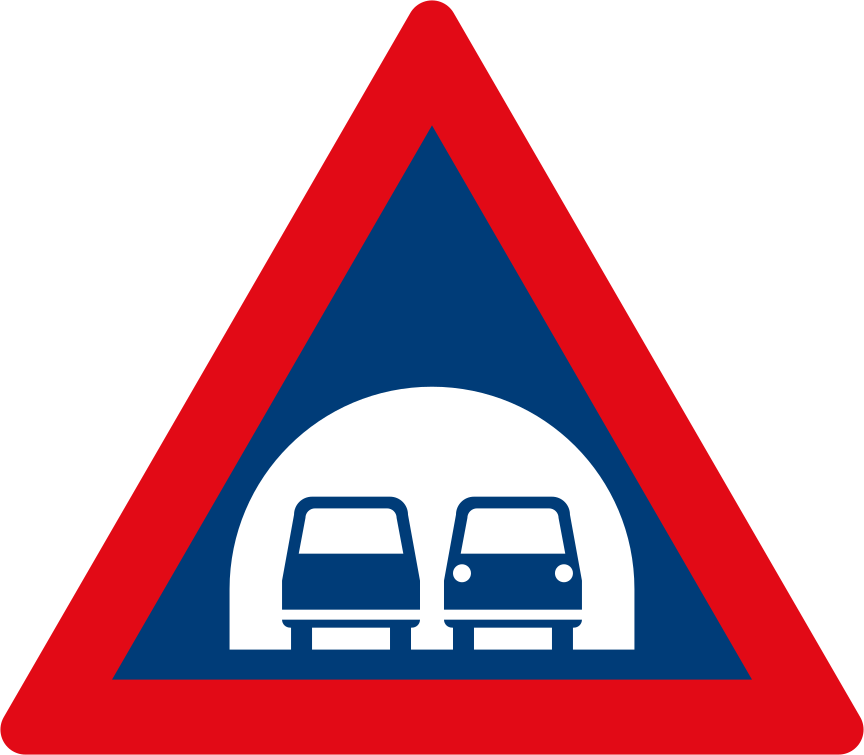
Tunnel (W319) A tunnel ahead. Slow down and switch on your headlamps (dipped).
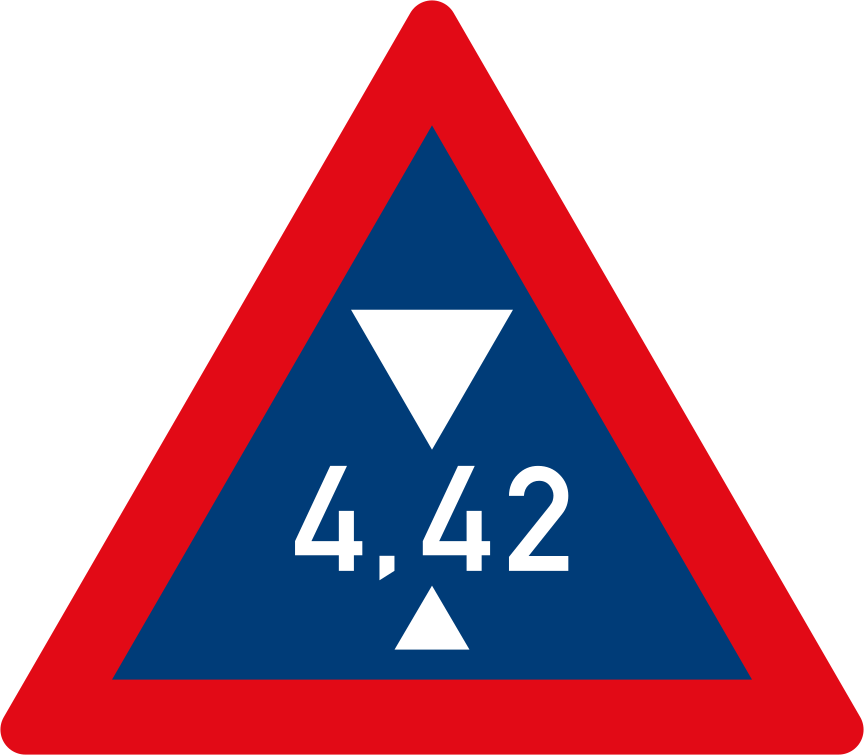
Height restriction ahead (W320) A bridge or structure ahead with the height shown. If your vehicle is higher, find another route.
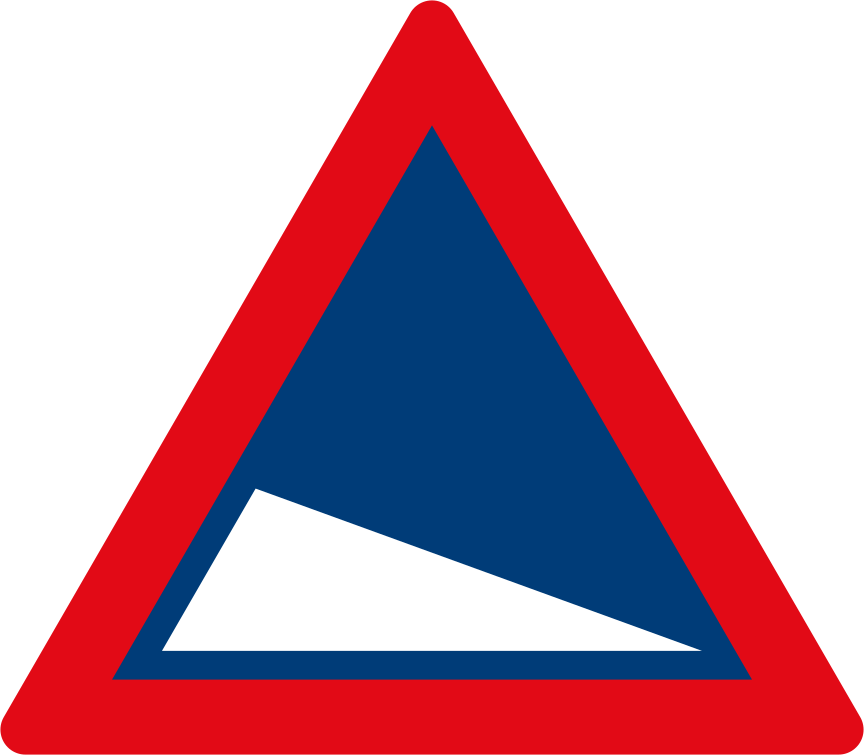
Steep gradient (W322) The road climbs or descends steeply ahead. Expect slow traffic; allow a longer stopping distance going down.
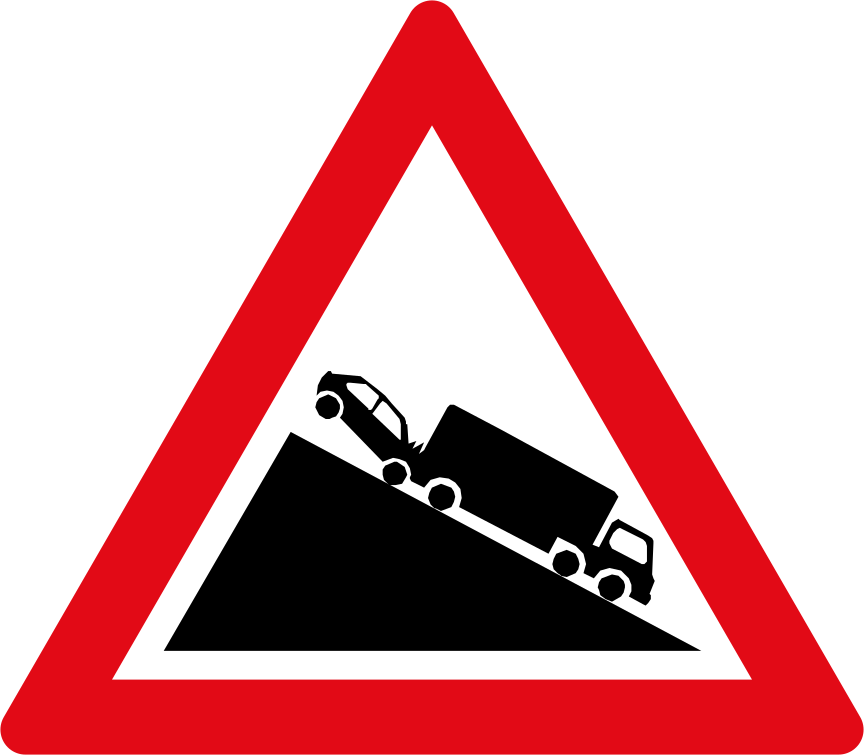
Slow-moving heavy vehicles (W324) Heavy vehicles travel slowly ahead, usually on a descent. Slow down and be able to stop within the distance you can see.
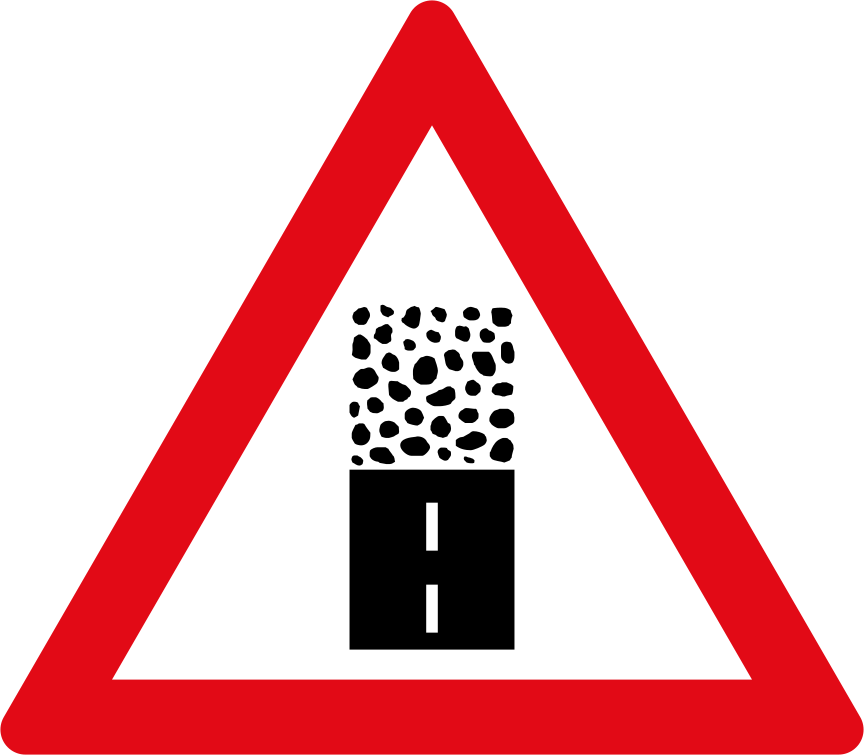
Gravel road begins (W325) The tarred surface ends and a gravel road begins. Slow down and watch for potholes where the tar ends. On gravel, steering is lighter, skids are easier and stopping takes longer.
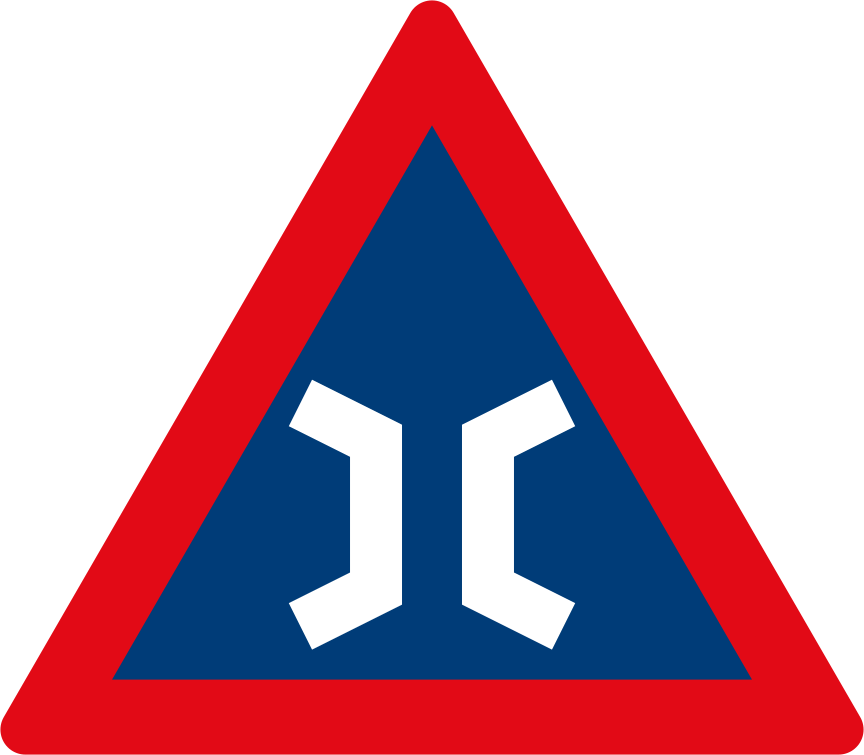
Narrow bridge (W326) The road narrows on a bridge ahead. Slow down and try not to cross the bridge at the same time as an oncoming vehicle.
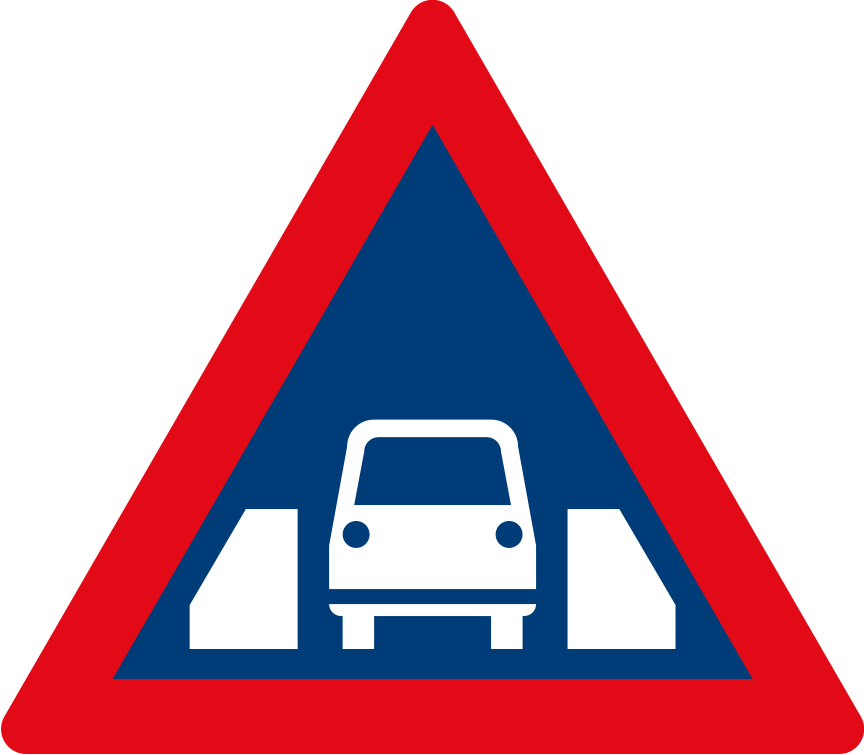
One-vehicle-width structure (W327) A bridge or structure ahead that is only one vehicle wide. Only one vehicle can pass at a time: be ready to wait.
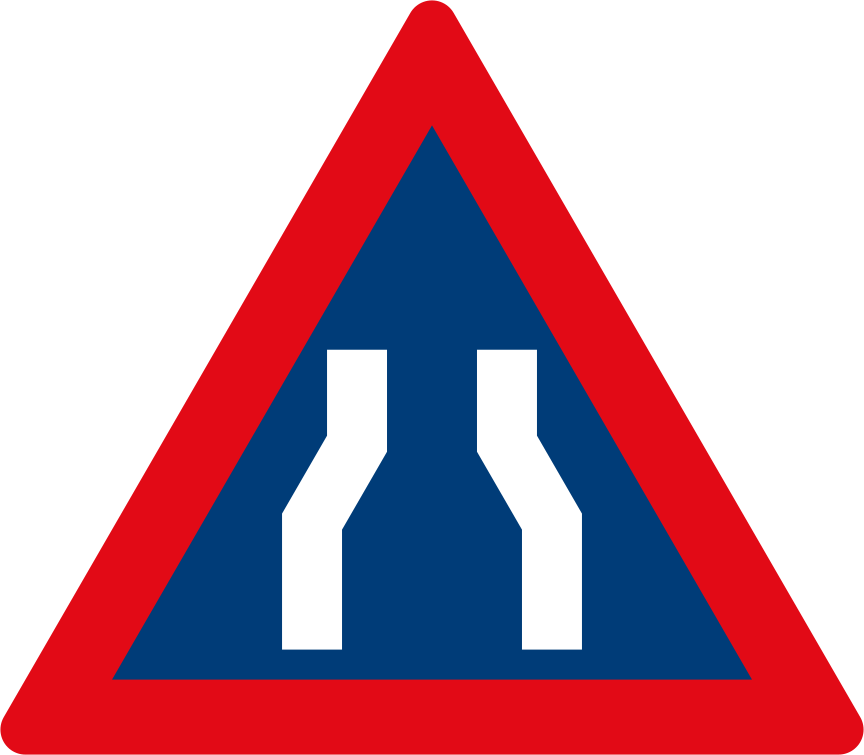
Road narrows (W328) The road narrows from both sides ahead. Slow down and keep left.
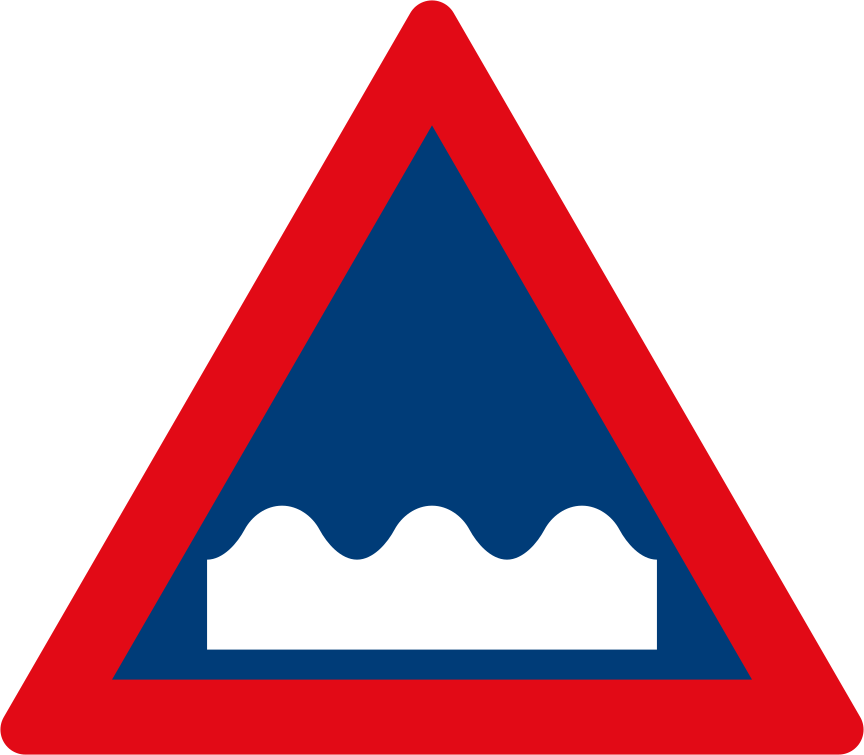
Uneven roadway (W331) An uneven road surface ahead. Slow down.
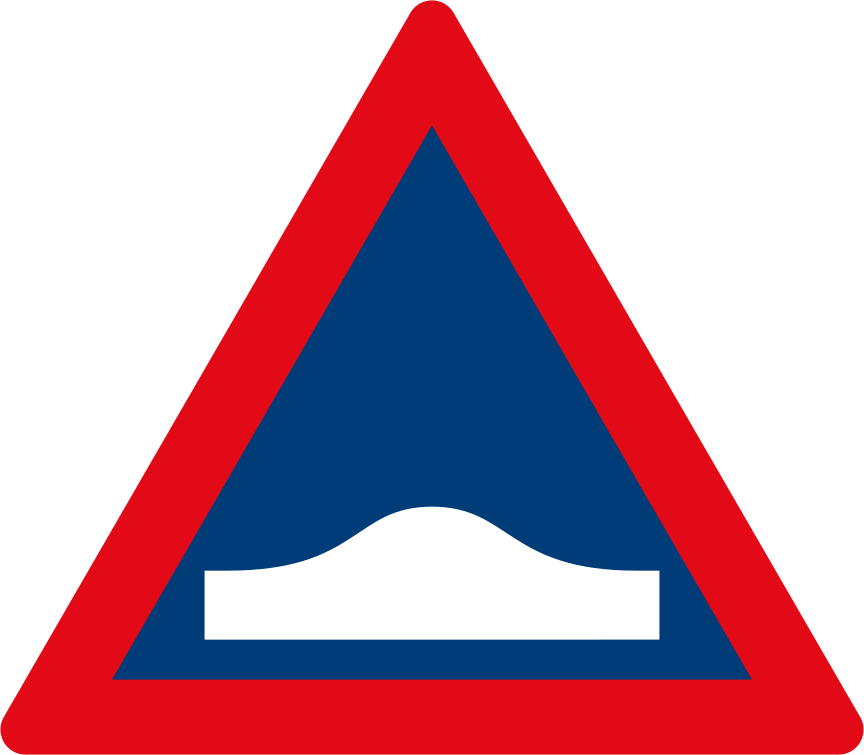
Speed humps (W332) Speed humps ahead. Slow down before each hump.
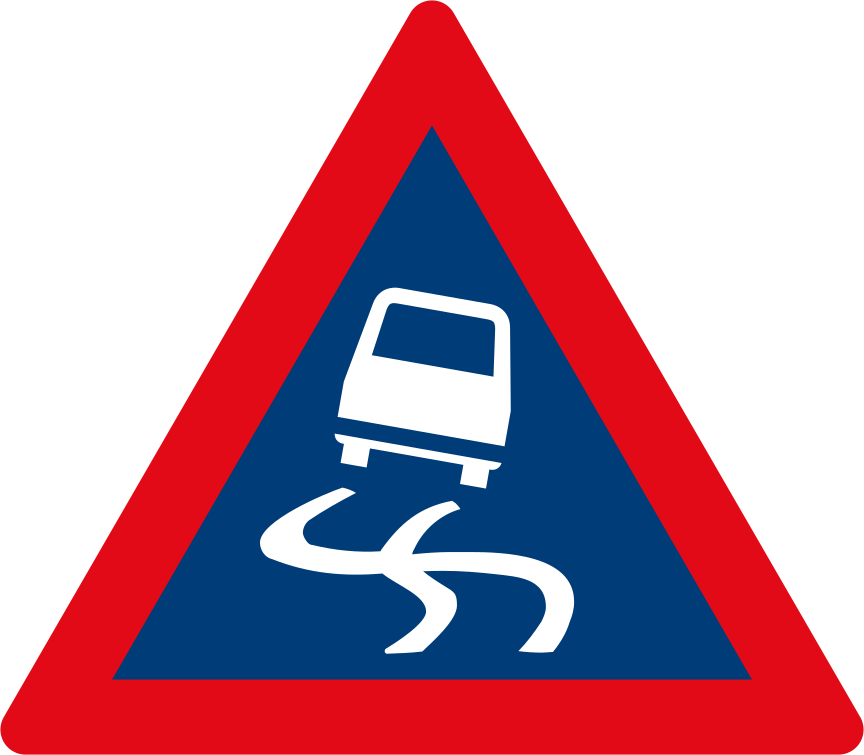
Slippery road (W333) The road ahead may be slippery, especially when wet. Slow down, avoid harsh braking and steering.
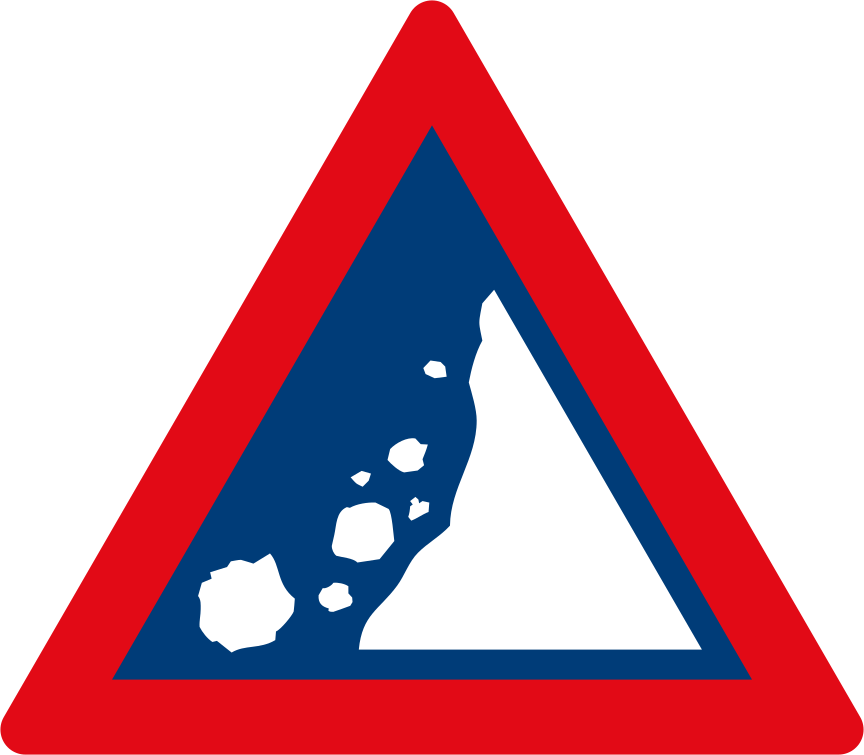
Falling rocks (W334) Rocks may fall or be on the road ahead. Slow down and watch for rocks.
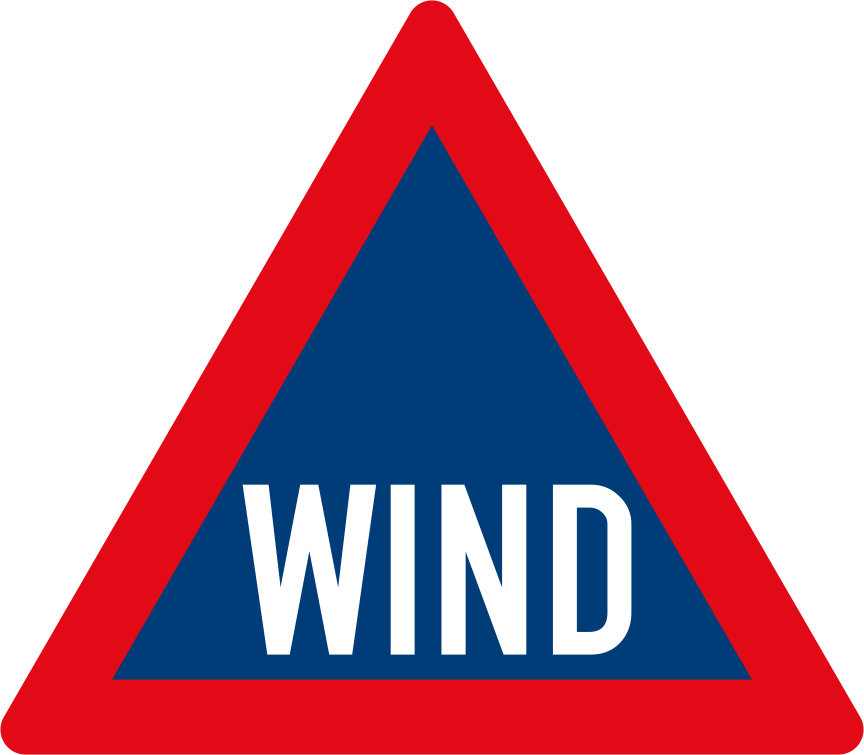
Crosswinds (W349) Strong crosswinds ahead. Hold the steering firmly and slow down.
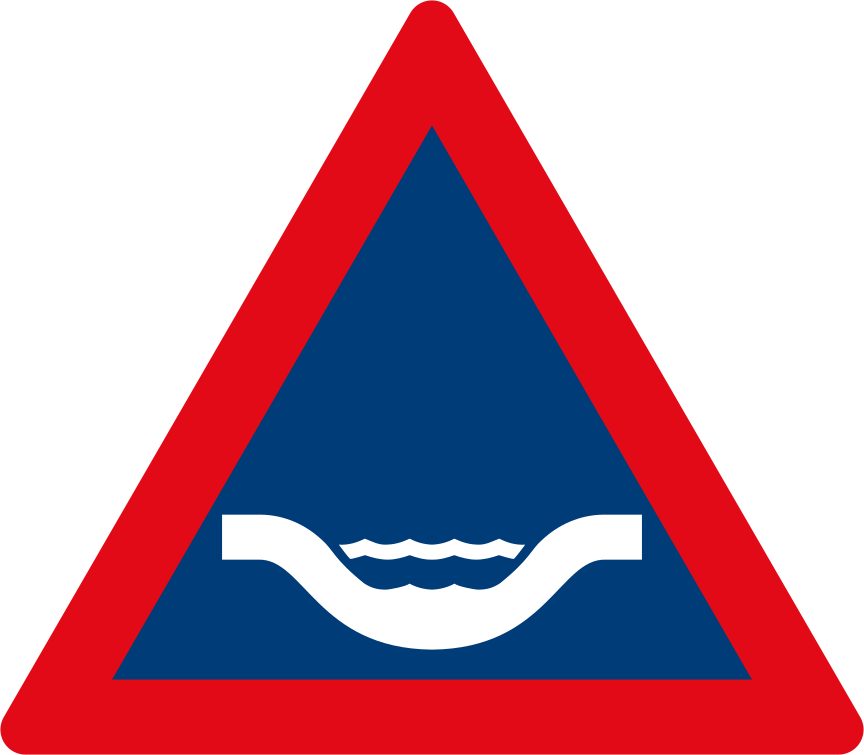
Drift (W350) A drift ahead: a low crossing through a stream or riverbed. Slow down; if you do not know how deep the water is, stop. If it is passable, drive through slowly.
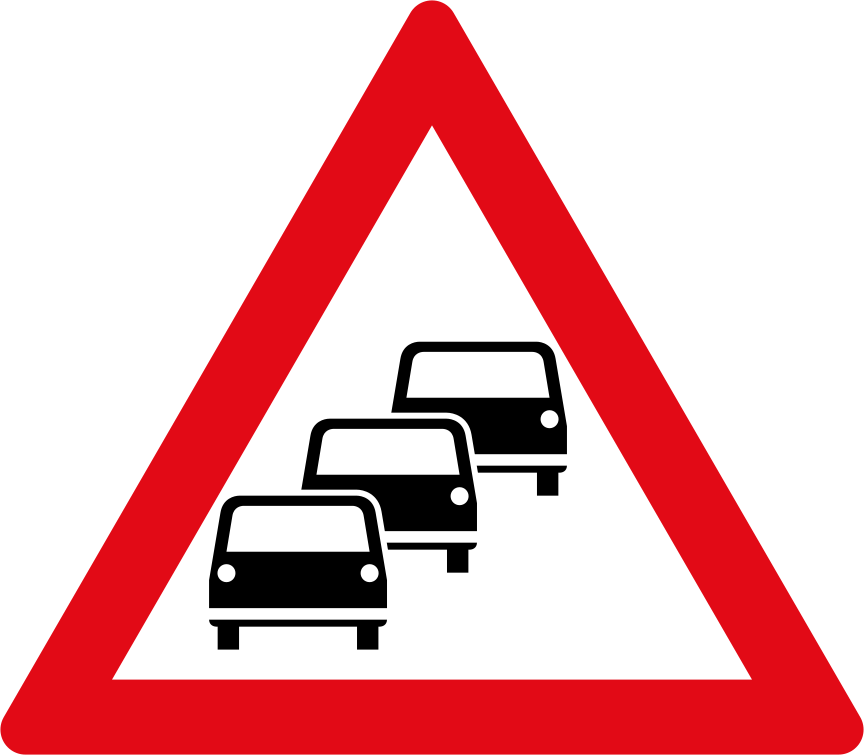
Congestion (W355) Slow or stopped traffic ahead. Slow down and be ready to stop.
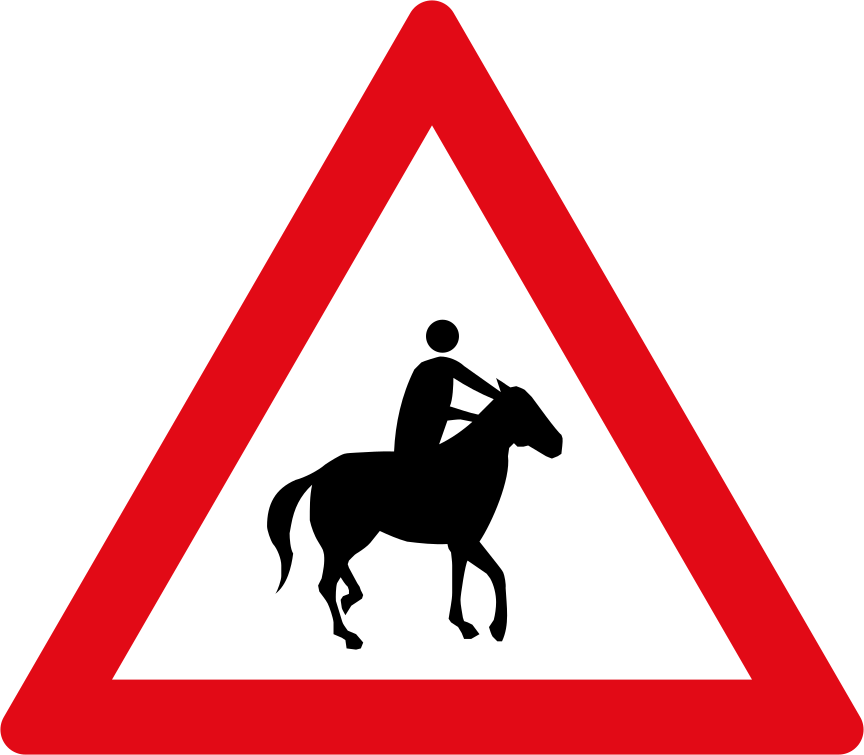
Horses and riders (W356) Horses and riders may be on the road. Slow down and pass slowly with plenty of room.

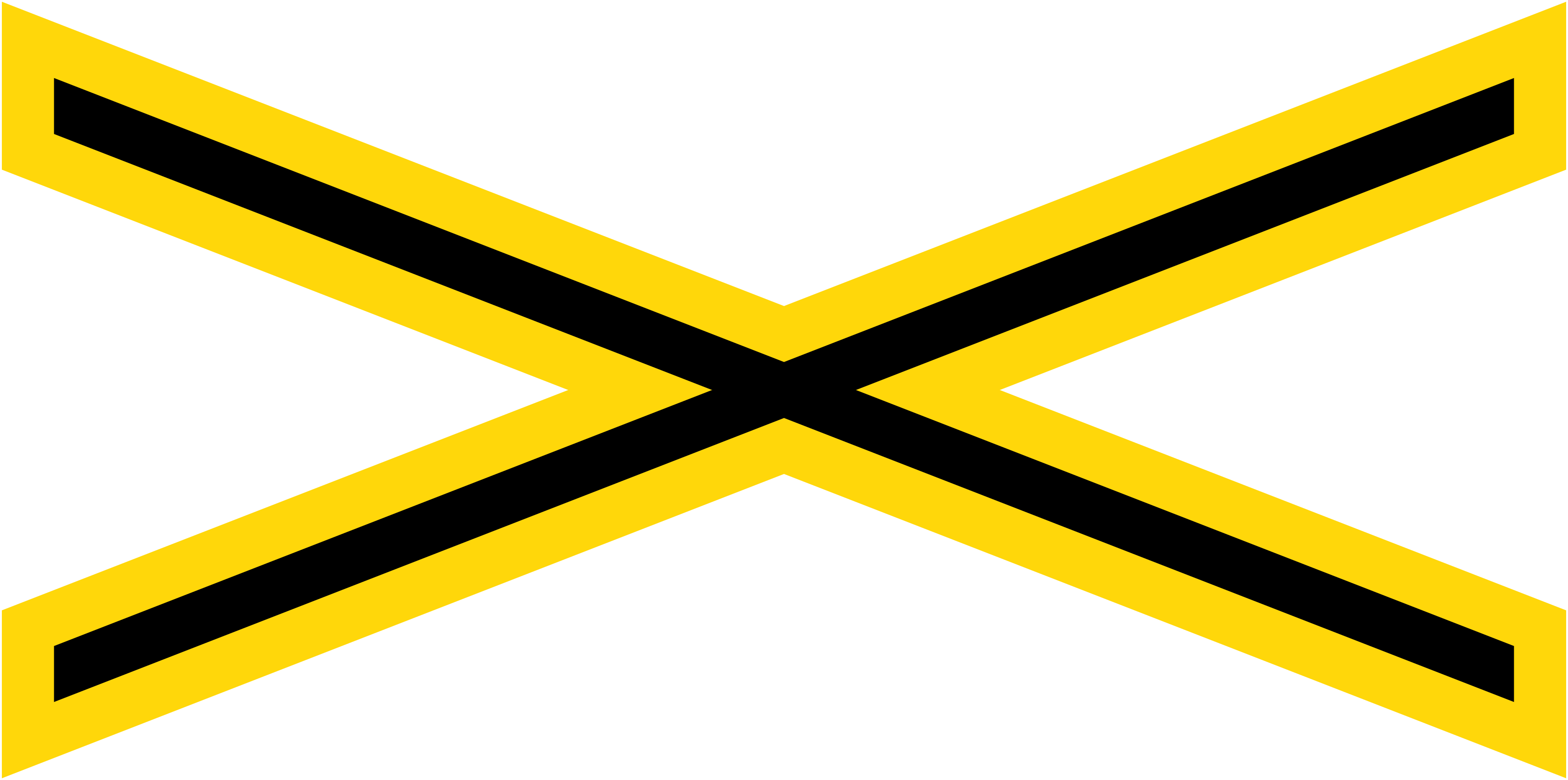
Level crossing (W403) Marks the railway level crossing itself (one track). Slow down and stop if a train is approaching.

T-junction chevron (W409) Marks the end of the road at a T-junction. Turn left or right.
Signs are easier to remember by group: the shape and colour tell you the kind of message before you read it. The South Africa signs on this page fall into these groups:
Pick an answer, then open "Show answer" to check it. For the real test format, take a free DLTC practice test.
Turn on JavaScript to take the interactive mock tests.